10 Important Video Games That Defined Survival Horror
The games you have to thank for not being able to sleep at night.

Unlike other video game genres, survival horror relies first and foremost on atmosphere and building tension. These games aren't about defeating hordes of enemies, nor are they about high scores; instead they're about enduring, persevering, managing resources and overcoming terrifying odds.
Often, you'll find yourself exploring an unnerving, claustrophobic environment, armed with nothing but a flashlight and a few dwindling bullets for your already ineffective handgun, not knowing what to expect. It's about the possibility that something might be around the next corner, or hiding in the closet; it's about deceiving the player into thinking that anything is possible, keeping them on edge and making them fear the unknown.
Unfortunately, far too many games now just throw you into a vaguely eerie environment, hand you a map and some kind of objective, and expect you to have a worthwhile time. For every Dead Space and Silent Hill 2, there's a Resident Evil 6, a Silent Hill: Homecoming and an Aliens: Colonial Marines.
For every resounding success there have been about a dozen failures, but there are some that have stood out from the pack and reminded us why we love the survival horror genre in the first place.
10. Resident Evil 2
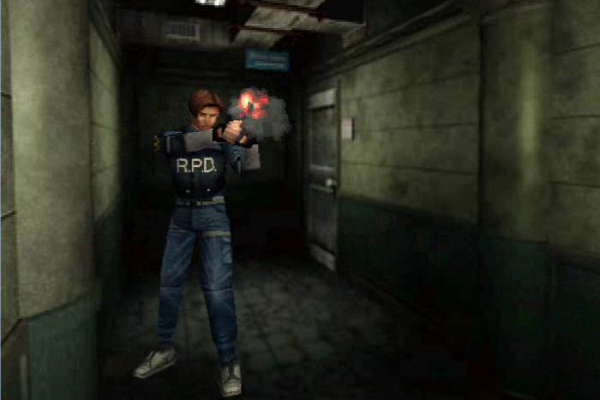
Released back in 1998, Resident Evil 2 was the long awaited second instalment in a franchise which had set the standard for survival horror pretty damn high just two years previous. Luckily, it was worth the wait.
Nearly everything about Resident Evil 2 was an improvement on the first: the story was grander, the stakes were higher, the character animations were smoother, and even though the environment itself was larger, it still felt just as oppressive and suffocating as the first.
Discovering that the city has been overrun by the undead, and that the vast majority of the city's law enforcement have been savagely murdered, Leon and Claire are left with the task of locating any remaining survivors and escaping Raccoon City. Sure, Resident Evil 2 wasn't considered anything groundbreaking at the time of release - it was essentially just expanding on a formula already perfected by the first game - but it brought enough new ideas to the table to more than justify its own existence.
The game was bigger, prettier and more intense - and even the acting felt much improved. Though Resident Evil 2 won't ever be considered as important as the first game, it was certainly the best sequel anyone could have asked for at the time.
9. Sweet Home
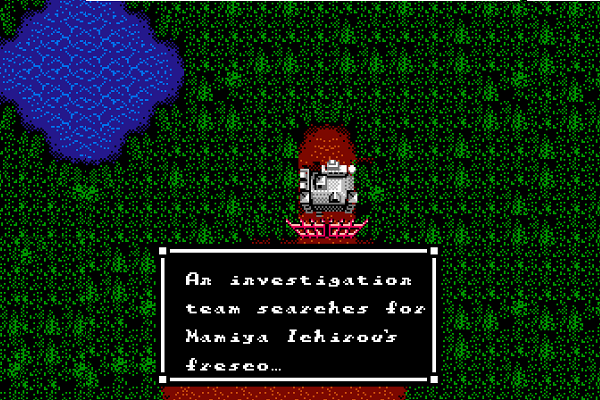
One of the principle influences behind the original Resident Evil, Sweet Home was a survival horror RPG developed and published by Capcom back in 1989 for the NES. The plot revolves around a group of documentary filmmakers trapped inside a haunted mansion by a ghost later - pretty standard stuff - who's later revealed to be the wife of Ichir Mamiya, a famous artist who stored many of his paintings inside the mansion before his mysterious disappearance thirty years prior.
Trapped alongside a whole host of murderous nasties, the team must fight their way through the mansion in order to confront Mamiya's wife's ghost. However, unlike other games, if any of the characters die, they cannot be revived, meaning that the difficulty greatly depends on your own ability to keep each individual member of your team from being disembowelled, cut in half, strangled, or just more generally bludgeoned to death by something heavy.
Tense and well designed, Sweet Home is probably one the greatest forerunners to the survival horror genre, not to mention a completely underrated gem of an NES game.
8. Alien Isolation

This spot on the list came to tossup between Alien Isolation and Dead Space, two games that were both celebrated upon their release revitalising the survival horror genre. Unfortunately for Dead Space, that didn't quite pan out. Though the first game in the series was a breath of fresh air, the sequels quickly abandoned their survival horror roots in favour of a more commercial, action-adventure style of game.
Alien Isolation, on the other hand, may have just helped convince publishers that survival horror isn't merely a niche, but rather an untapped, possibly lucrative genre that's been overwhelmingly ignored by an otherwise online-obsessed industry. The sales of Alien Isolation were encouraging to say the least, and though SEGA were initially disappointed with the games relative success, that didn't stop other publishers from capitalising on the genre's potential going forward.
7. Clock Tower
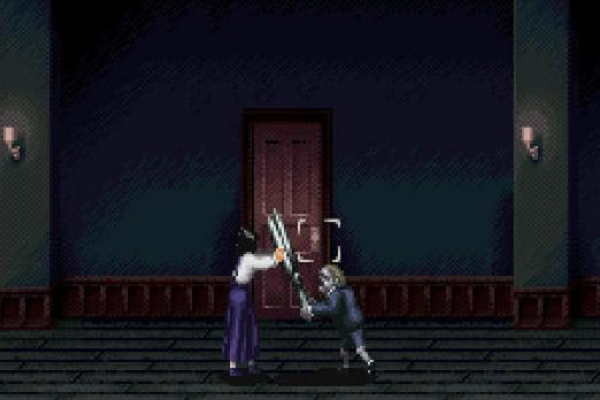
Developed and published by Human Entertainment back in 1995, Clock Tower is a point-and-click survival horror game in which players take on the role of Jennifer Simpson, an orphan adopted alongside several of her friends by the mysterious Barrows family. After arriving, she is quickly separated from her friends, and left to fend for herself against the disfigured, murderous psychopath known only as the Scissorman.
The game revolves around solving puzzles and exploring the Clock Tower itself in order to uncover its darkest mysteries. In each room, the player is able to collect items and interact with various objects in the environment, many of which will actually conceal the Scissorman himself, hiding behind drapes, inside closets, or behind shower curtains. At this point Jennifer will enter a panic phase, requiring her to sprint away from her pursuer, or lash out momentarily against him.
Depending on Jennifer's health, encountering Scissorman becomes more or less likely; blue health means that Jennifer is calm, and is therefore unlikely to be attacked, and red means that she is panicked and in mortal danger. Not only was Clock Tower a groundbreaking entry in the survival horror genre, it was also the first point-and-click game to feature an antagonist that would actively stalk the player, even during puzzles sequences. In that respect, Clock Tower was a forerunner for two gaming genres, making it a pretty historically significant little game.
6. Amnesia: The Dark Descent

Developed for PC by Frictional Games, players in Amnesia: The Dark Descent take on the role of Daniel, an amnesiac who, after awakening in an unfamiliar setting, discovers that he has deliberately erased his own memory for reasons unknown.
Trapped inside the strange and deeply unsettling halls of a mysterious castle, Daniel must descend into its depths in order to confront the Baron, Alexander.
Like other survival horrors, Amnesia involves solving puzzles and attempting to avoid being discovered by monsters. Unlike other survival horror games however, Amnesia champions managing Daniel's sanity, preventing him from staring directly at monsters, or allowing him to spend too much time in dark places.
Not only did Amnesia: The Dark Descent sell incredibly well for an indie title, it was also positively received by critics. The game has gone on to produce a lucrative sequel, as well as amass an enormous following of diehard fans in the process. Not bad for a game with an initial budget of just over $300,000.
5. Resident Evil (Gamecube)
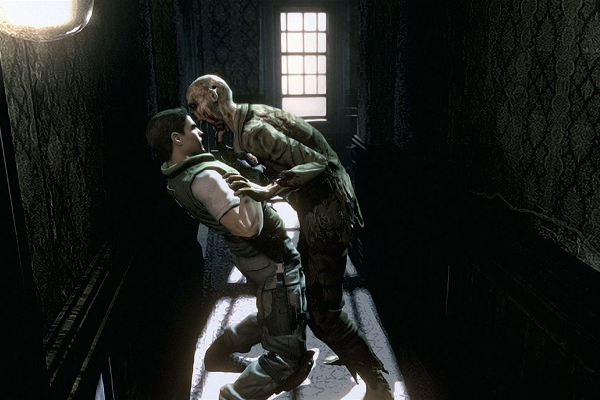
A remake of the original Resident Evil, not only were the graphics for this Gamecube exclusive (at the time) completely overhauled, the game also revised several key story elements as well, including the manner by which certain characters are killed.
The game also introduced several new features, including The Crimson Heads - a type of zombie that will sprint after the player and actively lunge towards them - as well as several new side stories, including the harrowing tale of mutated test subject, Lisa Trevor.
The story in general remains the same, with S.T.A.R.S. turning up to the Spencer Mansion and having their days ruined immediately. Things take another turn for the worst once they're inside; the whole place is infested with zombies (as well as other things), and depending upon which character you have chosen to play as, Chris/Jill is soon separated from the pack and left to fend for themselves.
Much like the original game, Resident Evil's remake was a huge critical success, so much so that fans are waiting with baited breath to see how the same treatment gets applied to the upcoming Resident Evil 2 rework.
4. Eternal Darkness: Sanity's Requiem

Spanning several centuries, Eternal Darkness: Sanity's Requiem is an ambitious, psychological horror which revolves around the character of Alexandra Roivas, a young woman investigating the death of her grandfather, Edward. The story itself is divided between twelve playable characters - each of whom is introduced through a series of flashbacks - and revolves around an ancient God attempting to manifest himself on Earth, feast on the souls of the living and plunge the planet into a state of eternal darkness. As you do.
The gameplay revolves around a sanity meter which is decreased by various factors, such as being seen by an enemy or witnessing traumatic events. If this drops too low, the player will begin to experience 'sanity effects', which subtlety alter the environment and cause random, bizarre things to occur. Some of the most popular examples include the television reverting to a blue screen, the volume being slowly lowered, and the walls in various rooms beginning to bleed.
It was an ingenious system that only enriched an already awesome game, one which has been almost universally praised since its release back in 2002. Though sales were poor, Eternal Darkness has slowly cultivated a following over the years, and is often heralded as one of the most standout games from the early 2000s.
3. Silent Hill 2
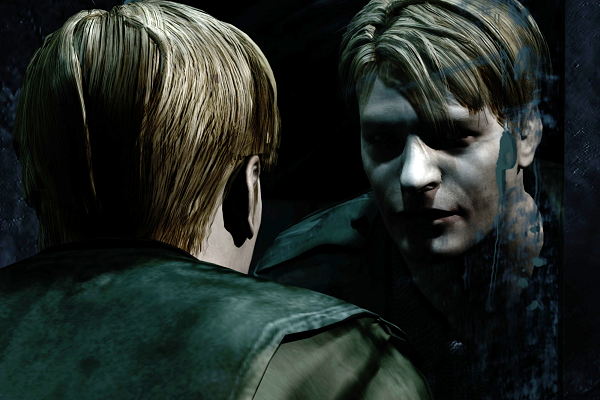
Perhaps even more so than the original, Silent Hill 2 has helped define survival horror in ways that few other games can claim. Developed by Team Silent and published by Konami, Silent Hill 2 puts players in the shoes of James Sunderland, a husband who travels to the town of Silent Hill in order to find his wife, Mary, who has written to James despite having been dead for the past three years.
Arriving in the town, James meets a host of strange, otherworldly townsfolk, encounters weird creatures - including the infamous Pyramid Head - and is generally forced to fend for his life in a world that doesn't make sense. The most interesting aspect of Silent Hill is the town itself, of course, which reflects the innermost fears, anxieties and frustrations of whomever happens to be trapped within; in this case, James.
The nurses and mannequins that feature throughout the game, for example, were designed to reflect James sexual frustrations, and Pyramid Head himself represents James guilt, as well as his subconscious desire to be punished for his wrongdoings. Though the game revolves around navigating the town, solving puzzles and overcoming obstructions, as well as managing dwindling resources and fighting enemies, it's the story that really sets Silent Hill 2 apart.
2. Alone In The Dark

Considered by many to be the forefather of the genre, Alone in the Dark revolves around the suicide of a Mr. Jeremy Hartwood, a former artist whose death is quickly dismissed by the authorities despite its mysterious circumstances.
Trapped inside the mansion where Hartwood was killed, players take on the role of either Edward Carnby or Emily Hartwood, a private investigator and the niece of the deceased, respectively. The goal of the game is to escape the mansion, and generally avoid being killed by the various Lovecraftian monsters that roam its corridors.
Though combat is an option, the game encourages you to avoid it; there are several enemies that cannot actually be beaten, and others that are rendered less difficult by the completion of various puzzles.
The title hasn't aged brilliantly (I mean, just take a look at the screenshot above), and some might argue that its been easily surpassed by the Resident Evil and Silent Hill games, the impact of Alone in the Dark shouldn't be overlooked.
1. Resident Evil
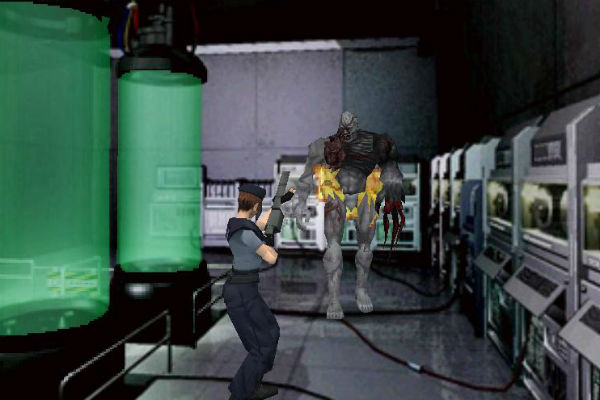
The very first game in a series that many people would consider the quintessential survival horror franchise, Resident Evil is perhaps one of the most beloved gaming properties on the planet.
Though it's arguably since forgotten its humble, Jill Sandwich-filled roots, you just can't fault the very first entry in the series; it will forever stand as a testament to the genre for as long as said genre continues to exist. Even if you don't like it, you can't deny the impact it had on the whole industry.
It has its forerunners; there were survival horror games that existed long before it (many of which have been featured on this list) but nothing can quite claim to be as influential, or as universally recognisable.
Though the series has moved from janky polygons to stunningly-rendered 3D environments, and from survival horror to whatever the hell Resident Evil 6 was, nothing will ever tarnish the memory of first entering The Spencer Mansion and encountering that very first agent of the undead.
What are the most important survival horror games that defined the genre? Let us know in the comments!