10 Incredible Open-Worlds WASTED On Disappointing Video Games
All style and no substance.
There's been no shortage of sandbox games since the dawn of the generation. The power of the new consoles meant that the limitations developers used to have to wrangle with - in particular the trade off between having a huge open world over increased graphical quality - became all but a distant memory, and everyone started getting in on the action.
Franchises which were usually home to linear, story-driven titles suddenly became these sandbox behemoths, while the established giants of the genre like Rockstar continued to use everything at their disposal to deliver the deepest, and largest, maps on the market. Of course, with so many open-world games being created, it was inevitable that a good chunk would fall a little short.
What's often the most disappointing part of getting a bad open-world game though, is when the sandbox itself is beautifully detailed, but the gameplay doesn't do it justice. You can tell that the artists put countless hours of work into either painstakingly recreating iconic cities or coming up with their own imaginative locations, only to have them completely wasted on games that nobody wanted to play.
10. Paris - Assassin's Creed: Unity
Although they've righted the ship now, it shouldn't be underestimated just how much of a disaster Assassin's Creed: Unity was for Ubisoft's premier franchise. The game buckled under its own ambition to have city streets littered with NPCs, with the strain its huge, dense world put on the game engine resulting in a title full of bugs and faces that melted straight off characters' skulls.
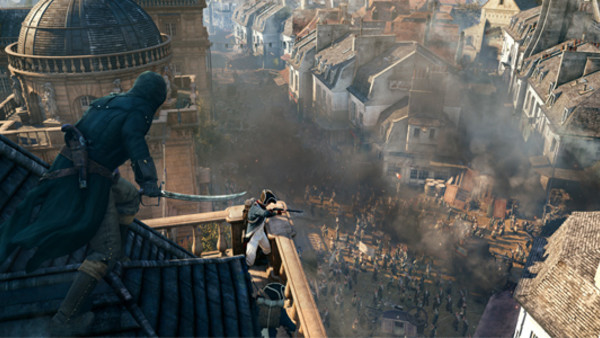
But one thing which did remain intact during this broken launch was the gorgeous recreation of French Revolution-era Paris the devs had crafted for the game. The attention to detail - just like in most Assassin's Creed games - was astonishing, with both the massive exterior and interiors holding up under scrutiny.
The architecture of the time is of course the biggest highlight, and it was still awesome to climb to the highest peak and sit in wonder at what the artists had created. Unity's vision of highly-populated cities was noble, and it's a shame the final product didn't have the power to support it.
9. Medici - Just Cause 3

While a lot of developers have moved away from the "bigger is better" mentality in recent years, there are still a bunch desperate to hold the title of having the largest sandbox any game has ever seen.
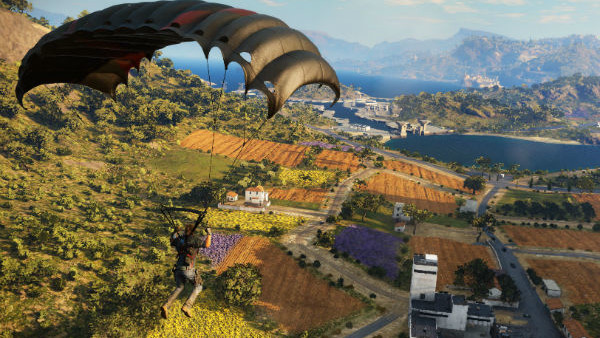
Just Cause 3 was one of these games, and when it released back in 2015, was essentially built around the idea of having loads of space for players to explore in the wildest and wackiest ways possible, with its map of Medici coming in at a whopping 400 square miles.
It's not the most detailed place in the world, and some of the environments - especially the buildings - feel a little copied and pasted, but it is jaw-dropping to look at. The vibrancy of the islands, with the lush greenery complimenting the striking blue ocean, made every action in the game picturesque. In a way, it kinda made you feel a little bad that you were blowing the whole thing to smithereens.
Just Cause 3 can be a lot of fun, but it undoubtedly suffered at launch thanks to an engine that struggled to keep up with the scale of the action. To say the framerate was unstable would be polite, and even after plenty of patches, there was the feeling that the sequel wasn't as polished as it could have been.
8. Chicago - Watch Dogs
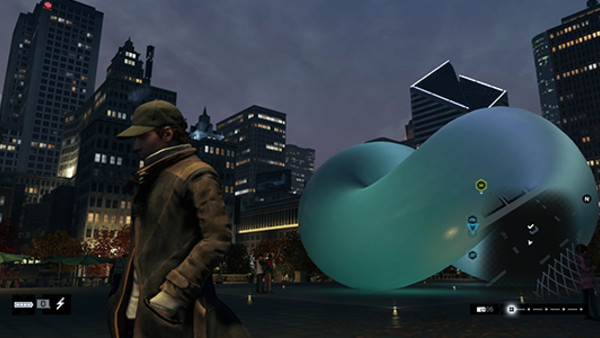
It was difficult to properly analyse Watch Dogs' visuals at launch, because no matter how good they may have been at the time, they were inevitably compared to those impossibly beautiful pre-release trailers. Consequently, its open world version of Chicago was criticised for not being as picturesque and dynamic as it was supposed to be, even though it was a damn fine playground for fans to hack their way through.
Chicago is an interesting city in media, as while it doubles for a lot of places in movies (for instance, Gotham City in Batman Begins), it rarely ever shows up as itself. The team at Ubisoft more than did it justice, though, creating a modern metropolis faithful to the actual city. It wasn't just urban areas and skyscrapers either; the map was balanced out with countryside to the north and run-down parts of town to the south.
It's admittedly not as detailed and exciting to explore as the second game's version of San Francisco, but it still deserved more love.
7. New Bordeaux - Mafia III

Mafia III could have been something special. All the cards were lined up: you had a great protagonist in Lincoln Clay, an emotionally affecting plot, a brilliant socio-political climate to mine and, of course, a lifelike world to explore in New Bordeaux. Unfortunately, while all of those features can be appreciated in isolation, the repetitive mission design the game is lumped with completely stops you appreciating the sequel as a full package.
Essentially a stand in for New Orleans, New Bordeaux provided a great dichotomy between the city streets and the nearby swampland (which were, of course, full of alligators that could handily dispose of bodies for you). However, it was the vintage 1970s setting that made it something special, with period-authentic architecture and iconography littering the map to give it such a distinct, unique look and atmosphere.
It's not part of the open world, but the pitch-perfect soundtrack didn't hurt the developers' vision of this excellent period setting either.
6. Post-Apocalyptic Earth - Rage
The gaming world is not in need of any more post-apocalyptic open world games. By now the setting is about as overdone as zombies are as enemies (which does not bode well for the upcoming Days Gone, which boasts both of these are core features), but back in 2011, it was a rarity.
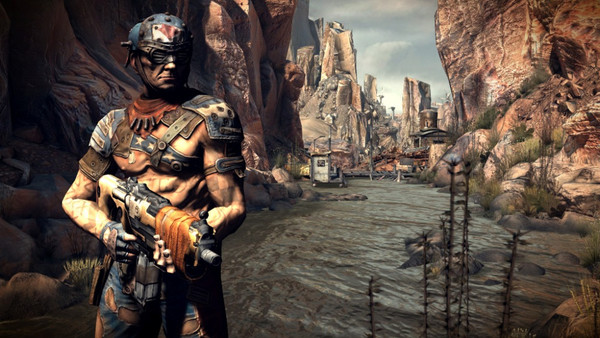
Sure, you had Fallout 3 opting for a semi-realistic version of a bombed-out Washington DC, but there was little else in the AAA space. In came Id Software's Rage, a first-person shooter set in a post-apocalyptic vision of Earth that had been destroyed after colliding with an asteroid. The design itself was more alien than realistic, focused on scorched deserts and shantytown outposts. To say it was very Mad Max influenced would be an understatement.
But Rage did a great job of making this sandbox feel like a place where humanity was actually trying to rebuild. Sure, it looked a little bit like Mad Max by way of a non-cell-shaded Borderlands, but that didn't matter because the developers made you believe this place could actually exist. It's just a shame the shooting itself was completely lifeless.
5. The Andromeda Galaxy - Mass Effect: Andromeda
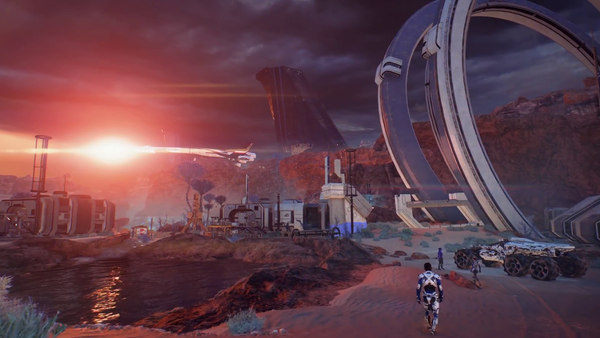
With Mass Effect: Andromeda, Bioware had free reign to go absolutely nuts in coming up with whatever crazy designs the minds of their artists had to offer. The jump to an entirely new galaxy should have resulted in worlds, aliens and artefacts that might not have even made sense in the Milky Way, but sadly, for the most part, the Andromeda system was full of the same sci-fi iconography fans have been subjected to for years.
Seriously, floating rocks? AGAIN?!
Still, the distinct planets you could land on were fun to explore, especially with the weird environmental problems each one came with. Crashing down on these uncharted planets and figuring out a way to make them hospitable really made you feel like a proper explorer, out on your own and discovering things no human had ever laid eyes on before.
That loop could have been the focus of a whole game, but as it stands it's obfuscated by a pretty terrible plot and side missions that make you feel less like an adventurer, and more like someone's personal assistant.
4. The Entire USA - The Crew

America has, understandably so, always been present in video games. Usually devs will pick one iconic city and attempt to bring it to life (usually New York), but The Crew decided to go one step further: rather than settle for a single city or even a single state, the racer would cram the entirety of the USA into a single game's map.
Ubisoft's ambition was certainly gigantic, but the most surprising thing was that they accomplished what they set out to create. While of course it wasn't a 1-1 recreation of the country, driving from city to city and state to state was a joy. Taking a cool drive from LA to New York, for instance, felt like an actual road trip, as even bombing down streets at over 100mph would result in it taking well over 30 minutes to get from one city to the next.
Of course, due to the sheer scale, the detail was sometimes lacking, but it was still impressive to travel around and see the sights. Sadly, Ubisoft gave players little incentive to do so, as the actual races themselves weren't all that enjoyable, and even with other players being visible, the experience was kinda lonely.
3. 20th Century London - Vampyr
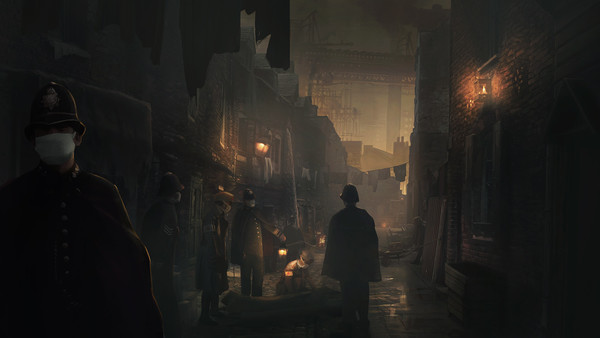
Late 1800s/early 1900s London has been represented in video game form a couple of times this generation - between Assassin's Creed: Syndicate and Vampyr - and frustratingly both times it hasn't been done justice.
It's perhaps the latter title which feels like the biggest missed opportunity though. The supernatural RPG from Dontnod certainly showed promise, but it was far too unrefined to break out of its niche little audience of diehard fans, even in spite of its haunting early-20th Century setting.
With the dense streets being torn apart by the Spanish Flu, Vampyr had the perfect backdrop to tell its horror tale, but while London itself was awesome to explore - and awarded the game with such a rich atmosphere - that's pretty much all it had going for it.
It's still worth picking up for the period setting alone, but you won't escape the feeling that the devs could have done so much more with it.
2. Appalachia - Fallout 76

If there's one word to describe Fallout 76 that isn't "broken", it's "uninspired". From the design of the missions to the loot to the mere fact that it's a games-as-service title, the title is devoid of any real creativity. However, that same apathy towards imagination thankfully didn't extend to the setting, Appalachia (and the monsters as well, though they're less impressive considering the A.I. ruins anything they may have to offer).
Unlike most sandboxes in this franchise, Appalachia is unique in how it actually wasn't destroyed by the nuclear apocalypse. Instead of being bombed, it was simply destroyed by radiation, meaning that most of the buildings are left intact, only completely empty and devoid of human life. Not only does this award the game with a particularly eerie quality, but it makes the player feel like they're rediscovering a lost relic, the remains of a time gone by that juxtaposes with just how dead the world is.
It's visually impressive too, taking the colour introduced to the world in Fallout 4 and running with it, leading to a surprisingly beautiful depiction of post-apocalyptic living. There's so much variation to the map as well - it's just a shame that it's all undone by bugs and glitches that take almost everything away from what intrigue this setting could have held.
1. Manhattan - The Division

As mentioned previously, there have been plenty of video games that have used New York City as their setting. From every single Spider-Man title ever made, to Grand Theft Auto to Crysis 3, The Big Apple has been imagined and reimagined countless times in video game form, but never as well as in The Division.
The dystopian shooter might have had uninspired gameplay, but its desolate version of NYC, abandoned one Black Friday and still decked out in Christmas lights and decorations, is evocatively haunting. There's something so creepy about the city being so desolate - not destroyed or decaying like in other post-apocalyptic media - simply empty.
It helped that the developers managed a 1:1 recreation of Manhattan itself, which really captured the scale of the location. It's not that the map simply felt large, it was more that the player was made to feel small, as they were surrounded by these windings streets and impossibly tall skyscrapers.
It was easily the best part of that original game, and it's a shame it's been chucked out entirely for the sequel, especially because you could have brought in other boroughs of NYC to make the game world even bigger.