10 Insane Marketing Stunts That Were Used To Sell Video Games
"Let's give away free petrol - what could go wrong?"

While it's always ideal to have a great game to work with, the quality of the experience doesn't matter one bit if you can't sell it to people. If marketed poorly, a great game can perform below expectations, and the opposite is also true: a bad game can sell like gangbusters when paired with a clever and unique marketing campaign.
Persuading someone to drop £50 or £60 on a game isn't easy, but the more buzz the publisher creates, the bigger its potential audience will be. This is why you'll often see companies pulling all kinds of crazy promotional stunts in an effort to get themselves noticed, because ultimately, any publicity is better than no publicity at all.
From publishers painting pigeons with game logos, to that time when Ubisoft caused a bomb scare by sending a ticking goodie box to an Australian media outlet, the number of bonkers stunts that have been used to advertise video games is shockingly high.
Not all of them resulted in a successful game, but regardless, you have to applaud the creativity and brazenness of the teams involved.
10. Bottled Messages Washed Up On Beaches (BioShock 2)

Thanks to the superb original game, BioShock 2 had an enormous amount of pressure on its shoulders, and people were hungry for just about any new information they could get their hands on. Knowing this, the marketing team decided that they would wash several glass bottles up on beaches around the world, each containing a mysterious poster that teased the game.
The week before this happened, media outlets like Kotaku received a message telling them to head to certain beach spots on 8 August 2009. The message listed nine beaches around the world - with longitude and latitude coordinates and exact times attached to each - including Brighton Beach in England and Rimini Beach in Italy. At this stage, nobody had any idea what to expect at these locations, which generated much excitement and curiosity within the gaming community.
On the day itself, the bottles washed up and the social media posts began to pour in. Dozens of strangers congregated on specific beaches around the world, hoping to find something cool. In Brighton, roughly 40 bottles landed on the beach, with cryptic posters contained within. These posters didn't reveal anything about the plot of the game - which disappointed some - but they did contribute to the air of mystery surrounding BioShock 2, which further drummed up the hype.
9. Shops Were Given Mario Makeovers (Mario Kart 8 Deluxe)

A franchise as famous as Mario Kart hardly needs help selling millions of copies, but with Mario Kart 8 Deluxe, Nintendo went the extra mile to ensure their game reached the widest audience possible.
This particular iteration of the colourful kart racer was launching on the Nintendo Switch, the company's successor to the disappointing Wii U. The Switch simply had to succeed in order to avoid another Wii U-style embarrassment, and as such, Mario Kart 8 Deluxe - a game with the power to shift consoles - had to perform well commercially, which led to Nintendo developing an expansive (and expensive) year-long marketing campaign.
Included in this push was the decision to physically alter the very stores that would be selling copies of the game. In the weeks leading up to the title's launch, Target stores across the U.S. were decked out to fit into the Mario Kart world: trolleys were decorated like karts, stickers were plastered on windows, and giant Mario/Luigi spheres were placed outside entrances.
But best of all were the automatic entrance doors, which played the "3, 2, 1, GO" race countdown noise whenever a customer walked through them.
Normally, shops might have a couple of standees dotted around the place, but a full-on makeover is something you hardly ever see, which made this all the more impressive.
8. Copies Of The Game Were Launched Into Space (Mass Effect 3)

Similar to BioShock 2's beach bottle event, the Mass Effect 3 marketing team also implemented a stunt that actively engaged members of the community.
Using select cities around the world (New York, San Francisco, Las Vegas, Paris, London and Berlin) as a starting point, EA decided to strap copies of the game to weather balloons, and send them into space. Each copy of the game had a camera and GPS system attached so players could track its location, and best of all, if the player managed to find the balloon when it landed back on Earth, they could keep the game and play it early.
This resulted in YouTube videos of people tracking balloons in their country, collaborative forum posts with people helping each other out, and the story being plastered all over mainstream media outlets for weeks. The stunt was a rousing success, and despite the game disappointing hardcore fans, it sold extremely well.
7. Pigeons Were Spray-Painted With The Game's Logo (Virtua Tennis 2)

Quite how someone came up with this idea is beyond us, but rest assured, this is a real thing that really happened in real life. Really.
As the name implies, Virtua Tennis 2 is about tennis, which gave the marketing folks over at Acclaim Entertainment a pretty great idea: why not take their game to Wimbledon, the most famous tennis tournament in the world, watched by millions around the globe each year?
But rather than just putting up billboards, handing out pamphlets or setting up a demo booth, the company decided to spray-paint 20 pigeons with the game's logo, training them to fly in and out of the tennis courts at the event. Acclaim made it clear that the birds were not harmed in any way, and that they would not be released during actual matches - just during warm-ups.
What's more, the pigeons were reportedly trained to fly up to people in the crowd and flap the game's logo in front of them. Because of this, they were dubbed "flying billboards" by the press, which seems like a missed opportunity to us. Why not "flying bill-birds"? Bill-birds. Right? Guys?
6. Your Mom Hates Dead Space 2 (Dead Space 2)

It's rare that a company will advertise their game by labelling it "an atrocity", but that's exactly what EA did with 2011's Dead Space 2.
Shortly before the game's late-January launch, the company unveiled their "Your Mom Hates Dead Space 2" campaign, including a video that consisted of several different mothers - who were not paid actors, but actual, genuine mothers - reacting to some of the game's goriest, most violent sequences. Needless to say, these women were not impressed with what they saw, with one of them questioning "why would they even make something like this?"
A brilliant play by EA, this stunt leveraged the game's "disgust factor" and gave it a positive spin: this game is so gross, so horrific and so bloody, that you have to experience it for yourself.
They did cheat a little by only having middle-aged women participate in the reaction (of course they were going to react this way), but this was still a funny, novel way to market a video game. Plus, the main video has almost a million hits on YouTube, so it clearly had a wide reach.
5. Fake Body Parts Were Hidden Across London (Resident Evil 5)

Resident Evil is famous for its gory horror, and Capcom chose to lean into that when promoting Resident Evil 5.
In March 2009, the company announced a contest that would allow one lucky fan to win a trip to Africa, the main setting in the game. But rather than pulling names out of a hat, the winner was required to find several fake body parts hidden throughout London, bring them to Westminster Bridge, hold them above their head, and yell "Kijuju!" as loudly as possible. Seriously.
In a post on their website, Capcom explained that they had hidden numerous fake body parts at locations near Trafalgar Square. Each body part came with a specific point value: 2 points for arms, 2 points for legs, 3 points for torsos, and 5 points for a head. The player who got the most points and brought their parts to Westminster Bridge by 11am would be crowned the winner.
Hundreds of people took part in this event, making it a resounding success. On the downside, a couple of body parts mysteriously vanished from their original locations and were not accounted for. This forced Capcom to issue a statement telling people not to be alarmed if they stumbled upon a fake mutilated corpse, and that one of the ingredients used to make the bodies - chicken liver - was uncooked. Tasty.
4. Parents Were Offered Money To Call Their Kids Turok (Turok: Evolution)
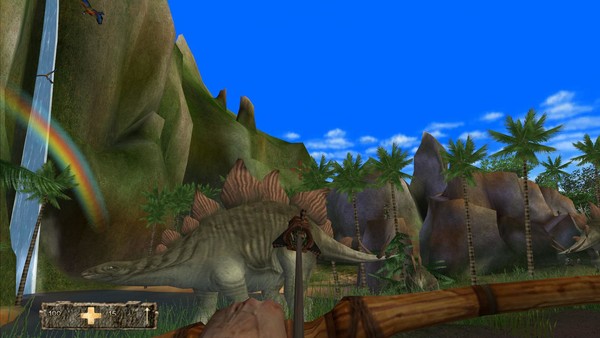
Another Acclaim Entertainment entry, the company often tested how far they could push the ludicrousness of their marketing tactics, and the way they promoted Turok: Evolution might be their wackiest stunt of the lot.
Choosing a baby name can prove difficult for many parents-to-be, so Acclaim decided they would try and help. But instead of suggesting a "normal" name for parents to brand their kids with, the publisher attempted to get people to call their newborns Turok, using a $10,000 savings bond as an incentive to do so.
In order to win that money, parents who were expecting a child on or around 1 September 2002 (the game's launch window) had to be willing to legally change their kid's name to Turok for one full year. Whichever child was born the earliest on 1 September would win. Simple! There were no catches, no tricks and no ploys: just call your baby Turok for a year and win ten grand. Not too shabby.
Inevitably, Acclaim came under fire for this stunt, despite it being the parents' choice to take part. And really, doesn't "Baby Turok" have a nice ring to it?
3. Free Petrol For Everyone! (Mercenaries 2)

Imagine the chaos that would ensue if petrol was made free for a limited time. Well, imagine no more, because that was the exact stunt EA pulled to promote open-world actioner Mercenaries 2: World In Flames.
The plot of the game finds players trying to murder the President of Venezuela, who has seized control of the nation's oil supply. To tie in with that story, EA concocted this oil-based marketing stunt, taking over a petrol station in north London and advertising a first come, first served giveaway amounting to around £20,000 worth of fuel.
The giveaway started at 6:30am but was shut down five hours later, with the free petrol causing dozens and dozens of cars to get caught in traffic jams in local streets. It was full-on gridlock, so the police intervened in an effort to clear up the roads and get things flowing again.
Still, plenty of happy commuters managed to nab a full tank for free, and the stunt caught the attention of the local media, before eventually going national. So in terms of getting more coverage for the game, it absolutely worked, despite the mayhem it caused.
2. Buy The Game On Day One, Win An Island (Just Cause 3)

Just Cause 3 takes place on a beautiful Mediterranean island called Medici, an open-world environment that players can explore to their heart's content. Not satisfied with just delivering an in-game island adventure though, publisher Square Enix sought to make that virtual locale a reality for one lucky player.
The company ran a competition in the run up to the game's release that would grant the winning player an island - literally - valued at up to $50,000. 90 days after the game's launch, whichever player accumulated the most Chaos Points (earned by completing missions, sabotaging vehicles and generally blowing stuff up) would win the top prize. The winner could also choose to take a $50,000 cash prize instead.
The only way to get involved with this campaign was to buy the day-one edition of the game, a sneaky strategy on Square's part that likely resulted in a lot more pre-orders and early sales of the game. Buy Just Cause 3, play it a lot, and win $50,000: who wouldn't want to get involved?
1. No Marketing Whatsoever (Apex Legends)
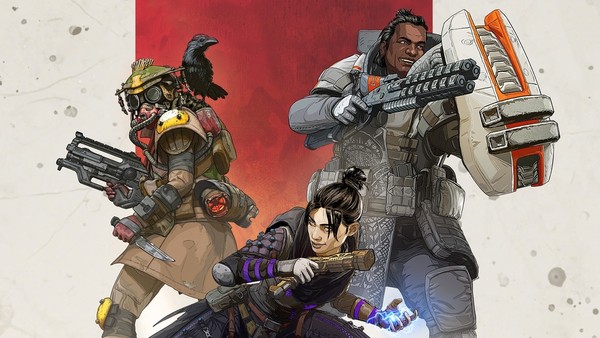
Apex Legends' marketing stunt isn't insane in a "let's spray-paint some pigeons!" or "let's launch some space-balloons!" kind of way, and this entry might seem a little tame when compared to others on this list. But from a financial perspective, this might be the single riskiest marketing strategy in gaming history.
Major AAA games are usually announced anywhere from six months to five years before they release: we'll see gameplay demos, trailers, images, developer interviews, betas, and general info dumps, all of which raise awareness about the game, tell people what it's about, and persuade them to buy it on launch. Granted, the hype train can be a bad thing since it can sometimes lead to unrealistic expectations, but it's always best to let people know your title is coming, right?
Well, Apex Legends just took a big fat dump on that idea. Respawn's free-to-play battle-royale released on all three major platforms on 4 February 2019, with no build-up and no pre-release coverage. It launched on the same day it was announced. This move could have backfired spectacularly, but instead, the game racked up 25 million players in just one week - for comparison, it took Fortnite six weeks to hit 20 million.
When asked about this release strategy, Drew McCoy - the game's lead producer - told Eurogamer that it was all about perception:
"We're doing a free to play game, with essentially loot boxes, after we were bought by EA, and it's not Titanfall 3. It's the perfect recipe for a marketing plan to go awry, so why have that - let's just ship the game and let players play."
Basically, after the Star Wars Battlefront 2 loot box controversy, a free-to-play loot-box-heavy battle-royale from EA would have turned a lot of people off instantly, so Respawn decided to let the game speak for itself on launch. A risky move? Yes. A stupid move? It had the potential to be. But it worked, and that's what matters.
-
Know of any other bonkers video game marketing methods? Share your picks down in the comments section!