10 Landmark Video Games Everybody Else Rips Off

If you can't beat them, copy them blatantly and cash in on their immense popularity...
We're told that imitation is the sincerest form of flattery. Which tells us that flattery is an important part of video game design these days - from subtle hints of influence to blatant plagiarism, game developers love to latch on to a winning formula and run with it as if it was their own. We can't really blame them though, can we? As gamers, the people with money to burn who shell out our cash for the games they put together, we're hard to please. So it makes sense that the developers would be cautious to create a game without a solid, reliable hook to build on. Sure, occasionally we fall in love with some utterly unique, artsy indie gem or daring high-profile surprise which takes risks and can be labelled as truly original, but go have a look at the upcoming Holiday Season release schedule: it's riddled with sequels and safe blockbusters, all building on existing successful ideas. The developers and publishing giants of the industry know their trade by now - pick a genre, pick a popular game that has done well at retail in the past, and "flatter" the hell out of it. As a result we are hammered with contrived third-person cover-based alien-stomper shooters, near-future open-wasteland adventures and gravel-voiced sneaky stealth cliches. It all started somewhere. All of these now overused game designs had their genesis. But often it's not the actual first instance of their existence that proved the most important - Super Mario Bros. wasn't the first platformer, but you can't deny that it became the genre blueprint to be ripped off and shamelessly copied. Sometimes it's a stand-out element of a specific game which changed the future of its genre, sometimes it's a whole new genre altogether. Whatever the case, the ten games we've rounded up for this list have been "borrowed" from more often and more blatantly than any other. Without their legacy to replicate, gaming just wouldn't be the same.

10. Max Payne - Bullet Time

Remedy's stylish third-person shooter clung tightly to a few major cliches of its own when it strutted into our lives back in 2001. The gunplay-heavy third-person action, the brooding neo-noir style, the grizzled protagonist, these were narrative and game design elements we had seen many times before. But Max Payne had an ace in the hole, a neat trick which instantly shot this moody shooter from zero to hero. We're talking, of course, about bullet time. How many times in your gaming life have you run into a room full of terrorists, shot them one by one, and then scurried on? Like, a bazillion times, right? But when Max Payne arrived, it was different - until you've charged headfirst through a double swing-door with an Uzi in each hand, spun around, jumped backwards to slide along the office counter on your back, still firing endlessly from both weapons, only to come to a rest lying on the carpet, empty magazines clicking in yours hands, dead bodies everywhere, papers and bits of broken furniture scattered in the air... until then, you haven't lived. This time-warp mechanic had been toyed with before, but Remedy absolutely nailed it with Max Payne and its sequels. Now it's everywhere - the slow-motion run'n'gun angle has been slotted into so many shooters (both first- and third-person) that we barely even notice it anymore. Call Of Juarez, FEAR, Red Dead Redemption, TimeShift... good, bad and ugly games have tried to cash in on the magic of Remedy's most successful franchise.

9. Call Of Duty 4: Modern Warfare - Multiplayer Perks
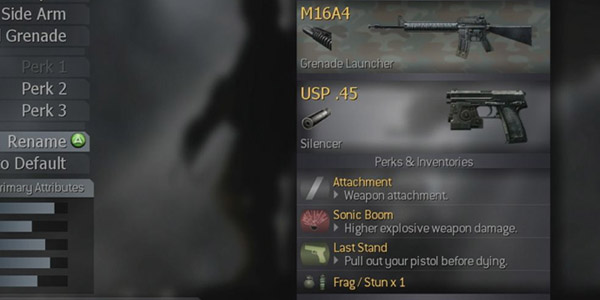
By now we're all getting a little tired of Call Of Duty, aren't we? Ok, not all of us, but there have been some serious allegations of stagnation within the franchise over recent years - it could be said that the game most guilty of copying Call Of Duty is Call Of Duty. Even with the multi-developer rotation system that Activision has in place for the franchise, they are struggling to expand on the core ideas which made this series as hugely popular as it is. The reason they are finding it hard to improve year after year? Because the original recipe of Modern Warfare-era COD is frighteningly close to twitchy PFS perfection. The original Modern Warfare kickstarted our love for a present day setting over the WW2 standards we were used to. It was loaded with FPS cliches, some which have become tightly associated with the franchise - the now-standard two-trigger aim & fire mechanic, for example. But it brought innovations too, one of which has gone on to become a multiplayer shooter staple - the ingenious perks system. These unlockable boosters could shift the tide of an online battle, or put the leading team in an even more dominant position, through a well balanced mix of power-ups. Not everyone loved the Perks idea at first, but today we rarely see a competitive online action game that doesn't have its own version of the concept. From Halo 4 and Crysis 3 to Assassin's Creed, developers have caught onto this smart game modifier which made COD: Modern Warfare stand out from the crowd.

8. Diablo - Loot Drop Obsession

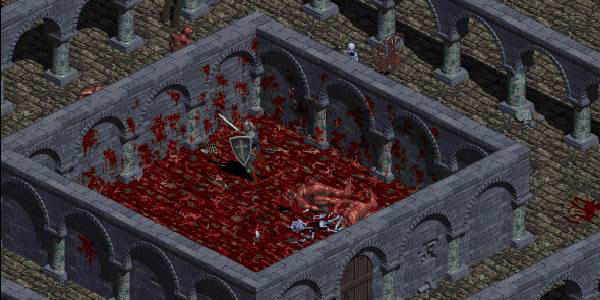
Treasure hunting has been part of gaming since the early days of quests and role-playing adventures, but if you think about the moment it went from being a sideline game element to a central driving force, it can only be Diablo that comes to mind. Blizzard's darkly atmospheric hack'n'slash action role-player turned the search for loot into an addictive and compelling gameplay device. There was a sense of limitless bounty to be discovered, even though behind the scenes we knew there were parameters determining what magical goodies could possibly pop out of each chest or be dropped by the next fallen enemy. Not knowing what you would find just added to the mysterious allure of battling through each procedurally generated level of this dungeon crawler. It was captivating, and largely responsible for the success of the franchise debut - endlessly searching for that beautiful Doombringer broadsword or Demonspike armor was almost as absorbing as working your way through the actual quests. Things only grew from there, with Diablo 2 and the monstrous Diablo 3 taking this preoccupation with loot drops to new heights. Chests, barrels and recently cut down corpses now all overflow with treasure across the entirety of the hack'n'slash genre, from Dungeon Siege to Torchlight to The Mighty Quest For Epic Loot. And beyond - Gearbox built this same passion for loot into their lovely Borderlands franchise too. Again, Blizzard didn't invent the concept of obsessive loot hunting, but they definitely hammered it home unlike any other game and made it an essential part of adventure gaming.

7. Street Fighter - Quarter Circle Forward, Punch... Hadoken!
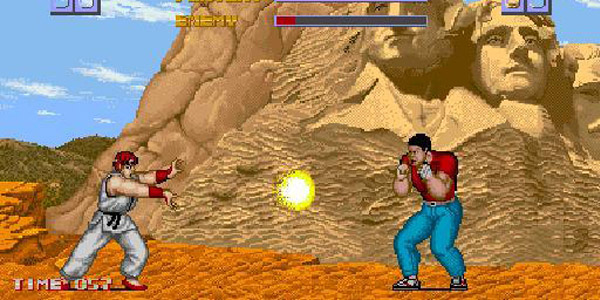
We take the good old Hadoken fireball attack for granted these days - admit it, when you fire up a new beat'em-up and select an unknown character, one of the first things you'll try is the classic "quarter circle forward + punch" joystick sweep. And the chances are good that your fighter will do something cool. It might not be a blue ball of energy surging across the scene, perhaps a flying kick or a blast of electricity, but the result is much the same. We're singling out Ryu's Hadoken special attack here, but the original Street Fighter protagonist had two more tricks up his gi: the upwards striking Shoryuken and the Tastumaki whirlwind kick. We had seen power moves in fighting games before, but these were different in that they were more spectacular than the standard arsenal and, more importantly, were hidden to some extent. Without a listing on an input card for the Street Fighter arcade cabinet, it was up to gamers to figure it out. Street Fighter 2's implementation of this idea was bigger, better and more elegant, adding flamboyant special moves the sizable roster of iconic characters, and so began an endless list of beat'em-ups which have used wildly expanded special moves built upon the same key principles. We could list the fighting games which have employed Capcom's most influential technique over the years, but we would be here all day.

6. Shenmue - Quick Time Events

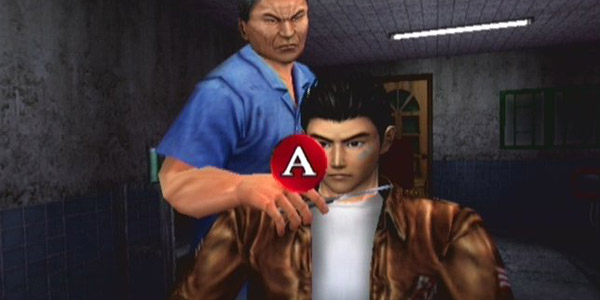
Sega legend Yu Suzuki's labor of love, Shenmue, is undoubtedly a landmark title. Generally considered ahead of its time, this Sega Dreamcast classic was a huge graphical jump forward, a vast step for large-scale narrative and played a big role in popularizing the open-world adventure genre which Grand Theft Auto 3 ran off with. Shenmue earns a place on this list for a less proud element - its heavy reliance on Quick Time Events. "Man, that was the most awesome bit of QTE gameplay I've ever experienced!", said no one, ever. But to give credit where it is due, Suzuki's implementation of these dastardly QTEs was a lot less intrusive than the immersion-destroying "Press X to save the girl" rubbish we've been subjected to since then. In Shenmue, these reflex-testing button-sniping sections were worked into the free play almost seamlessly, so you rarely had that feeling that you were playing a barely interactive movie. Whether it was in the middle of a street brawl or while leaping and bounding through a chase scene, these scripted moments worked far better than you would expect. This was a new direction for QTE usage, and one which has been copied many times but rarely improved on.

5. FarmVille - The Rise Of Freemium Management Hell

Just because a game is considered a landmark title doesn't mean it has to be any good. Case in point: the tiresome Facebook-based management game FarmVille. Developed by Zynga, a team of prolific game plagiarizers, FarmVille was a bitter piece of free-2-play gaming which went on to become one of the most prominent titles in the freemium management sector. It was a parasitic game which relied on generating soul-detroying tedium to prompt micro-transactions, and people just ate it up - at its peak, there were more people playing FarmVille than there are people alive on Earth (citation required). Hardcore gamers will argue that FarmVille is out of place on this list on the basis that it barely qualifies as a game at all, but lets not be elitists here - Zynga's casual farm management sim bewitched more gamers than most triple-A blockbusters could ever dream of. It was a formula which has since become one of the most copied and cloned game design concepts ever devised, and also the most denounced. Spend a bit of time researching the design elements underlying a free-2-play game like FarmVille and you'll probably start to feel a little uncomfortable - coercive monetization, paywalls and progress gates, it's tantamount to customer abuse. How many bored housewives have sat patiently waiting for their in-game energy to recharge so that they can plant another carrot or stroke a goat? And how many have grown impatient and whipped out that credit card to end the tedium? Zynga didn't invent freemium gaming, but FarmVille was undeniably the poster child for this horrid concept, a concept which was soon cloned again and again by Zynga themselves. Today the free-2-play landscape is polluted with the same sort of garbage, and we have the initially stratospheric rise of Zynga and FarmVille to blame for that.

4. Grand Theft Auto 3 - The World Is Your Playground

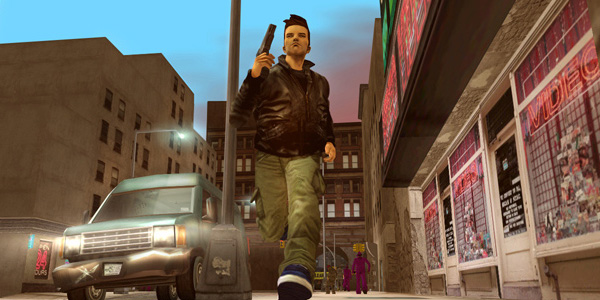
Grand Theft Auto 3 changed the face of video gaming in a number or profound ways, and its impact on the industry landscape can not be ignored. Unlike most of the other games on this list, its magic didn't lie in a singular game design gimmick or a clever bit of programming wizardry, but in the way Rockstar placed us in this intricately realized sandbox world and gave us the keys. Never before had we been faced with so much freedom - this was the epitome of "I wonder if I can do that?... Oh, snap! I can!" gameplay. Cinematic and vividly detailed, whether you were on-track with the tense, varied storyline missions or just wreaking absolute random havoc, a "quick" GTA3 session would inevitably turn into hours upon hours of Liberty City rampage. It says a lot for the outstanding game design at play here to see how often the core philosophies of Grand Theft Auto 3 have been aped since its 2001 release. From straight-forward me-too clones like Sleeping Dogs and the True Crime franchise, to more outlandish takes on the concept like Saints Row, the vast success of GTA 3 was quickly jumped on by competing developers wanting a piece of the action. Fast forward to today, and the Grand Theft Auto franchise has grown to be among the biggest names in the industry, and while the clones are still out there trying to catch some of the limelight, Rockstar's flagship franchise is proving hard to beat.

3. Gears Of War - Take Cover!

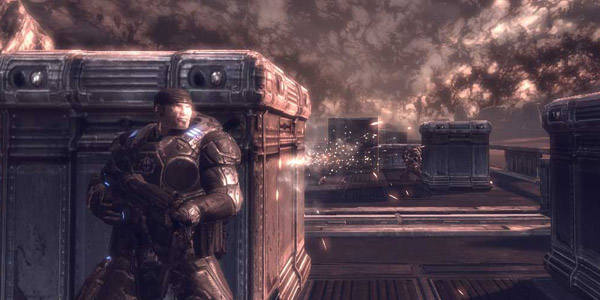
Hiding behind crates and barrels (not red ones though - those tend to be a bit explodey) has been an integral part of action gaming for decades. Whether it has been a free cover system or a built-in gameplay element like the snap-to-cover mechanic, finding a quiet place to catch your breath in the heat of battle is essential in most shooters. Its a system that not everyone gets right, often coming off as a cheap design short-cut, and it can be truly frustrating when weakly implemented. But developers need only take a lesson from Gears Of War for the blueprint for perfecting cover-based gameplay. Kill.Switch predates it as a game built around a cover element, but Epic's epic Locust Horde death-fest improved on it in such dramatic fashion that it's Gears which has become synonymous with the idea. The transition between cover and free action was seamless and silky smooth, structured in a way that never breaks the flow of play. Uncharted came close to copying this fluid feel, as did Mass Effect and Vanquish, and to a lesser extent the Grand Theft Auto franchise, although none have surpassed the intuitive nature of Gears Of War. Diving into cover, lobbing a grenade and and then strafing the Locust scum to find the ideal angle of attack, Marcus Fenix and his pals made it look easy.

2. Metal Gear Solid - Sneaky Snake

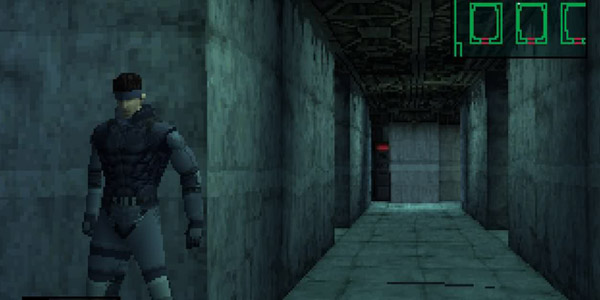
There's no point denying it: just about every "Best Stealth Game Of All Time" chart ends up with Metal Gear Solid in first place. Call it nostalgic bias if you will, but Hideo Kojima's magnificent sneak'em-up clearly captured gaming audiences in a way few other franchises have managed. Skeptical? Go ahead and pop "best stealth game" into your favorite search engine, pick a few links and skip to number 1 on each chart. Chances are good it's MGS sitting pretty at the top. There's more to Metal Gear Solid than pure stealth. It's a magnificently cinematic experience, a complex narrative packed with unforgettable gameplay moments and tied together with impeccably directed cutscenes. Above all, though, it was the intensity of the sneaky bits which earned MGS the highest praise. Xbox fanboys spat and moaned about this critically acclaimed PlayStation exclusive, but lets face facts: there wasn't anything that could touch it as far as stealth action was concerned. It's become a cross-platform mega-franchise since then, so thankfully there's no more need for this exclusivity-trolling nonsense. Years later Splinter Cell proved a successful MGS-alike, albeit appealing to the mainstream with a more Hollywood feel. But even Sam Fisher, with his gravelly voice and kick-ass night-vision goggles, was no match for Solid Snake. Today these gripping stealth elements are scattered throughout the action adventure genre, and we have Kojima's creation to thank.

1. Halo - Regenerating Shields

All of the games on this list represent industry-wide shifts in game design. Of these, Halo is arguably the title which altered the course of its genre more than any other. The franchise has its detractors (and you're welcome to fire off in the comments below), but deep down even the most vehement anti-Halo activists know that Bungie's 2001 hit changed console FPS gaming forever. Competitive multiplayer was hugely impacted by the franchise debut's 8-way system link sessions, and even more so with the stellar Xbox LIVE matchmaking of its sequel. While a number of Halo features have gone on to become genre standards (the 2-weapon load-out restriction; more accessible grenade usage), it was the implementation of regenerating shields which led to the franchise's most meaningful contribution to FPS gaming. The shield re-gen itself isn't particularly significant, but it was the root of Halo 2 and the evolution to regenerating health, and as such can be considered a a watershed moment. Today the idea of crawling around in the dark desperately searching for a health pick-up sounds ludicrous, especially in the context of online multiplayer. Instead it has become second nature to take damage until the screen is pulsing red and then find a quiet place to hide while we wait for magical healing. It's hardly realistic, but then neither is instant healing via health packs. It's game-changing design concept which is now seen in just about every first person shooter.

In this post: 
Shenmue
 
Posted On: 
Contributor
Contributor

Game-obsessed since the moment I could twiddle both thumbs independently. Equally enthralled by all the genres of music that your parents warned you about.