10 Loading Screens So Good You Forgot You Were Waiting To Play
A little game while you wait to game?

When it comes to video games, loading screens are the worst. Who wants to have a break in gameplay to stare at an animated circle or hourglass spinning around for all eternity?
Nobody likes them, but that doesn't mean they haven't evolved to become a part of the entertainment.
Thankfully, game creators realized how boring loading screens were, and many opted to do something about it. If you have to stare at something for a couple of minutes, why not make it interactive? There are tons of modern loading screens that offer up minigames, and some are so much fun, you forget about the main title you are playing!
Granted, it's nice to get back into the game, but that doesn't mean there aren't more than a few loading screens the fans truly appreciate. Anything is better than nothing, but not every video game loading screen can be found on a list about the very best of them.
The loading screens on this list are all interactive little minigames that keep the player occupied while the computer crunches its numbers, scans the disk, or does whatever magic is necessary to bring your favorite video games to life.
10. Onechanbara: Bikini Samurai Squad

Onechanbara: Bikini Samurai Squad is a hack and slash action horror game that was released for the Xbox 360 in 2009. The game is styled after 1970s exploitation cinema, and if the name doesn't give away the campy story, you may want to read it again. It features over-the-top violence, gore, bikini-clad sword-wielding ladies, and everything you might want from such a title.
The game was not well received when it came out, and that's pretty much due to the fact that it's not very good. As IGN's review put it, it's "a digital disaster in nearly every way. It’s ugly, sounds awful, handles poorly and has a premise that is as shallow as they come."
If the game's so awful, why bother highlighting its load screen? As it happens, the load screen is arguably better than the game itself and seeing as there aren't many titles that can make that claim seriously, it had to be included for that novelty alone.
When you head into a loading screen, you drop out of the well-rendered 3D imagery and find yourself controlling a small 8-bit character who then goes on a zombie killing spree against a hoard of enemies that look a bit like Papa Smurf. It's endless, it's pointless, and it's more fun than the game you're distracting yourself from playing.
9. Dragon Ball: Ultimate Tenkaichi (2011)

If you've ever played a Dragon Ball Z game, you know they all have ridiculously entertaining loading screens, but they can't all be the best -- that title goes to 2011's Dragon Ball: Ultimate Tenkaichi. The game is the fourth in the Budokai Tenkaichi fighting game series and can't be considered the best game of the franchise.
Despite that, the game does feature a loading screen many players likely enjoyed more than the actual gameplay. The game ends up having to drop into a loading screen a lot, so it's a good thing the developers programmed them to be fun and interesting.
When players enter the loading screen, they are thrown into a shooting gallery, where you can shoot at dual-colored Capsure Corp. capsules using your on-screen reticule. It's a bit strange for a fighting game, seeing as it's far cuter than the rest of the title, but that just makes it all the more fun.
At the very least, it's something to do between battles, and seeing as the game has a lot of loading time built into it, it's something a player can go back to time and time again without becoming too bored.
8. Spec-Ops: The Line (2012)
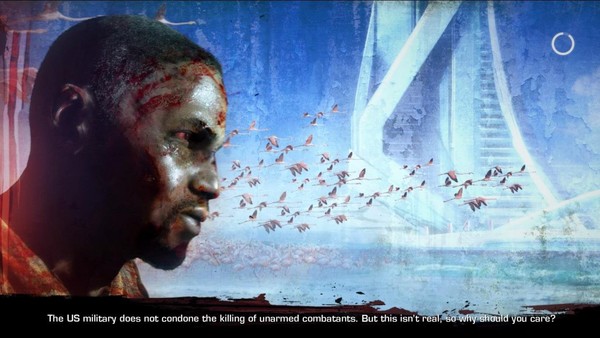
Spec Ops: The Line is a high-intensity third-person shooter that was released in 2012. It's the 10th title in the Spec Ops series, and the game featured some impressive online multiplayer gameplay and other features, which made it stand apart from other games in the genre.
Another impressive aspect of Spec Ops: The Line was the detailed narrative story players made their way through while going through the game. The story and overall narrative was one of the game's best features, and it didn't come to an end when the game shifted into a load screen -- it kept going on in a big way.
When players entered a loading screen, the narrative continued by showing poignant scenes accompanied by through-provoking text. They were spread about through the game so that players would see them throughout their gaming experience, and they managed to offer a peaceful alternative to the necessary violent gameplay.
Comments like, "Can you even remember why you came here," and "The US military does not condone the killing of unarmed combatants. But this isn't real, so why should you care," are sprinkled throughout. They get the player thinking about the nature of violence and warfare, but then drop them right back into the action anyway.
It was a novel concept when it came out, and actually made the game more engrossing.
7. Lollipop Chainsaw (2012)

Zombie fighting games often feature something to distinguish themselves from one another, and for Lollipop Chainsaw, it was a high school cheerleader who enjoyed hunting down zombies and killing them with her chainsaw. It's a fairly straightforward concept, at least, where zombie games are concerned at any rate.
The game falls in the hack and slash genre like many others on this list, but it had a lot going for it when it was released. It was the product of Jakes Gunn and Grasshopper Manufacture, and their collaboration ended up creating a great game that sets itself apart from the rest of the genre.
The loading screen features the main character, Juliet, rising along on her bicycle in graphics that would have been at home on something like the Sega Genesis. Accompanying her is some catchy music, and that's about it. It's little more than the main character taking a nice ride on her bike, and that's it.
Well, not entirely. What the loading screen accomplishes is the way it offers a stark contrast to the brutal gameplay by dropping in a cutesy, cel-shaded comic book illustration style animation of the hyper-sexualized zombie slayer doing a run-of-the-mill humdrum activity.
It effectively breaks up the carnage, and it helps the player transition from scene to scene in a relaxing and humorous way.
6. Assassin's Creed (2007)
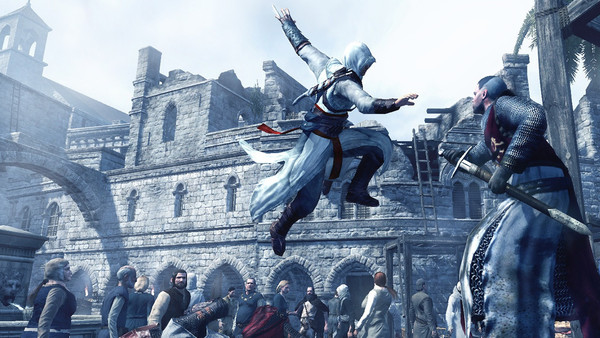
Killing people in video games was nothing new when Assassin's Creed was first released in 2007, but the game took over the concept and crafted it into an artform. Becoming a better assassin was all about stealth, weapons, and tactics players would learn from playing the game.
Of course, learning all of that could only happen as long as they could stop exploring the massive open-world long enough to play the main quest. The game was innovative for its time, had some high concepts, and was incredibly successful, having grown into a major franchise.
When players reached a certain point in the gameplay, they would watch some cinematics, and find themselves in a loading screen. Working within the confines of the game's lore, the player would find they could continue to control Altair in the infinite void that was the Animus.
You could run, use your weapons, practice your moves, and basically tear it loose in an otherwise empty void of cloudy mist. It wasn't especially entertaining on its own, but it was somehow difficult to simply let your character just stand there waiting. When the load screen came up, nary a player could keep from playing around until the screen ultimately disappeared to begin the next chapter.
5. Devil May Cry 3: Dante's Awakening (2005)

When Devil May Cry 3: Dante's Awakening was released in 2005, it was highly praised for being a return to form for the series. The game is probably the one most people think of when the term "hack and slash video game" is thrown around, and for a good reason.
The game is incredibly difficult -- so difficult, in fact, that a rebalanced special edition was released the following year. Difficulty aside, either version of the game requires players to learn combos and master them, or there's little hope in advancing through the game.
While you might think that learning those combos is part of playing the game, you'd be right. Mastering the combos... that's a different story. One of the best ways to master anything in Devil May Cry 3 is to have some fun in the loading screens, where you'll have the opportunity to button mash to your heart's content.
When you're dropped into a loading screen, the game lets you slash and shoot the "loading" text by pressing any combo of buttons as much as you want. Doing so is oddly satisfying, and helps keep your fingers moving, making you prepped and ready to go once the level finishes loading.
4. Rayman Origins (2011)
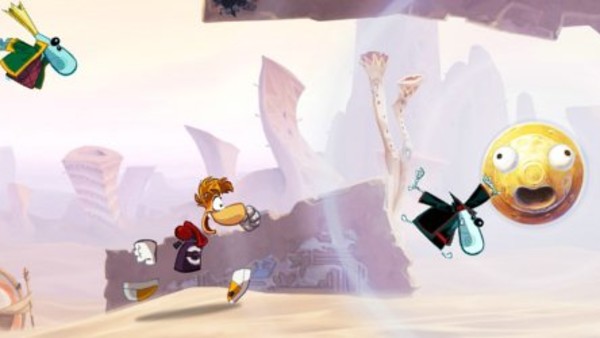
Rayman has been a popular character since his first video game back in 1995, and since then, he's popped up in a total of 45 different games. Rayman Origins was released back in 2011 for the main consoles, and it hearkened back to the classic by being the first original 2D Rayman since the very first game.
The game did remarkably well, and if you've played it, you know why. It features an excellent co-op mode, enabling up to four players to work together across the many puzzles this platformer offers. With adorable characters and interesting creatures, the game offered a lot to a ton of players.
The game features one of the best loading screens ever made for a puzzle-platformer, but it's not just because it's entertaining; it can help you in the next level as well.
Players are dropped into a loading area, which is like a zone in the game, but with a twist.
Players can make a run to collect a heart bottle, and the one who gets it will be treated to an extra life in the next level. Because the bonus is so high for the gameplay, loading screens for Rayman Origins can get insanely competitive, so be prepared to have your controller knocked out of your hand at least once.
3. Bayonetta (2010)
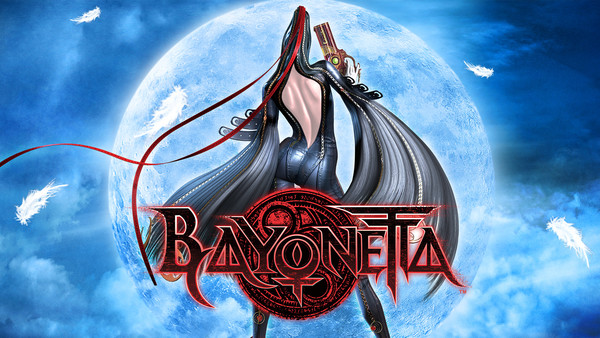
Bayonetta was released back in 2009 for the Xbox 360 and the PlayStation 3. The game is a rather stylish take on the action/adventure hack and slash genre, which stars the eponymous character in a fictional European city. Bayonetta is a witch capable of shapeshifting, carrying out various magical attacks, and lighting enemies up with firearms.
The game was incredibly fun to play, and popular enough to garner a sequel and anima film adaptation called Bayonetta: Bloody Fate. As hack and slash games from Japa go, it's remarkably original and doesn't take more than a slight bit of inspiration from others in the genre like Devil May Cry 4.
When the player finished a level, they were greeted with a loading screen, but instead of watching a mild animation or some other boring visual to keep the player occupied while the system threw the next level together, they were immersed into a safe-zone devoid of enemies.
While in the area, the player can practice their combo moves, and perfect their style. It is entirely interactive, and anything you can do in the game, you can do in the loading area. This game is all about pulling off killer moves, so getting a chance to practice them between missions wasn't just entertaining, it was incredibly helpful.
2. Invade-A-Load (1987)

Going all the way back to the commercial hit that was the Commodore 64, players found entertainment in their loading screens in a clever and fun way. Instead of seeing a spinning icon or an animated hourglass, which was common at the time, players were treated to a game of Space Invaders!
Technically, Invade-a-Load wasn't a game in and of itself -- well, it was, but it only functioned as a game within a game. The game was loaded onto the system so that players could play a clone of Space Invaders while they waited for their actual game to load, which could take some time on the Commodore 64.
The game was much smaller than the others you could load onto the system, so it popped up in less than a minute. Some games could take as long as five to ten minutes to load, so it was a great alternative to sitting around waiting.
The loader was mostly found in the United Kingdom, and it appeared on gamed loaded onto Compact Cassette. By the time it was infiltrating games in the UK, the media being used in the United States and other markets had primarily been switched to floppy disks, which made Invade-A-Load less common outside the United Kingdom.
1. Ridge Racer (1994)
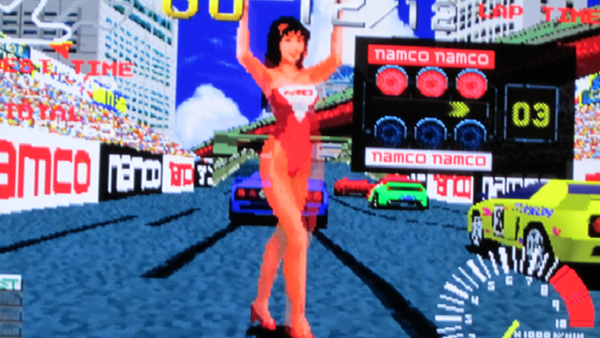
Back in the 90s, Namco secured a patent on a method that helped avoid "unnecessary wastage of time" in video games. More specifically, the patent gave Namco the license on making their loading screens less boring, and one of the best examples of the company's exploitation of this came via Ridge Racer.
The first Ridge Racer was ported to the PlayStation as a launch title in 1994 and has since gone on to spawn numerous arcade and home console releases in the franchise. The game was noted for having superior drifting mechanics and arcade-like gameplay, which worked well in multiplayer mode.
When you find yourself on a loading screen in Ridge Racer, the game keeps going, but not the game you threw into your PS1. Namco's classic Galaxian fills the screen, leaving the player there to shoot the insectoid alien ships while the PlayStation does its work in the background.
The system was known for having long loading times, as it was one of the first consoles to utilize CD-ROMs instead of cartridges. If a player managed to kill off all of the aliens in Galaxian before the loading screen disappeared, they were rewarded with an in-game bonus, which made paying attention to the load screen a helpful tool in playing the game.