10 Manipulative Gaming Tactics You Fall For Every Time
Pre-orders, false advertising and hype. When do we stop falling for such manipulative tactics?

Some claim the old snake oil salesmen died years ago, but that's far from the truth; they just got smarter at covering their shady goods. The video game industries of today want money, no matter the cost, from gamers. Recently, even real, quality businesses such as Nintendo have been known to follow certain less than wholesome marketing practices.
Now these corporations should lay their greed aside and attempt to put their games under a better quality control. The days of launching a game without a big one-day patch are gone, and digital storefronts being the way of the future, computer games have never been simpler for individuals to get their hands on. In order to increase profits, businesses want their games launched as quickly as possible.
These charlatans can employ several misleading and deceptive tactics when a they realise their game is not up to scratch or will not sell well to pry the cold hard cash from your pocket. They will entice you with their modern-day oils that do little but wring out your wallet, from misleading marketing to ludicrous pre-order incentives and collector's editions. In order to inject life into a dying game, even after it's out, most companies today employ devious life support mechanisms, such as loot-grinding.
For some of us, more than one entry in this list may apply. Let's not allow these companies to manipulate us anymore.
10. Social Pressure

"What, you don't play Call of Duty? What's wrong with you?"
How many times in your life have you heard that, not only about COD but about every mass-marketed gaming property? Some franchises, such as COD, have a large fanbase and typically release a new version of the game every year, selling millions of copies around the world.
For all these fans in a hugely popular franchise playing a new title, there are likely to be people who are simply not interested. The game is not their style; they may have tried to play it before, but they just couldn't get into it. The bottom line, whatever the situation, they don't play it and those who do can't understand why. In addition, look at popular game streamers. They are cool, huh? Look at Ninja. He makes a great deal of money playing Fortnite and streaming it. Wouldn't you want to be like him? Better play Fortnite until you're just like him.
Although social pressure may be an indirect form of manipulation, gaming companies are aware that it is out there and have come to rely on it to further their sales.
9. Limited Quantities

If you have a product that you know for certain is going to be a huge hit, you'd want to make sure you're going to have enough supply to meet demands, right? Tell Nintendo, Sony and Microsoft that. Everybody wanted one when the Switch launched in early 2017. Everyone desired one when the PS5 and Xbox Series S/X were released in late 2020. Was anybody capable of getting one? Oh, no. Why? Their supplies were insufficient.
Now let's be honest here: we don't really need these consoles when they come out; we want them. For some strange reason, when a company says that their new console will only be available in limited quantities at launch, we immediately assume that we'll never get one, so we struggle to buy one. It's that paranoia about not being there from day one, not being a cool kid, that drives us to search for many of these products when they're launched.
Then the scalpers dig in their greedy paws. Knowing that we want that new console right away, or we're going to be left behind by our friends, they're buying all the new consoles they can and selling them at twice the price. The sad thing is, our desire for something new is so great that we're going to pay that price.
It doesn't make you cool to pay almost double for the hottest new thing. It just makes you look desperate.
8. Graphics And Misleading Trailers

It's not about the graphics; as long as the gameplay is great, that's all that matters. Not anymore. If a game doesn't run at 60fps in 4K and look ultra-realistic, then we don't wanna play it. What the hell happened to us?
We've always been attracted to the promise of flashy graphics. While the Atari 2600 might not look amazing right now it blew people's minds back in the day. Now we've got games that are nearly photo-realistic. We've almost come to a certain level of expectation when it comes to the way the games look. If they don't look good when they're first debuted, odds are that we're not going to give it the time of day.
Too often game companies are debuting incredible trailers for games, such as Killzone 2 and Watch Dogs, which are sure to dazzle us with amazing graphics. Then, it looks downgraded graphically once we get our hands on the game. The most typical excuse is that the hardware of the existing consoles cannot handle the visual level. So, why show us a trailer claiming to use real footage of the game? To hype us up and trick us into purchasing that game.
At least Marvel's Spider-Man was fantastic, good puddles or not.
7. Loot Grind Systems
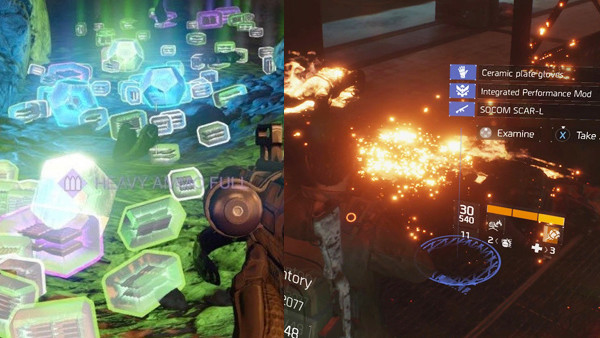
So, you've made a decent game. But, it's really short. How do you pad that runtime and make sure people will continue to pour hours into it? Add a loot-grind system of course!
Loot-grinding is a fairly straightforward system. Use the loot you get to defeat enemies to get better loot, etc. In general, this mechanic is found in major MMO titles, like Destiny and The Division. Both have bare story campaigns and rely on the players to compete in the same events over and over so they can get better loot. This problem is strongest in Destiny, where new content is usually added at a much higher level than the one you're currently at, making you grind to level up just to continue playing.
This is the thing, however. We are like crows, attracted to shiny objects; we have to collect all the loot. Developers hype the next expansion or patch new weapons you need to be a certain level to use. Therefore, we grind, because we can't be left behind. We must be up to date with the best gear or skins while other, better games pass us by. I mean, you could always pay extra money to skip the grind, since more often than not developers will stick predatory systems like that into their games.
If you have to pay to bypass the grind, the game just isn't worth it.
6. Collector's Editions
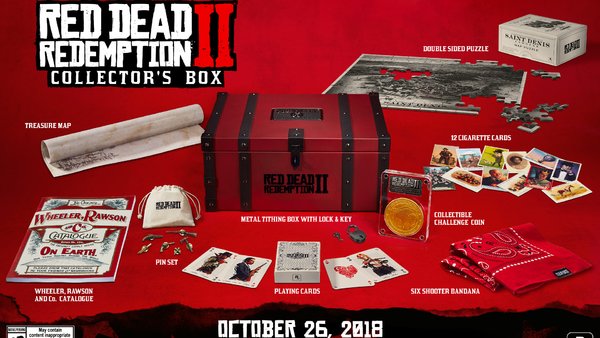
As gamers, we tend to have a couple of franchises that we love above all else. So of course, we buy their merchandise. Even the casual player has probably a t-shirt with their favourite game character on it. Our obsession towards certain franchises is known to game companies, so the Collector's Edition came into being.
Now, a number of Collector's Editions have actually offered a lot of memorabilia for a good price, such as Batman: Arkham Origins, Borderlands 2, and Gears of War 3. Those days are now gone. With digital gaming, companies put more digital goodies into their collector's editions rather than physical collectables. But not all material goods are worth the price.
Call of Duty: World At War gave players a gun unlock, a week of double XP, and a canteen that you can't drink out of. Some companies just give you a steelbook and that's it. Red Dead Redemption 2 takes the cake though: a collector's edition that doesn't even include the game. But companies get away with this all the time. They know that if we love a franchise to death, we will pay whatever they want so we can show off our cool dust collectors to our friends.
Those steelbooks are nice though.
5. False Advertising

Game developers want you to buy their products, and they're going to say whatever they can to get your sale. But we are competent at spotting their misleading ways - though, we still fall for them from time to time.
Honestly, a lot of entries on this list can be considered forms of false advertising, such as graphics and limited quantities; they just stem into their own forms of manipulation. Other times, this will be the mention of a totally immersive world or something that has never been done before.
Enter Peter Molyneux. From the Fable franchise to Godus, he lives and breathes with his mouth running over-exaggerated statements about his games. But he isn't the only one. Hello Games had proclaimed No Man's Sky as this massive, game-changing experience, only to fall flat on release. It's awesome right now, but that's not when the statement was made. Too often we sit around and watch as companies over-inflate their games, promising features that are either not there or are not properly implemented. But we believe them because there's a little bit of hope that they're telling the truth.
Except for Peter Molyneux. We know better than to believe him.
4. In-Game Currencies & Microtransactions

Remember a time when you were buying a game and it came with 100% of its intended content? Those were the days. Now, game companies are pumping extra life into their games through microtransactions.
Grand Theft Auto Online is always getting a slew of free game upgrades all the time. Now, free is a good thing. But many of these updates include high-priced items that you need to purchase with in-game currency. But, if you don't have the time and patience to play the game and earn a small amount of money through missions, well you can always buy in-game currency. EA did something similar to Star Wars Battlefront 2 when it first launched in 2017. Why play the game to upgrade when you can pay to win instead?
We can be easily swayed by the quickest manner available. Why do we put in all the work when we could just pay a little extra for what we want? Would you like that cool skin? It's just five bucks, so why not? Do you want to level up quickly? Buy a booster pack with an experience modifier. Our willingness to allow such practices has allowed gaming industries to make such systems normal in the industry.
Season Passes though...
3. Season Passes & DLC
Season Passes are a bane on the industry and game companies abuse them in stride.
Every year the worst offender is Call of Duty. They're selling you 60% of the game at full price, then hiding the other 40% behind a season pass that you're paying extra for. But it doesn't stop there. Star Wars Battlefront was released in 2015, and their season pass was the same price as the full game. Worse, we were only sold 40% of the full game, and they locked the other 60% behind the season pass.
The whole point behind the season pass is to bundle all the DLC behind a slightly cheaper paywall, allowing players to buy all the said DLC before we even know what we're getting. DLC should never be front and center, it should always be an afterthought. Give your fans the game we want and if we want more, give us the DLC. When pre-launch DLC is announced, just delay the game and add it to the main package that we pay for upfront.
If game companies truly are the modern-day snake oil salesmen, then Season Passes and DLC are their wares.
2. The Hype Train
All aboard the hype train for disappointment. While not always the case, developers tend to over-hype their games to the point where they just can't live up to expectations. Sometimes it works; Super Smash Bros. is a universally loved franchise, so when a new one is announced, we'll get hyped right away. This is because we know that Nintendo is, more often than not, a quality company.
Bethesda, however, hasn't been here for some time. Fallout 76 was hyped up as the first MMO Fallout game, and people were really stoked. When it launched, and all the hyped people got their hands on the game, they were disappointed, to say the least. The product we thought we were going to get and the product delivered was completely different because of the hype.
Hype is without a doubt the easiest way for a game company to sell their product. They talk about how amazing and revolutionary it is, show off some misleading "in-game engine" trailers, announce it years in advance, and they've sold us on the game before we can even get our hands on it. Big showcases aside, a good game doesn't need hype when it comes down to brass tacks. It can get by on its own merits.
When the hype dies down, all that's left is the quality of the game.
1. Pre-Orders

Oh, the all-powerful pre-order, how you've been tricking us continuously and effectively for years. Why are we pre-ordering games? To secure a copy? It's not like they're in limited quantities, like consoles, and with digital storefronts, we can always get a digital version. It's those sweet bonuses that come with the pre-order that blinds us.
Usually, the pre-order bonus is not something special: an in-game skin or weapon, early access, or a bonus mission to name a few. When you pre-order in stores, you are more likely to get something physical, like a keychain or a steelbook. This all seems so harmless, so why are we always going to fall for this?
It's a simple phrase: "pre-order now to get exclusive access." That word, exclusive, does something in our heads. It makes us believe that if we do not pre-order, we will never have access to it, although most "exclusive" content can either be unlocked in-game later or is available for purchase months after release. What about when you get so hyped you pre-order a game, only to be disappointed that it's not as good as you had hoped upon release?
Pre-ordering makes you feel justified, showing the company that you are loyal when all they want is your money.