10 Most Popular Video Game Consoles Of The Last 10 Years - Ranked
Does the PS4's popularity translate into genuine quality?

Though we might currently be experiencing one of the finest years in gaming history, it's worth remembering just how far consoles and technology have come. The very fact you're able to experience something like the magnificent world of Horizon Zero Dawn or the luscious Hyrulean fields of Breath of the Wild on the go is testament to the hardworking coders and technicians that assemble our favourite gaming machines in the first place.
Over time - and especially recently - we've seen a push from the likes of Sony and Microsoft to embrace a far more 'PC-like' mentality, the iterative PS4 Pro and Xbox One X being received positively enough, but they're a far cry away from when we first saw the PS2 running Tekken Tag Tournament, the 360 showcasing Gears of War or something like The Witcher 3 on PS4.
Indeed, the games industry has always championed bleeding edge technology to bring its respective worlds to life, though across the last 10 years, we've seen some of the most powerful pieces of hardware to date.
From perfecting facial rendering and environment design to motion controls, VR and especially seamless online gaming, we've grown attached to all manner of systems over the years, but which are the best?
10. Xbox One

To this day, Microsoft haven't truly fixed the launch day Xbox One.
It emerged broken, stuttering and tripping over its own shoelaces back in 2013, and even if you were to boot one up now, the lagging menus, horrendous user experience and overall shaky nature of the OS makes it feel like an early access machine.
This is all down to the sheer amount of patches and changes the dev teams have made over the years, removing the reliance on Kinect, redesigning the various home button menus, how the system juggles games and dashboard features, etc. Not to mention, many of the supposed system-sellers like Quantum Break and Ryse: Son of Rome did little to convince the masses of any truly unique experiences worth investing in.
Truly, if it wasn't for the hangover of brand loyalty from the 360 propping it up, the Xbox One would've gone the way of the Ouya.
9. Nintendo DSi
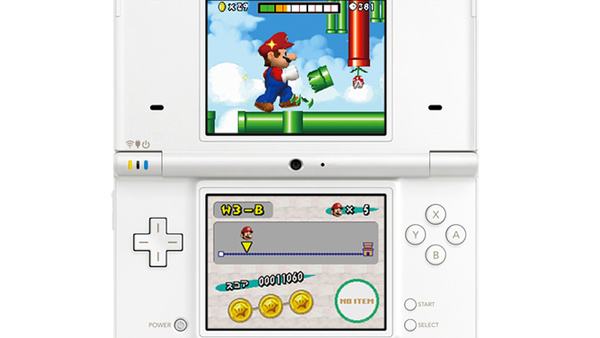
Of all the companies that carried away with incremental upgrades, Nintendo went off the deep end towards the end of the 2000s. As such, the DSi was quite literally the DS lite with a couple of cameras and far better battery life.
Still, at least that provided some quality of life improvements to one of the most popular handhelds of all time... provided you stayed with physical media. Sadly, despite Nintendo pioneering the awesome Virtual Console on the Wii, the DSi never saw anything close to NES, SNES or Game Boy emulation, instead being the last physical console to still support Game Boy Advance cartridges.
When you've got the entirety of Nintendo's back catalogue at your fingertips on the big brother system but not on the go, that's a problem - one that was fixed on the 3DS, but remains a huge misfire here.
8. PS4 Pro

The system designed to stymy the flow of negative press that emerged from 2014 centring on how the current generation of hardware was simply not up to the task of handling the latest video games, the PS4 Pro is but the barest of incremental upgrades from the standard model.
Even at launch, the harsh reality of how fast Sony had cobbled this thing together and kicked it out the door was apparent, as only a literal handful of games supported the 4K/HDR graphical upgrade, and even they came with a host of individual issues.
Yup, even if you'd bought the complete hokum that this was 'the next essential step in gaming entertainment', it would take Sony until March 2017 to release the 'Boost Mode' - a toggle that freed up frame rates and resolutions across the board. And even then, the system just doesn't support 4K blu-ray playback, a baffling oversight for any investors in 4K tech.
Truly, if there was ever a bigger indication that the 'era of 4K' has nothing to offer but longer development times and shinier textures, it's right here.
7. PSP Go

Onto more positive things, and although Sony are hands-down atrocious at marketing anything other than their core consoles (seriously, PS VR is already on life support), the PSP Go was a delightful redesign of the 2005 original.
Somewhat annoyingly, the Go traded out UMD/disc support for a smaller form factor, targeting those who liked the idea of owning a glorified pocket-sized PS1 machine instead. Sadly, Sony kept the weirdly blobby and unsatisfying analogue nub, but the real pull here was for newcomers who didn't already have established PSP libraries.
To them, you could load this thing up with everything from Crash Bandicoot to Final Fantasy VII, Metal Gear to Castlevania as PS1 emulations, all backed up with the PSP's burgeoning library including God of War: Chains of Olympus, Daxter and Pursuit Force.
Seriously, Sony may continually drop the ball when it comes to reminding the masses of these systems, but the PSP Go was one incredibly slick system.
6. Wii U

If you take the time to wade through the furore of negative press that survived the Wii U thanks to its godawful sales figures and marketing, there's actually a supremely neat system underneath.
Sure, it's a stepping-stone to move between the Wii and the Switch, but its Gamepad is a joyously chunky tablet capable of playing many full-screen games away from the TV. With that in mind, a lot of the Switch-associated "Just play on your couch!" appeal started here, as did a better method of accessing everything from the NES onwards.
Brilliantly, as the Wii U Gamepad wasn't a glorified TV remote, every Virtual Console game immediately felt far more natural and comfortable, not requiring additional controllers for the likes of N64 games. Atop that, you had backwards compatibility with the entire Wii library and some phenomenal exclusives like Bayonetta 2, Mario Kart 8, Super Mario Maker and the ace Wind Waker HD remake.
We might have all dog-piled on the Wii U for being a strange, awkward, barely marketed abomination, but there's a lot of heart buried under those deformed bones. Plus, until the Switch gets its act together this is the only way to experience the legacy of Nintendo on the big screen - a huge reason to invest.
5. PS Vita

With better marketing, I wholeheartedly believe the PS Vita could've actually been a worthy competitor to Nintendo's substantial hold on the handheld market.
The touchscreen, introduction of cute, SD card-sized cartridges, the incredible games library - Sony even (finally) included another analogue stick so proper camera control was now a reality. Speaking of games, you had one of the most underrated (and still completely overlooked) Uncharteds in Golden Abyss, Persona 4 Golden, Killzone: Mercenary, Tearaway, Gravity Rush - not to mention the bursting-at-the-seams library of backwards compatible PS1 games filled with every childhood favourite you could shake a stick at.
Hardware-wise, the Vita ran like a dream, pairing to both the PS3 and PS4 for a variety of uses such as an additional screen, a controller or - best of all - Remote Play, where the consoles can beam across any triple-A game to play wherever you like.
How Sony didn't market this better I'll never know, but what a phenomenal piece of kit.
4. Xbox One S
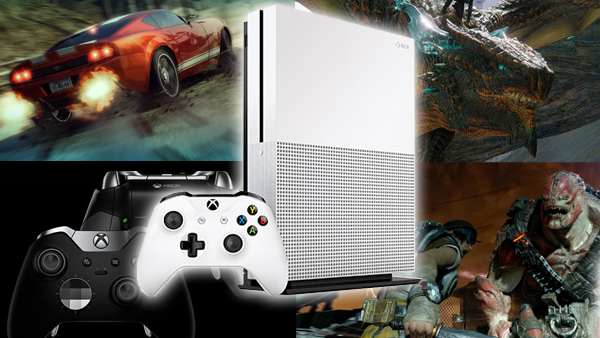
You could tell Microsoft wanted to get back in everybody's good graces with the Xbox One S.
Not only had they long-ditched Don "I literally couldn't sell suncream in the Sahara" Mattrick as a spokesperson and hired Phil Spencer, but they'd announced free backwards compatibility with 360 games, had a healthier selection of exclusives and even had the good grace to - unlike Sony - include 4K support for games and blu-rays.
Being this was still the Xbox One architecture, Microsoft didn't upend the dashboard's look, though everything from the system's menus to any games played on the Xbox One S see an uptick in speed and performance thanks to the console's better hardware.
Basically, this is what Microsoft want to come to mind whenever anyone mentions 'Xbox One', and as that library of exclusives now includes the mighty Halo 5, State of Decay, Sunset Overdrive and Forza, that hobbling 2013 original need only be a faded memory.
3. Nintendo 3DS/2DS
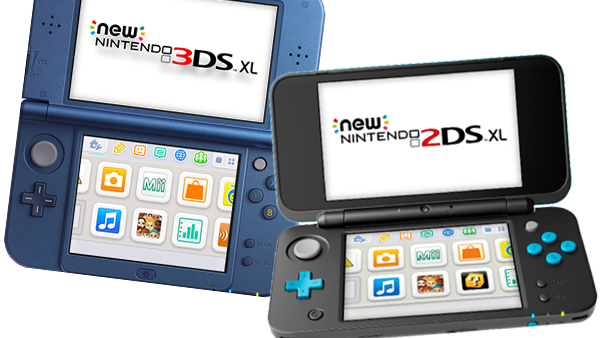
The 3DS - or rather, the 2DS if you don't care about eye-straining projection effects - is where everything clicked in a huge way for Nintendo.
Coming with much more hardware than the DS, the system's library is simply one of the absolute best Nintendo have ever put together. Everything from Monster Hunter Generations to Fire Emblem: Awakening, Pokémon, Mario Kart 7 and the potential original-beating Ocarina of Time 3D - there was a real next-level step up in third-party support across the board.
Later editions of the 3DS would expand the Virtual Console to support SNES games, meaning that some of the best games of all time, Super Metroid, Zelda: Link to the Past, Super Mario World, Super Mario Kart and F-Zero were all available on the go for the first time.
It might carry forward the 'looseness' of the D-pad, but with the recently released 2DS removing the gimmicks and focusing on nothing but that exemplary library, the 3DS can stake its claim as one of the finest consoles in history.
2. PlayStation 4

Sony's ongoing marketshare dominance is a product of two things:
1. Having some of the most effective and well-timed marketing in history with their "How to share a game on PS4" viral video, and 2. Being everything the Xbox One wasn't. Because make no mistake, the 360 dominated the last generation when it came to word of mouth and - right up until the end - sales, too. To that end, it took a good few years for Sony to justify the PS4 as a worthwhile step-up from the PS3, but when those exclusives started coming, they rolled out hard.
Horizon Zero Dawn, Uncharted 4, Nioh, Bloodborne, Hotline Miami, Ratchet & Clank, NieR: Automata, Yakuza 0, Dragon Quest Builders - it really does just go on and on. On base hardware the PS4 continues to trounce the Xbox One, with the only thing stopping it from taking the top spot being a lack of meaningful innovation.
Instead, that accolade goes to...
1. Nintendo Switch

What it lacks in a breadth of exclusives, the Switch more than makes up for through sheer hardware, medium-advancing innovation.
From the idea of taking games like Breath of the Wild on the go to swapping between handheld and big screen modes, the seamless motion controls that work in the likes of ARMS and World of Goo, or the fact one half of the Joy-Con pad can function as a separate controller entirely, there's a level of forward-thinking progression across the Switch that feels fantastic.
In honesty, its game library has always had far more to offer than you might think, and with a free online mode, games like Fast RMX and Mario Kart 8 feel most at home when you're up against the entire world.
It might have taken Nintendo over a decade to get back to serving their core fanbase, but with so many features on-hand and such a great feel, the result is a console that feels as though it has a solid grasp on the future of gaming, rather than circling endlessly around pointless resolutions and frame rates.
Here's to Nintendo being back on top form, it's been a long time coming.
--
What's the best console of the last 10 years? Let us know in the comments!