10 Most Shocking Zelda Moments

If Link could talk, he'd have just dropped the mic.
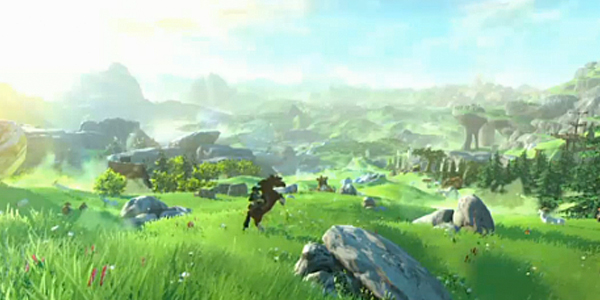
There were several surprising Nintendo moments at E3 2014, ranging from unexpected new titles like Splatoon to quirky experiments with old favourites like Mario and Star Fox. While some form of teaser for a new Zelda was widely anticipated, producer Eiji Aonuma surpassed the audience€™s expectations with a snap of his fingers, unveiling a vast overworld to be explored at the player€™s leisure. Fans had often wondered about the impact that a Skyrim-styled open-world would have on the series€™ core mechanics, and now Nintendo had risen to the challenge of making it work. The Legend of Zelda games are perhaps the best way to embody Nintendo€™s love of surprise; the pleasure that comes from finding something where you expected nothing to be. The franchise has given us many shocking moments over the years - the games themselves have offered up plenty of plot twists and unusual weapons - but the series has also used debuts at trade shows and press events to wow the audience and generate buzz in a way that Mario and his chums just can€™t quite seem to match. Sometimes these plot twists and surprise reveals work in Nintendo€™s favour. Just occasionally, they backfire horribly. Here, covering both the games themselves and the world of buzz and anticipation that surrounds them, are ten Zelda moments that stunned the audience and set the internet alight€

10. The Mystical Seed Trilogy

In July of 1999, Nintendo solidified internet rumour and speculation; yes, there were Zelda titles in development for the Game Boy Color and, no, Nintendo wasn€™t going to be developing them. The series was now in the hands of Capcom€™s offshoot studio, Flagship. In today€™s world, where Sonic and Mega Man can butt heads in a round of Smash Bros, a studio collaboration is nothing out of the ordinary. In the late 90s, it was a shocking revelation €“ the past decade had seen Nintendo€™s partnerships churn out unlovable Mario €œedu-tainment€ titles and poorly-executed Zelda efforts for Phillips€™ CD-I system. Since then, Nintendo had wisely kept their bankable characters close at hand €“ were they now about to repeat their past mistake? The more fans learned, the more their concerns seemed justified. Capcom were making not one but three Zelda games, all of which could intermingle and affect one another. One of the games was later stated not to be an original title but, rather, a remake of the first Legend of Zelda. The trilogy changed its name repeatedly and as the fans grew more confused it seemed that Flagship had bitten off more than they could chew €“ finally, it was announced that the trilogy would be reduced to just two titles. Ultimately, there was no cause for alarm. Oracle of Ages and Oracle of Seasons were worthy successors to Game Boy hallmark Link€™s Awakening and the series€™ quality was maintained. Flagship would continue to work with Nintendo for more portable Zelda games, though they€™d learn to keep projects under wraps €“ at least, until the concept had been nailed down.

9. The Wind Fish€™s Dream

With the Game Boy and SNES now firmly established as a little-brother, big-brother relationship, it became common for Nintendo€™s handheld system to get games that were the quirkier, off-beat entries of a franchise. Mario would rule the SNES, but his evil counterpart Wario would conquer the Game Boy with his own series of chunky platform puzzlers. While Donkey Kong Country sent players on a gorgeous, fast-paced quest the portable Donkey Kong €˜94 offered a more cerebral, bite-sized brand of platforming. Despite Link€™s Awakening borrowing the clothes of its Super Nintendo sibling, Link to the Past, it too had a lighter, more playful tone. Link would get zapped and squashed, feed dog food to crocodiles and take a (mostly) tame Chain Chomp out for a stroll. All in all, without Ganon€™s looming shadow casting a pall over proceedings, it felt like a whimsical adventure... until the Face Shrine. Link discovers a mural which informs the player, in no uncertain terms, that his quest to wake the Wind Fish will destroy the island, its inhabitants and possibly Link himself €“ they€™re all just part of a dream. Worse, the nightmares Link faces begin to taunt him about the destruction he€™ll bring to his new friends. Uniquely to the Zelda series, you find yourself wondering if Link might actually be the unwitting villain. The remainder of your journey takes on a sombre €“ and wholly-unexpected €“ tone, with the game€™s bittersweet ending setting a precedent for Zelda games to come.

8. Saving Midna

Twilight Princess was the second of the Gamecube Zeldas, and the series had started to settle on a regular structure €“ Link would be tasked with collecting three magical objects, use them to defeat the supposedly final boss and only then be made aware of the true scale of his quest. Even though they€™d just collected the Fused Shadows needed to defeat the shadowy sorcerer, Zant, few players expected the game to be nearing its end. What nobody expected was for Zant to be lying in ambush, assaulting Link and Midna the second they emerged from the Lakebed Temple. Zant swiftly undoes all of your accomplishments; stealing the Fused Shadows, skewering Link with wolf-Kryptonite that leaves him permanently transformed and beating Midna to within an inch of her life. What follows is a frantic charge through a thunderstorm, a lifeless imp clinging limply to your neck as you race through the night looking for help in a world that has few friendly faces. There€™s no Sage to guide you, no helpful fairy to point you on your way €“ you€™re cold, you€™re cursed and your only friend is dying on your back. Things don€™t remain this hopeless for long, of course. Still, the combination of a clever plot twist from an unusually pro-active villain, coupled with Nintendo€™s sudden refusal to offer guidance, make for a shocking and memorable scene that remains one of the bleakest in Zelda€™s history.

7. Phantom Hourglass Announcement

If E3 is market day, with developers and publishers hawking their wares in a hubbub of noise and visual splendour, then GDC is a craft fair. It€™s a gathering of artists and creators, a chance to put aside business rivalries and to share, not just showcase, talent and techniques that help make games better for everyone. It€™s also why Satoru Iwata€™s unveiling of a brand new Zelda title during his keynote speech was such a shock. It wasn€™t just Nintendo seeking to hog the limelight - the game formed the backbone of what Iwata€™s presentation was all about €“ but it was perhaps an early sign of the company€™s shift away from a death-or-glory E3 battle to the special events they host today. With nothing competing for attention, Phantom Hourglass€™s reveal generated a lot of buzz. Many of the game€™s more controversial mechanics, such as pure stylus control and repeated visits to a central dungeon, had yet to be discussed. Even so, just the look of the game was enough to provoke controversy €“ the game seemed to be aping the look and sailing mechanics of Wind Waker, even though Nintendo had acknowledged how divisive they could be. Phantom Hourglass€™s surprise debut set a trend of GDC unveilings that some developers found irritating €“ they€™d come to share knowledge, not watch trailers. Even so, it remains a novel and memorable reveal for an equally experimental Zelda outing.

6. The Moon€™s Landing

Less than six months after the long-awaited Ocarina of Time had finally hit store shelves, reports of a sequel that would make use of the same engine and many of the same characters bemused press and fans alike. Questions around the game€™s nature abounded €“ was it Ocarina€™s of Time€™s €œsecond quest€ salvaged from the ailing 64DD peripheral, or something new? Unlike the Mystical Seed trilogy, gamers didn€™t have long to wait for answers. Time itself would be working against Link in this adventure, with the death of every hour marked by an on-screen sundial and, overhead, a malevolent moon growing ever larger in the sky. If Link failed to save the world in time€ well, what? It was a mystery that caused much speculation amongst fans. Nintendo had teased an unwinnable situation, but what would the penance actually be? In the final game, Link is given the opportunity to escape the world€™s end at the last second thanks to his ocarina, whisking himself back in time with nothing bruised apart from his wallet. Still, many inquisitive players decided to park themselves in Clock Town and stare down the moon, waiting to see what would happen if they didn€™t hit eject before the End Of Days. The streets empty as the moon approaches. A bride and groom await the end, hand in hand. The ground quakes, the Clock Tower crumbles, and an unstoppable wave of fire expands violently, consuming the world. Link€™s shield is tossed aside, he€™s hurled into the void€ While much of what€™s shown is symbolic or implied, Nintendo had pulled no punches and actually portrayed a player-induced apocalypse. Grim stuff, and an indication of just how dark the series was prepared to get.

5. Sheik€™s Identity

It€™s Ocarina of Time, and the player€™s been played. Ganondorf and his minions have been trailing Link, waiting for the young Hero of Time to unlock the gates to the Sacred Realm so that they can obtain the legendary Golden Power. Sealed out of time for seven long years, a boy€™s heart in a man€™s body, Link€™s cast back into the battered remains of Hyrule to wake the Sages and somehow undo the damage he€™s caused. That€™s when we€™re introduced to Sheik. Who is, as any self-respecting Nintendo fan should know, really Zelda in disguise. It€™s a twist that becomes a lot more layered and interesting when the plot€™s considered in hindsight. The game€™s done enough to convince you that Sheikah like Impa are still an important force in Hyrule and that Sheik€™s a plausible ally, but moreover, this is Nintendo playing off against their own depictions of gender. Despite being the titular character, Zelda€™s always been portrayed as the helpless captive €“ given that the player last saw her fleeing her castle, there€™s little reason to suspect that the last seven years transformed her into a somersaulting, bomb-wielding ninja who€™s both faster and wiser than Link. As great as this reveal is, however, its full potential does get rather trampled upon. The minute Zelda€™s unmasked she€™s back to wringing her hands, apologising profusely before Ganondorf encases her in a large pink crystal €“ y€™know, because she€™s a girl. Still, it remains a powerful moment and planted seeds that should hopefully bear fruit when Zelda takes the stage in Hyrule Warriors.

4. Hyrule Warriors

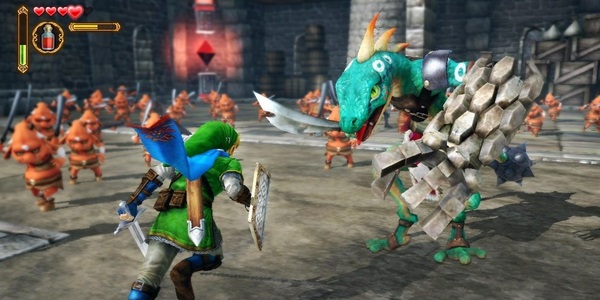
In their own way, Nintendo Direct conferences mirror the air of surprise and discovery that define the Zelda games. They appear with little warning and, while watching, it€™s difficult to say whether you€™ll be taking a detailed look at an upcoming game, catching your first glimpse of something completely new or just watching a CEO studying fruit. The rule, then, is to expect the unexpected. Even so, it was hard not to be caught flat-footed by the mere existence of Hyrule Warriors. Reactions were both mixed and extremely passionate, though Nintendo likely weren€™t anticipating any other sort of response. The Dynasty Warriors titles are popular but bewildering for first-time players, a stark contrast to Nintendo€™s own games and the broad audience they strive to reach. Fans concerned about the treatment of their favourite characters may also raise an eyebrow at Team Ninja€™s involvement, given the heavily-criticised story of Metroid: Other M. Nintendo took steps to address these concerns at E3, stressing the involvement of Zelda team veterans and showing a wide array of playable favourites like Midna. We€™ll be waiting until August to see if the game fulfills its many promises and proves to Zelda fans that Dynasty Warriors can offer more than pyrotechnics €“ but the announcement itself proved the team know how to handle explosions.

3. Braving Hyrule Castle

Not just any Hyrule Castle, mind you €“ the series has revisited this iconic location several times, but the opening of Link to the Past is a superbly-crafted introduction to everything that the SNES classic has to offer. While Link€™s lantern would be familiar inventory to Zelda aficionados, everything else was brand new to the series. The rumblings of the thunderstorm that blanketed Hyrule could be heard indoors if the player was above ground, enemies both gave chase and lost sight of the player and decorative pots could be used as impromptu weapons if the going got tough. The player would move seamlessly from opulent hallways and into an imposing dungeon, before leading Zelda into the treacherous darkness of a sewer system. Compared to the NES games, where dungeons looked identical in all but colouring, this wasn€™t just having an adventure €“ this was living a story. Emerging from Sanctuary into the bright light of a new day was like coming up for air. This was a truly €œnext-gen experience€ decades before that term would be even be conceived €“ it wasn€™t just Zelda with a lick of paint, it was the painstaking realisation all the craft and history we€™d had to imagine before now.

2. Wind Waker€™s Reveal

As other entries on this list have shown, Nintendo have developed a cunning sense of showmanship in recent years, taking to social media and Youtube with remarkable frankness and humility if something isn€™t received as they expect. While it€™s unlikely Nintendo€™s sudden shift towards cel-shading in The Wind Waker was ever going to go down well with fans, a poor choice of tech demo at their Spaceworld exhibition only added fuel to the fire. The demonstration showed a short, pre-scripted battle between Link and Ganondorf that mirrored both the combat and style of Ocarina of Time. The press were hyped, fans were excited and Nintendo€™s warnings that this wasn€™t an actual product went unheeded. One year later, Link returned €“ this time, looking more like a Saturday morning cartoon. Sneaking past Moblins with exaggerated footsteps, poking them in the rear end with his sword and goading them off cliffs, this Link behaved more like Bugs Bunny than the Hero of Time. Toon Link was perceived as Nintendo jettisoning its fan-base in favour of a younger audience. It was certainly a shocking reveal, but one that gave way to feelings of anger and betrayal. Nintendo worked hard to restore faith at the next E3, bringing a playable demo and grittily-voiced trailer to try and win back their audience. While the game ultimately reviewed and sold well, it would take ten years and an HD remake before some fans would revisit the game on its own merits.

1. Leaving Kokiri Forest

The team behind Ocarina of Time were no strangers to risk. On the way to bringing their five-year epic to completion they€™d had to redefine third-person combat, merge together multiple camera perspectives and evoke vast landscapes with the fledgling 3D engine at their disposal. Even so, they played a dangerous game with Ocarina of Time€™s opening hours. Kokiri Forest, Link€™s home and the game€™s starting location, is a fake-out. Its colours are muted and muddy, the villagers fade in only when Link approaches them and the entire area is drenched in a thick fog that€™s closer to Victorian London than idyllic Hyrule. You don€™t have time to feel disappointed, however - because Link controls like an absolute dream and there€™s still fun to be had slicing up signs and scavenging for rupees. By the time you€™ve finished the Deku Tree dungeon you€™ve pretty much acclimatised to your surroundings. Nintendo uses the Deku Tree and its surrounding woods to set your expectations, and then blows them out of the water the minute you step onto Hyrule Field. The sky overhead starts as a deep cerulean blue, the landscape stretches on forever with no sign of fog and the sun leaps into motion, shadows lengthening as you approach Hyrule Castle. It€™s a moment planned to perfection, delivering shock after shock. Time€™s passing, the castle gate is closing just as you approach and skeletons are erupting from the ground around you. As one of the series€™ most memorable locations, it€™s fitting that Hyrule Field weaves together multiple, rapid-fire astonishments and sends the player tumbling from one to the next €“ all without a single word being spoken. It€™s true that the new Zelda has a lot work to do if it€™s to live up to its E3 reveal. Fortunately, Nintendo have repeatedly proven that while they may not always work as planned, they€™ll never stop delivering surprises.

Contributor
Contributor

Chris has over a decade's experience as a game designer and writer in the video game industry. He's currently battling Unity in a fight to the death.