10 Perfect Games With Even Better Sequels
These "perfect" games had room for improvement.

While making a video game sequel, the developers should do everything to remedy any issues the previous instalment had while still retaining its spirit. Now, there are many follow-ups that pulled this off with flying colours, including Persona 5, The Witcher III, and Street Fighter II.
However, making a superior successor is tricky when the previous game was pretty much perfect. There's been countless Pac-Man and Tetris entries and yet, none have come close to replicating the magic of the original. Obviously, it's debatable what qualifies as a masterpiece, but it doesn't seem feasible to improve upon certain titles.
But it does occasionally happen. When a game that's considered flawless gets a sequel, it tends to sell well regardless of its quality. Rather than cranking out more of the same, some creators go above and beyond to ensure the next instalment is just as good, if not better. By fine-tuning mechanics, removing minor flaws, and adding a whole bunch of innovation, these sequels blew their predecessors out of the water.
These ten video games may have been considered unequalled in quality, but their sequels proved to be better in every possible way.
10. Batman: Arkham Asylum & Batman Arkham City

With only one game under RockSteady's belt at the time, little was expected when the up-and-coming company announced a Batman title was in the pipeline.
Little did we know Batman: Arkham Asylum would become the definitive superhero game. With its accessible controls, compelling storyline, visceral combat, intricate detective mechanics, and towering voice-acting, there was no question the creators brought their A-game.
Although the follow-up, Arkham City, was shaping up to be another blinder, the creators went above the call of duty to deliver the perfect Dark Knight experience. The open-world was significantly larger, which made exploration, gliding, and combat far less cramped than before.
Asylum's bosses were a sore point, so no expense was spared this time around. Mister Freeze gets special mention, since facing off against the cold-hearted supervillain is one of the most imaginative boss battles in history.
More variety was given to the missions and side-quests, which offered a more engrossing experience overall. The original story was top-notch, but City's narrative has so many twists and turns, players were picking their jaw off the floor after the gobsmacking climax.
While playing Arkham Asylum, you felt like Batman. But in Arkham City, you ARE Batman.
9. Super Mario Galaxy & Super Mario Galaxy 2

Even though Super Mario is Nintendo's bread and butter, the mainstream series usually doesn't do direct continuations. But after Super Mario Galaxy achieved staggering success, the company started working on another.
Naturally, the prospect of swirling across the cosmos and collecting Power Stars again was a cause of celebration. Having said that, topping the first game was a tall order.
After all, Super Mario Galaxy wasn't just great. It was GameRankings highest rated title ever and the first Nintendo game to win a BAFTA. It demonstrated the precision of the Wii's motion controls, making exploration, flying, and puzzle-solving a joy to behold. Nintendo put such care in the level design, gravity mechanics, soundtrack, and missions, it was challenging to find a single thing they could enhance.
And yet, Super Mario Galaxy 2 was an utter triumph. It boasted more imaginative puzzles, an accessible map, a refined difficulty curve, better designed bosses, luscious levels, and addictive power-ups.
It also threw in Yoshi, which is always a bonus. Rather than using Yoshi sparingly, Mario's dino-buddy plays a pivotal role in many of the most daunting missions. In fact, it's difficult to think of a time where Yoshi was implemented better in the franchise.
And since 120 more Power Stars are unlocked after beating the game, the main campaign will keep completionists entertained for ages.
Super Mario Galaxy 2 is such a marvel, it's mind-boggling why it wasn't included it in Super Mario 3D All-Stars. Way to drop the ball, Nintendo.
8. Half-Life & Half-Life 2

Looking back, it's hard to believe there was any cynicism towards Half-Life 2, considering the original was the biggest game-changer in the FPS medium since Doom.
But when the long-awaited follow-up was delayed for a year and its unfinished source code was leaked online, Valve suffered serious backlash, leaving the company demoralised.
However, this delay was necessary, based on what Gabe Newell was trying to accomplish. Rather than tossing out the same-old, same-old, the Valve president emphasised he wouldn't be satisfied with Half-Life 2 unless it redefined the genre like its former.
It may have been a Herculean task but the Valve team fully delivered. Though Half-Life 2 was praised for its animations, voice-acting, sound effects, online mode, multiplayer, and AI, it was the Havok engine that set it apart from its competition. This system simulated real-world physics, allowing players to experience a level of gameplay that, without a shred of exaggeration, did not exist before.
Also, the Gravity Gun. No other details necessary.
In the end, Half-Life 2 went on to win 39 Game of the Year awards. More importantly, it secured its reputation as one of the greatest video games ever made.
7. Resident Evil & Resident Evil 2

The first Resident Evil may look haggard by today's standards, so it's easy to forget how influential Capcom's zomfest was.
Despite some questionable voice-acting, the survivor horror was legitimately terrifying, due to its effective jump-scares, limited ammo, focus on atmosphere, and remarkable monster designs. The fixed camera angles elevated the tension, especially when you could hear an unseen ghoul shuffling nearby.
Although Resident Evil could've been a gun-toting shooter, Capcom put more focus on strategy. Our heroes can only carry a handful of items at once, forcing the player to be tactful what to pick up and when to use certain objects.
After Resident Evil became a hit, Capcom quickly prepped for the inevitable sequel. When the project was scrapped and restarted, there were concerns the follow-up would be a disaster.
Despite the skepticism, Resident Evil 2 was monumental success. Due to the improved layout, graphics, music, puzzles, and controls, there was no argument which of the two was superior. RE2 also placed a bigger emphasis on emotional conflicts, so players found themselves getting genuinely invested in the characters. Still upset about that cop who died.
The scares had been ramped up exponentially, thanks to unsettling villains, like the Licker and Mr. X. Also, the rebirth of Birkin plays out like a horror film.
Although the 2019 remake was a knockout, the 1998 version still has a special place in our hearts.
6. Breath Of The Wild & Tears Of The Kingdom

Despite the unrealistic expectations Breath of the Wild set for itself, it surpassed them all. It amplified everything that made The Legend of Zelda special, thanks to its innovative combat mechanics, gargantuan open-world, and open-ended gameplay. Even though launch titles tend to quickly show their age, BOTW still looks as sublime as ever.
Though several DLCs were released, the developers realised they had enough ideas for a direct continuation. Despite the fact the hype was off the charts, Tears of the Kingdom made its predecessor feel like a prototype.
Tears builds upon its precursor, adding a sky section and an underground lair, each as large as the main map. It also implemented more Shrines, each filled with challenges that are more balanced, creative, and fun.
Even though BOTW's bosses were pretty samey, each of Tears' screen-filling foes offer a drastically different brawl.
It also must be stressed that TOTK doesn't just feel like BOTW2, since Link is endowed with newfound powers that drastically alter the gameplay. These abilities let you turn back time, enhance any weapon, and teleport upward within seconds (which saves a ton of time).
The Ultrahand skill allows you to construct almost anything you can imagine, including cars, planes, ships, catapults, laser defence systems, flamethrowers, and killer robots. These mechanics offer such an unrealistic level of freedom, it's a wonder how it doesn't break the game.
Breath of the Wild deserves all the praise it received, but it's tough to find one thing it does better than its successor.
5. Metal Gear Solid & Metal Gears Solid 2: Sons Of Liberty

Metal Gear Solid didn't just change the rules of the genre, but redefined what gaming is. Hideo Kojima's pride and joy was a masterful stealth-based, tactical shooter with a remarkable diversity of gameplay, even by today's standards. At the time, next to no game had a more meticulous and thorough plot structure. Also, fighting Psycho Mantis is arguably the most ingenious boss battle in history.
So, when Metal Gear Solid 2: Sons Of Liberty hit shelves, fans couldn't wait to play as Solid Snake again.
And we all know how that turned out. Despite what the deceitful promotions suggested, Snake was swapped out for a new hero called Raiden, which led to an immeasurable level of backlash.
This revelation was initially disappointing, but it totally paid off. Not only did it offer a very different gaming experience, this bold decision reminded the gaming community that Kojima's team could still blindside the masses.
MGS2 is considered a trailblazer across the board, due to its real-time mechanics, shadow and light interaction, cover systems, and advanced AI. Every character is fleshed out so well, their introductions feel like a mini-movie.
The plot was deemed too fantastical at the time, but it's now considered terrifyingly relevant. The way this 2001 title explores social engineering, targeted news, alternative facts, and echo chambers is so accurate, it's borderline prophetic.
Even though the best titles can age badly, Sons of Liberty is one of the few that's gotten better with time.
4. God of War & God Of War: Ragnarok
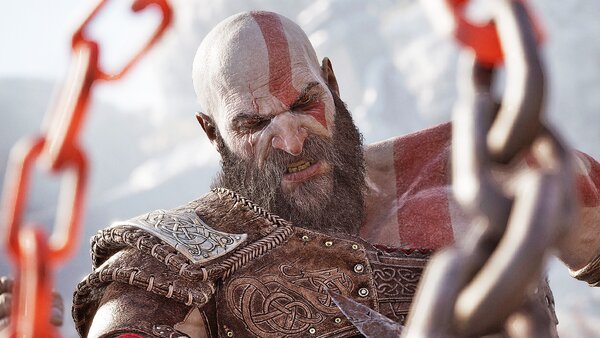
2018's God Of War was a major departure for Santa Monica Studio's franchise, turning the rage-consumed Greek demi-god into a sombre father battling Norse deities alongside his son, Atreus. With its over-the-shoulder free camera, heavily revised battle mechanics, change of location, change of primary weapon, and partner-based gameplay, the semi-reboot seemingly had little resemblance to its roots.
Fortunately, this new bold direction was a fitting godsend. This incarnation of GoW brought back every element that veterans loved, including creative puzzles, intense character conflicts, accessible combat, and epic boss battles.
However, it was clear the primary focus was on the overarching plot and fleshing out the central characters. Though Kratos has always been well-written, he had been humanised more than ever, thanks to the tight script and Christopher Judge's magnificent performance.
God of War turned out so well, players wished they could experience these beautifully written characters and explore the gorgeous open-world a little longer.
As such, God Of War Ragnarok was more than welcome. The sequel improved in every department, offering combo-based combat, more variety in weapons, less tedious travelling, diverse landscapes, and a greater sense of scale. Different characters could assist Kratos this time around, and Atreus was now controllable, diversifying the gameplay further.
Once again, Ragnarok focused on the character dynamics and conflicts above all else, but to a greater degree. Though God of War veterans expected a bad-ass and epic adventure, nobody was ready for how poignant Ragnarok would be.
3. Red Dead Redemption & Red Dead Redemption 2

Red Dead Redemption had one major problem - it was too good. Rockstar's cowboy title flawlessly incorporated everything synonymous with the Wild West, including horse-riding, Mexican standoffs, ranching, raiding, ambushes, bounty hunting, gambling, hunting, racing, and shootouts. It even weaved in a deeply entertaining side-story involving a snake oil salesman.
Basically, Redemption covered it all. So, what could another instalment offer that was any different?
But Red Dead Redemption 2 proved there was still a lot more to do and tell. As expected, the open-world is magnificent and the mechanics had been revised to perfection. Though it harbours the DNA of the preceding title, this instalment explores the same themes in greater depth. Themes surrounding social change, manifest destiny, the cycle of violence, and of course, redemption are interweaved into the narrative in an organic way, so it never feels forced.
More care is given to each sub-plot than ever before, so there's a great sense of accomplishment and closure every time a chapter is completed. Each character is so well-rounded, it's an emotional tour de force any time one of them bites the dust.
In a nutshell, gaming doesn't get much better than Red Dead Redemption 2.
2. Portal & Portal 2

It's hard to think of a game that utilised a single mechanic in a more inventive way than Portal. Though the wormhole-based puzzles are straightforward to begin with, you're performing stunts later on that you never thought possible. There's little explanation how to solve the elaborate puzzles, so it's deeply satisfying when you complete each test chamber.
Portal is also astoundingly funny, thanks to the snarky AI, GLaDOS, voiced by Ellen MacLain.
The delightful FPS also knew not to outstay its welcome. Its succinctness gave the main campaign a lot of replay value and made Portal extremely popular with the speedrunning community.
Even though Portal feels perfect, the follow-up is paradoxically more perfect. Portal 2 did what all great sequels do, expanding on everything that made the original special without simply recreating it. Brand-new mechanics were implemented that made the puzzles more elaborate than ever. A new AI called Wheatley was introduced, voiced impeccably by Stephen Merchant.
Rather than just offering more GLaDOS banter, the sarcastic machine's origin was heavily expanded, as was the backstory behind the entire facility. Instead of having GLaDOS return as your bitter rival, she becomes your unwilling sidekick, creating a different dynamic that's hysterical but touching. (Also, whoever decided to turn GLaDOS into a potato deserves five raises.)
Portal was a wonder to behold, but Portal 2 ticked every box, offering an experience that was enjoyable, hilarious, emotional, and epic.
1. Baldur's Gate II & Baldur's Gate 3

Although there was a ton of buzz for Baldur's Gate 3, it had a lot to live up to. Baldur's Gate II isn't just one of the most beloved PC titles or role-players, but among the best titles period.
The gameplay and mechanics were so smooth, you can tell the development team tried and tested every aspect to death. It was more strategy-based than the original, so players had to be more tactical and calculating in battle, which made victory ever sweeter (especially after defeating the infernal Demogorgon). Although The Throne of Bhaal DLC could've been a cash-grab, it was apparent the creators put just as much effort into it as the main game.
When Baldur's Gate 3 came out in 2023, its predecessor had enjoyed its mantle as the definitive Dungeons & Dragon's title for over two decades.
But Baldur's Gate 3 didn't just up its game. Instead, Larian Studio's apex title raised the bar for the entire gaming industry. The storylines effortlessly intertwine and present deviating plot-points, creating a freeing experience, which made players feel like each decision they made develops the characters and expands the overall narrative.
Despite the complexity of the D&D Fifth edition rules, the round-based combat is remarkably easy to pick up, even for beginners.
In terms of graphics, animations, voice-acting, open-world structure, combat, and character development, it's hard to find anything to say except they're faultless.
Although games shouldn't be praised for being released without game-crashing glitches, it's been a long time since a title of this complexity was released without issue.
Not only does this threequel make Baldur's Gate II feel primitive by comparison, it puts almost every triple-A title in recent memory to shame.