10 Reasons Why Apex Legends Is BETTER Than Call Of Duty: Blackout
Battle royale ain't dead yet.
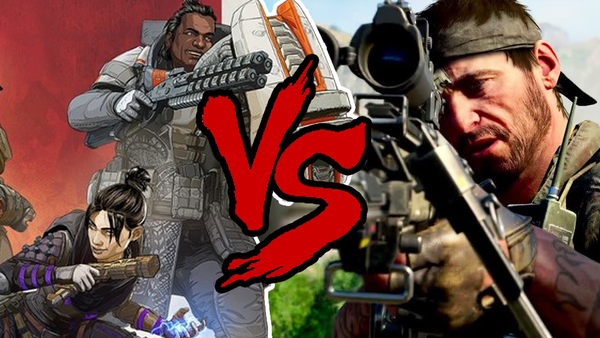
Following a surprise release (that was totally revealed days prior thanks to a whole host of leaks) Respawn and EA's Apex Legends is out in the wild. Despite being from such an acclaimed studio, it hasn't been an easy sell, as even a fleeting glance at the game's description immediately draws attention to some pretty pertinent red flags. Not only is it the publisher's first attempt at chasing the battle royale dollar, but it's free-to-play, effectively replacing Titanfall 3 and progression is built around loot boxes.
However, the developers have actually acknowledged how, on paper, their latest release looks a bit like a cash grab. In fact, the "surprise" release was in part a decision made in order to circumvent the inevitable backlash and let the product do all the talking, rather than the marketing.
That was a a genius move because, despite there still being some leftover resentment that Apex Legends isn't a proper Titanfall sequel, it's damn good, and a real breath of fresh air in the battle royale space. Putting its own spin on the genre's core conventions, the release fits snugly in the sub-genre, but innovates enough to not be instantly suffocated by the big three, Blackout, PUBG and Fortnite.
It's biggest competition is Blackout, though, and while it's early days, Apex Legends might have already done enough to dethrone it as the console battle royale king.
10. It's Visually Stunning (At Times)

Even though Valve's Source Engine is starting to show its age (especially when pitted against other EA first-person shooters built on Frostbite 3), Apex Legends still looks gorgeous at times. A lot of battle royale games, by virtue of their sheer size and scale, look kind of ugly when scrutinised up close, with textures looking dated and overall quality taking a dive.
The same thing can be said about Apex Legends, but the devs have clearly done the best with the tools at their disposal, creating a visually rich environment for players to shoot each other to death in. The art design certainly owes a thing or two to Borderlands, but Respawn have mixed those influences in with a style that feels distinctly Titanfall.
From deserts built off the backs of gigantic skeletons to lush sci-fi greenery, there's a real creative flair to Apex Legends' first map. Blackout, on the other hand, doesn't have anything to really mask the downgrade in visuals from Call of Duty's regular multiplayer. It's colourful, but the bog-standard buildings, barns, and oh-so-many shipping containers makes the environment feel kinda nondescript - even if it does bring together pieces of maps from Call of Dutys past and present.
9. There's Way More Personality

What's more important than pure visuals, though, is the vibrant personality flowing through every aspect of Apex Legends' characters, locations and lore. The heroes themselves are distinct and memorable, not simply defined by their weapons and abilities, but their unique appearances, characteristics and roles.
Even better, the developers have mentioned how they want to build this world and further the in-universe explanation for these battle royale bouts going forward. Apparently, it'll be rolled out in the same way Overwatch's CG videos and other out-of-game material continues to build a narrative around that title's multiplayer.
Of course, we'll only get a proper taste of how this will play out once the first season kicks off in March, but the devs are already working off a tantalising base. Blackout, on the other hand, doesn't have the same kind of meta, and while it does take pride in its franchise heritage, any real personality owes pretty much everything to the fondness players have for previous titles.
8. Looting Is No Longer Boring
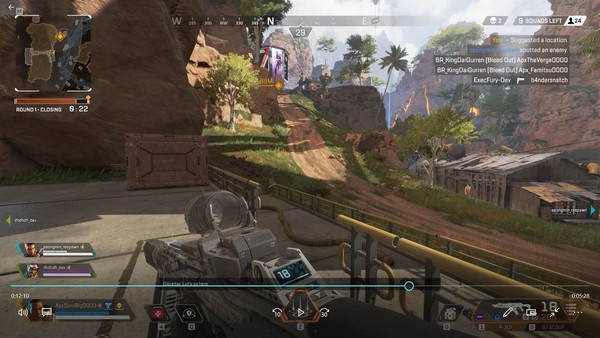
So far, battle royale games have mostly focused on the downtime between firefights, rather than the actual battles themselves. Jumping into a massive map and having to fend for yourself, all the while finding resources and weapons so you're not instantly flattened by someone who happened to land right next to a rocket launcher, offered a unique gameplay loop that was, initially, incredibly innovative.
However, when every imitator under the sun adopted the same system, and forced players to scout for the same kind of weaponry in the same kind of locations, it got old real fast. On the surface, Apex Legends still has the same loop, and you're still spending a good chunk searching for better gear, the key difference is in the presentation.
You're no longer searching the same copy-and-pasted rooms for boring rifles or attachments, but opening cool containers and getting the instant gratification of seeing a purple gun pop out of a futuristic box. It sounds daft, but that's the kind of audio-visual satisfaction which made Borderlands' loot system so satisfying, and there's a reason why so many shooters colour-coordinate their items in the same way.
Games like Fortnite have also leaned into this style, but Blackout's loot system remains as bland as ever.
7. The Ping System Makes Communication Effortless

Apex Legends made the controversial decision to force you into playing with two team members at all times, but it's attempted to make that process as efficient and fun as possible through the 'ping' system.
Even though it's still best to coordinate with a mic, not every player enjoys talking to random strangers online, and this convenient system, attached to R1/right bumper, helps keep your team together in the thick of battle. By pressing the button you can highlight weapons, armour, enemies or locations you want to venture to next, while your in-game character will shout out an appropriate line for added clarity.
The added audio line surprisingly makes your team actually feel like a close-knit squad rather than a band of randoms. The visual detail also makes it easy to change tactics on the fly, and being able to ping vital information like an enemy's location keeps the communication lines open without, you know, actually forcing you to verbally communicate.
6. Heroes Add Tactical Depth

If you saw it written down, the description "a battle royale hero shooter" feels like every current multiplayer buzzword piled into one sentence. It's the kind of description that would no doubt make an executive's eyes light up at the prospect of the impending stock increases, but the average gamer's eyes roll into the back of their head.
Fortunately, the combination of the two different multiplayer sub-genres is more than a way for EA to attract two different audiences with one game, but a vital way in which Respawn have added more tactical depth to the battle royale experience. No longer does every single person start out on the same playing field, with your choice of hero being integral to the way you and your team approach each match.
Each one, of course, can still be strong on their own, but every hero - or 'Legend', if we're going by the game's lore - is clearly designed to be part of a larger whole. They're closer to Rainbow Six Siege's Operators than Black Ops 4's, which means players have a bunch of different playstyles to master.
Battle royale games suffer a little bit with longevity or the idea that you're progressing the more you play, but learning each of these classes should provide you with a touch more incentive to keep jumping into Apex Legends matches.
5. Different Ways To Revive Team Members Minimises Downtime & Restarts

One of the biggest frustrations found in battle royale games is how much downtime there is. Not only do you spend the majority of your time looting and getting ready for a fight which can end you in seconds, but then you're immediately kicked back to the lobby and have to wait to drop into another match to start the whole thing again.
That's essentially the risk-reward of these kind of experiences, but Apex Legends has added one feature which makes it a little more bearable: the ability to revive dead teammates. While other games let you pick up downed friendlies, only Respawn's game lets you actually bring dead ones back to life. If a teammate dies, you can pick up their 'banner', haul it to the nearest revive point and bring them back into the fight.
Not only does this encourage teamwork and players not quitting as soon as they're dead, but it also provides added tension in combat. It takes a while to revive friendlies, and the trek to the respawn point, and the fear that follows putting yourself in danger to activate it, provides a rush Blackout simply doesn't have.
4. Time To Kill And Weapon Variety Is Fairer
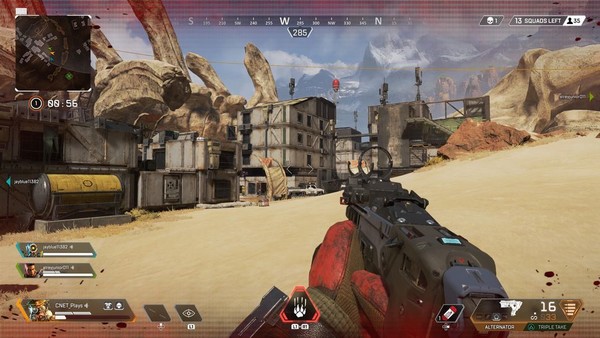
While the time-to-kill in Blackout is increased from the regular multiplayer, it still feels like the winner of any combat scenario is the one to spot the other first. Occasionally you can fight back, but other times it feels as though there's nothing you could have done to avoid a cheap death.
Apex Legends isn't perfect in this regard either, but it certainly feels like you have a fighting chance no matter how well-equipped the player you come up against is. With a shield system and then the regular health pool, it takes a good few hits before you go down, and you actually have the ability to trade shots with your enemy, taking turns going on the defensive and offensive.
Healing no longer feels like something that can only be accomplished between firefights (if you survive, that is), but an option within combat itself. Overall, there's just a greater push and pull to each engagement. It's not perfect, but it's a step in the right direction.
3. The Map Balances Long-Range And Close-Range Combat

It's potentially too early to assess Apex Legends' expansive environment in its totality, but so far it does seem way more dense and purposefully designed than your average battle royale launch map. The distinct areas, as mentioned previously, which cram a bunch of different visual influences into the same play space, are of course aesthetically pleasing, but the design of the level also facilitates a balance of playstyles.
It's a running joke that the only people who win battle royale matches are people who camp in bushes and pick off unsuspecting enemies form afar. There can still be an element of that in Respawn's release, but the most noticeable part of Apex Legends' combat is how little you can rely on pure line of sight to take out enemies.
Though it can never be as tight and authored as a regular multiplayer map, Legends' arena certainly feels the closest a developer has come to replicating that same flow. It's not just one lifeless expanse, but a constant mix of long-range areas and tighter close-quarter zones that force you to switch up your approach.
2. Teamwork Makes Matches More Focused
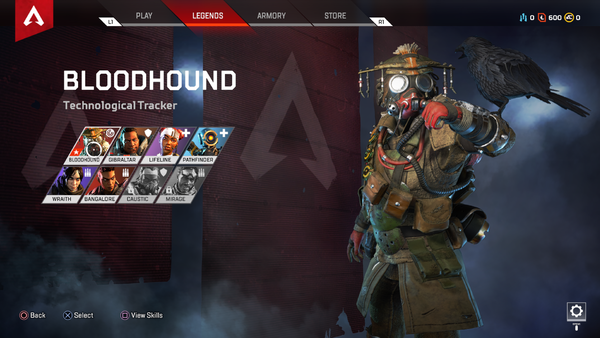
The biggest difference between Apex Legends and any of its competitors is the way it forces you into a team of three. While that will no doubt put the lone wolves out there off, it's actually the best decision Respawn could have made. While team modes exist in other battle royale games, those experiences certainly aren't tailored around them. They can still be enjoyable, but those titles are designed specifically so you have fun no matter whether you're alone or with friends.
Apex Legends, on the other hand, would be demonstrably worse solo. The way the heroes are set up makes their power sets and unique abilities kinda useless if they're not supported by those of other players, while coming into contact with three other enemies ensures a dramatic firefight even if it's your first and last of the game. And, of course, it ensures you always have a chance to be revived and brought back into the match without having to quit.
It's the subtler changes that make the experience feel fresh, though. The way you group together when dropping in, and the subtle uses of the ping system, inherently promotes team play and bouncing off each other. You're not just aimlessly wandering around, passively searching for items and hoping nobody stumbles across you, but roaming the wastes as a strong unit and actively seeking out combat encounters.
1. It Doesn't Make You Wish You Were Playing Another Mode

The biggest problem with Blackout is that, with its constant references to prior Call of Duty games and copy-and-pasted shooting mechanics, there are times where you just wish you were playing the regular multiplayer. Sure, firefights with other players can be an adrenaline rush, but they only remind you how good even the base TDM experience of any COD game is, and how much of that appeal is lacking in the battle royale mode.
Apex Legends, though, feels fundamentally different from Titanfall in a way that doesn't create this sense of longing. Despite taking place in the same universe and boasting the same buttery-smooth shooting mechanics, the two are markedly different when it comes to how you actually play them. The lack of wall running or Titans, the new abilities and weapons, as well as the focus on team play and increase in the time to kill, offers a gameplay experience that you couldn't find in its sister series.
In that sense, then, Legends feels like its own distinct experience, rather than a spin-off that looks and plays like a simple variation on an experience you're already well-acquainted with.