10 Sega Dreamcast Games You Really Should Have Played
 I really don't think there are enough articles online about the Sega Dreamcast. The system was years ahead of its time and, quite frankly, was one of the greatest leaps forward in gaming history. Launched in Europe on October 14th 1999, it officially ceased production on March 30th 2001, granting the console a mere 534 day lifespan. To put this in perspective, the excess Dreamcast consoles produced prior to launch continued to be sold new until 2007, despite there being no official way for that to happen. But despite "failing" less than two years after it was first launched, the system produced some incredible games - both innovative and informing - that I feel you should go out of your way to find and play. Maybe you've played these games first time round and, if that's the case, well done - but don't rest on your laurels, because there's a generation of clueless gamers (most of whom were born after Margaret Thatcher left office) and they might not have a clue of what gems you speak of. You'll find Dreamcast consoles in a variety of places, including charity shops, pawn stores and independent games retailers nationwide - according to UK magazine Retro Gamer you should expect to pay between £20 and £40 for a Dreamcast, in a variety of conditions, whilst the games can be located from anywhere between 50p and £50. While some of these titles are readily available on other formats, I recommend that you stick to the Dreamcast version as it offers a unique experience. So remember: this Christmas, don't ask Santa for a PS4 - ask him for a Dreamcast instead... and educate yourself! And no, there is to be absolutely no mention of Seaman.
Honorable Mention - Dreamcast Virtual Memory Unit
 I remember the first time I ever held a Dreamcast controller in my hand. It was bulky, unusually designed (compared to that of its rivals) and reminded me of the PlayStation's Dual Shock Controller if anything. But it was the question of why the controller seemingly had a massive hole in the top that confused me most. I soon learned that this belonged to the Virtual Memory Unit which, to my mind, is one of the most forward-thinking designs ever committed to console accompaniment. Although not strictly a game itself, the VMU was an attachment which brought life outside these titles, and some games featured here would not have been included if not for their VMU functionality. Several titles for the Dreamcast included mini-games that could be downloaded onto a VMU and allowed you to continue the experience way beyond your initial play. Although its primary use was as a memory storage device, it quickly evolved into acting more like a handheld game console, which had essentially came free with the console. Of course, it wasn't free because you had to buy it, but if you planned to save your games you'd be doing that anyway - so the improved functionality was something which Microsoft (and ultimately Sony) obviously watched very carefully, given the hindsight of games development. It gets an honorary mention on this list because it's a catapult that, although not perfect, gave rise to the possibilities that created the standards we take for granted in gaming today.
10. WWF Royal Rumble
 Not to be confused with the video game released by LJN in 1993 for the Super NES and Sega Genesis, WWF Royal Rumble 2000 was developed by THQ exclusively with the Dreamcast in mind. Although a version, spearheaded by Sega, found its way into arcades - it's the original console journey that I remember taking most fondly with this title. In comparison to its former siblings on other consoles, Royal Rumble's charm lay in its simplicity, which allowed for several unique features including support for up to nine wrestlers on the screen simultaneously. It also allowed multiple uses of the one wrestler, which (due in part to the game's smaller roster) led to hilarious instances during matches that often found three to four Steve Austins facing down in the Squared Circle. Now, a lot of people gave this game a hard time, due in part to the small percentage of actual wrestlers present and the lack of game modes. The game just featured Exhibition matches and, you've guessed it, Royal Rumbles- so there was a certain feeling that some DC gamers had been hard done by. But when you think about it, does any game which contains D Lo Brown really need to feature anybody else, especially one with that special "S" icon that allowed you to completely circumvent the rules and jump back into the ring having been legally disqualified from a Rumble match? While wrestling fans come to terms with WWE 2K14 and its impact upon their genre, spoiled for choice with legendary encounters and downloadable content, we ask you to consider a simpler game where the best thing to happen was to invite three friends around (each with their DC controller), plug into your console and load your game for some fantastic fun. And if that wasn't good enough, online playability allowed you to invite up to another 5 friends (who you couldn't actually stand to be with physically) to join in the experience as well!
9. Sonic Adventure
No doubt when Sega first dreamed up their Dorīmukyasuto they considered how Sonic would look on the format. Sonic had been so well connected as the Sega mascot by this point that I'm surprised the Dreamcast didn't actually feature the Blue Hedgehog's wagging finger anywhere on its case. First released in November 1998 (almost a year before the Dreamcast was launched in Europe) Sonic was, quite literally, the Dreamcast's leading title and was also the first game ever created for the format. It's no surprise therefore that, and I can hear the pun's already, Sonic's "head start" meant Sonic Adventure was to become the best selling game on the platform. According to estimates, it beat it's nearest rival for that privilege by almost 1.2 million copies alone, meaning that it was very far ahead in terms of competition. The only downside is that's sequel, released in 2001, came to late to help save the console as Sega had hoped. Set on a fictional island and located within a city, the plot was relatively straightforward, if you know anything in regards to 'Sonic 101' - Doctor Eggman plots to steal the seven Chaos Emeralds and some entity has been released to wreck havoc in the process. Despite the generic plot, the game gives you a chance to witness the full potential of its format, something that is rarely seen so early on in a console's lifespan. There's a triple treat from graphics, gameplay, and soundtrack which leave you feeling overwhelmed by the amount of effort that's gone into the game. And although it's not the first ever 3D Sonic game, it was the first in the Sonic the Hedgehog series to feature free-roaming 3D gameplay. But there's also another reason it makes this list and that's because of the Chao. The Chao was a virtual pet which could be cared for and raised by the player, but if they decided to download the additional Chao Adventure mini game, they could download the creature to their VMU (Visual Memory Unit) and go on the move - essentially taking a small part of the Dreamcast with them wherever they want. This simple - but pivotal - act changed gaming forever and soon console gamers were not simply restricted by the limitations of their physical machines, with modern technology allowing interaction between mobiles and cross platform play on multiple Sony formats.
8. Resident Evil 2
 Right. I know what you're thinking: I've hit a dead link or I've gone to the wrong page. He can't possibly be suggesting that Resident Evil 2, a game which was arguably most famous for being one of the most classic PSOne sequels in existence, deserves to be on this list. Can he? But the truth is that, yes, I most certainly can. Resident Evil 2 has no doubt been featured on many lists (some of which are no doubt on this very site) calling it either the best game on the PSOne (stiff competition mind), best zombie survival game ever, best Capcom game ever or just the best game to ever feature a reporter named Ben - why does nobody ever remember Ben? It was critically acclaimed by critics, who praised its atmosphere, setting, graphics and audio. 15 years after its release, you'll still find it topping the best 100 games ever made. Chances are you've played it already. So why Dreamcast? The only noticeable graphic change was the resolution, as the Dreamcast version keeps the additions from the original PC release - running at 60 frames per second during game play. The fact is because it's a port. The realism of Dreamcast is that it had burnt a series amount of bridges, mainly as Sega had released a number of consoles within such a short time period across the 90s, thus forcing developers to update their own games and suffer financial setbacks as a result. The strength of the Dreamcast lay in three areas - one being the technology, one being original games, and the other being ported titles - games that were already so familiar to gamers they would bring in "new money for old rope" and for reasons of either nostalgia, boredom or just safety there would always be a relief in playing games you knew the ending too or had already completed on another format. It's why the likes of XBLA and PSN are so popular. So when I first picked up Resident Evil 2 on the DC it was because I knew William Burkin's secret, I had a funny feeling Brian Irons (the Police Chief, seriously) was corrupt and there was always something funny about the line "that maniac is trying to ram us" and I still wanted to hear it again. Of course, several other people had (and still have) the same idea, so of all the games featured on this list expect to pay a higher price for this one in particular. And should you find it lurking in a charity store bin for 50p, don't run scared, don't scream - just calmly hand it to the cashier and say you don't need a bag. Good for the environment.
7. Crazy Taxi
 Crazy Taxi is the third highest-selling game for the Dreamcast. But you might be surprised to learn that its sales are confined almost wholly to America. Of the 1.2 million copies it sold worldwide, it only mustered a paltry 115,039 copies in Japan. Reason? Because some games are only really meant to sell their specific market. Personally I'm surprised that the creators of Crazy Taxi were never actually sued by Paul Schrader, so close is the game with the latter's idea for a certain 1976 film starring Robert De Niro and Jodie Foster. But I suppose this turned out to be one of those situations where the cross promotion and knowledge of the film led to the sales of the game. Having said that, Crazy Taxi does not see you take on a character anywhere near the likes of Travis Bickle - rather its very simple plotline is to pick up customers and take them to their chosen destination as quickly as possible. It's something that might infuriate Grand Theft Auto fans, as this simple premise has been included as a mini game in that series for a while now, providing virtually nothing to the main plot. As you travel in the general direction of your destination, an arrow points "as the crow flies" to your goal - which results in some hilarious situations as you attempt to plow through that building. It would have made this game a lot easier I suppose if you could simply sandbox everything ala Battlefield 4, but times were tough in 2000, people needed to get where they were going and San Francisco (or whatever crazy city you're meant to be in) had a lot of "virtually challenged" streets. The game's simplicity led to its success - success which far outgrew the Dreamcast, with the game recently being re-released on Xbox 360 as part of a "Dreamcast Collection." Punk fans got an extra boost as two world class bands, Bad Religion and The Offspring, contributed music for the soundtrack - an accompaniment benefiting from enjoyment. Ultimately Crazy Taxi became another game to outlive the Dreamcast, although it's first incarnation was a DC exclusive, it led to several ported versions appearing on PC and even PS2. Interestingly enough, the game's sequel remains a DC exclusive, unless you count the horrible PSP port created in 2007 - which I don't - while its obscure third installment was one of the only halfway decent games released for the original Xbox (my apologies, in advance, to angry letters from Halo fans).
6. Sega Bass Fishing
 It's about this time that you're ready to go and take a coffee break - just a moment to pause and reflect - as we reach almost half way through our chart. And if there was ever a time for coffee then the riveting sport of Bass Fishing should literally be endorsed by Maxwell House. Indeed, Sega Bass Fishing is without question, one of the most unusual games to have ever been released on a home console system. Not because of the activity - fishing games have a well-documented history on platforms (well, I'm not going to document them, but someone has) going back as far as the classic 'Jack Charlton Fishing' for Commodore 64 - but more because of the specifically designed 'Sega Dreamcast Fishing Rod Peripheral' that accompanied it. As a precursor to the Wii, this design was in a league of its own, with players literally being able to get as involved in the activity as possible. While the game was released with a narrow sales-point in mind (I mean, if you're not into fishing, does it really appeal?) it was the chance for a different kind of gamer to come forward - essentially the same gamer the Wii approaches with Brain Training and Wii Sports. More importantly, what the game lacked in story or substance, it more than made up for in graphics and was praised for its amazing graphical capabilities, with the fish moving fluidly to create a smooth fishing experience. The fact this game was released on XBLA and PSN as late as October 2011 pays testament to its appeal - truly it's a title which inspires you to fish in a calm environment and attempt to progress to each level if nothing else. I recently found this game for £1 in a North Shields charity shop in near-perfect condition... although to be fair I was more impressed with the "coming soon to Dreamcast" leaflet that was still in the box!
5. Marvel Vs. Capcom 2
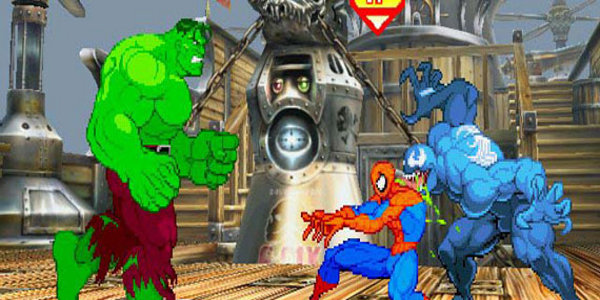 There has to be a lot of credit given to the individual who decided that a partnership between Marvel Comics and Capcom Games was going to work. Truth be told, even the most fleeting of comic book fans can name a Marvel hero, with most gamers being able to mention at least a handful of Capcom creations, so putting these characters against each other in competitive 2D combat was only ever going to create one problem - can we make a big enough roster to satisfy everyone? Both Marvel games had a significant period of exclusivity on Sega's system, adapted from their Arcade brotherhood and allowed to roam free in your home. In that style I should tell you that Marvel's second vs. incarnation for Dreamcast makes my list because I personally wasted my life playing this game. It wasn't exactly hard to do that, since the four players could be sourced from your own friends - and if you all had DC controllers you only needed the one console. To be perfectly blunt, nobody ever cared about Ruby Heart or Amingo.... the only characters worth playing were those you knew and loved, which led to all sorts of arguments about choosing sides and opponents. Today's leading game is arguably the first-person shooter, the Call of Duty and Battlefield series respectively control a large part of the market, with football and GTA taking up a large portion of the remainder. But the Dreamcast has virtually no representation in these areas, and while that's a big indicator as to the reasons of its failure, in retrospect the one thing it does do well is arcade conversion and beat 'em ups. Within this area of expertise, it's Marvel vs. Capcom 2 which remains a shining beacon for the success and popularity of the console in the tears of nostalgic gamers. The inclusion of Jill Valentine and Doctor Doom for the second installment was just an added bonus, then.
4. Jet Set Radio
What list of Dreamcast titles would be complete without Jet Set Radio? Before Tony Hawk attempted to take total domination of the market with the Underground series, there was the GGs and their quest to properly tag every piece of art in Tokyo, something that we can assume was only commended by the Department of Tourism. To define JSR as a skating game would do it an injustice, because it's so much more, it's a free flowing "pick-up and play" attitude means that you're given hours of fun attempting to achieve checkpoints and solve quests while collecting points. You collect health via spray cans and if you cause too much mischief the police come to chase you, which is akin to similar games of this era, not that we're saying there are any similarities. Quite frankly, Jet Set is unique, and its cel-based polygons are a fantastic example of a well-designed game at the turn of the Millennium. This game was also one of the first to be relatively changed for the North American release. Although a lot of new work and levels were done because of a copyright claim, the added addition of Internet connectivity gave players a chance to become more involved then they could have imagined at the time, connecting to the Internet via SegaNet and downloading user-created graffiti tags, or uploading tags of their own, as some could also be used to promote other Sega games. It was that kind of connectivity and cross promotion that was to be later copied on a much wider scale. Not that I'm suggesting Jet Set Radio "set" the trend. I just wanted to make that pun.
3. Nightmare Creatures 2
 "Ah ha!" I hear you say. "You've messed up! I know Nightmare Creatures and it wasn't released on Dreamcast! It's late and you've been drinking too much coffee in order to get this article done and survive another round of Sega Bass Fishing!" And normally you'd be right, except that Nightmare Creatures did find its way onto the DC, albeit in its second installment. I have such fond memories playing this rather questionable game - a game so questionable we couldn't locate a decent enough photo of graphics to show you - that it needed to be included high in my list. In truth, it's perhaps the only game on this list that you'll find, play and then come back and question its inclusion here. But this list is about games I feel you should have played from this system and while there are better storied games, better graphical treats and better picks on DC alone, it still deserves your attention. A reasonably priced copy awaits your attention from any good second hand internet retailer, so make sure to check it out, before this game is lost forever. OK, service done.
2. Shenmue

1. The Typing Of The Dead
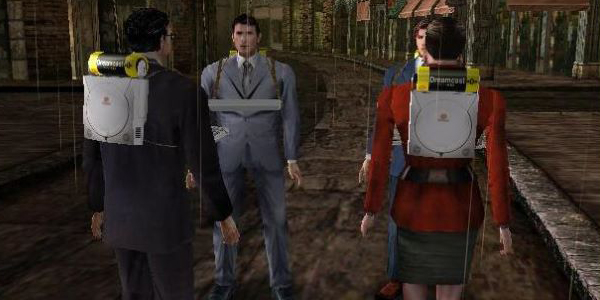 Rarely does a game inspire someone to go and get an education. Even as I sit here, typing this now, I can't think where I'd be if I hadn't played The Typing of the Dead. I easily owe the decision to become a journalist to the Typing Of The Dead as it helped me learn a skill I still use today that nobody else could teach me! Despite having never been released on DC outside Japan, I managed to pick up a copy shortly after its port from arcades, where it gathered attention due to a special cabinet equipped with dual QWERTY keyboards. The Typing of the Dead can best be described as an educational game, following the events of House of the Dead 2 almost word for word - except rather than have guns and chainsaws to slay zombies, there are prompts and keyboards. Characters carry keyboards that magically defeat the zombies, powered by a DC on their back, with a giant AA sized battery for good measure. Due to its inclusion with Seganet, the DC came equipped with its own branded keyboard - something that is quite common today with consoles, but is often only used for surfing online and entering forgotten or complicated PSN passwords. Typing Of The Dead was one of the first games to utilize the keyboard function of a modern console system and get players involved in learning a basic function as well as having fun doing it. This list has been long and exhaustive, but I simply need to tell you that the other 9 games on the path just pale in comparison to this beautiful beast of a game. Buy it now. At any costs. Like this list? Which Dreamcast titles would you have added?