10 Small Details Video Games Still Can’t Get Right
Do all games exist in an alternate reality where every mirror is smashed?
Video games have come a long way from the days of the arcades, when a few lines and a circle were enough to capture the minds of players. As the years have progressed they've become way more sophisticated, constantly finding new ways to blow fans away through graphical revolutions or brand new mechanics that weren't originally possible.
Of course, along the way developers have also found some ingenious means of fixing small issues that used to plague their games. 2018 saw dynamic dialogue finally perfected for instance, where cut-off conversations with NPCs could be continued after being interrupted, rather than dropped entirely.
Though they're small issues and hardly ruin a game's overall quality, devs finding savvy ways of getting around these niggles is always welcome, but there are a few that players just accept which should have been addressed by now.
These quirks aren't deal breakers, but it's always a bit weird to see them pop up so frequently.
10. Dialogue Being Drowned Out By The Action

I mentioned in the introduction that games have made great strides in letting conversations outside of cutscenes play out dynamically, rather than cropping up once and never being finished should they be interrupted, but that doesn't mean all in-game dialogue is perfect.
Since more releases have veered away from cutscenes, a good chunk of story information is delivered by characters over comms, with heroes and villains popping up for lectures without the game needing to stop in its tracks.
That gives the player more freedom, but it can lead to vital information being completely missed because these characters are yapping while you're blowing away goons.
Sometimes it's your own fault - if you're seeking out combat while you're being spoken to then it's on you for missing the dialogue - but often the nature of open world games especially means enemies can come out of nowhere and make it impossible for you to listen to the person speaking
Even worse, there's often not the option to play these conversations again, and they won't stop just because you're attacked.
It's fine, though, I didn't want to hear what Handsome Jack, one of the most charismatic video game villains ever, had to say anyway.
9. Invisible Walls
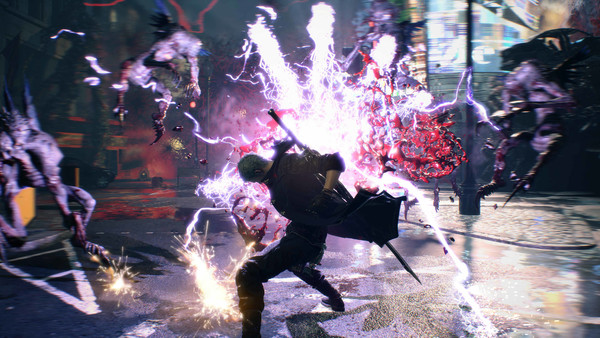
For a long time, it looked as though invisible walls had gone out of fashion. Though devs always need to limit where players can and can't go in their levels, simply slapping in an arbitrary invisible barrier is sure-fire way to break immersion, and games have gotten increasingly better at hiding these barriers through smart design.
However, because some titles go to great effort to hide the limitations of the play space, it makes the games that don't stand out like a sore thumb. Take Devil May Cry 5 for instance; it's a great hack and slasher with beautiful environments, but as soon as the player tries to experiment or move away from the beaten path, they're hit with one of these barriers.
Rarely are players blocked from paths by walls or doors they could clearly jump or open anymore, but invisible walls still plague games despite smart workarounds existing.
8. Enemies Having Goldfish Memories
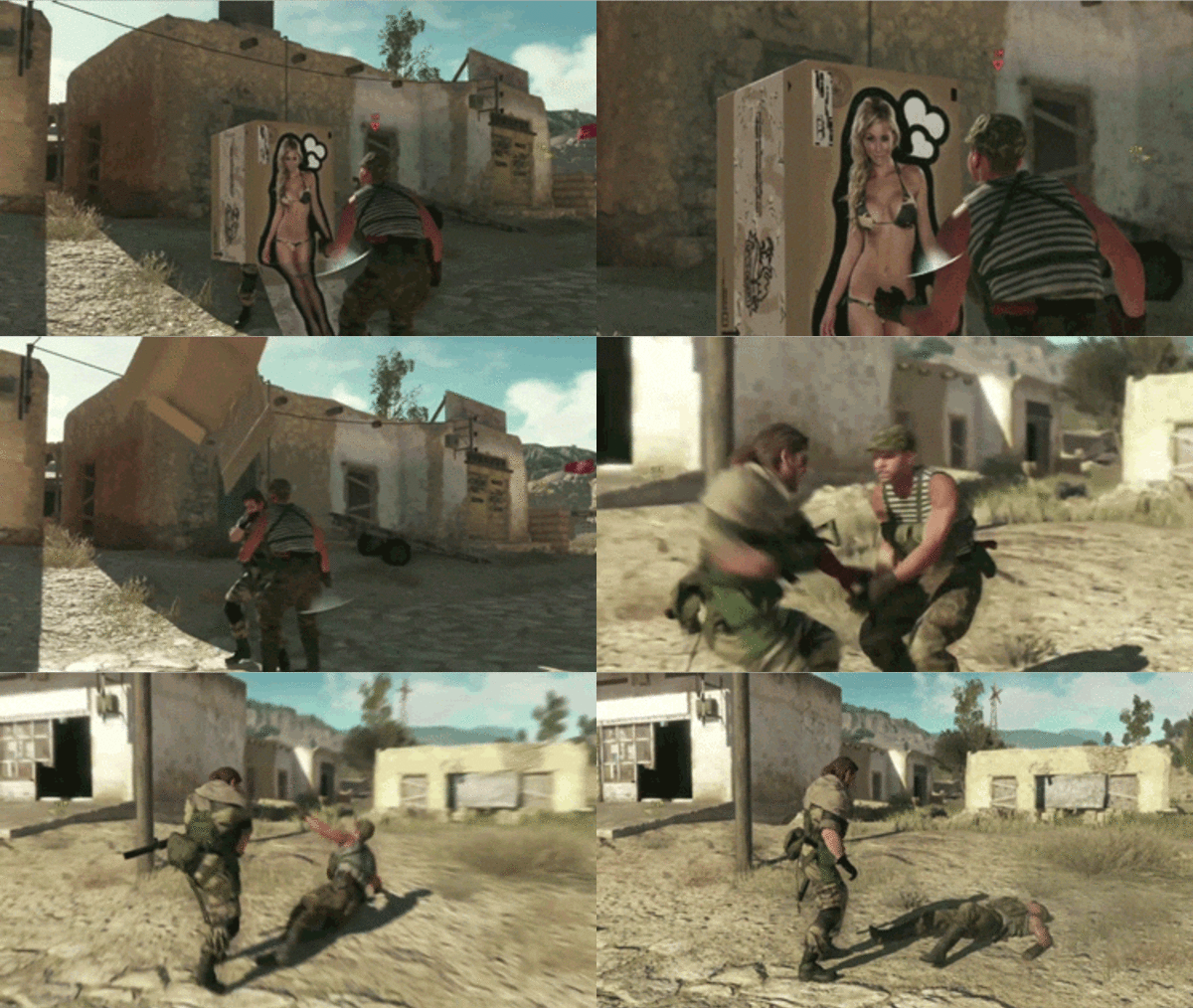
The cat-and-mouse nature of the stealth genre means that being seen and regrouping is part of the moment-to-moment experience (because if you hit a game over simply for being seen it would hardly be any fun), and that means these titles let you reset and try again without being kicked back to a checkpoint.
What we currently have is better than the alternative, but guards quickly going from being on the alert to returning to their regular patrol like nothing ever happened after a fight is always jarring. An enemy might catch you bang to rights, but then give up after 30 seconds of pursuit only to say "I guess it was my imagination" and return to their post (to get stabbed in the neck ten seconds later).
It's always those comments that are the most immersion breaking though. An enemy might spout that your presence "must have been the wind" despite seeing a half-naked dude with an eyepatch wielding an LMG inches from their face.
While we're here we might as well throw in enemy patrols not seeing anything unless it's right under their nose as well, or not being bothered about the corpse of their friend lying in the corner of the room. It's maybe a necessity to avoid frustration, but there must be a more elegant way of masking how dumb the A.I. is.
7. Characters Berating You For Exploring

A developer's biggest nightmare is a player getting stuck in a level. The player in question might be thick as mince, but it will always be a perceived issue with the clarity of the level design or specific mechanic that gets the blame.
Consequently, should you not be barrelling towards each new objective in your average action game, you'll no doubt hear either the character you're playing as or a nearby NPC say they need to stop wasting time and get a move on.
The occasional nudge is fine, but sometimes you might just stop for ten seconds and get someone shouting in your ear about where you need to go next.
Maybe you just want to admire the scenery and the work the devs put into painstakingly detailing the environment, or maybe you want to indulge your curiosity and look for hidden secrets but no, the game does not have time for that.
The same issue hurts puzzles as well. The joy of these sections comes from pretending you're intelligent for a moment, but spend more than a minute mulling it over and the character will just blurt out the answer more often than not.
If you don't trust a player to figure it out themselves, then what's the point of putting them in in the first place?
6. Avoiding The Rule Of Three

The rule of three is a video game design structure that once you know about, is impossible to not notice every single time you play a game. It doesn't matter the genre, whether you're playing Mario or Call of Duty this little sucker turns up everywhere, and makes every gameplay section feel like an arbitrary, repetitive slog.
The general idea is that when you're tasked with something in a game, be it beating a boss or solving a puzzle, you'll have to do an action three times. This might be avoiding certain attacks and then hitting an enemy, which you need to do three times in a row before they die, or getting three items before you can progress to the next area.
It's not always as obvious as that though; sometimes it's how many paths are in a level, or how many abilities you're given. The number will always be three.
Deadpool made a joke about the design principle being overdone back in 2013 and here we are six years later and nothing has changed. Come on, developers, listen to your pal Wade Wilson on this one.
5. Characters Drinking... Anything
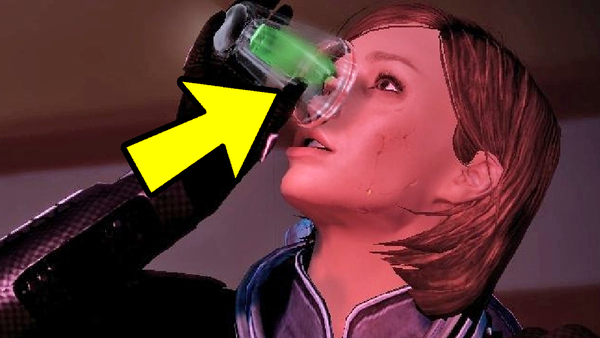
Video game graphics have reached a point where the pores on someone's face can be seen up close and personal, and their ear cartilage goes see through when the sun shines on it - yet all those immersive details are for naught because characters still drink like they're aliens inhabiting human skin.
Though water effects make for realistic oceans and rivers, they're not at the point where they can mimic the small amount of liquid found in a glass. Instead, when a character is poured a drink it's usually via a low quality animation and then a virtually static goo that completely disappears as soon as a character puts it to their lips.
Take the above example from Mass Effect 2, for instance. Look at the absolute state of it. How the liquid barely touches the glass before it's full, and how Shepard guzzles it down despite it never actually touching his lips.
A few titles do this well - The Last of Us is pretty convincing, for one - yet most completely crap the bed as soon as drinks appear.
4. NPCs Not Matching Your Pace
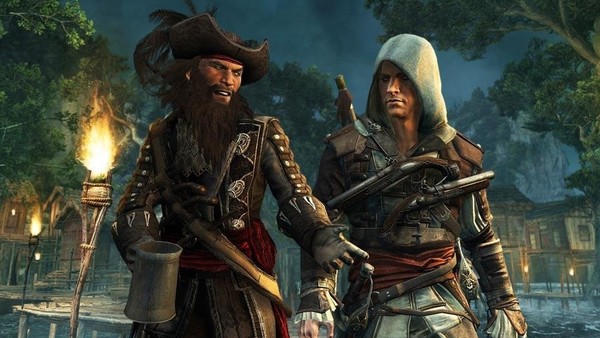
This entry might seem a little hypocritical considering I just criticised games for wanting players to speed through environments, but there's a difference between moving through the game at your own pace and being forced to come to a crawl because an objective requires you to follow an NPC.
Though these sections aren't inherently bad, and often award a breather between the action where you can get filled in on vital plot elements, why do the developers always make the NPCs slower than you? Being stuck behind slow walkers when you need to get somewhere is bad enough in the real world, and there's no reason that frustrating social situation needs to be replicated in games.
It's even worse if there isn't a walking option, so you're forced to run ahead, wait for them to catch up, run ahead and repeat until the section finishes.
The fix seems simple: just make the NPCs match your default speed. Games like Red Dead Redemption solved this years ago, and yet it still crops up, and is absolutely infuriating each and every time.
3. Mirror Reflections

One of my earliest gaming memories involves playing Duke Nukem: Time to Kill when I was far too young for it, and hitting the interact button in front of a mirror so Duke could spout off some one-liners.
However, for a while I wondered whether I simply dreamt that happening, because in the years since, games have completely forgotten how to implement realistic mirrors. Though you occasionally find a title here and there that has accurate reflections, a lot of the time mirrors will be conveniently smashed or dirtied.
Now, there is a reason for this. Having an accurate reflection requires quite a lot of computational power, because the game essentially needs to render the world twice and match it up with the movement of the camera, which can divert resources away from more pressing matters.
Still, the fact that some games pull it off and others just pretend they exist in an alternate reality where mirrors don't work isn't exactly a great compromise.
2. NPC Reactions To Violence

Random NPCs in video games are more lifelike than they've ever been. In open world games you can follow anyone on the street and watch them go about their daily routine, while the background characters in story-driven titles are even more convincingly realistic.
Of course, this all falls apart as soon as you interact with them.
Though they work fine when they're left to their own scripted devices, once players start messing around with them or engage in the action, it all goes to pot. Killing someone in front of most NPCs is either treated with a shrug or sees them scampering to the nearest bit of cover... where they'll stay forever even if you walk right up to them.
GTA V had a great system where you could never guess how an NPC would react to your actions - for instance, attacking them might force them to flee or chase you down in retaliation - but most games have a set few responses that can be easily broken.
1. Colour-Coding Parts Of The Environment You Can Climb
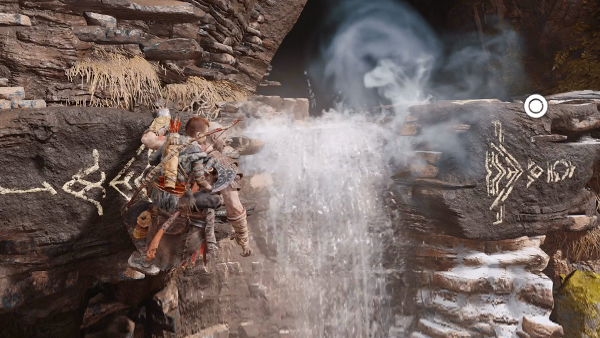
Platformers in the 2D era were pretty clear with where you could and couldn't go. If there was a ledge present on screen, you could jump up to it, and there was never a problem with figuring out which parts of the environment you could get to.
That all changed with the jump to 3D though, which needed to distinguish parts of the level from background decoration. Earlier games essentially just had you investigating every area and hoping for the best, leaving it to you to figure out if one muddy texture was climbable or not.
Consequently, most developers decided to colour-code or highlight elements of the world the player could engage with so they weren't jumping around trying to grab everything that looked like a ledge.
This resulted in the Far Cry series adopting dangling ropes to visually signify places that could be climbed, or Uncharted highlighting ledges that could be grabbed. This works to keep players moving, but it also makes it incredibly obvious where you're supposed to go, and draws attention to the limitations of how much you can actually explore.
God of War featured the same system, but actually explained why certain environments were highlighted. Not every game needs the same in-universe explanation, but finding ways to hide what is interactive and what's just there to look nice would do wonders for increasing immersion.