10 Subtle Ways The Witcher 3's Story Is One Of The Very Best
In a world of might and magic, gritty realism makes Wild Hunt stand out.

Deep breath...
Game of the Year, Best RPG, Developer of the Year, Best DLC, Best Art Direction, Best Soundtrack. Outstanding Achievement in Game Design, Excellence in Art, Most Wanted, Best Storytelling. Best Visual Design, Best Performance, Best Art Direction, Best Male Character and Studio of the Year.
Those are just some of the awards The Witcher 3: Wild Hunt and developer CD Projekt Red have displayed in what must be a trophy room brighter than the surface of the sun.
The Witcher 3 has been out for 18 months now, and anyone with a penchant for high fantasy RPGs will most likely have delved into the bloody and unforgiving world of Temeria and its neighbours. If you haven’t, then do yourself a favour and give into the hype, you won’t regret it! The graphics are beautiful, the controls refined and the game's difficulty allow for all approaches, from hack-and-slash to a more classic RPG experience.
Yet the truly great open-world games have to offer something more than a high polygon to keep us coming back for more. The characters need to be believable, the world needs to feel real and the pace has to find that oft-missed balance of desperate action and explorer-friendly roaming.
So what’s the thing that ties these all together? A personal story caught up in the midst of a world that doesn’t give a flying fudge about you. That’s how the real world works, and The Witcher 3 pummels it into our face at every opportunity.
--
10. The World Is Indifferent To Everyone
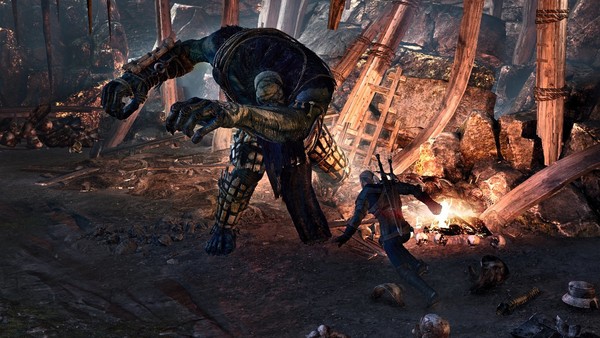
The Witcher 3 never once lets you forget that you are in a harsh, unforgiving world that just doesn’t give a steaming poop what you want.
The first game in the series opens with an exciting flashback cinematic before you wake up in Wolf Witcher school stronghold Kaer Morhen, for your 'Video Game 101' tutorial introduction. Sure, the calm doesn’t last long, but for a moment you think you’re safe.
Assassins of Kings begins in the middle of a castle siege. It’s one of the most exciting openings to a video game ever, but you are clearly the hero, kicking ass, and saving the day. Wild Hunt takes the safety net of the first game, your legendary reputation of the second, bundles them into a rotting carcass and feeds it to a humongous griffin. You begin the journey on a muddy road, under attack by an overpowered monster, chasing a woman only book-readers fully understand (Yennefer only appears in the previous games in flashbacks or as a footnote in passing conversations).
The first town you come to, White Orchard, is replete with swinging corpses, abusive soldiers, and racist townsfolk. Velen shows you the body-ridden fields after battle, the destroyed families and towns of the mutilated soldiers, and humanoid ghouls that scavenge rotting flesh, personifying the destructive nature of war to mind, body and soul.
This theme never lets up throughout the entire 300+ hours of The Witcher 3. Charming characters can be killed off at a moment’s notice, loved ones are tortured, and soldiers die whilst kings and spymasters treat their subjects like fodder.
The world is cruel, nasty and selfish. Just like Monday morning.
9. Charity Begins At Home

Speaking of an unforgiving world, why would anyone do you a favour, just to help you out?
Fetch quests are a dime a dozen in RPGs, but in the world of Geralt, totally believable. Imagine you’re a dwarf in the middle of 13th Century Temeria, struggling to survive as a blacksmith. An invading army is forcing you to make its weapons for free, your human neighbours use this to intensify their prejudice against you, then, to top it all off, one of the townsfolk burns your forge down. What would you do when a Witcher, a genetically enhanced mutant, trained to kill monsters for money, walks up and asks for directions to the nearest army garrison? You get him to help you first.
Even Geralt’s closest companions rarely help him without some ulterior motive. Aid from Redania Spymaster Dijkstra sees you serve as a political puppet before offering to help you rescue the persecuted mages. Dandelion needs you to placate jilted lovers and rescue him for the hundredth time before he can recount his history with Ciri. Even Zoltan needs a hand with his card collection.
The beauty of these quests, besides making us stronger and the lovely loot we find on the way, is how they build the characters and our relationship with them. Yennefer becomes more than just a powerful ally, but a powerful ally that is selfish, insecure, intelligent, and who we suspect is dabbling in dangerous, forbidden magic.
Some stories are explained over time, whilst others we only get glimpses of, further building on our curiosity.
8. Lore & Myths

The key to truly believable storytelling is having a fully fleshed-out world. The history, the religions, the legends, the politics… it all needs to be there. The challenge is giving all this information to the player without sending them to sleep. Whilst some might favour the Kojima-style 10 minute long FMV sequence, The Witcher hides its lore in the hundreds of books and thousands of random NPC conversations.
This ‘show, don’t tell’ approach enables the casual gamer more bent on progressing the plot, whilst the purist can take their time and read every Elven rune and decipher every poet’s sonnet. Whilst sometimes opening a book in The Witcher 3 can feel like an intimidating wall of text, the stories and histories, many taken from previous games and books in the series, expand on the characters, the races, the countries and the history of the world.
Whilst this extra info is world-building and not needed to progress, I am personally happy that I learned about the ‘Conjunction of the Spheres’ event, and how it brought the monsters into the world, before embarking on the mission that took Geralt across multiple worlds and realities. Mostly because it meant I at least had half an idea what the hell was going on.
7. The Truth Is Stranger Than Fiction

What’s so magical about all of the lore and myth in Wild Hunt is how romanticised it is. The heroes and villains of the stories often stand out against the lack of such characters in the rest of the world. Kings we know as cruel are presented in books as noblemen and heroes. Geralt falls in love with the supposedly hellish sorceresses and shares a brotherhood with the cruel, child-stealing Witchers.
The most memorable example of this is the story of Yennefer and Geralt, as sung by Priscilla in Novigrad. She sings the story of their passion for one another and how they are bound by fate. It’s all rather romantic, until you later discover the bind is a curse (well, technically a wish) put on them after Yennefer tried to enslave a powerful Djinn, or genie.
Seriously, Geralt. Just go with Triss, already. Any girl that tangles with elemental deities is just asking for drama!
6. Monstrous Reflections
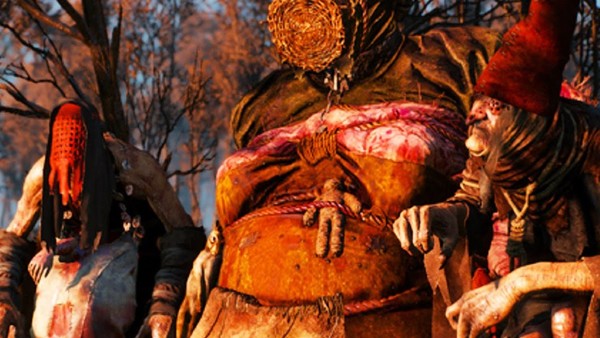
They say the scariest monsters are those that reflect our true selves, and The Witcher 3 is the poster-boy video game for ‘don’t judge a book by its cover’. Many of the monsters you meet turn out to be non-sentient creatures simply following their nature, trying to survive, or are some poor sod the wrong side of a horrific curse.
Meanwhile, almost every ‘normal’ person you meet, be them human, elf, dwarf or some other conscious, talking entity, no matter how outwardly innocent, almost inevitably wants to kill you or trick you into killing someone else.
What’s so captivating about this, is how easy it is to relate to the real world. Maybe not the killing part; but the richest, cleanest and prettiest of us aren’t necessarily the loveliest, whilst those that sacrifice for others are so often overlooked.
Storytelling is at its best when it makes us challenge our preconceived judgements, forcing us to look deeper. Like Blood and Wine DLC’s Dettlaff. Hideous, rampaging, murderous higher vampire? Or jilted lover and misunderstood…
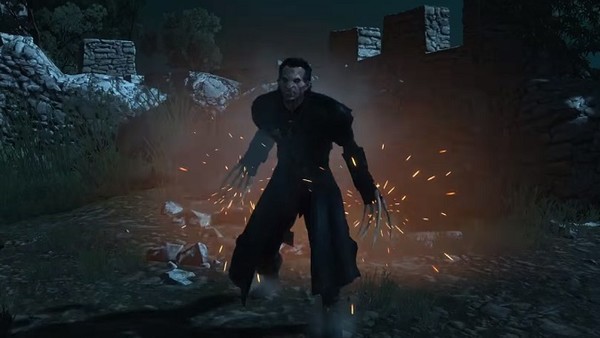
…Okay. Maybe a bit of both.
5. Good & Evil Are Subjective
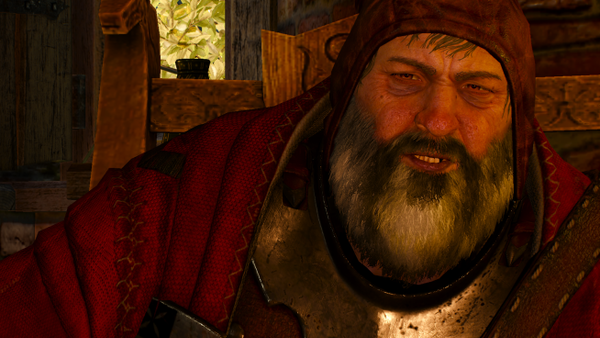
The most engaging media is that which forces us to confront challenging dilemmas. Just as the monsters blur the farcical line between nasty and nice (ugh, Santa – what a fascist), so to do the other NPCs of The Witcher 3.
Returning to Dettlaff as the example once more, slicing people like a pizza cutter isn’t the best way to make friends – but The Beast of Beauclair only did it to save the woman he loved… who was actually manipulating events the whole time. Yet still, Syanna was exacting revenge after years of being treated as an outcast, simply for having the superstitious misfortune of being born under an eclipse
The Witcher truly succeeds the most when it forces us to face absolute, hideous evil…and then provokes our judgements. The causes rarely excuses the crime, but it certainly stops and makes us think. The lord that feeds his own people to his pet basilisk needs to meet the sharp end of your steel, though his fight to save the near extinct species causes Geralt to question his own profession.
Is it right to kill the Werewolf and let a murderous sister live? Or let the Werewolf exact his revenge, but in doing so risk him killing more innocents? The fact that we control these decisions, and their consequences have real impact on the world, make them all the harder to carry out.
Just don’t help out that ‘poor, innocent ghost’ stranded in the tower on Fyke Island. That’s the last time I’ll be tricked into unleashing a devastating plague on an entire village. Probably.
4. Politics Is Thankless & Cruel

No one likes politicians. Even other politicians don't like politicians; especially if they're tortuous spymasters like Dijkstra, or genocidal maniacs like King Radovid V. Yet even these slimy creatures are subjected to the same storytelling rules as the other NPCs of The Witcher 3.
King Radovid's excuse for hunting and killing sorceresses is a poor one. As a young brat, he wasn't fond of Philippa's spankings. Hardly an excuse tying all mages to escape and lighting the fuse. Yet when we look at his psyche, his entitled upbringing, and the reputation and dubious actions of the mages, it is easy to see how his mind travelled to its horrific destination. Radovid trusted in Philippa, a mage, right up until suspecting she was manipulating him for her own power.
Soon after, he would learn how she founded The Lodge of Sorceresses, which by its very nature existed to preserve magic above all else, including the Kings the sorceresses served. With the ever present belief of an inevitable coup, coupled with the murder of his father and an invading empire from the south, it's of a little wonder that he turned out to be so coo-coo for a bonfire.
Anti-heroes and tragic villains infest the political preserve. The greedy Dijkstra recognises his King for the villain and leads a plot to assassinate him for the good of the people, uncharacteristically risking position and wealth to save sorceresses from the witch hunters. The guerrilla-like Scoia'tael non-humans, despite their vicious and unforgiving methods, are merely fighting for the survival of their diminishing cultures. Even the Bloody Baron that beat his own wife repents to bury his dead child. And you can see why, right? What a cutie!

3. We All Want To Be Geralt

The Northern Kingdoms aren’t a lovely place to live.
The Elves are outcast. The Dwarves ostracised. Women are abused and unwanted children turn into botchlings. Peasants get conscripted and murdered by soldiers, or left to toil back-breaking work in the fields…and then get murdered by soldiers. Monsters prowl the land night and day, ready to eat, crush, slice, possess or cook you. Even the lords and ladies in their castles are prone to frequent nastiness… killer bird curses, banquet bear slaughters, or trapped in your own dilapidated home with only a talking dog and cat, and a terrifying, undead Caretaker for company.
The only people with any real power in this world are the Kings - who get assassinated… or the sorceresses - who get their eyes gouged out.
Geralt was taken away from his parents as a child, subjected to terrifying trials, gruelling training, and life-threatening mutations. His emotions were all but drained from him and he was forced into the unrelenting trade of hunting monsters for low-pay from ungrateful and prejudiced species that are often more odious than the monsters themselves.
And despite all this, Geralt is who we’d all choose to be if we had to live in Temeria, too.
Geralt is independent, strong, resolute, capable, and can defend himself against almost any danger (especially if you can reload a save after dying for the hundredth time). Okay, so my idea of fun isn’t clearing out spider-infested caves so some merchant can store his wine…but I wouldn’t be me. I’d be Geralt. And Geralt can handle those giant eight-legged freaks with ease, collect his pay, and be back at the brothel before sundown. If some troll tries to boil my bones, or a gang of thugs tries to steal my loot, I’ll calmly turn around, wield my swords more elegantly than a conductor commands his orchestra, and be on my merry way (after picking their pockets clean).
In a world where everything is constantly trying to betray, murder or eat us, he’s everything we’d wish we could be.
2. Love Triangles

As enjoyable as the sordid moments can be, this isn’t just a gratuitous entry to allow me to use the image above (although, you know, that to).
The love triangle between Geralt, Yennefer and Triss genuinely adds something to each character. The love-hate relationship between Geralt and Yennefer serves to highlight the magical bond that binds them by force, although their intimate moments hint that perhaps there is more than just a spell between them.
Triss’ longing for Geralt is made all the more heartbreaking because she actually realises she can’t compare to Yennefer in his eyes, and his reaction to them both reveals that no matter how much torture he was subjected to as a young Witcher in training, his emotions could never be completely eradicated.
Even the sex scenes and flirting with other women across the open world serve to tell us more about the story and the characters within. Geralt isn’t exactly the trustworthy, Prince Charming, hubby-material-type, but he never lies about his affairs. In fact, the more you learn how common place the rumpy-pumpy in a strangers bed is in the world of The Witcher (and neither Yennefer or Triss are innocent in this regard, either), the more commonplace it appears, making Geralt’s honesty almost… dare I say… admirable.
All three treat sex as something that is purely fun and pleasurable, but, no matter the time or distance between them, never entertain the idea of love beyond their triangle.
1. No Such Thing As Miracles
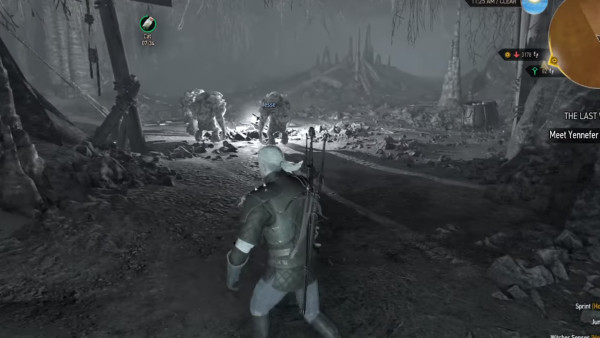
In a world of ghouls, goblins and faeries - witches, wizards and vampires, you’d be forgiven for thinking things were a little farfetched. From the word go, Geralt can project fire from his hand and take potions to help him see in the dark.
Yet, for all this, there is a gritty truth to it all. The Witcher 3 defines the rules, but applies them in equally harsh measure to everyone and everything. Magical powers, with their uncanny ability to render users infertile, coupled with the frequency in which wielders become mad or isolated, tend to have an er of misfortune about them rather than providence.
Rich lords and ladies can be cursed as easily as a peasant in passing muttering foul words, just as the cures for such curses are often difficult to come by and rarely see the side effects lifted without some nasty, residual effect. Even the magic itself is explained away with the minimal pseudo-science required to help us suspend belief. Oxenfurt academics study the science behind mystical forces, lending it credibility amongst the intelligentsia, just as the super human strength and reflexes of Witchers are brought about through mutation and experimentation of genetics.
The greatest adherence to the physical laws of The Witcher is its avoidance of any Deus Ex Machina. At no point does a knight ride in on a white steed to save the day.
More likely the knight will run in the opposite direction, leaving poor princess as lunch for whatever snarling nest she’s fallen into. Any mess Geralt finds himself in is often, at least partly, a result of his, or rather our, own meddling – and we have to rely on our own wits, Geralt's superhuman abilities, and our understanding of a dark, profound, and fully realised world, to see him to safety.
--
What do you think of The Witcher 3's story, world, characters and mythology? Let us know in the comments!