10 Times Video Games Found A Way To Be Even Worse
Ubisoft gonna Ubisoft.

The sheer amount of work that goes into even the worst video games is undeniable, and so it sucks when a new entry into a hit gaming franchise falls far short of expectations.
There's always next time at least, right? Countless AAA franchises have rebounded from a dud entry or two and even emerged stronger than ever before, though it's perhaps more common for a flagging series to just keep on trending downwards.
That's certainly true of these 10 games, all of which impressively out-did a hugely disappointing prior entry into the series by making yet another major misstep.
These 10 games all wore their desperation on their sleeves, whether crassly implementing loot box monetisation, misguidedly going the mobile game route against fans' wishes, pointlessly chasing the open-world gravy train, or simply releasing a lackluster, even unfinished product.
Each of these games left a large swath of the fanbase bitter and frustrated, that the series they loved seemed to hit rock bottom and then just... keep falling.
We can only hope that things might upswing from here, but you're probably better off keeping your expectations low...
10. Loot Boxes - Star Wars Battlefront II

2015's Star Wars Battlefront was one of the biggest gaming disappointments of the last decade - a visually stunning Star Wars-themed shooter that was ultimately an empty shell of a game.
Once you got past the gorgeous presentation and sheer fan-serving thrill of it all, Battlefront was egregiously lacking in content for a game touting a full-fat AAA price tag.
Without a single-player campaign or meaningful suite of multiplayer content, many understandably objected to EA selling a Season Pass for access to more maps and characters, feeling that they were being excessively greedy given how scant the base release was.
But EA seemed to listen to fans' vocal complaints, and made a persuasive case that 2017's Battlefront II would rectify the previous game's mistakes. With the addition of a campaign and all multiplayer DLC being free with no Season Pass to speak of, it was easy to be excited.
But in the days before Battlefront II's release, critics with reviews copies noted the aggressive implementation of loot box microtransactions in its multiplayer component, making player progression so staggeringly slow as to heavily incentivise spending real-world money.
And though EA quickly responded by removing all MTX elements, the fundamental structure of Battlefront II was still built around them.
It took many months before EA could adequately reintegrate MTX in a less-offensive way, by which time many players had already sworn the game off and moved onto other things.
This is without even mentioning the single-player campaign, which was infuriatingly lackluster and forgettable, seeming to confirm that EA said all the right things pre-release but did very few of them in reality - at least until a tectonic backlash forced their hand.
9. Going Open-World - Dynasty Warriors 9

The Dynasty Warriors franchise admittedly hasn't ever been a critical darling, though the series' quality is generally accepted to have noticeably declined with the release of the sixth game.
By this point, critics had grown tired of the series' well-trod formula and behind-the-times graphics, and though the seventh and eighth games certainly had their fans, they nevertheless represented a franchise that was basically totally out of fresh ideas.
And so for 2018's Dynasty Warriors 9, publisher Koei Tecmo made the decision to reinvent the series with an open-world design.
Unsurprisingly, this trend-chasing choice proved even worse than the drudgery of what came before, due to the flabbergasting dullness of the open world and listless quests contained within.
It is exactly what you'd expect from a publisher desperately attempting to salvage a franchise's dwindling sales - the bare minimum effort to try and keep up with the Joneses.
8. Mobile Exclusivity - Command & Conquer: Rivals

Once upon a time, the Command and Conquer franchise was the crowned king of the RTS genre, but the series tanked with the release of 2010's widely despised Command & Conquer 4: Tiberian Twilight.
Originally created as an online game for the Asian pro-gaming market, it was reworked into C&C 4 in an attempt to boost sales, as unsurprisingly didn't pan out well at all.
The uninteresting campaign, embarrassingly lousy live-action videos, intrusive DRM, and poor multiplayer functionality were all pilloried by critics and players alike.
And after years of stalled projects and buzz about a new C&C game, it ultimately turned out to be a mobile-only title, Command & Conquer: Rivals.
Though critical reviews actually weren't bad, the fan response both pre and post-release was scathing, with many decrying EA's decision to take a cherished franchise and shift it to mobile, complete with predatory microtransaction implementation.
C&C 4, as disappointing as it was, was at least playable on the lead platform that first made the franchise famous.
7. Being A Buggy, Rushed Mess - Battlefield 2042

For many, many years, the Battlefield franchise seemed completely bulletproof - even with stiff competition from Call of Duty, it continued to deliver some of the beefiest, deepest, most wonderfully chaotic FPS multiplayer carnage on the market.
But the mainline series' first major stumble came with 2018's Battlefield V, which while still decently reviewed, met a more hostile response from fans due to a lack of launch content and general feeling that it failed to bring much new to the table.
Sales fell far short of predecessor Battlefield 1, and so much was hinging on EA winning fans back over with 2021's Battlefield 2042.
Despite its attempts to innovate the existing formula, however, 2042 was trashed by disgruntled players on release for the lack of a single-player campaign, overabundance of bugs, and major overhauls made to the series' class system.
To many, it was indicative of EA rushing the game to market before it was ready - a fact they later admitted, while also citing the complications of producing it amid the pandemic.
Ultimately 2042 proved dispiriting enough that players returned to Battlefield V in droves, with its Steam player count being six-times that of 2042 within a few months of its release. Yikes.
6. Forced Motion Controls - Star Fox Zero

Fan response to the Star Fox franchise has been all over the map ever since 2002's Star Fox Adventures, which many felt deviated too far from the series' traditional gameplay style.
2005's follow-up Star Fox: Assault received even more polarising reactions due primarily to its short length and difficult-to-control on-foot sections.
But for the next mainline Star Fox game, Nintendo said "hold my beer" re: the control complaints and delivered one of the most unwieldy video games of the last decade.
The Wii U's Star Fox Zero, released in 2016, actually had a lot going for it on the surface - it looked great and seemed to play well in gameplay previews, but playing it for yourself was a whole other story.
Due to the game's forced motion controls, even basic manoeuvring became a frustrating chore, making an otherwise simple game far more challenging than it needed to be - and not in a good way.
As a result, Star Fox Zero received wildly mixed reviews from critics and players alike, causing it to flop at retail and prompting Nintendo to put the series back on ice.
5. Copying The Ubisoft Formula - Sonic Frontiers

Is there any video game franchise more maddeningly inconsistent than Sonic the Hedgehog? As beloved as the original three games are, the last 30 years of Sonic have pinballed between unmitigated dreck and only occasional flashes of inspiration.
The most infamous missteps include 2006's ill-advised Sonic the Hedgehog, which saw basically every aspect of its conception criticised, and 2014's Sonic Boom: Rise of Lyric, which was somehow received even more poorly.
Though the series finally seemed to rebound with 2017's 2D homage Sonic Mania - which netted the franchise's best reviews in literally decades - mere months later it was back to business as usual with the indifferently reviewed Sonic Forces.
Rather than get to work on Sonic Mania 2, Sega bafflingly scrapped plans for a sequel and instead forged ahead with the recently released Sonic Frontiers.
Frontiers marked the series' first foray into true open-world gameplay... which is exactly what the millions of fans who loved Sonic Mania were asking for.
Unsurprisingly despite scoring not-bad reviews, Frontiers was basically a low-effort imitation of the Ubisoft open-world formula, packed to the gills with stamina-drainingly tedious busy-work that made playing soon enough feel like a second job.
Sure, Frontiers was more mechanically refined than its more maligned predecessors, but it marked such a soulless direction for the franchise, demonstrating Sega at their most cravenly lazy and cynical.
4. Releasing Unfinished - Tony Hawk's Pro Skater 5

Few video game franchises have divebombed as spectacularly as Tony Hawk's Pro Skater, which between 1999 and 2007 released a bevy of well-received entries.
But with the series' sales and general cultural cachet steadily declining, Activision had the lightbulb idea for a bold reinvention - a Guitar Hero-esque make-over, if you will.
2009's Tony Hawk: Ride introduced a plastic skateboard peripheral in an attempt to deliver a uniquely immersive experience, yet the board's mediocre functionality resulted in poor reviews and sales.
Activision released a follow-up the very next year, Tony Hawk: Shred, which while received slightly more positively was still dinged due to the controller's innate lack of responsiveness.
In light of atrocious sales, Activision then put the series on hold, and it truly seemed like things couldn't get any worse for the once-beloved IP, right?
Well, 2015 saw the release of the much-anticipated Tony Hawk's Pro Skater 5, which ditched the silly skateboard controller and got back to a more traditional gameplay style.
But THPS5 was ultimately released blatantly unfinished, hastily slung together in a matter of months before Activision's licensing agreement with Hawk ended.
The end result was embarrassingly rough, from the PS3-caliber graphics to the wonky feel of the skating, ensuring it scored by far the worst reviews of the series. All in all, it was enough to make you wish you were back standing on a goofy plastic skateboard in your living room.
Thankfully the series eventually rebounded with 2020's Tony Hawk's Pro Skater 1 + 2 remasters, though due to developer Vicarious Visions being merged with Blizzard the very next year, planned remasters of the third and fourth games were regrettably canned.
3. Microtransactions - Guitar Hero Live

It's simply impossible to deny the success of the Guitar Hero franchise, which in its earlier years was a genuine breath of fresh air in the gaming market.
But like so many hit franchises, the rhythm game series suffered from its own popularity, as Activision oversaturated the market with increasingly less-interesting titles.
In 2009, six separate Guitar Hero games - largely spin-offs and band-centric titles - were released, and so when the sixth mainline game, Guitar Hero: Warriors of Rock, came out the very next year, it largely fell upon deaf ears.
Warriors of Rock wasn't awful by any means, but it was painfully unambitious and touted by far the weakest tracklist of any of the main games. It felt like Guitar Hero running on fumes, basically, and consequently cratered commercially.
The game's failure at market put the series on ice until 2015, when Activision attempted to relaunch it with Guitar Hero Live.
But rather than simply focus on assembling an awesome tracklist and making people remember all the fun they had playing the earlier games, Live lost itself down the microtransaction rabbit-hole.
One of Live's chief complaints was the lackluster on-disc tracklist, and though the GHTV Mode allowed players to stream a massive rotation of songs, you needed to unlock Play Tokens to pick specific songs.
And surprise, surprise, this was geared entirely around convincing players to spend real-world money on tokens, rather than grinding away on the random rotation in order to amass the tokens the hard way.
Though the basic bones of Guitar Hero Live had a ton of promise, Activision's wanton greed didn't do it any favours in the sales department. After flopping commercially, the community quickly died off, and the series hasn't been heard from since.
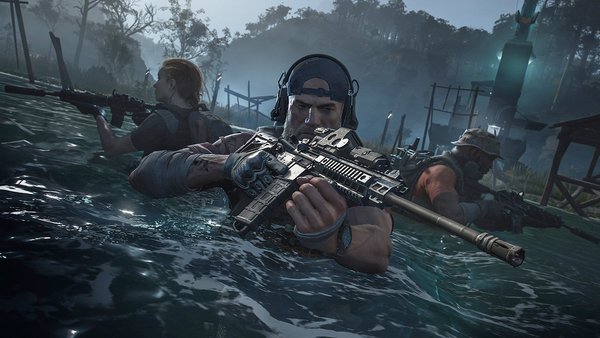
2. NFTs - Tom Clancy's Ghost Recon Breakpoint
Nothing indicates desperation in the modern video game landscape quite like NFTs.
Tom Clancy's Ghost Recon franchise has admittedly been on the skids for a little while now - 2017's Wildlands was fine if forgettable, but 2019's Breakpoint received largely mixed-to-negative reviews for its shamelessly generic Ubisoft Game formula and underwhelming gameplay.
Breakpoint was a commercial disappointment for Ubisoft, but that basically seemed to be the end of it. They'd just try again and hope for better next time, right?
Not quite.
In December 2021, long after general interest in the game had dried up, Ubisoft announced that it would be receiving integration with their new NFT platform, Ubisoft Quartz.
The service would allow players to obtain weapons, gear, and cosmetics using cryptocurrency, a decision so unpopular that the initial announcement video ended up with a 96% dislike ratio on YouTube.
Ubisoft plowed ahead regardless, but player uptake in the NFTs was so pathetically minimal that they discontinued the service just three months later.
Not content for Breakpoint to merely be an aggressively mediocre, also-ran shooter, Ubisoft decided to outright bury it by tethering it to gross money-grubbing practises - years after most people stopped playing it, no less.
1. Ripping Off Left 4 Dead - Alone In The Dark: Illumination
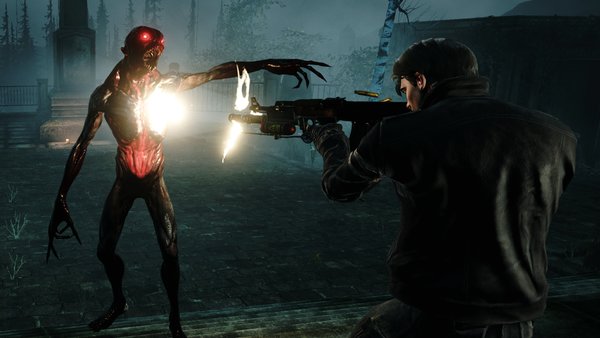
Many years ago, the Alone in the Dark series was a respected survival horror franchise, and though there was much excitement around 2008's AAA reboot - simply titled Alone in the Dark - it was met with mediocre reviews upon release.
Between the janky, bug-filled gameplay and awkward controls, it was more of a chore than a thrilling experience, even if the enhanced PS3 version of the game at least fixed some of these nagging issues.
The series took another extended nap until 2015's Alone in the Dark: Illumination, which firebombed what little remained of the series' goodwill in almost impressive fashion.
Illumination reimagined the series as a co-op action-horror shooter in the vein of Left 4 Dead, while lacking that game's polish and basic fun factor, and delivering an experience few Alone in the Dark fans were actually asking for.
It was consequently panned by critics and players alike, leaving them all craving the mere mediocrity of 2008's reboot.
Last summer, a remake of the original game was revealed to be in development, as will hopefully finally get the franchise back on track.