10 Unbelievable Inspirations Behind Your Favourite Video Games
Inspiration comes in many forms.

Inspiration comes in many forms, and gaming in particular is predisposed to a myriad of influences – some cinematic, some literary – which inform upon the stories being told.
Visually, games owe a tremendous debt to film, frequently borrowing
themes and images from prevalent cinematic blockbusters, and even replicating
filmic techniques in order to recapture the grandeur and spectacle of your
average Hollywood marvel.
That said, gaming is completely unique – predicated upon player/character relationships, interactivity and technological innovation – meaning its inspirations aren’t always obvious. In fact, even the most popular, mainstream shooters are influences by classic works of literature, comic books, international cinema and even poetry, believe it or not.
The reality is that everything from Metal Gear Solid and Bioshock to Silent Hill and Bloodborne owe something of their success to the games/books/films which came before them.
Here are ten incredible video games which wear their inspirations on their sleeve…
10. Half-Life - The Mist

Second only to H. P. Lovecraft, Stephen King has had a resounding impact on gaming, influencing everything from Earthbound and Silent Hill to Super Mario Sunshine.
In 1998, the author’s work inspired one of the most innovative first-person
shooters ever made, Half-Life – a relatively realistic shooter which
prioritised storytelling over mindless carnage, distancing it from previous
entries in the genre, such as Doom, Wolfenstein 3D and Duke Nukem.
In particular, Half-Like took numerous cues from The Mist – a short-story in which a small town is invaded by creatures from another dimension. In the game, players assumes the role of Doctor Gordon Freeman, a theoretical physicist inadvertently responsible for causing a resonance cascade, opening a bridge between dimensions and allowing extra-terrestrial invaders to launch an offensive on the Black Mesa Institute.
As such, the working title for the game during development was Quiver, a reference to a military base in King’s story.
Half-Life was also heavily inspired by the writings of James Tiptree Jr., also known as Alice Bradley Sheldon, author of Up The Walls of the World.
9. Halo - Ringworld

Beginning in 2001, Halo has become a commercial juggernaut, spawning numerous sequels/spinoffs since it was released over a decade ago, and selling over sixty million copies worldwide.
The core concept was actually borrowed from Ringworld – a classic work of science-fiction by Larry Niven in which a crew of explorers attempt to make contact a massive orbital ecosystem, crash-landing and becoming stranded in the process.
The game also took several cues from the writings of Ian M. Banks; namely,
The Culture – the first in a series of novels about a futuristic society in
which technology has advance considerably, rendering manufactured production
almost entirely automated. In both the novel and the game, artificial
intelligence plays a considerable role, influencing the destiny of human
society.
8. S.T.A.L.K.E.R - Roadside Picnic

Written in 1971, Roadside Picnic was a science-fiction novel written by Arkady and Boris Strugatsky, and a tremendous influence on the genre. In 2005, the novel was adapted into a feature length movie, Stalker, directed by legendary filmmaker, Andrei Tarkovsky.
In the film, a small group – consisting of a
Stalker, a writer and a scientist – journey into a mysterious, quarantined zone
in the hopes of fulfilling their wildest desires.
Released in 2007, S.T.A.L.K.E.R: Shadow of Chernobyl – an open-world first-person shooter, developed by GSC Game World – sought to expand concepts from the film. In the game, the player assumes the role of an unnamed Stalker, tasked with navigating the “Zone of Alienation” in order complete an assassination attempt, fulfilling numerous objectives for multiple characters along the way, including bounty hunter missions.
Roadside Picnic and S.T.A.L.K.E.R both feature a mysterious zone in which reality is altered in unfathomable, and downright terrifying ways. Within this quarantined environment, the laws of physics seem not to apply, and seemingly anything is possible. The game is admittedly more action-orientated, but the core concept remains the same.
7. Metal Gear Solid V: The Phantom Pain - 1984

Beginning
in 1998, Metal Gear Solid has always worn its influence on its sleeve, paying
homage to everything from James Bond to Planet of the Apes. Surprisingly, the
biggest influence behind The Phantom Pain was actually George Orwell’s 1984, a
novel about an authoritarian government under which individual expression is
considerably restricted.
Most obviously, the game is set in 1984 – however, the parallels don’t stop there. In fact, multiple posters can be found throughout the game featuring the following caption: “Big Boss is watching”, an intentional wink to the slogan co-opted by the totalitarian regime featured prominently throughout the novel, known only as Big Brother.
Revolver Ocelot also makes multiple references to the classic work – including the concept of “Double Think” – and the interrogation room aboard Mother Base is even called “Room 101”, another reference.
6. Silent Hill 2 - Crime & Punishment

Released in 2001, Silent Hill 2 was a critical and commercial success, heralded as the greatest entry in the entire franchise. Strangely enough, the game was actually influenced by Fyodor Dostoevsky’s Crime and Punishment – a novel written in nineteenth-century, released in twelve equal instalments in The Russian Messenger.
In the novel, the protagonist is forced to deliberate upon the morality or murder, suffering a tremendous amount of mental anguish in the process.
In the game, James Sunderland is revealed to have committed the act himself, punishing himself through self-imprisonment. In both cases, the protagonists are tortured immensely by their decisions, the ethics of murder an important theme in the construction of each work.
In terms of style, Silent Hill 2 takes numerous cues from popular cinema, including the works of David Lynch, David Fincher, Alfred Hitchcock and David Cronenberg. With that being said, Takayoshi Sato – lead developer on the series – cited Crime and Punishment as his first inspiration, suggesting that the game’s story was based entirely on the novel, and slowly modified as more writers were added to the project.
5. Bioshock - Ayn Rand

Released in 2007, Bioshock was based around the principles of Objectivism – the philosophical ideology of self-interestedness, propagated throughout the work of Ayn Rand.
In the game, it is suggested that Andrew Ryan original created Rapture as a haven from outsiders, in which the artist, scientist or philosopher could pursue their ambitions without limitation, a concept also explored throughout Atlas Shrugged, as well as The Fountainhead.
Ayn Rand and Andrew Ryan share similar histories, both heralding from the Soviet Union, escaping to America in order to avoid the escalation of Communism. Bioshock also parallels numerous aspects of the novels, referencing those incidents throughout the story.
During a radio transmission for instance, it is revealed that Andrew Ryan once destroyed his own property in order to prevent it from becoming public possession, an act mirrored in Atlas Shrugged, in which Ellis Wyatt commits a similar act for analogous reasons.
The name Atlas was also taken directly from Atlas Shrugged, and Frank Fontaine was inspired by the title of The Fountainhead.
Finally, throughout the game several posters can be found featuring the tagline, “Who is Atlas?”, a possible reference to the expression, “Who is John Galt?” a reoccurring line featured throughout Atlas Shrugged.
4. Spec Ops: The Line - Heart Of Darkness

Released in 2012, Spec Ops: The Line was a triumph in interactive storytelling, exploring the complex realities of warfare whilst simultaneously providing commentary on player/character relationships.
It was a provocative, captivating and exciting experience, heavily inspired by Joseph Conrad’s Heart of Darkness – a novella about the corruption of civilisation in the furthest reaches of the wilderness, and easily one of the greatest works of English literature.
In the game, players assume the role of Captain Martin Walker, a reconnaissance operative tasked with recovering a rogue agent missing in hostile territory. As the story progresses, Captain Walker begins to question the nature of warfare, as well as his own involvement as a soldier without clear allegiances, slowly losing his mind in the process.
In this respect, the game and the novella share several overlapping similarities, both providing a commentary on imperialism, as well as the reintegration of soldiers back into civilisation.
Specs Ops also took cues from the movie, Apocalypse Now – directed by Francis Ford Coppola – which was equally based on Conrad’s writings, as well the novel, Dispatches.
3. Shadow Complex - Orson Scott Card
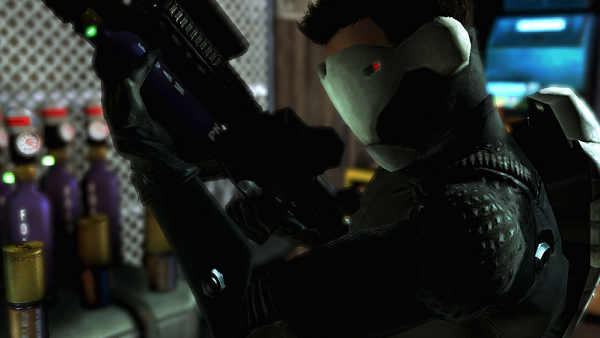
Released
in 2009, Shadow Complex was a critical and commercial success, acclaimed for
its integration of narrative and gameplay. Interesting enough, the game was
actually inspired by the work of Orson Scott Card – the novelist renowned for
his science-fiction masterworks, including Ender’s Game, Speaker for the Dead,
and Shadow Puppets.
In particular, Shadow Complex is set prior to events depicted in the novel, Empire – a work of speculative fiction concerning the possibility of a second American Civil War. In the game, players assume the role of Jason Fleming, an expert infiltrator tasked with preventing the launch of a powerful airship capable of assaulting certain locations across the country.
The events of the game are concluded in Empire, the former serving as a narrative precursor to the large scale devastation inflicted throughout the rest of the novel.
In this case, Shadow Complex was actually part of a collaborative effort to integrate two separate mediums, one informing upon the other.
2. Darkest Dungeon - Rats In The Walls

More so than anyone else, H. P. Lovecraft has had a resounding influence on gaming, inspiring countless creators, and influencing everything from Alone in the Dark to Bloodborne.
Unsurprisingly then, the roguelike dungeon crawler, Darkest Dungeon took numerous cues from the writer’s work, from the nature of cosmological horror to certain reoccurring images and concepts.
In particular, Darkest Dungeon pays homage to Rats in the Walls – a short story about a man unfortunate enough to inherit a vast estate, only to discover an underground metropolis buried underneath its foundations.
In the story, the protagonist is compelled to investigate the remnants of the catacombs out of devotion to his family, in much the same way that the player is compelled to explore the darkest dungeon initially out of familial obligation.
1. Prince Of Persia - One Thousand And One Nights

Spearheaded by Jordan Mechner, Prince of Persia was heavily inspired by the One Thousand and One Nights – a collection of Middle Eastern and South Asian myths and legends, compiled in Arabic between the 8th and 13th Centuries – which served as the primary basis for the game.
Rather than simply referencing the source material, Prince of Persia aimed to recapture the spirit of the stories, the protagonist inspired by the likes of Sinbad the Sailor and Ali Baba, the leader of the forty thieves. Additionally, Mechner took significant influence from Shāhnāmé – also known as The Book of Kings, an epic poem documenting the history of the Persian Empire, written by the Iranian poet, Abu ʾl-Qasim Ferdowsi Tusi.
In both cases, Prince of Persia uses 1001 Nights and The Book of Kings as tonal reference points, capturing the spirit of the stories without plagiarising their content.
With that being said, there are numerous parallels between the two – including the repetition of dualism as an important theme, as well as constant emphasis on concepts such as water and time.
--
Are there any cool gaming origin trivia facts we missed? Let us know in the comments!