10 Video Game Characters Who First Appeared Sooner Than You Think
These gaming icons made premature debuts.
Every classic video game character has their coming-out party - the single game that introduces them to the mainstream crowd and ultimately ensures they become an iconic franchise mainstay forever more.
But every now and then, you might be surprised to learn that one of your favourite gaming heroes (or villains) has actually been around a little longer than you were ever aware.
These 10 video game characters all made their inauspicious debuts before most fans in fact realise, typically by making a cameo in a prior entry into the series or, better yet, slyly making a below-the-radar appearance in another IP altogether.
Only the most hardcore fans of these gaming icons will even remember that they showed up in these titles, as for more casual players, they didn't arrive for months, years, or even almost an entire decade later.
Prepare to have your mind blown by these premature appearances from some of gaming's most indelible and recognisable names and faces...
10. Galen "Starkiller" Marek - Soulcalibur IV
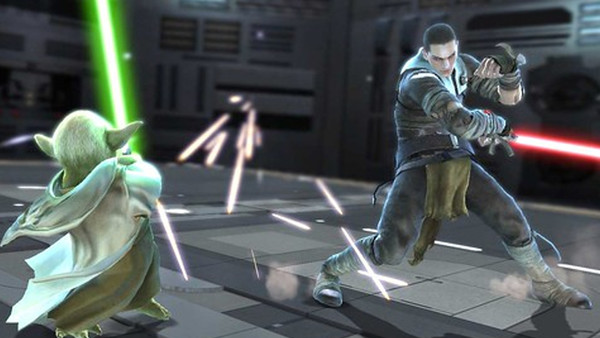
Galen Marek aka "Starkiller" is the protagonist of the much-loved Star Wars: The Force Unleashed video games, the first of which was released in September 2008.
However, Starkiller actually made his video game debut two months earlier, appearing as a playable fighter simply dubbed "The Apprentice" in Soulcalibur IV.
The beat 'em up sequel famously featured a bizarre-yet-brilliant crossover with Star Wars, where Darth Vader and Yoda were also playable characters alongside Vader's secret apprentice.
For those not paying attention at the time, Starkiller's random inclusion in Soulcalibur IV made him seem like a generic player insert character, but as it turned out, he went on to become one of the best Star Wars video game characters of all time.
9. Sonic The Hedgehog - Rad Mobile
Sonic the Hedgehog is of course one of the most iconic characters in the history of the medium, but he didn't actually make his first appearance in his own eponymous debut platformer, which was released in June 1991.
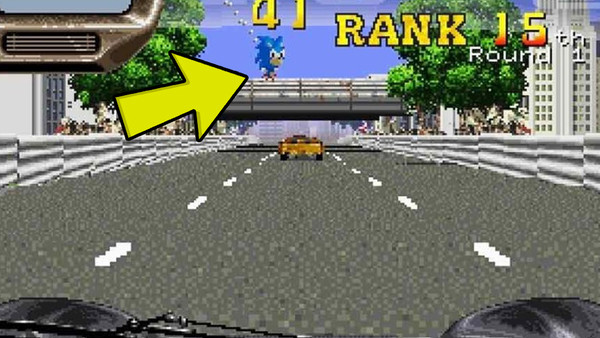
Rather, Sonic initially had a cameo appearance in the Sega-published arcade racer Rad Mobile, released a whole four months prior in February 1991.
Sonic is visible as an air freshener hanging from the driver's rearview mirror throughout the game, and though nobody knew it at the time of course, a future icon was literally hidden in plain sight.
As for Rad Mobile? The only reason anyone remembers it at all is because of the Sonic cameo.
8. Noob Saibot - Mortal Kombat (1992)

Mortal Kombat's cult fave character Noob Saibot started out as a bit of a joke, his name a mash-up of the reversed surnames of the franchise's co-creators Ed Boon and John Tobias.
The character is largely accepted to have made his debut in Mortal Kombat II as a non-playable enemy who the player can battle in Goro's Lair's after winning 50 concurrent matches.
Noob's solid black appearance lent him an air of mystery that, in conjunction with his ridiculous moniker, made him popular with fans to the extent that he developed an extensive backstory and distinct aesthetic in future games.
But 2004's Mortal Kombat: Deception confirmed that Noob had actually been part of the series since the very beginning, revealing that he was actually the original Sub-Zero aka Bi-Han, who was killed by Scorpion.
For future games, the Sub-Zero mantle went to Noob's younger brother Kuai Liang, while Noob forged out an identity in his own right.
If you don't pay much attention to the wider Mortal Kombat lore - and let's be honest, most of us don't - this is a mind-blowing realisation.
7. Mario - Donkey Kong

If you ask most casual gamers when Mario made his debut, they'd probably guess it was 1983's arcade classic Mario Bros.
But as dedicated Mario fans should know, Mario actually first appeared a few years prior in the 1981 arcade game Donkey Kong - but with a catch.
Mario appears as the player character tasked with taking Donkey Kong down, yet in the game's original Japanese arcade release actually went entirely unnamed. In later versions, however, he was given the bizarre moniker "Jumpman."
Only for the game's U.S. release was he again renamed to Mario, and as confirmed in recent years by Nintendo themselves, the platformer icon's name was inspired by the landlord who leased Nintendo of America their warehouse, Mario Segale. The rest, as they say, is history.
6. Arno Dorian & Élise De La Serre - Assassin's Creed Rogue
2014's Assassin's Creed Unity casts the player in the role of assassin Arno Victor Dorian, whose love interest happens to be one Élise De LaSerre.
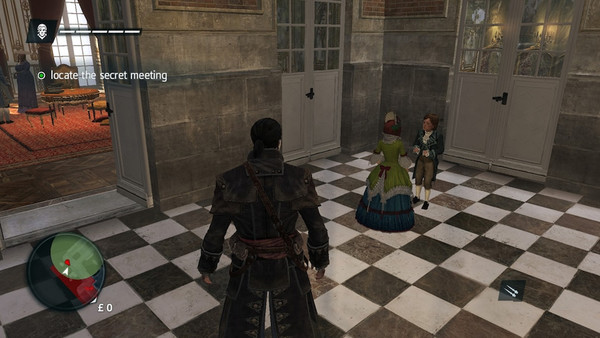
But both characters were actually sneakily introduced in the "previous" entry into the franchise, Assassin's Creed: Rogue, a quasi-prequel to Unity which was released exclusively for PS3 and Xbox 360 the very same day that Unity was released for current-gen consoles.
Rogue's final mission sees protagonist Shay Patrick Cormac assassinate Arno's father Charles Dorian, and if you explore the surrounding area, you'll actually find Arno and Élise as children, where Arno can be overheard talking about his father.
This dovetails perfectly into Unity's plot, which picks up with Arno as an adult.
Though Rogue is deemed a mainline Assassin's Creed title by Ubisoft, it being dumped on prior-gen platforms upon initial release, the same day as the more high-profile Unity no less, ensured that many players simply dismissed it as an also-ran spin-off.
As a result, the game's delicious final reveal was missed by a lot of the series' less-committed fans who then went on to play Unity.
5. Captain Price - Call Of Duty
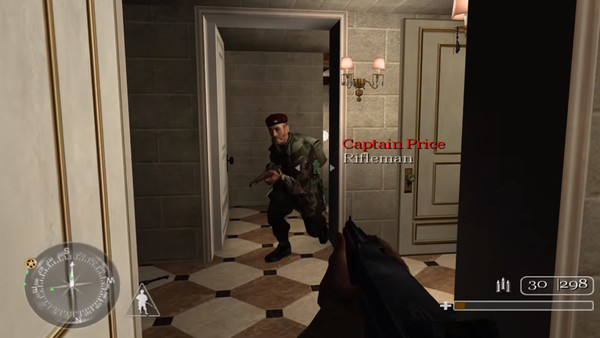
For many, the Call of Duty franchise may as well not have existed until the release of 2007's Call of Duty 4: Modern Warfare, where it enjoyed a major critical and commercial uptick due to its stylishly cinematic campaign and groundbreaking multiplayer suite.
Modern Warfare also popularised the heroic Captain Price, who has been a franchise mainstay pretty much ever since.
But Price actually made his series debut years prior in the original 2003 Call of Duty, being rescued by the player character Pvt. Martin during the Alps Chateau level.
In fact, Price ends up dying in a later mission, yet re-appears in 2005's Call of Duty 2 as the game is actually set prior to its predecessor.
Price was absent from Call of Duty 3 entirely, though was of course re-introduced for the quasi-reboot Modern Warfare.
Though logic dictates that Modern Warfare pressed the reset button on the active continuity, there's a delicious theory that we're actually hanging out with the original Price's grandson in the Modern Warfare games.
Whatever you believe, Price wasn't an entirely new creation for the Modern Warfare series: his distinctive mustache and plummy accent have been around a good few years longer.
4. Banjo The Bear & Conker The Squirrel - Diddy Kong Racing
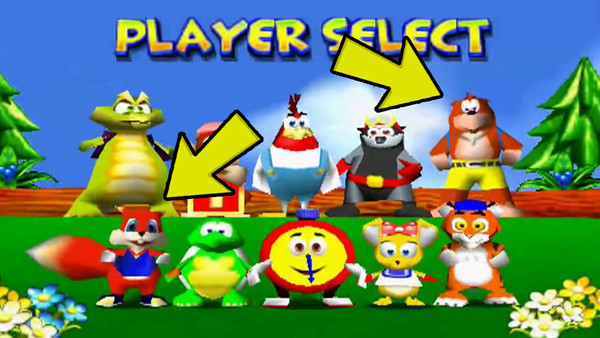
You'd be forgiven for assuming that beloved platforming icon Banjo the Bear made his video game debut in his 1998 N64 romp Banjo-Kazooie, but as a result of that game's delays, he actually ended up appearing first in Rare's racing game Diddy Kong Racing, released more than six months prior.
Similarly, Conker the Squirrel is best known for his "debut" appearance in the delightfully crude 2001 N64 platformer Conker's Bad Fur Day, yet most fans would actually be doubly wrong about this one.
Conker not only appeared previously in the 1999 Game Boy Colour title Conker's Pocket Tales, but of course, his real debut was also in Diddy Kong Racing, which came out almost two years earlier.
Both Banjo and Conker are playable racers in the game, but unless you've dusted off your copy of Diddy Kong Racing lately, you couldn't be blamed for forgetting about them.
3. Vincent Brooks - Persona 3 Portable
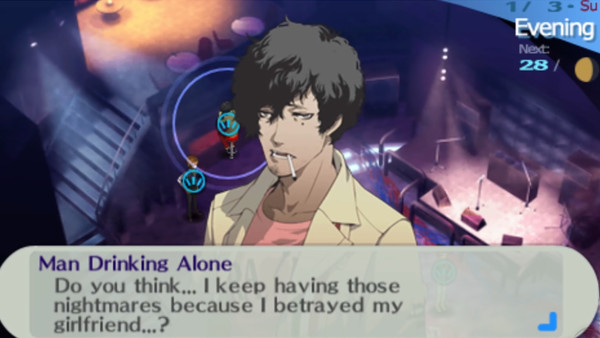
Vincent Brooks is the 30-something, hopelessly tortured horndog protagonist of the wonderfully eccentric puzzle-platformer Catherine, as was released in 2011 and beautifully remastered earlier this year.
But Vincent made a prior cameo appearance in another game developed by Atlus, Persona 3 Portable, an enhanced PSP port of Persona 3 released in Japan well over a year before Catherine.
Vincent appears in the game's Club Escapade as a character simply named "Man Drinking Alone," where he mentions his recurring nightmares and his pregnant girlfriend, both of which inform much of Catherine's narrative.
Though various timeline and logistical elements of the cameo don't quite line up - suggesting it's more an Easter egg than actually canon - the character portrait is a near-identical visage of Vincent, save for him having a mole below his left eye which Catherine's Vincent does not.
2. Meryl Silverburgh - Policenauts
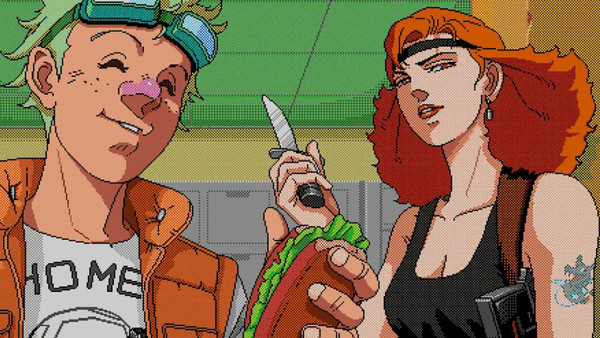
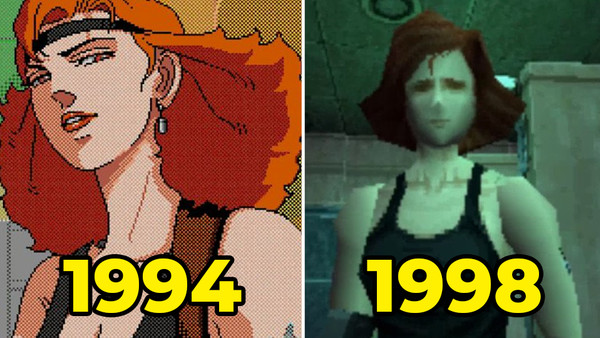
Meryl Silverburgh is one of the most important supporting characters in the Metal Gear Solid franchise, best remembered for her appearance in 1998's Metal Gear Solid and her return in 2008's Metal Gear Solid 4: Guns of the Patriots.
But the steely heroine was actually first created for Hideo Kojima's previous 1994 adventure game Policenauts, where she appears in a supporting capacity, bearing her iconic red hair, black tank top, and distinctive arm tattoo.
Kojima reportedly liked the character enough that he decided to include her in the Metal Gear franchise, though presumably in order to avoid any messy continuity issues, no explicit references are made to the events of Policenauts.
For all intents and purposes, though, they're functionally the same character.
1. Ralf Jones - TNK III
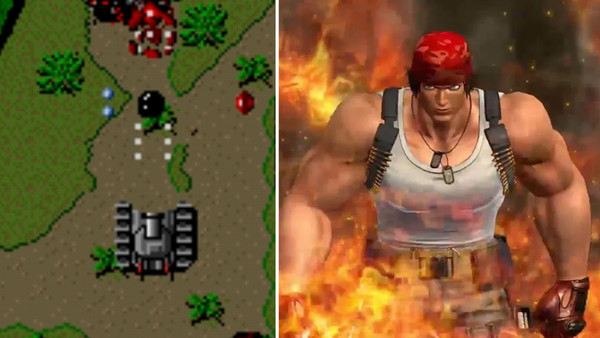
Ralf Jones is one of the most popular characters from the hit beat 'em up series King of Fighters, which launched with The King of Fighters '94 and counted Ralf among its original roster.
But long before he became a franchise mainstay, Ralf made numerous earlier appearances in games of totally different genres that were also developed by SNK.
In 1986, he appeared in the arcade run-and-gun title Ikari Warriors and its 1988 and 1989 sequels, going by the name of Colonel Ralf in the Japanese release before being renamed to "Paul" for the international versions.
But Ralf also appeared in another game prior to Ikari Warriors: he was the protagonist of the 1985 arcade shooter TNK III. Though the player never actually sees Ralf in the game, he is nevertheless piloting the tank which the player controls throughout.
Yet almost an entire decade would pass before Ralf would star in King of Fighters and become the more mainstream fave he's known as today.