10 Video Game Cliches That Need To Die
Why are there only four sub-bosses every developer uses?!
Video games have never been more popular than they are now, but they've also never been more similar. This industry is pretty much the equivalent of that 'can I copy your homework?' meme from a few years ago, as once something becomes successful, be it a specific mechanic or entire gameplay suite, it's guaranteed to be aped across the board.
This doesn't necessarily mean that all new games are bad or unimaginative, but that you can usually tell when a certain feature will show up in a new release based purely on its genre. That can make games more accessible and help players jump into them quicker without having any barrier for entry, but it can also breed familiarity, especially when certain cliches are included seemingly to tick a marketing box.
With a new decade and a new generation looming, it's time developers did some things differently. These features might once have been unique and innovative, but now they're nothing but cliches that stop games from being as creative as they could be and genres from evolving.
10. Losing All Your Abilities After The First Level

This one thankfully isn't as prevalent as it used to be, but it still shows up far too often. The general idea is that a game's opening needs to hook the player across the first few hours, and that often means devs show off all the cool abilities and weapons they've built straight away.
The problem is, of course, you can't start out players at the peak of their powers, as they need to feel like they're getting stronger and growing over the course of the story, which usually leads devs down the path of stripping these abilities away after the opening and forcing players to recapture them.
The first Assassin's Creed took a lot of criticism for doing this, and while that title is perhaps the most egregious, releases continue to make this mistake over a decade later. Starting players off on a purposeful back foot after teasing them with all the bells and whistles they'll get to use again eventually just ain't fun.
9. The Same Four Zombie Enemy Types

At one point this entry was simply going to be about zombies in general, but really it isn't the creatures themselves that are boring and outdated (otherwise they wouldn't have persevered in media for decades), but how developers use them in video games.
Take Days Gone for instance; this was a zombie apocalypse game that the devs were constantly trying to push as being unique and separate from the thousands which came before. Here, the undead were known as 'Freakers', and there was enough to distinguish them from regular old shamblers, including a fascinating origin, a genuinely inspired ecology, and the fact that they were constantly mutating into new forms.
What made all that set dressing useless was the fact that the behaviour of the enemies conformed to the same old zombie types we've fought against before. There was the regular brainless fodder, the tank strong zombie and the fast, agile one that jumped around. All that was missing was the bloated one that would spit and blow up.
At this point, after these templates have been the basis for sub-bosses even outside of zombie fiction, it's overdone, and they have no right showing up in a zombie game ever again.
8. Craft Everything, All The Time
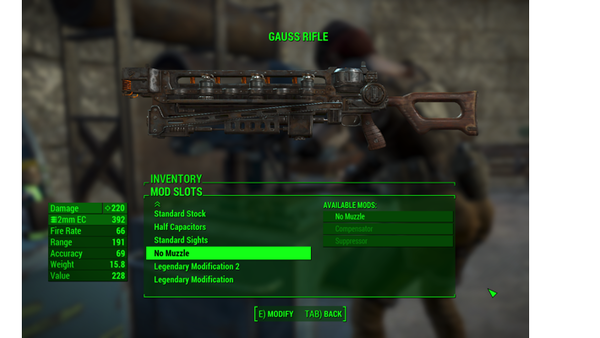
I don't exactly know how crafting became a feature that had to be included in every single game regardless of genre, but that's the reality we live in now.
There was once novelty in a system where you could collect scrap to make new things, and it still makes sense in post-apocalyptic titles like The Last of Us or Fallout where scavenging and concocting life-saving items from garbage makes in-world sense, but that context is now seemingly unimportant.
It doesn't matter what kind of game you're playing, it will probably feature some kind of work bench where you can turn scrap into health packs like a rag and bone Jesus. It's a mechanic that, like a lot on this list, isn't bad per se, it's just so familiar that you probably don't even question whether it's any fun to use.
Articles were popping up complaining crafting was overdone back in 2014, and now it's six years later and crafting items as part of the gameplay loop has remained unchanged.
7. 'The Princess Is In Another Castle' Structure
Games are inspired by movie storytelling devices, but the length of a title - even the shorter ones - is often way longer than a film, and writers and designers have had to come up with ways of elongating the experience without muddying or changing the central objective.
Nintendo's Mario franchise infamously used the 'Princess is in Another Castle' trick, where players would make it through levels to rescue Princess Peach, only to realise at the end that they'd been barking up the wrong tree, and needed to investigate another area.
Now, obviously it's not always literally a Princess players are looking for and it's not always a castle they're exploring, but the general idea of having these roadblocks and extensions placed onto the plot to pad the runtime has never really vanished.
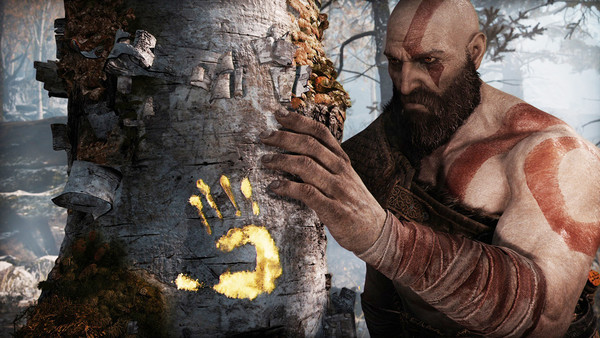
Even God of War, one of the best games of the last decade, adopts this structure to an extent. Your entire journey is tied to reaching the highest point in the nine realms, but that's dogged at every turn. You reach the door to where you need to go, but it's locked. You return with a key, but find out this isn't actually the highest part, and you need to go even higher.
Games have gotten better at hiding this formula, but you can still identify when it's being used.
6. The Colour-Coordinated Loot System
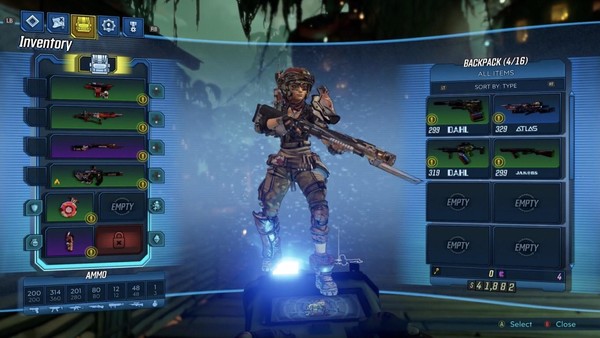
For better or worse, pretty much every action game has looter shooter elements now. Weapons are no longer things to find and cherish, but numbers on a page that should be swapped out after every combat encounter, with the gameplay loop being designed around the pursuit of the top-level death bringers.
That's fine, but the big issue is that the majority of games don't do anything to differentiate their loot system from the next big blockbuster.
Modern shooters especially rely heavily on the same basic tiered system of common, uncommon, rare, epic and legendary weapons to get them through, while they'll often even share the same colour-coordinated hierarchy. Players know a grey gun is a dime a dozen, a green one is a little better, a blue one is getting into rare territory, and purple and gold are the upper levels.
It's made these loot shooters all about seeing those explosion of colours pop, rather than the actual weapons or how they function. The genre isn't going away any time soon but, c'mon guys, at least change up the colours or something.
5. The Father/Daughter Bond

The Last of Us, The Witcher 3, and Bioshock: Infinite are some of the best games of the past decade (yes, even that last one), partly because they all focus on the central relationship between a father figure and a daughter figure, chronicling how they both grow in the face of adversity.
The problem is, they ruined it for any other action game that wanted to tell a similar tale.
In the early 2010s there was a period where a bunch of big-name games all told this story at the same time, and did it better than anyone expected by tying the companion in the narrative to the gameplay in a dynamic and inventive way, and it's made similar efforts which followed feel a little hollow.
Even if they're not chasing trends, using this relationship as the emotional backbone of a story is no longer unique, especially when so many titles often give the companion character identical abilities in gameplay.
4. Stealth = Squatting In Tall Grass
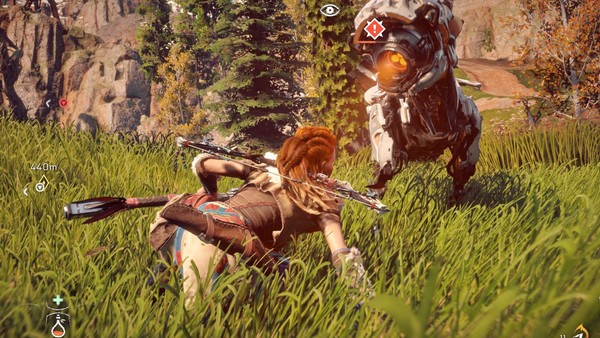
It makes sense for video games to simplify things to make them fun. Scoring an overhead kick from outside the box isn't as easy as it is in FIFA, while infiltrating a Nazi-occupied castle with only a couple of throwing knives isn't as effortless as it is in Wolfenstein. Or so I've been told.
However, sometimes games go too far, and implement a system that clearly should have evolved, yet which has remained static. Take stealth for instance, which in a bunch of games simply amounts to sitting around in some tall grass, your head peaking out the top, while brainless guards walk straight past you.
Sure, it's easier than making sure you're well and truly hid and camouflaged correctly, but that doesn't mean it's fun. Often stealth is so basic that it makes you wonder why the devs included it at all, especially when the only cover they knew how to render is a goddamn bush.
3. Mentors Betraying Students

A lot of the entries on this list so far have been about gameplay elements, but there are narrative conventions that game stories return to too frequently as well. One is giving the player character a mentor figure to look up to, who teaches them the basics and inspires them to embark on a quest.
Of course, these characters almost always betray you by the the end of the story.
Sometimes heel turns are obvious from the beginning - after all, it doesn't matter whether you're his secret apprentice or not, you probably shouldn't put your faith in Darth Vader - but other times you can guess how the relationship is going to change purely because of how games have handled the dynamic in the past.
Like all cliches, games can do this well, and Metal Gear Solid 3 is probably the be all and end all when it comes to maximising the dramatic potential of this trope, but for every MGS 3 there's ten releases that absolutely half-ass it.
2. Highlighted Climbable Areas

The issue that faces developers when they put climbing mechanics into their games is that, unless they're making Breath of the Wild, not everything can be climbed.
Consequently, they need to find a way to communicate to players what can be traversed and what's just set dressing, and that usually results in every climbable ledge having a visual signifier, whether that's a yellow painted outline in Tomb Raider, or simply highlighting ledges a different shade from the environment they're attached to in Uncharted.
There obviously needs to be some way to identify interactive areas, but it can make the game world feel more artificial than it should. I mean, after all, who was leaving behind hundreds of ropes in Far Cry 4?
God of War recently did a great job of justifying why certain areas were highlighted, so hopefully devs get more inventive in the future.
1. Detective Vision/Eagle Eye Modes

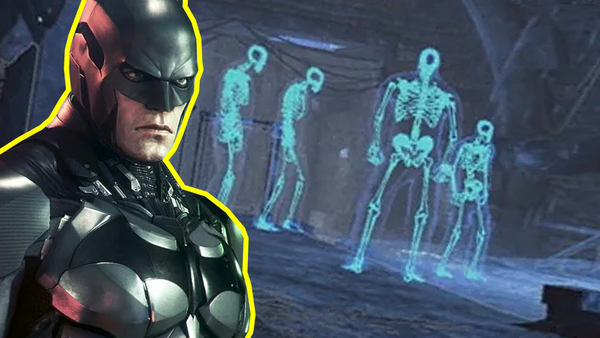
When Arkham Asylum pioneered the use of Batman's Detective Vision and Assassin's Creed introduced the Eagle Eye ability, how players read a game world changed forever. While mini-maps used to be the primary way of conveying environmental information such as key items or enemies, now those things would be highlighted in real-time, while a handy little effect altered the game's visual presentation.
Again, it's one of those abilities that works best in games that justify it, and falls flat in titles that throw it in because it's expected. Even The Last of Us has a 'Listen Mode' that highlights enemies through walls for easier combat, but the game is much more intense with it turned off, and the higher difficulties remove it by default.
Options are always a good thing, but games relying on modes like this to convey every bit of info to the player makes navigating each one feel so run of the mill.