10 Video Game Design Rules You Can Never Unsee
It's like looking at Matrix code.
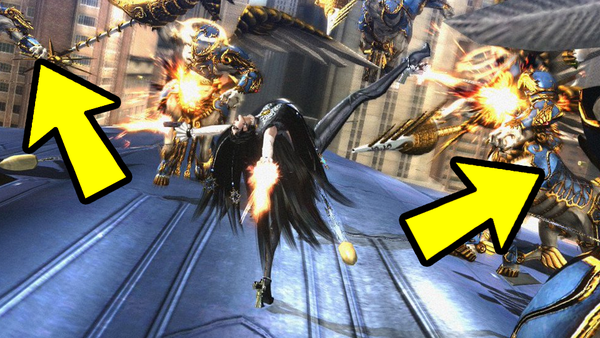
Video games may not be real life, but like The Matrix, they are still based in a world that is built on rules, as have been meticulously programmed by teams of hundreds of people.
And while the very best video games manage to make us forget about their game-y logic by concealing their biggest secrets underneath immersive gameplay, virtually every game in existence will have a moment or two that breaks that precious immersion and brings the player back to reality.
And once you become aware of these design tricks and tropes, it becomes incredibly difficult to switch your critical brain off and forget about them.
A few years ago, a Twitter thread did the rounds where developers confessed their sneakiest behind-the-curtain game mechanics, which while both surprising and admirable in their genius, ultimately ensure you'll never quite think about those games - or all games, even - the same way ever again.
And so, we come to these 10 video game rules, from those well-worn mainstays that many players will recognise, to those sly shortcuts most of us wouldn't even think of, that will forever re-shape the way you play. Time to break the spell...
10. "Coyote Time" In Platformers

Ever played a platforming game and felt like it was a little over-generous with registering your late button presses?
That's what devs like to call "Coyote time" - named after Wile E. Coyote, naturally - a minor yet significant gravity delay which gives players that extra split second of time to press the jump button when leaving the safety of a platform.
It's a trick so commonplace in the platformer genre that it proves incredibly jarring when a game doesn't use it.
Case in point, Crash Bandicoot N. Sane Trilogy actually reduced the amount of Coyote time compared to the original games, which left players missing jumps, screwing up timings and dying far more often than they expected to.
Platformers are all about precision, but that little extra lee-way is vital to ensure players aren't left unjustly fuming.
9. Invisible Walls
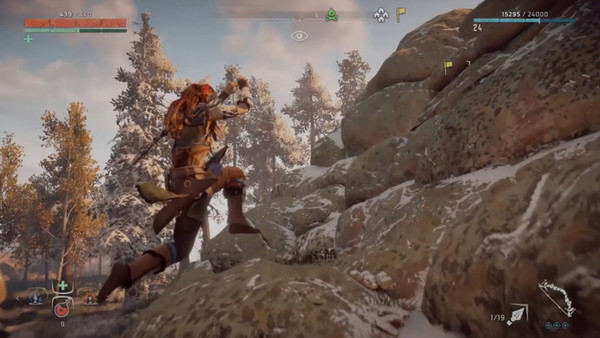
One of the most pervasive design tropes across video game genres is the invisible wall, a boundary placed in the video game world to stop players venturing outside of it.
Because a literal brick wall would be too immersion-breaking, developers tend to throw up an invisible wall in the hope that players will only occasionally stumble across it and remember they're actually playing a game.
Though more creative dev teams have come up with novel ways to mask their map's limitations - Grand Theft Auto closes parts of the map off with traffic barriers, for instance - it's still relatively common in modern AAA games to find invisible walls if you venture far enough off the prescribed path.
Even a game as brilliant as Horizon Zero Dawn uses the trick, which runs counter to its emphasis on freedom and exploration, though avoiding the invisible wall is an undeniably tough nut to crack from a developmental standpoint.
The Elder Scrolls III: Morrowind did find a clever way to avoid it, however, by having the main bulk of the game take place on the island of Vvardenfell, where if players attempt to swim away from the island, the ocean simply expands out infinitely. Genius.
8. Your Final Remaining Health & Ammo Are Actually Worth More

We've all been low on health and/or ammo in a game and only barely skated by thanks to our awesome gaming skills - but in fact, you most likely had a little help from the game itself.
Assassin's Creed and Doom, for instance, place a higher hit-point value on the last few chunks of the player's health, to improve the likelihood of sweaty-palmed players feeling like they made it through by the skin of their teeth. But in fact, they had a smidge more health than they thought they did.
The same often appears to be true of ammo, with System Shock allowing the player's last bullet to deal double damage, potentially giving them that crucial final edge when the chips are down.
This is one of those fantastically clever aspects of game dev the player can't physically see, but once you're aware of it, you'll never think about your in-game resources the same way again.
7. Enemy Bullets Purposefully Miss The Player (But Your Bullets Magnetise Towards Enemies)

Virtually all shooter devs want to give players the experience of shooting their way out of an incredibly chaotic, wildly outnumbered scenario, but you're actually in decidedly less danger than you might think.
In Bioshock, for instance, the first bullets fired at the player by enemies always miss, in an attempt to give players a slight head-start, in what we're dubbing "Stormtrooper aim."
Uncharted deploys a similar trick, having bullets miss the player in order to create a sense of tension consistent with the Hollywood movies the games are homaging.
In fact, the series' creative director Amy Hennig and animator Jonathan Cooper both confirmed that Drake doesn't have a traditional health meter, because none of the bullets fired are actually hitting him.
Drake's health is instead a "luck" meter, and the closer he comes to dying represents that luck running out, with Drake's death finally coming when an enemy eventually manages to lodge a bullet in his chest.
On the other hand, many games give players a leg-up when it comes to gunplay by lending bullets different penetrative properties depending on where they're fired. Serious Sam, for example, makes bullets thicker when near enemies to increase the likelihood of impact.
Collectively, these gunplay features ensure combat is more forgiving for the player and makes their hero fantasy that much more badass.
6. Nintendo's "Rule Of Three" For Bosses

Nintendo games, especially those in the Mario franchise, are massively beholden to this rule of boss design, whereby the overwhelming majority of boss fights will require the player to overcome the boss during three stages, typically hitting them or jumping on their head at the end of each stage.
It's a trope that forms an inextricable part of the formula of most Mario-branded games, and if Nintendo ever stopped doing it, there would probably be uproar from fans who find it comforting in its familiarity.
Given that the games are supposed to be accessible to kids it certainly makes sense, even if there's a fair argument to be made that it's a teensy bit lazy, too.
5. Enemies Are Slower Off-Screen
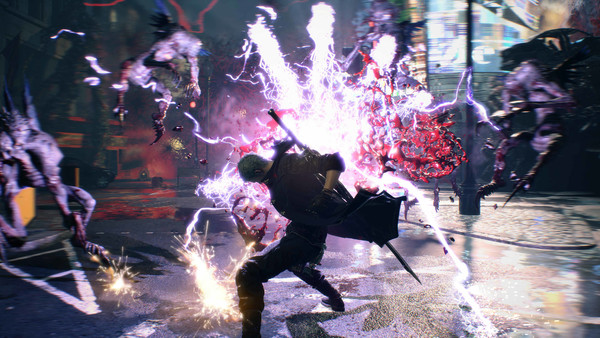
Action games have to nail a delicate balance between overwhelming the player with a ridiculous number of enemies and making them capable enough to fend them off, but devs actually sneak a clever little feature into these games to tip the outcome in the player's favour.
In games such as Devil May Cry and Bayonetta, any enemy in the vicinity that isn't physically on-screen will generally have their speed slowed and damage nerfed, to ensure players aren't blindsided by a barrage of foes attacking out of nowhere.
Bioshock 2 also employed a similar mechanic for its lumbering Big Daddies, which move slower when not in view to give the player a greater opportunity to avoid getting killed.
Given how off-screen attacks in conjunction with a bad camera have ruined so many promising action games, this is a brilliantly inventive way to keep player frustration to a fair minimum without literally having enemies take turns attacking the player.
4. Blatantly Obvious Set-Piece Triggers
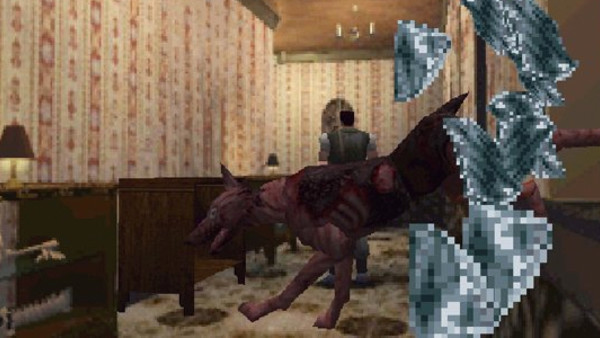
Scripted events are the cornerstone of most AAA video games, whereby crossing an invisible line in the game's environment at the right time under the right conditions will trigger a new gameplay sequence for players to contend with.
The nature of gameplay scripting means that players can stand an inch away from that trigger line for hours without anything happening, only for all hell to break loose once they move a toe past it.
Perhaps the most famous example of a blatant scripted event is the pant-filling moment when the zombie dog crashes through the mansion window in Resident Evil.
There's a very specific boundary in the environment that needs to be crossed for the dog to make its entrance, and without crossing it, you can just chill out in the well-lit hallway to your heart's content while the dog presumably hangs out until summoned by the game's logic.
3. Rubber-Band Difficulty

Rubber-banding is one of the most infamous and controversial video game design tricks there is, whereby developers dynamically increase or decrease the skill of A.I. opponents depending upon your own performance.
This is most common in the racing genre, where players in first place will find rivals magically sling-shotted towards them to enhance the feeling of tension and prevent skilled players from lapping the competition.
Alternatively, struggling players will themselves benefitting from a boost that allows them to get closer to racers ahead. Case in point, the Mario Kart franchise.
The FIFA games also have a momentum-shifting mechanic intended to stop a match from feeling too one-sided in either direction, much to the chagrin of fans who feel they're being cheated out of a legitimate competitive experience.
But it's not just sports games: the Ratchet and Clank series scales enemy damage depending on the players' own frequency of deaths, and the Far Cry franchise boasts internal adaptive difficulty settings which constantly re-jig enemy damage and placement on-the-fly according to how well you're doing.
Though many players hate it, especially when it draws attention to itself, it's clearly employed with the hope that it creates the most enjoyable experience for the most players, providing just enough push-back to be fun.
2. NPCs Waiting FOREVER For You
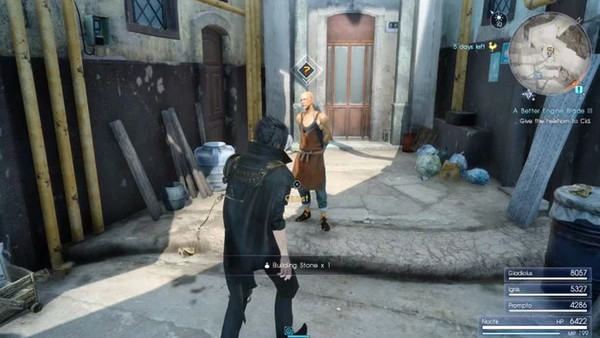
Programming believable A.I. has always been a major challenge for developers, especially given how effortlessly players can demonstrate its limitations.
Non-player characters (NPCs) are governed by an extremely strict series of parameters, of course, intended to shepherd the player along the game's story or core gameplay loop.
Virtually every RPG and open-world game in existence has NPCs who will tell the player, "come on over when you're ready to start a mission", only for them to stand around gormlessly in a fixed position for potentially hours on end while waiting for you to engage them.
And even for more active A.I. companions, if you don't keep up, they'll simply hang around patiently at the target objective waiting for you to catch up.
They don't grab a bite to eat, visit the bathroom or even sit down to rest their back and legs, reminding everyone they're just lines of code funneled into a digital maquette supposed to resemble a human being.
Video games aren't really at the point where they can deliver consistently believable NPCs, though it's ultimately more a resource issue, that devs know their time is better spent elsewhere than developing complex A.I. routines for characters you're probably not paying that much attention to.
1. Thumbstick Correction
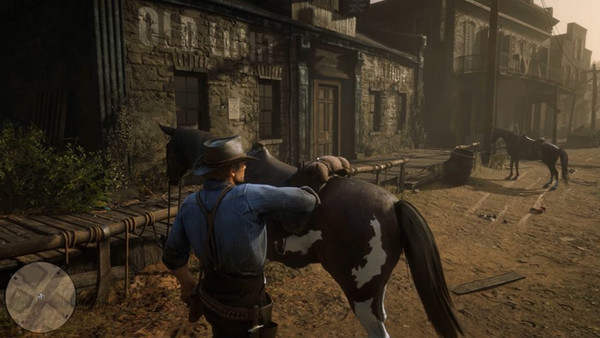
And finally, a trick that's said to be "pretty standard in AAA" is thumbstick correction, whereby a game will subtly ignore a player's inputs if they're about to collide with the environment and sneakily manoeuvre them around it for the sake of a smoother experience.
In perfect conditions it prevents the player from walking into walls or getting stuck in environmental objects, but as Red Dead Redemption 2 proved last year, it can also result in the feeling that the controls are a little too floaty and sluggish.
But Rockstar wasn't just getting lazy with how they programmed the controls: this was an active attempt to guide players around the world, though the game's overall meditative pace ensured the approach didn't work for everyone.