10 Video Game Features Every Title Should Have Stolen
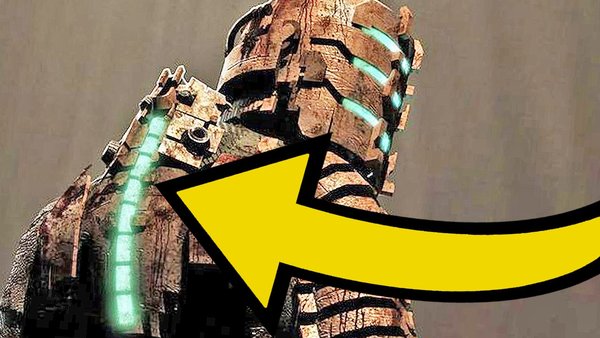
Dead Space's UI is STILL the future.
We’ve all come across a feature in video games that’s just so freaking good we can’t believe every developer hasn’t copy pasted it into their own game.
Alright, so sometimes there are legal reasons stopping creators from lifting a particularly cool mechanic and plonking it into their game, but we can still dream. In the case of all the features on this list, we couldn’t help but imagine how other games could have benefitted by implementing the same clever mechanics that massively improved the games that did utilise them.
Whether it was a totally unique combat system, a feature that revolutionised conversations in games, or an excellent quality-of-life addition, these games totally nailed it.
--
10. “GeoMod” Environmental Destruction Technology - Red Faction

There’s nothing quite as immersion breaking as shooting up the environment with your variety of guns and grenades and watching everything stay intact.
Sure, you’re probably shooting your enemies to smithereens but boy is that half a wall made out of crumbling ancient debris remarkably solid. Not so in Red Faction, one of the few games to implement destruction tech that makes you feel like you’re having an impact on your environment and not just the bad guys on the wrong end of your gun.
The feature is called Geo-Mod or Geometry Modification Technology and it enables certain weapons to blast holes in the environment. In the back end the engine is actually creating an empty space object to occupy that hole. The engine shone in Red Faction: Guerrilla and Red Faction: Armageddon and it’s a mystery why no more than a tiny handful of games have tried to do the same thing at the same level.
It’s 2021 and we now have PCs and even consoles that can handle the extra power requirements of destructible environments so, you know, let us blow stuff up, OK?
9. Importing Your Save State & Choices - Mass Effect

I only put one series up in the subheading there but I want to quickly say that The Witcher and Quest for Glory both do an excellent job of this.
Games that carry a protagonist forward through multiple instalments in a series is nothing new but it’s a tricky thing for developers to navigate when you end the previous game with a massively powerful hero. That becomes even more complicated when you enable the player to make big choices within their experience. So, what do you do as a game creator? Do you introduce a new, weaker protagonist, take the characters to a new part of the world so their choices have less impact, or do you double down and create totally different narrative paths that cater to the choices that were made.
That’s what the aforementioned games did and while it must be a tonne of extra work, it creates an incredible connection to your protagonist and ongoing journey.
Aside from that, it’s excellent when games like Mass Effect let you take your class and build to the next game in the series. In Quest for Glory you could keep your stats and money and become more powerful with each passing game, making carrying your hero all the way through far more satisfying.
The potential for other games to reward your time in the series by letting you carry choices, money, maybe even skills or certain weapons across games would be incredible.
8. Integrated HUD - Dead Space

If you know you know, if you don’t, don’t worry, I’m going to give you the lowdown.
There is a strong argument to be made that Dead Space has one of the greatest user interfaces in all of video games. Dead Space’s HUD is especially good because the game doesn’t really have one. The HUD it does have is diegetic, meaning it exists in a way that suits Isaac and the game world, not as an artificial meta display created for the player.
Even those who aren’t all that jazzed about well-done user interfaces enjoyed the on-suit health meter, the intuitive seamless inventory menu that exists as a projection in game, and the way you’re guiding Isaac to interact with his HUD, not doing it for him outside of his experience. In particular, doing it this way meant the tension of the setting isn’t broken up by throwing up any barriers between the player and the survival horror experience.
Dead Space’s dedication to ensure that even its HUD feeds into the ludonarrative harmony of the game is really awesome and it’s a shame we haven’t seen it more often.
7. The Nemesis System - Middle-Earth: Shadow Of Mordor
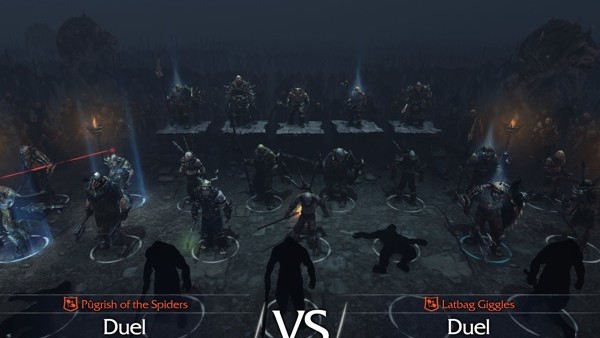
I know you know this one but we can’t make a list about features other games really should have stolen without bringing up Shadow of Mordor’s Nemesis System.
If you’ve been living under a rock or you just never played this one, the Nemesis System is essentially a feature whereby the enemies you face will grow, adapt their personalities, strengths and weaknesses each time you encounter them in combat.
They remember previous encounters and you’ll develop nuanced rivalries with each Uruk. It’s pretty revolutionary and this was the first time we’ve seen anything like it. Some games have made some attempt at emulating what Shadow of Mordor achieved, but not quite as effectively.
Let us know in that comment box if you can think of a game that’s done anything like this and what games this would work great in and, uh, maybe they can work around that tricky patent.
6. Protagonist Customisation System - Disco Elysium

Something that certain RPGs do really well is letting you level your skills by actually doing the things those skills are related to. Wanna get better at Alteration spells? Do Alteration spells. Want to up your One-Handed skill? Engage in combat with a one-handed weapon.
Enter Disco Elysium where your protagonists’ personality is defined by the way you interact with others and the morals and thoughts you choose to internalise.
Your protagonist in the narrative-heavy RPG is Harry Du Bois but he’s a bit of an odd blank slate and while your backstory is fixed, where you take him from there is entirely up to you. Your skills in the game which you can invest in are facets of his personality; things like Drama, Pain Threshold, and Perception. These facets will also pipe up in the middle of conversations and the ones you put more points into are more likely to weigh in.
This extends to the game’s unique Thought Cabinet where you can spend skill points to internalise various ideologies. The result of this is your ability to build a character in a way that avoids the binary good or evil characterisation that is present in pretty much every other RPG.
Basically, this game is awesome, you should play it, and this would be a cool feature to see elsewhere.
5. Varied NPC Behaviour - I Am Alive

It can be tricky to give NPCs any semblance of seeing like actual people. There are often so many of them that most of the time they repeat character models, voicework, and behave in pretty predictable ways. Either they’re totally innocent, going about their little NPC lives, or they’re shooting at your face in which you’re totally within your rights to shoot at that face.
Things are a little more complicated in the 2012 action-adventure survival game I Am Alive.
Remember that one? The one with all the climbing and the very threatening stamina bar? Well it also has a very cool feature where other survivors in the post-apocalypse will treat you differently depending on their circumstances and equipment.
Unarmed NPCs will leave you alone, pointing your gun at an NPC who has a knife but not a gun will cause them to throw their hands up and surrender, and you can even ammo bluff, which is essentially holding someone up even though you don’t have any bullets.
It becomes a pretty important balancing act to master as the game goes on and it works perfectly for its setting.
4. Pause-Able Cutscenes - Death Stranding

If there was ever a game to implement this sorely needed feature it makes sense for it to have been Death Stranding and the more recent titles of the Yakuza series. Both are famous (or infamous depending on your perspective) for having incredibly long cutscenes. Incredibly long cutscenes that are often stacked up against other, equally long cutscenes.
Fortunately, though, should the phone ring you won’t be stuck having to miss the whole thing and wonder what on earth you’re doing or why because these games put in a pause button.
Honestly, a pause function for cutscenes should absolutely be something that all other games across every genre have stolen by now, but it’s still not the case. Fingers crossed that changes.
3. Enemies & Areas That Don’t Adapt To Your Level - Gothic 2
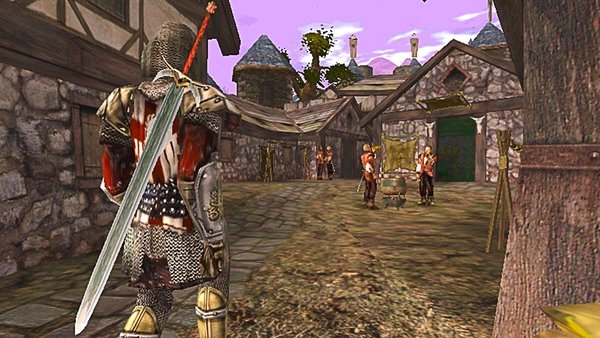
I admit, my old school RPG fandom might be showing with this one but there’s a special kind of magic to RPGs that do away with level scaling.
Level scaling works for a lot of games, it rubber bands the enemies so they sit pretty close to your level and while some enemy types or bosses may be more challenging, it’s not often you’ll run across an area that’s impossible. In games like Gothic 2 and Might & Magic X: Legacy, areas and enemies have fixed levels so if you can’t deal with them now you’ll want to go find a different conflict which you can handle and then come back once you’re more powerful. It’s an excellent mechanic to make game worlds feel more threatening and when you do manage to take out that beastie you lost to a dozen times, there’s nothing like it.
Knowing you have to constantly gear up and tread carefully is so much more engaging and immersive and it’s a shame that more games don’t do this.
2. Adding An Actually Useful AI Companion - BioShock Infinite

AI companions are more often than not the worst. They get in the way when you’re trying to shoot things, get themselves killed a bunch, and nag at you head to Hyrule Castle even though you’re totally planning to go there, you’re just doing something else right now and don’t want to be interrupted every five seconds by a tiny glowing fairy.
Sorry, I have no idea where that came from. Anyway, bless BioShock Infinite for giving us a companion who is not only very cool and a total 10, she’s actually useful.
Elizabeth has lovely idle animations so she actually feels like she’s engaging in the world, not just weirdly following you around. Potentially the best thing about her is told to us by the game itself, that is, "You don't need to protect Elizabeth in combat, she can look after herself". In fact, she looks after herself and you. She gives you advice, throws you ammo when you need it, picks locks, and finds a way to make herself useful in pretty much every situation. With Elizabeth, you actually feel like a team, not a hero stuck in a game-long escort quest.
If anything, Booker was Elizabeth’s annoying companion, not the other way around. I’ll let you sit with that one.
1. Adventure Game Changing Dialogue System - Oxenfree

Oxenfree’s approach to video game dialogue is so good it’s crazy we haven’t seen other dialogue-heavy games copy it.
I’d argue this might be as close to natural conversation as video game dialogue has ever been able to reach. Night School Studio designed Oxenfree’s conversations to happen a few different ways. Characters will speak at length and you’re given the option to interrupt, though you don’t have to. There’s no punishment for saying nothing, though if you stay quiet for a while your companions might ask if you’re listening.
The characters tend to talk amongst each other and you’ll get a few speech bubbles to participate as much or as little as you want. There is a time limit which some might find frustrating but it’s important as it keeps the pace. You’ll often walk and talk so it never feels like anyone is just waiting around awkwardly paused for your response.
Given that the game features a bunch of teenagers, this comes off pretty naturally.
There are also sprawling dialogue trees to ensure you can go down precisely the conversation and narrative path you want to. Various characters react differently to the ways you choose to engage and it can be just as meaningful to say nothing as it is to say something.