10 Video Game Heroes You Didn't Want To Succeed

Is it wrong that we didn't want these guys to win?

Every story needs a good hero; it's important in all forms of fiction but in gaming, it's absolutely key. When you watch a good film you should feel connected to the protagonist of the story in some manner, and the same is absolutely vital in games, as we're basically being tasked with controlling that character's life for a period of time. If we're unable to form some sort of attachment to them, are we going to be fully invested in helping them out? This has become even more important with the rise of choice-driven games like Telltale's The Walking Dead series. Nowadays, we expect our heroes to have some added depth to them, because after all, why would you want to play as a bland, uninteresting lead when there are characters in the same world who are genuinely exciting and intriguing? That's not to say that a hero has to be perfect. In fact, nearly every great, fictitious protagonist is flawed in some manner as it separates them from the crowd and helps make them unique. Occasionally you'll find a central character's flaws can actually turn them into a thoroughly nasty piece of work, making for an even more intriguing proposition. A great example of this from TV is Breaking Bad; a series that constantly has us questioning Walter White's motives and goals as he explored different shades of grey that sometimes ended up as more black than white. On the flipside, if a hero possesses ulterior motives or is mixing with the wrong sort of crowds, we might want them to fail for their own betterment; a remarkably bizarre thought to have when playing a video game. As such, while we were playing as these ten heroes, there was something just slightly off that made it hard for us to root for them. If you have any other examples you'd like to throw into the mix, please feel free to add them in the comments below.

10. Aiden Pearce (Watch Dogs)

Entertainment is so flooded with anti-hero characters nowadays that it's become a bit tedious. Yes, we all love Batman, but that doesn't mean that every leading character ever has to put on a deep growl and act all mysterious. Watch Dogs had some immense hype before release, which it was never going to live up to, but it could have done several things so much better. For one, it could have had a protagonist that we actually were interested in. Aiden Pearce is the Vigilante in Watch Dogs, a mysterious hacker on a crusade against the higher powers of Chicago. As a result, he's a protagonist who keeps his cards close to his chest; he doesn't really open himself up for anyone. Again like Batman, that's par for the course. The problem is, we actually get to see Bruce Wayne when he's out of costume. The only time we really see Aiden Pearce is while he's running around as the Vigilante; we don't really get to see the person under the mask. Yes, he has a tragic past, but if we're expected to care about Aiden, we desperately needed to see more of him. Even his interactions with his sister and nephew are unbelievably cold; his actions frequently put them in danger, as well as drive a wedge between them, and when he finally decides to remove them from harm's way, the final farewell is so emotionless you have to wonder what exactly it is that drives him. We're told he cares deeply for his sister and nephew, but are we ever shown it? Certain aspects of Aiden's character fit in well with Watch Dogs' almost dystopian portrayal of Chicago but those same aspects make him a bland and unlikable hero. Again, that's fine, if we get to see Aiden when he's not obsessed with his war on corruption. Sadly, we don't, and that makes it all the harder to pull ourselves into his world and root for him.

9. Cole Phelps (L.A Noire)

Come on, you didn't think Rockstar were going to endorse a law enforcing protagonist and not make him flawed, did you? We first meet Cole Phelps while he's the golden boy of the LAPD. He quickly rises through the ranks of the force, moving from being a patrolman to a fully-fledged detective, all while rather annoyingly, sticking as close to the letter of the law as he can. Does that make him a bad guy? Of course not; the complete opposite in fact. He's so endearingly boring that it leaves us a bit bewildered. Then, suddenly, about half way through the story Cole sleeps with another woman and is kicked out of his house by his wife. This scene arrives almost from out of nowhere; Cole had met with Elsa (his new mistress, apparently) before, but it wasn't in a scene loaded with sexual tension. For seemingly no reason, Cole destroys his family (and inadvertently, his reputation and career). Yes it's a plot twist, but it arrives out of nowhere and doesn't sit well within the story. It seems harsh to judge a character on one mistake but a quick search online shows that there is genuine hatred for Cole Phelps as a result of his actions. Team Bondi seemed to take influence from Rockstar, as they have a habit of forcing their 'heroes' to indulge in their darker sides, but with Cole it didn't work out. Perhaps because previously, there was no signs of a darker side brewing beneath the surface (his darker actions during the Second World War are referenced occasionally but judging by the rest of the game, he left that side behind). With his reputation in tatters, Cole begins a vendetta against corruption in the LAPD and while this noble action redeems him somewhat, for many players there was no redemption for a character who abandoned everything he had for seemingly no reason.

8. Booker DeWitt (Bioshock Infinite)

The real genius of Bioshock: Infinite is the way in which it plays on a heavily clichéd storyline (hero rescues damsel in distress from a tower) while still making it feel fresh and original. The world of Columbia has a massive helping hand in that, of course, but Infinite's two central characters are the key factors in creating an engaging and interesting storyline. Elizabeth is the damsel in distress, though she's far more intuitive than your regular fairy tale princess. Booker is the knight in shining armour, though for the majority of the game, it's a role that he never really looks comfortable in. His motives are entirely selfish, for one thing. Throughout the game, we hear a familiar line which drives Booker's mission: "Bring us the girl and wipe away the debt". Our taskmaster isn't revealed until later on in the game but it's the second part that is key to shining a light on Booker's character. Exactly what debt he owes is unclear; what is clear is that Booker seeks to rescue Elizabeth so he can hand her off to someone else to wipe his own slate clean. That, ladies and gentlemen, is a pretty unheroic act. Even if Booker's actions were noble, his short fuse and willingness to commit unspeakable acts of violence contradict his intentions. While he bears the responsibility for those actions, hearing them discussed openly gives us a sense of unease about the guy. While the full extent of Booker's story isn't revealed until the fantastic closing scene, there's not a point in the game where you can really trust Booker to do the right thing for Elizabeth (a character that we quickly grow attached to) and that makes it hard for us to will him onto success.

7. Connor (Assassin's Creed III)

While Altair and Ezio may have had their negative qualities, neither can match the petulance of Connor from Assassin's Creed III. He's far more of an outsider than the previous two heroes and while that might make him a more interesting protagonist (especially as an assassin is perhaps best left to his own devices), it actually drives much more of a wedge between the audience and him. Any interaction that Connor has with pretty much anybody leaves us with a thoroughly negative impression of the guy. Yes, he's from a Native American tribe (a destroyed one, to top it off) and having to adapt to a new way of life, but there's very little to like about Connor's personality. It's clear that Ubisoft wanted a "deep and brooding" protagonist to explore the events of the American Revolution but the dominant personalities of the other characters (most notably, the villains) overshadow him and make him almost irrelevant in his own story. It's hard to root for a guy who's so entangled in his own mind that he refuses to let his personality shine through. The odds are stacked against Connor from the beginning though. Ubisoft took a risk in Assassin's Creed III and forced us to play through the opening hours of the game with Haytham Kenway; Connor's father who eventually becomes one of the game's main antagonists. Not only is Kenway a more interesting character (as with most villains in games, his flair is allowed to shine every time he's on screen), the opening section only makes us want to play as the assassin we know is the leading role, thanks to E3 press conferences and trailers. When we finally switch to Connor and have to play hide and seek in the forest, it quickly grows tedious. Sorry Connor; Ubisoft simply didn't let you become the character you needed to.

6. Niko Bellic (Grand Theft Auto IV)

It's actually credible to Rockstar's team that two of their flawed protagonists appear on this list. Niko Bellic is the primary protagonist of Grand Theft Auto IV and his story centers on a warped interpretation of the typical American Dream. He's also a man desperate for redemption and that creates something of a catch-22 situation for the hero. Niko's actions during an unnamed war in Eastern Europe are frequently mentioned and he clearly carries a lot of baggage. Moving to America is intended to be the turning point in his life, yet he quickly finds himself dragged back into the world of crime. Eventually, it gets to a point where his situation is so muddied that he has no choice but to continue committing horrible acts for even worse people in the vague hope that there's some sort of light at the end of the tunnel. Of course, it doesn't help that Niko was lied to by his cousin Roman, who filled his mind with a series of fabricated stories about how great living in America is. Despite this, it's questionable whether Niko would have ever been able to escape his past life; after all, if all he knows is killing, what could he expect to be doing in Liberty City? It's an interesting thought but it's not really one that's explored by Rockstar - Niko almost immediately returns to his instincts and we never really see him going out of his way to improve his or Roman's lives. Niko is a great character in many ways and we would be rooting for him in most circumstances, but do we really want him to succeed while he's helping some of the scummiest people in Liberty City? Unlikely. His most violent acts may be optional but Niko's quest for redemption only begets more misery upon himself and his family.

5. Jason Brody (Far Cry 3)

While the Far Cry series has always maintained a decent level of popularity, Far Cry 3 was the game's biggest title to date. A lot of the plaudits have to be given to the game's villainous lead Vaas; his crazed, dramatic monologues gave the game a hefty dose of originality and he stole every scene he was in. Not that that was hard though, given the protagonist, Jason Brody, was one of the most unlikable heroes in gaming history. He's first presented as the stereotypical spoiled rich kid, living it up on a pampered vacation with his equally bratty friends. As such, his first experiences with death leave him a little shaken. He whimpers his way through the first scenes of the game, luckily escaping capture while all around him is chaos. Still, there was plenty of opportunity to turn Jason into an interesting character; with the setting and the overarching narrative, it should have been pretty easy. It's a shame then that Jason's development is annoyingly rushed. One second he's whining about having to go out and face trouble, the next he's spouting action movie clichés and killing for pleasure; there's almost no middle ground. It's a tad unrealistic and as you venture through the game, it's hard to grow attached to a character who seems to have no issues disregarding his old life so he can embrace his new, borderline psychotic ways. It's a story about discovering one's true self, sure, but it's so rushed that you'll feel short changed. There's two sides to Jason Brody and to tell the truth, there's little to like about either one.

4. Wander (Shadow Of The Colossus)

Shadow Of The Colossus' story is told in such a minimalist manner that you might have been left bewildered by the whole thing. Wander's quest to defeat the sixteen Colossi and restore the life of a girl named Mono has quickly become one of gaming's most acclaimed experiences. So why on earth would we ever want Wander to fail? Downing a Colossus in the game is a momentous task; they're hulking, giant beasts which require a mix of platforming and reflexes to traverse and attack. It's the story of David and Goliath played out sixteen times. Interestingly though, you may notice something is off when you down a Colossus. For starters, they only ever attack in retaliation; there's never a Colossus who attacks Wander first. As you progress further and further, Wander starts to deteriorate; his skin grows paler, his hair grows darker and black streaks cross his face. Clearly, Wander's quest is having an adverse effect on him. It's these unsettling changes which make Shadow Of The Colossus such a unique experience. Eventually, beating a Colossus doesn't even feel like a victory; that's a real achievement and it shows just how well designed the game is. The dramatic consequences of Wander's quest may not be fully realised until the end scenes but there's a distinct feeling of foreboding throughout which leaves us wondering if saving the damsel in distress is actually a good idea.

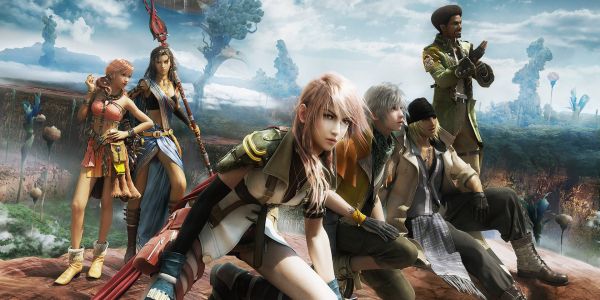
3. Everybody (Final Fantasy XIII)

In truth, Final Fantasy XIII isn't as horrible as people make it out to be. Yes, it's a huge step back from the glory days but if you can overlook the linearity of the game, there's still a lot to enjoy... like taking the mickey out of the characters whenever they do or say something stupid - which is all the time. Final Fantasy XIII is a story about six people fighting against fate; trying to prevent a future which will be pre-determined by their actions. That's a noble cause but it's a shame that our six heroes aren't very heroic at all. Lightning is your typical Final Fantasy protagonist; sullen, brooding and "deep"; Hope spends the vast majority of the game wishing the ground would swallow him up; Snow is the typical "thug with a soft center"; Sazh is probably the most driven of all but makes stupid decisions constantly; and the only real interesting thing about Vanille and Fang is that everybody online seems convinced that they're lesbian lovers. It's a touch harsh to characterise our heroes by their flaws but, truthfully, there's not much else to work with. Hope is the pick of the bunch; he's thoroughly unlikable and spends most of the time curled up in the fetal position (not literally but he might as well be), wishing things could go back to the way they were. Apparently his name was ironic, because he's the most hopeless person around. There's a level of maturation and development to his character within the story but it comes far too late; sadly, we've lost interest. If Final Fantasy XIII robbed you of any hope for the series, XIII-2 and Lightning Returns may help restore your faith a little, mainly because they tell a far better story which isn't interrupted constantly by stupidity. XIII isn't as bad as everybody says... but its protagonists definitely are.

2. Raiden (Metal Gear Solid 2)

Interestingly, Raiden may be the only character on this list to be doomed before he'd even appeared in game. Metal Gear Solid's phenomenal success turned Solid Snake and his creator Hideo Kojima into gaming superstars. Everybody clamored for more and unsurprisingly, Metal Gear Solid 2: Sons Of Liberty was put into production. While E3 trailers clearly showed Snake as the star once more, behind the scenes, a new protagonist was being lined up; one who would cause immense controversy upon arrival. You see, Raiden is actually the star of Metal Gear Solid 2. Solid Snake features in the prologue (the Tanker Chapter) but the main bulk of the game sees you playing as Raiden. The fan backlash was pretty incredible. People turned on Raiden almost instantly, refusing to accept him as a genuine hero. Some have offered reasons behind the switch; that playing as Raiden allows us to see Solid Snake as the legendary soldier he is, but still, the overall feeling was one of negativity. Putting aside rampant fanboyism, Raiden doesn't have many redeeming qualities. He acts as a blank slate of sorts, asking questions which allow newcomers to the series to feel welcomed. That's all well and good (at least it prevents the game from being bogged down by tutorials) but it kind of makes Raiden seem pretty silly. On top of that, he actually has no real world experience; all of his training was done in virtual reality. Again, that's acceptable, although it's kind of ruined by his cocky nature. Despite not having undergone a real mission before, Raiden insufferably brags about his accomplishments in VR, almost instantly causing us to dislike him. Snake could back up his heroic boasts and taunts; Raiden is just an annoying rookie. Is Raiden unfairly judged? Definitely. The overwhelming hatred directed at him by the community back in 2001 was unfair. Does he redeem himself in game? Not particularly. While Metal Gear Solid 2 remains a great game to this day, it's heroic lead leaves something to be desired, mainly actual heroic qualities.

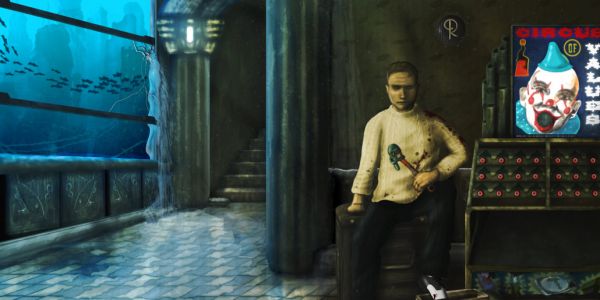
1. Jack (Bioshock)

If you were to ask gamers what they're favourite game of the last gen was, chances are Bioshock would pop up a lot and rightfully so. Bioshock's story is so well written that it's hard to think of a game that even comes close to being as thought-provokingly brilliant. It's hero Jack (who is never actually named in the game), is one of the most interesting characters ever created and he only has two lines of dialogue, right at the beginning of the game. Instead, it's the way the story builds around him that makes for such a brilliant yet mysterious protagonist. Like some of the other characters we've discussed on this list, Jack is somewhat of a victim of circumstance. While he may not seem inherently bad, the man leading him certainly has ulterior motives. Sure, Atlas is polite enough (he has a very fond liking of the phrase "Would you kindly"...) but there's definitely more to him than he's letting on and it makes your journey through Rapture that bit more cautious. It's not that we didn't want Jack to succeed overall; it's more that we didn't want him to necessarily help Atlas out. To ruin Bioshock's immense narrative would be a disservice to those who haven't experienced it for themselves yet so we shall leave it there, but before the game's huge revelations Atlas' sugar-coated voice was perhaps the most uncomforting aspect of Rapture and that's saying something. While we may have wanted some heroes to fail due to awful writing, here we had doubts about wanting one to succeed thanks to genius writing. Kudos, Ken Levine. Agree? Disagree? Are there any heroes you had trouble getting behind and would rather have seen fail in their adventures? Let us know in the comments below!

In this post: 
Watch Dogs
 
Posted On: 
Contributor
Contributor

I have an addiction to achievements, a craving for new bands and a dream to become Captain America. I once finished second in a Mario Kart 7 tournament so I'm kind of a big deal.