10 Video Game Plot Twists That Were Profoundly Insulting
"You must die to save us all", "Why?", "Because".

Much as games have gotten better at delivering well-told stories, immaculate Hollywood-aping feats of acting and eye-popping visuals, there truly is an art to an effective plot twist.
Too crowbarred in and it feels last minute - some resurrected character or "it was all a dream!"-type revelation only raising eyebrows and deflating immersion. TOO fundamental without sticking the landing though, and it serves to undermine the entire project's most meaningful moments.
As with many stories and sagas that get added to or otherwise unfold across multiple instalments, there's rarely a detailed plan going in. Yes, depending on the scale of production, many plot markers may need to be hit, but there's plenty room for improvisation. This opens the door for marketing whims and cherrypicked plot points to be the thing an entire game is hung on. Marketing budgets inflate and the hype train is boarded by millions, all now waiting for that one immaculate reveal or piece of information that on the creative side, was never going to truly satisfy.
In fairness, there are exponentially more phenomenal stories in gaming than those that don't land, but when we've been lead to expect one thing and it's a total whiff? Us gamers aren't shy about letting everyone know about it.
10. Booker Is Comstock - Bioshock Infinite

The antagonist of Bioshock Infinite, everything about Comstock screams "mysterious evildoer".
Yes he's got a flying city in the sky, but the second you touch down on Columbia you realise racial segregation and oppression is still in full flow. This wannabe-American utopia circa the early 1900s is rife with inequality, and with one "genius" mind at the top, you can't wait to see what makes him tick; what makes him think he's above the rest, and how you're going to reason with him or bring him down.
Cut to your first in-person meeting and... Booker just kills him. In retrospect I totally think this was done to prevent the game's later twist from happening earlier, but the head-bashing of Comstock comes out of nowhere, completely ruining what should've been the best exchange in the game.
That later twist, too? It's that Booker IS Comstock. Ken Levine and co. wrote a whole bunch of alternate reality-type gubbins explaining multiple timelines and how the Comstock version of Booker is just one permutation of an event in his past, but... this doesn't explain how Booker doesn't recognise himself visually.
Feeling as though Levine had to put twists on top of twists because that's what pop culture's version of Bioshock had become, everything with Comstock felt contrived to manufacture head-scratchers where there weren't any, and even surface level analysis makes the whole thing fall apart.
9. The Ancient Shambhalan Guardians Are Blue Zombies - Uncharted 2

Uncharted 1's original Spanish zombies were pretty damn stupid - the idea being that they were immortal and feral thanks to the power of El Dorado, despite the entirety of the game otherwise maintaining a believable, "realistic" tone. Also, besides tying into the one treasure Drake had been hunting for, there wasn't any overarching buildup - there wasn't anything to be disappointed by, it was just unnecessary.
Cut to Uncharted 2, and after spending a whole game leading up to visiting Shambhala, the mysterious ancient city of gold, Naughty Dog had us in the palm of their hand.
What sumptuous treasures would we find? What monolithic, imposing-yet-stunning architecture would be on display? The place would assumedly be abandoned, but what if anyone still lived the-
It was immortal zombie-people again.
Because of course it was.
This time though, they were blue.
Already annoying and all sorts of "... really Naughty Dog? This again?!", fighting the blue Shambhalan guardians came with one-shot kills, just so you could restart the entire fight over and over. And over.
It was agony.
8. Your Wife Was In Your Arm The Whole Time - Bionic Commando

Getting people talking about your game is usually a good thing, but in Bionic Commando's case, it's become known as "the one with the arm-wife".
See, back in 2008 and 2009, we got a two-pronged assault of games designed to satisfy the old and the new simultaneously. Bionic Commando: Rearmed was the remake of classic 2D Bionic Commando from 1988, where 2009's Bionic Commando was all about shooting guys, swinging through the sky on your arm-hook, and all-round being an acrobatic, rastafarian-haired legend.
Sadly, though Rearmed is BRILLIANT, 2009's offering cranked up the dials on some spectacularly unnecessary lore. Available in scores of text prompts and discoverable diaries, we also had a gritty story cented on Nathan "Rad" Spencer and the quest to find his wife.
The twist, after a good two-thirds of the game? Your titular arm WAS your wife, and her soul was necessary for the perfect synergy of man and metal.
A completely bonkers notion that could've totally worked, had the overall tone fed into this, but as it stands, Bionic Commando's hilarious rug-pull was just one of many reasons the majority of people avoided this altogether.
7. You Were Dead The Whole Time - Final Fantasy X

Oh god, this thing.
Now, I actually really enjoy and appreciate Final Fantasy X overall. Its immaculate art direction, medium-pushing visuals, shakeups of boss battles by introducing extra elements to score damage points. Hell, I even adored the Sphere Grid, despite it hybridising every character and removing individuality.
That said, what a terrible script and hilari-bad voice acting might have hinted at was certainly true - the story overall is just plain bad.
Feeling like director Yoshinori Kitase was making it up as he went along, we started with things like religious devotees summoning spirits and channeling ancient magic (plus a giant space whale shooting lasers out its mouth), only to shift into main characters becoming evil villains for the sake of it, and the ultimately maddening reveal that Tidus himself was a dream.
Not that the entire adventure was a dream, but that Tidus could exist as a walking, talking, feeling dreamed-up entity, summoned by a dead populace, because they miss their homeland and its citizens so much.
Naturally the scripting and overall acting required to make this sort of thing remotely believable wasn't here, and it went down as one of the most pointless twists in gaming history, that also ultimately negated the majority of your character progression in the process.
6. Desmond Must Die To Save The World - Assassin's Creed III

Maybe so many people were so vocal about the perpetually whiny Desmond Miles, that killing him off was best for all involved.
For anyone looking forward to seeing where the modern day part of AC III was heading though? Desmond pulling a sacrificial messiah on us was insanely forced, and served only to remind the fanbase that series creator Patrice Desilets had left the project two games ago.
Yes, in Desilets stead it was assumedly decided that future Assassin's Creeds should focus entirely on whichever time period was plastered all over the marketing materials, and so it was revealed that Desmond - being the character the gods were talking to in the present - would be wiped off the face of the Earth.
The setup Ubisoft came up with though? A ludicrously forced mess of "please take this seriously" circumstances. Ranging from unlocking a secret ancient door that lets Desmond talk to the gods themselves, to then being told a mystical orb houses an ancient evil that will kill him for touching it, naturally the only solution was to touch said orb and be done with it.
Multiple endings follow that REALLY lean into those religious overtones - well, less "lean in" and more "Desmond is actually Moses talking to people from a cliff" - but either way, the looseness of this "finale" stood in stark contrast to the slow, intense rollout of plot points in the original games.
5. Vaas Dies - Far Cry 3

Centre of Far Cry 3's marketing and total monologue machine, Vaas was the video game villain of 2012. Hell, Michael Mando's energetically creepy performance practically restored faith in Far Cry overall after the maligned second instalment.
What a truly baffling and pointless twist then, that Ubi decided to kill him halfway through the story.
Besides the fact that trailers and the general vibe of FC3 seemed to be leading to a revelation that protagonist Jason Brody actually WAS Vaas (or was related to him in some fashion), the result was Vaas being gunned down during a pretty flat-feeling mission, only to look at you one last time and... nothing.
Seriously, it's as strangely "meh" as it sounds. One of gaming's coolest and most memorable villains got a fantastic introductory sequence and very little else. Even the way you kill him isn't anything to write home about.
It's... just... WEIRD.
4. Bringing Back The Joker - Batman: Arkham Knight

This wouldn't be so bad if Rocksteady had been honest with everyone, and though under really heavy, let's-get-legal scrutiny, they DID stay true to Joker being dead, giving him even even more screentime in Arkham Knight was tantamount to a resurrection anyway. Because one of the coolest twists in gaming is Joker accidentally killing himself at the close of Arkham City, choosing to stab Batman and break the life-restoring serum Bruce was trying to administer.
After finding out all he had to do was not try to stab someone, the closing line of "That is actually... pretty funny" fit the character to a tee, so for Rocksteady to essentially undo that finality just for kicks felt profoundly off.
Put alongside the reality of the Arkham Knight being Jason Todd i.e. not a new character - something Rocksteady had outlined in their pre-release marketing - it made for a bizarrely unconfident feeling across the entirety of the game's story and wider narrative.
Arkham Knight was Rocksteady notably stumbling after such an immaculate track record otherwise - a motion they've not recovered from to this day.
3. YOU Must Make The Final Sacrifice - Fallout 3

You have to imagine someone at Bethesda flagged this during a meeting, but it was likely too late. Because though Fallout 3 remains a monolithic entry in not just the Fallout franchise, but RPG history, this ending being undone by a technicality was INFURIATING, to say the least.
Yes, it turns out that Fallout 3's final ask is to press a switch amid a room filled with death-bringing radiation.
This would be a suitably epic "hero's sacrifice" ending in literally any other franchise, but... well, there's no reason for you to die. Though your protagonist is susceptible to radiation, your mutant pal Fawkes certainly isn't, and players immediately questioned the reality of him flipping the switch instead.
In-game you could attempt to raise this idea, only to be told about your "destiny" and the need to needlessly perish. Bethesda did include the option to send other companion Sarah Lyons into the room, but again, any death could have been avoided with a more thorough script. As a final kick in the teeth, even if you did choose to send Lyons in, neither ending opened the map back up for further exploration, ending Fallout 3 on a feeling of "Really? That's IT?!"
After a groundswell of complaints, Bethesda's response was to create a new ending where Fawkes could push the button... but it was sold as part of the DLC, Broken Steel.
Because video games.
2. The Centre Of The Galaxy Is A Reset Button - No Man's Sky

Firstly, hats off to Hello Games. The version of No Man's Sky you can pick up today is one of the best space exploration RPGs of all time, with a gorgeous graphics engine, awesome art direction, scores of varied, fun ways to play and an all-round feeling of passionate developers creating something with a real vision.
At launch though? It released as a spectacularly mis-marketed and lied-about game, leading consumers to purchase off the back of various promised game features that simply didn't exist, despite being mentioned on talk shows and websites across the board.
Multiplayer, factional warfare and a more direct story were some of the biggest, but another was the mystery of what lay at the centre of the universe. Hello Games' Sean Murray discussed an "incredible experience" and hinted at, well, something being there many times before launch, but the reality was a stunningly empty sequence where your whole game's progress resets.
Done by zooming AWAY from the central sun until you were back where you began hundreds of hours ago, this was supposed to bring about "oohs" and "aahs" as to the never-ending nature of discovery, but it made most of us think "f**k this" instead.
I can't help but think if you zoomed through the sun and out into another galaxy, it would've saved the whole thing.
1. No Matter What You Pick, Everything Sucks - Mass Effect 3
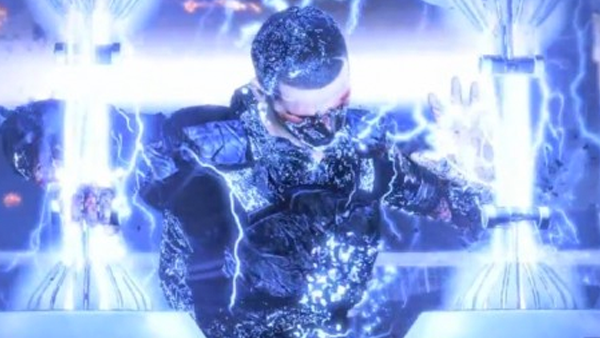
Arguably the biggest and most insulting of all the twists in gaming history, the revelation that Commander Shepard would have to kill himself to save the galaxy wasn't outside the realm of possibility - but the reasons why this had to happen? They were straight-up bullsh*t.
Any who played through the franchise can attest to the stupidity of the Starchild: a new "character" telling of how the Reapers were actually an ancient A.I.-type force designed to be an intergalactic reset button, brought about by the "inevitability" of synthetic and biotic life never truly getting along.
Besides the fact you could literally proved this wrong by having the Quarians make peace with their Geth underlings, Mass Effect 3's ending felt like one of the most manufactured wannabe-epic conclusions in entertainment history.
Turns out, that was almost entirely the case. Behind the scenes, Bioware weren't having the best time settling on how to wrap Mass Effect up, and lead writer Mac Walters (who replaced Mass Effect 1 and 2 head scribe Drew Karpyshyn) "scribbled down some thoughts on various ways the game could end" in late 2011 - only months before shipping.
This "study the night before the finals" mentality highlighted a team running out of time, and whether a release date had to be hit because of EA or not, Mass Effect 3's ending remains the most notable dud in all of gaming.