10 Video Game Sequels That Resolved NOTHING
Shenmue III... you ended on ANOTHER cliffhanger?!

What do fans expect from a video game sequel? To creatively evolve the gameplay systems that were so great last time, to raise the scale and stakes, and of course, to continue the story in a majorly satisfying way. Is it that much to ask?
While most video game sequels at least manage to pick up the previous story and run with it, every so often they'll inexplicably drop established threads, abandon cliffhanger endings, or simply fail to deliver the implied closure.
These 10 sequels, whether otherwise great games or just total disappointments, all failed to resolve the leftover story from the previous game as players quite reasonably expected them to.
Whether it was a jaw-dropping villain tease, the hero's ambiguous fate, or the epic showdown fans hoped to see, these expected elements were all thrown out of the window in favour of something else.
Often, it simply ensured players had to wait for yet another sequel to maybe, just maybe get their desired resolution...
10. Marvel: Ultimate Alliance 2

The first Marvel: Ultimate Alliance game concluded with an incredibly neat sequel hook, as big bad Galactus swore revenge against Earth's finest superheroes, who managed to defeat him with some help from the Silver Surfer.
And so, the die seemed to be definitively cast for the inevitable sequel, with the heroes attempting to prevent Galactus from launching a devastating attack against Earth.
But for whatever reason, original developers Raven Software didn't return to make 2009's Marvel: Ultimate Alliance 2, and replacement team Vicarious Visions more or less opted to ignore that tantalising cliffhanger entirely.
The sequel instead decided to adapt elements from the beloved Secret War and Civil War storylines, while being met with mixed reviews - though they were more to do with the game's inferior gameplay than the outright ditching of the Galactus plot.
9. Dino Crisis 3

Dino Crisis 2 may have jettisoned the survival horror style of its acclaimed predecessor, but it was nevertheless still an enjoyably arcade-y dinosaur-shooting romp, which reunited fans with the series' red-haired cult fave protagonist, Regina.
The game memorably ends on an agonising cliffhanger, as Regina travels back in time in the hope of finding a way to rescue the game's co-protagonist, Dylan, along with his daughter from the future Paula, both of whom are killed in an explosion moments later.
But fans were mightily pissed off when Dino Crisis 3 turned out to be set in the year 2548, with a greater focus on sci-fi elements while neither Regina nor Dylan made any sort of appearance whatsoever.
To make matters worse, the game tanked critically and commercially, effectively nailing the series' coffin lid shut, even as rumours of a Dino Crisis remake still do the rounds to this day.
8. Life Is Strange 2
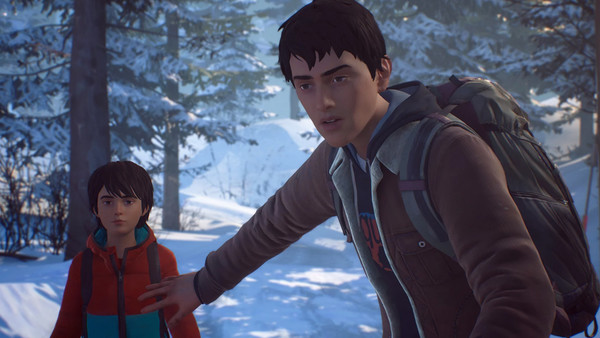
Dontnod's fantastic episodic adventure series Life Is Strange concluded its first season with the player being forced to make a devastating choice: either sacrifice the life of Max's friend Chloe in order to save Arcadia Bay from an impending storm, or let Arcadia Bay be destroyed to save Chloe.
Players made their decision, after which they lingered in limbo while waiting for the announced second season to give fans a definitive canon ending.
But of course, it was eventually confirmed that Life Is Strange 2 would be an entirely new story which ultimately featured just passing references to Max and Chloe's adventure - including an amusing cameo late in the season - while leaving Chloe's face up in the air.
As much as the lack of concrete resolution upset some fans, the logic from Dontnod was actually pretty sound: the game's co-writer Christian Divine said, "The whole game builds up to literally that moment. The point of the game is not to give that linear conclusion."
The lack of finality is undeniably bittersweet, but if Dontnod truly has no further desire to tell future stories featuring Max and Chloe, it's probably for the best not to commit either way.
7. Resident Evil 3: Nemesis

Back when Resident Evil 3: Nemesis was first released, fans were shocked that the game ended with a thermobaric missile being dropped on Raccoon City, annihilating the locale in an attempt to destroy the T-Virus.
The identity of the first three games is so inexplicably linked to Raccoon City that there was an unexpected sense of finality to witnessing its destruction, that the zombie threat had truly been vanquished once and for all.
But of course, this celebration was incredibly short-lived, as the series limped away from its dilapidated homestead with the spin-off Code: Veronica (which introduced a new T-Virus variation), and Resident Evil 4 (which featured a new mind-controlling parasite).
By Resident Evil 5, Wesker was fully back in the fold with a new Umbrella-esque outfit and yet another virus, and so as epic as Resident Evil 3's table-clearing ending seemingly was, it ultimately just set the place for the next batch of games.
6. Splinter Cell: Blacklist

2010's Splinter Cell: Conviction revealed that there was a shadowy, globe-spanning organisation called Megiddo that was attempting to covertly control the world, having even infiltrated the Third Echelon spy outfit itself.
Though the game only vaguely hinted at the full extent of Megiddo's influence, it was clearly a thread that was to have enormous implications for future games...only for the for the next sequel, 2013's Blacklist, to inexplicably ignore it completely, save for a brief mention in the game's SMI database.
As such, we're left to assume that Megiddo is still out there somewhere pulling the strings, given that this significant plotline has never been resolved, and it's unlikely that any potential future games will ever pick it back up again.
5. Silent Hill 2

It's pretty much par the course that most games in the Silent Hill franchise tell their own, tangentially related story, rather than serving as direct sequels to whatever came before.
But considering that the first Silent Hill ended in rather ambiguous fashion with players unsure which of the game's several endings was the canon one, fans were hoping that Silent Hill 2 might at least shed some light on the fate of original protagonist Harry Mason.
But save for a cameo in Silent Hill 2's jokey UFO ending, Harry's fate is left entirely up in the air, and bar a few references to the first game scattered throughout, the sequel is almost completely standalone, focusing instead on new lead James Sunderland.
Fans were relieved when Silent Hill 3 finally circled back to the original game's story with some satisfying surprises, but for all its brilliance, Silent Hill 2 offered up no such catharsis.
Rather ironically, Silent Hill 2 also concluded ambiguously itself, with fans fiercely debating James' fate to this very date, because beyond a fleeting reference to James' disappearance in the fourth game, we're still none the wiser.
4. Call Of Duty: Infinite Warfare

Precisely what defines a "sequel" in the Call of Duty franchise is somewhat up for debate, given that Activision cycles through several teams of developers to ensure that a polished AAA Call of Duty title is released every year.
As such, each team of developers is effectively in command of their own Call of Duty IP, and in 2013, Infinity Ward sought to move away from the Modern Warfare brand with their new release, Call of Duty: Ghosts.
It certainly wasn't a great game by any means, though the campaign did conclude with a compelling provocation for the sequel, as protagonist Logan Walker gets dragged off by the villainous Gabriel Rorke and subjected to the very same torture and brainwashing that caused Rorke to go mad himself.
Despite selling almost 20 million copies, however, Ghosts was middlingly received by both critics and fans, and so when time came for Infinity Ward's next Call of Duty game, they dropped Ghosts like a bad habit.
Their follow-up was instead the intensely sci-fi heavy Infinite Warfare, which didn't fare much better either critically or commercially. As a result, Logan's fate was never resolved, and almost certainly never will be given the unlikelihood that Ghosts 2 will ever get made.
3. God Of War (2018)

God of War is an interesting example because most fans went in assuming that it was actually a franchise reboot rather than a sequel, and so expected it to more or less exist within its own continuity.
But as the game eventually makes incredibly clear, God of War 2018 is indeed a sequel to God of War III, catching up with the very same God-smashing warrior Kratos several centuries later in Norway as he and his son Atreus attempt to spread the ashes of their fallen wife and mother respectively.
Yet the game makes virtually no effort to pick up the previous game's cliffhanger ending, where a near-dead Kratos seemingly vanishes into the sea, leaving a trail of blood in his wake.
Somehow, he gets patched up and travels from Greece all the way to Norway. Granted, a couple of hundred years is plenty time to make that happen, but the new game doesn't make any effort at all to show or explain this, almost as though it never really happened.
2. Shenmue III

Oh, Shenmue III. The sheer fact that this game exists at all is nothing short of a minor miracle, and though Yu Suzuki insisted that the game was simply a small fraction of his planned five-game franchise, fans were still hopeful that it would pick up Shenmue II's cliffhanger in a meaningful way.
After all, the second game concluded with Ryo Hazuki's revenge against his father's murderer, Lan Di, still eluding him, and while fans were understandably expecting Lan Di to figure significantly in Shenmue III's story, he ultimately only shows up for a brief cameo at the end of the game.
The final "boss fight" sees the player trying to land a few hits on Di before the game wrestles control away for a cutscene, where Lan Di kicks Ryo's ass, Ryo flees the burning castle, and Lan Di presumably escapes yet again.
The final title card, reading "The story goes on...," couldn't feel much more insulting after waiting almost 20 years to see Ryo face off against his arch enemy.
Given that a fourth game may well never happen, it feels pretty rich for director Yu Suzuki to so brazenly stretch his epic story out for so long.
1. Saints Row: The Third

In Saints Row 2's extra mission "Revelation," it's revealed that the player character's pal Dexter "Dex" Jackson is actually a turncoat who has tried to have the player killed.
Dex ends up escaping the situation, while the player makes it clear they're going to hunt him down and make sure his pays for his duplicitous actions. But this never happens, and while fans expected to see Dex resurface in Saints Row: The Third, the character is totally M.I.A.
The same goes for Saints Row IV, after which Earth is destroyed and any possibility of a canon showdown between the player and Dex is literally obliterated.
You do technically get to kill Dex in the standalone spin-off Gat out of Hell, yet Dex is already in Hell at this point, so does it really count? More to the point, there's no story follow-up to Dex's actions in Saints Row 2, as left many fans frustrated.
Then again, thinking too hard about the lore of Saints Row really is a fool's errand.