10 Video Games Based On Real Life Stories
Look, nobody can prove Chopin didn't give up his life for a load of JRPG stock characters.

One of video games' greatest strengths lies in their ability to offer escape from a life which for so many, regrettably, is less enjoyable than fiction. Imagination is allowed to run entirely unhinged as the dreams of designers goes digital, and we lucky folk, blessed to live at a time when such possibilities are open to us, are invited along for the ride.
Beyond the special sort of people who revel in the intricate, inexplicable mundanity of building and rather tediously maintaining factories and zoos with a mouse and keyboard rather than a hard hat and, er, whatever it is zookeepers wear (you know who you are), we often pick up a controller to expand our horizons, not replicate them. It's why so many people think Shenmue, as perfect a replication of the tedium of day-to-day as imaginable, is eye-wateringly dull.
But they're wrong. Real life - and the history of real life - is as intimately fascinating as any spacey shooty world thrown up by the AAA Corporation. You just need to know where to look.
Thankfully, these developers did - even if they did take a few liberties here and there.
10. Secret Files: Tunguska

What is it about Siberia which attracts adventure game scribes so much? Four years after Benoît Sokal took us to the far northern reaches of Russia in his misspelled magnum opus Syberia, adventure game designer Jörg Beilschmidt jetted us back via Novosibirsk in Secret Files: Tunguska, a game which had flown largely under the radar like a Soviet spy plane before its Switch re-release last year.
What starts out as a hunt for her suddenly vanished father soon evolves into an epic quest across the four corners of the, er, globe, as amateur detective Nina seeks to solve the century-old mystery of the Tunguska catastrophe, a gargantuan explosion which torched the area to a crisp.
It sounds like fanciful video game fare, but the Tunguska event actually happened. 2000 square kilometres of the Taiga forest were decimated in a moment of cosmic chaos, widely attributed by scientists to the air burst of a meteor - a sort of intergalactic grenade. Boffins estimated that the blast hit with an impact over one thousand times than the atomic bomb dropped on Hiroshima - though the consequences to human life were nowhere near as catastrophic; luckily, there wasn't a single fatality.
9. Mystical Ninja: Starring Goemon
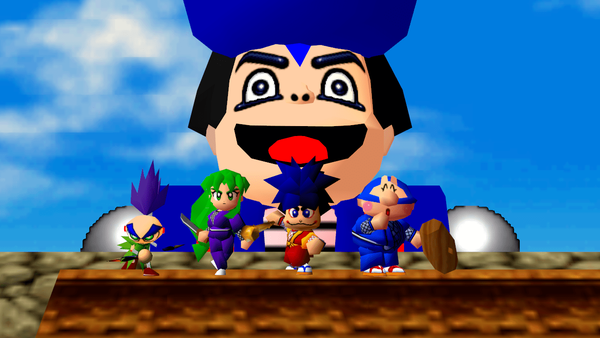
In the musical N64 number Mystical Ninja: Starring Goemon, the eponymous, elaborately blue-haired hero and his crew of eccentric accomplices travel the length of Oedo hitting things with a kiseru, riding the tail of a dragon and at one point, commandeering a gigantic robot as they attempt to thwart the Peach Mountain Shogun gang from turning Japan into one big theatre.
It's fair to say then, that Konami's retelling of the legend of Japan's Robin Hood cum Don Quixote expy Ishikawa Goemon isn't necessarily faithful to the one popularised by 18th century kabuki theatre - though perhaps that's just as well, given the real man's adventures ended being boiled alive in a bathtub.
Though his escapades have been dramatically exaggerated and enhanced by historical retelling, Goemon was a real outlaw with pretensions of heroism, at one point allegedly leading an assassination attempt on warlord Oda Nobunaga (another man with a whole series of games based around him). It was another failed hit, this time on Toyotomi Hideyoshi, which resulted in Goemon's culturally celebrated execution. Today, round iron bathtubs are known in Japan as goemonburo - 'Goemon baths'.
8. Operation Thunderbolt
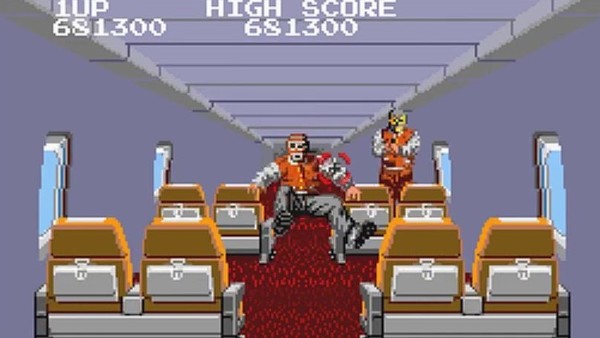
The plot of Operation Thunderbolt, Taito's sequel to coin-op classic Operation Wolf, revolves around a couple of Green Berets with improbably heroic names - Roy Adams and Hardy Jones - liberating the hostages of a hijacked plane in north Africa. Though that might sound like standard shooty-wooty fare, it's actually based on a real life event. At least, loosely.
In 1976, the separatist group Popular Front for the Liberation of Palestine hijacked a flight from Tel Aviv headed for Paris, with the demand that the Israeli government release a group of Palestinian militants in exchange for their hostages. The plane was first diverted to Benghazi, Libya for refuelling, before landing at Entebbe, Uganda, with the support of dictator Idi Amin.
The Entebbe Crisis was ended when the Israel Defence Force stormed the airport, taking just 90 minutes to rescue the captives in an extraction known as Operation Entebbe, or alternatively as - you guessed it - Operation Thunderbolt.
Taito's version of events takes some liberties; Israeli soldiers didn't shoot everybody they ran into on sight, and the PLFP's two ports of call have been rolled into the fictional province of 'Kalubya' - clearly a corruption of Libya. Brilliantly, it's also possible to botch the save by accidentally executing the pilot at the game's conclusion, in a blunder almost as bad as Amin's own harbouring of the terrorists.
7. Eternal Sonata

In the autumn of 1849, virtuoso Polish pianist Frédéric Chopin lay on his death bed, as the tuberculosis which had ravaged his body reached its final stages. As the last life ebbed out of the Romantic musician, he was surrounded by his family and friends, and his final wishes were enacted before he eventually entered his eternal sleep.
What historians don't tell us is that during his last hours, the maestro was gripped in the midst of a painfully anime-esque fever dream, featuring every stock JRPG character imaginable in a magical world loosely themed around music.
Eternal Sonata then, which plays out that somnolent scenario, is just utterly preposterous. What should surely be the driving force - Chopin's timelessly poignant compositions - takes a backseat to typical turn-based fare, until eventually, mercifully, our hero pens his longest rest. It probably came as a relief.
6. Aoki Ōkami To Shiroki Mejika (Genghis Khan)
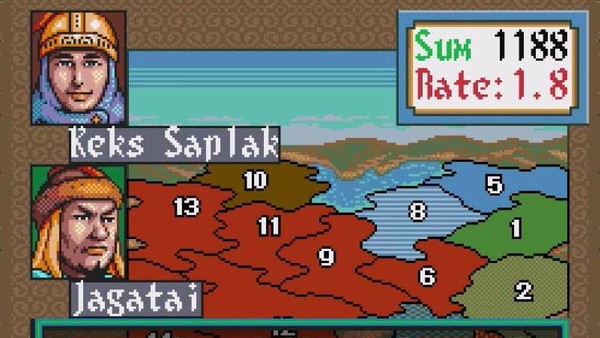
A number of games have drawn inspiration from the incredible, almost mythical history of Genghis Khan, from his money-hoarding expy 'Temjin' in Terranigma to a range of his most famous campaigns in imperial expansionist wet dream Age of Empires II.
However - and pretty obviously given its name - none tell the war-mongerer's story quite as well as Koei's historical simulation series Genghis Khan (known in the east as Aoki Ōkami to Shiroki Mejika, which brilliantly translates as 'Blue Wolves and White Doves').
The first in the series, released 1987, put players in the deel of the Mongolian warlord at the beginning of his global conquest back in 1175, with a snazzy multiplayer mode offering the roles of his contemporaries: England's Richard the Lionheart, Alexios of the Byzantine Empire, or Minamoto no Yorimoto - a man who has a starring role in several games himself.
Koei really dusted off the history books for the game's sequel, presenting four complex scenarios trailing the rise of the Mongol horde from Genghis Khan's seizure of the steppes in the late 12th century to the eventual birth of the Yuan Dynasty in 1274. If you love viciously conquering all your neighbours as part of a rampaging horde, this is for you.
5. Yoshitsune Eiyūden: The Story Of Hero Yoshitsune
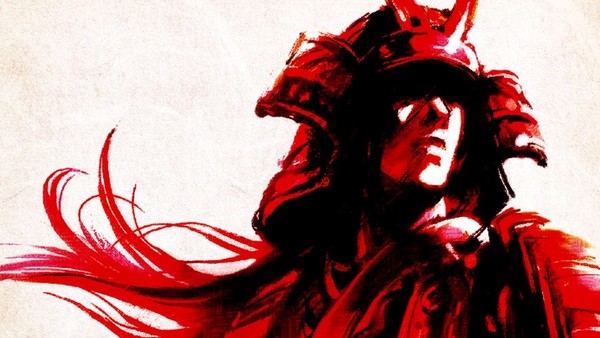
Before they were making masochists of us all with the deadly, dead-hard Dark Souls, FromSoftware made it their remit to deliver a Japanese history lesson through the medium of a real-time strategy/third-person hybrid.
As the game's title very obviously suggests, Yoshitsune Eiyūden retells the tale of Heian-period samurai Minamoto no Yoshitsune, a swordsman whose legendary exploits during the Genpei War helped half-brother Yoritomo consolidate his shogunate.
Yoshitsune's cultural and historical significance have seen him crop up in a number of video games - even if it hasn't always been as obvious as FromSoftware's tribute.
Ōkami's self-proclaimed prophet Waka is also based on the general, who was known as 'Ushiwakamaru' in his childhood. His depiction in Capcom's lupine classic isn't quite as biographical as those seen in the likes of Age of Empires II and Total War: Shogun 2. For a start, he plays a magical flute. Oh, and he can walk on water. The real Yoshitsune's amphipedal abilities aren't mentioned in any historical texts.
4. That Dragon, Cancer

Ryan and Amy Green's independent art game That Dragon, Cancer isn't based on a famous figure or significant world event which changed history, but is a deeply personal, autobiographical account of the pair coming to terms with their infant son's terminal cancer.
At just 12-months-old, the Greens' third child Joel was diagnosed with an atypical teratoid rhabdoid tumour - a cancer of the brain - with doctors offering a prognosis of four months to live. The 'game' - if such a term is appropriate - isn't about stepping into a historical role with the separation of time or context, but asking the player to experience the despair, grief, and eventually acceptance of losing a child. It's understandably powerful, poignant stuff, and redefined the paradigm for what a video game could be.
3. Mozart: The Conspirators Of Prague
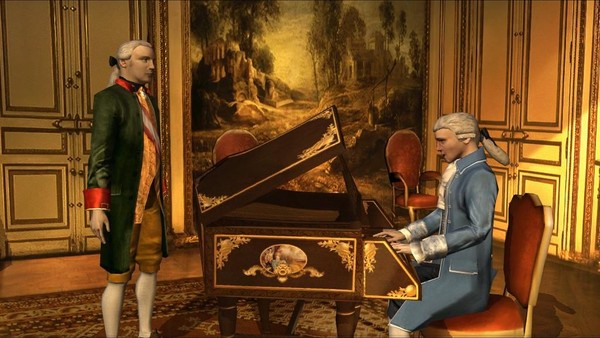
For many, the Freemason's lodge is nothing more than a glorified boys club, where the apparent bhadralok of high-society meet for a knees up. For other, more empirical minds for whom actual evidence is a hindrance, the society is an organisation shrouded in mystery, its members' collective fingers stirring many punch bowls of conspiracy.
Micro Application's historical adventure Mozart: The Conspirators of Prague takes the latter view. The game's story is a standard plot-boiler, concerning the masonic Wolfgang Amadeus Mozart's discovery of a scheme to overthrow Holy Roman Emperor Joseph II, whilst in Prague to debut new opera Don Giovanni.
Though there's not a jot of evidence to suggest there was ever a hit on Jo's head, the Austrian musical maestro's connection with the shadowy cabal is well-established. At the tail end of his life, the composer was inducted into the society alongside his mentor Joseph Haydn, a development which manifested in his latter-day compositions, from the Mason's three-note knocking motif appearing in opera The Marriage of Figaro's overture, to the self-evident 1785 dirge Maurerische Trauermusik - literally, a Masonic funeral march. In 1785, Mozart became a master Mason, surrounding himself with members of the club up until his untimely death six years later.
2. Guerrilla War (Guevara)
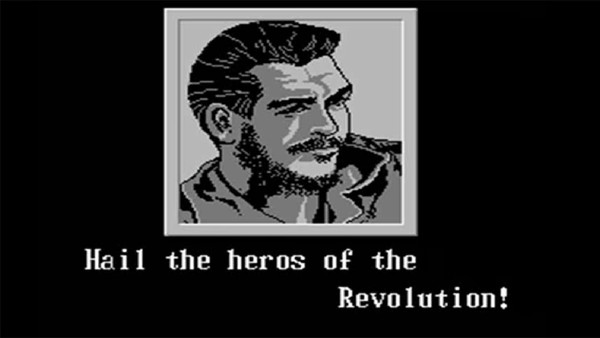
In the English language version of SNK's Guerilla War, a pair of unnamed rebel commandos make it their personal mission to liberate a non-specific Caribbean island from the clutches of an obviously evil but similarly unknown despot. The politics of their plot are never mentioned; it's just two well-to-do chaps trying their best to bring peace to a long-suffering population.
In Japan, the story's somewhat different. There's no subtly behind the original title Guevara, as players take on the role of legendary revolutionary of the same name Che, shooting his way through Cuba's moist forests on a one-man campaign to bring down capitalist authoritarian Fulgencio Batista. If a second person picks up the pad, they assume the role of none other than Fidel Castro.
Fearing anti-communist sentiment in the west, SNK removed all traces of Che and Castro from the game - and with it, all the intrigue.
1. This War Of Mine

Unlike most war-based video games which place you front and centre of the frontline with an arsenal strapped to your back, 11 bit studios' This War of Mine explores the civilian side of conflict, putting you in the gradually perishing shoes of a group struggling to survive a city under siege.
It's truly the most harrowing 'survival horror' game ever made. War, to paraphrase Sensible Software, has never been less fun.
The game's shell-shattered, fictional setting of Pogoren, Graznavia is directly inspired by Sarajevo, the Bosnian capital which spent 1,425 days besieged at the hands of the Yugoslav People's Army from April 1992 until February 1996. The developers specifically reached out to those who had lived through the ordeal, in the hope of making This War of Mine's experience as accurate - and thought-provokingly horrifying - as possible.
The siege of Sarajevo was eventually lifted shortly after the Dayton Agreement brought the Bosnian War to a close. The conflict might have been over, but those who lived through it were left haunted for life by the experience - an experience painfully recreated in 11 bit studios' unremittingly bleak recreation.