10 Video Games Fans And Critics Can Never Agree On
Looking at the Marmite of video games.

Whether you consider yourself a casual player, a die-hard gamer, or a critic, it should be obvious whether a game qualifies as good or bad. If you're playing a beat-em-up or first-person shooter with janky animations, inaccurate lip-synching, and glitches galore, you can tell within a few seconds that the game is not up to standard.
Because game-crashing bugs, crappy controls, and shoddy graphics are so blatant, the ratings for games, whether its by a professional critic or a regular player, is usually the same. That's why the Super Mario games are universally regarded as top-tier platformers while anyone who has played Superman 64 for a quarter of a second can tell it's irredeemable trash.
But that isn't always the case. There are a couple of titles that were average at best and yet, critics swore they were the next big thing. On the other hand, some video game reviews that were so scathing, players were astonished to see the games were nowhere near as bad as they were told.
So, what video games have divided the critics and fans the most?
10. Gone Home

In Gone Home, you take control of a woman called Katie who has returned home to learn her parents and sister are missing. Navigating around the house, Katie searches for clues, hoping to learn what happened to her family.
Despite the simple premise, the game stood out for focusing on exploration rather than interactivity, which many critics believed made the story more engrossing. Critics were so won over, it wasn't long before Gone Home started being used as proof that video games can be classified as art. It received excellent scores from every gaming publisher and it even won a BAFTA. (I didn't even know video games could do that.)
Sadly, Gone Home is one of those games where players hated the exact elements that critics loved. Many gamers felt the lack of of interactivity made Gone Home feel more like a walking simulator than a game. Although many people found the subtle horror kept players on their toes, some found the lack of outright scares boring.
Because supporters feel like Gone Home is a work of art above all else while naysayers think it's trash, the only thing everyone seems to agree on is it doesn't feel like a video game.
9. Banjo Kazooie: Nuts & Bolts

For years, Rare was among the best developers for Nintendo, churning out classics like Donkey Kong Country, GoldenEye 007, and Diddy Kong Racing. So, when the British developers were acquired by Microsoft, gamers were worried about Rare's franchises, especially Banjo-Kazooie.
So, when it was announced Banjo-Kazooie was coming to the Xbox 360, fans rejoiced. However, people were horrified to see this game, Banjo-Kazooie: Nuts & Bolts, was a letdown. Even though the series was a platformer above all else, this threequel put an unnecessary emphasis on vehicle construction to navigate through levels. Not only did this sections grind the gameplay to a halt, the controls for these automobiles was clunky and imprecise. Nuts & Bolts left a bad taste in everyone's mouth, to the point where the most dedicated fans of the franchise never played beyond the first level.
Because of the game's reputation, it's easy to forget it received consistently good reviews upon its initial release! Although it was regarded as the weakest of the three, it achieved a Metacritic score of 79%, implying the game was a solid entry. Some critics praised the construction and driving sections, stating that it urged the player to focus on innovation rather than platforming.
8. DmC: Devil May Cry

Because the demon-hunting hack-and-slasher, Devil May Cry, was among the most highly-rated games on the PS2, it was no surprise Capcom fired out numerous sequels. Although the follow-ups were great (apart from the second one), it felt like they were trying to be outlandish and over-the-top rather than innovative. By the time the sequels incorporated missile-surfing sequences and buttslapping jesters, it was apparent the franchise was teetering on becoming a parody of itself.
So, it felt like a smart move when the developing team behind Devil May Cry announced a more grounded reboot called DmC. When critics praised the game's flexible combat system, fluid controls, and stellar art-style, it seemed like the series would discard the in-your-face zaniness of the previous entries.
Sadly, die-hard fans were disappointed that DmC didn't embrace the crazy outlandishness that defined Devil May Cry in the first place. Although few people had any problem with the gameplay itself, loyalists made it abundantly clear they wouldn't support the new direction Devil May Cry seemed to be going in. Even though DmC did receive consistently good reviews, Capcom returned to the original style and format for the following sequel, Devil May Cry 5.
7. The Legend Of Zelda: Wind Waker

Upon its release, The Legend of Zelda: Wind Waker was praised for its distinctive graphics, epic story, and focus on exploration. Receiving a Metacritic score of 96% and becoming the fourth game to receive a perfect score from Famitsu, one would assume WW was flawless.
Although there are people who adore WW, it has glaring problems. Link is meant to receive a pearl after completing each dungeon. But since he receives the third pearl by doing nothing, it feels like the game is missing a dungeon.
And that's exactly what happened. Nintendo were so behind schedule during development, they cut out the third dungeon, making the game feel incomplete.
Even though sailing was Wind Waker's selling point, it gets tedious after a while. No matter how much you love sailing, it's repetitive to travel for hours on end.
Also, the last section focuses on a massive fetch quest for the Triforce pieces which quickly becomes monotonous. These problems were so apparent, Nintendo simplified the Triforce quest and made the sailing sections faster when the game was re-released for the Wii U. Since these issues are so flagrant, it makes one wonder why the critics were so generous with WW upon its release.
6. Final Fantasy VIII

The instant Final Fantasy VIII booted up, players were blown away by the stunning graphics and Nobuo Uematsu's beautiful orchestral score. Even though the characters in FFVII resembled blocky Lego figures, everyone in FFVIII has realistic proportions, looking as close to human as video game characters could get (by 1999 standards, of course).
Despite FFVIII's gorgeous aesthetic, it's regarded as among the weakest games in the series. Although the plot is non-sensical and the protagonist is whiny, it's the Junctioning battle system that irked gamers the most. Junctioning requires the player to stockpile spells repeatedly to perform certain commands, which becomes tiresome quickly. The system is so unnecessarily complicated, you can play the entire game without fully understanding how Junctioning works!
But during its release, it was difficult to find anyone who said a bad word about the game. It received perfect scores, became a best-seller in Japan, and won EGM's Game of the Year. Edge, Gamespot, and other gaming magazines praised FFVIII's Junctioning system, claiming it was revolutionary. (Reminder - It wasn't.)
FFVIII is, by no means, a bad game, but it is far from the best the series has to offer.
5. Super Mario Sunshine

Super Mario 64 is considered by many to be the greatest video game ever. It's so masterfully crafted, it's perceived as the template on how to make a 3D platformer correctly. When Nintendo announced its sequel, Super Mario Sunshine, fans couldn't see how it could possibly live up to its predecessor.
And it didn't. Even though Mario is renowned for its precise controls and camera, that isn't the case here. Many players found themselves dying unfairly over and over while playing Sunshine because the camera kept sporadically swivelling, causing the Italian plumber to miss a platform. The controls seem to have regressed since they are janky and unresponsive, causing the player to screw up the simplest tasks, through no fault of their own.
But if you read the reviews of Super Mario Sunshine upon its release, you'd think this is the best Mario game ever. That's not an exaggeration. Several Nintendo magazines, including Game Informer and Computer and Video Games, claimed Sunshine was better than Super Mario 64. GamePro called it "a masterpiece of superior game design". Although everyone is entitled to their opinion, reviews like this are so undeservingly positive, you wonder if they actually played the game.
4. Mass Effect 3
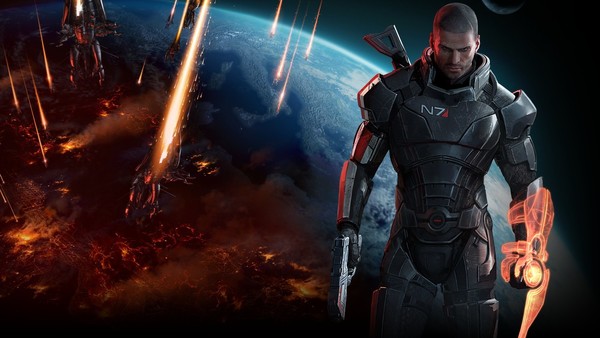
No matter how perfect a game seems, there are always a few naysayers who can pinpoint a couple of flaws. But when Mass Effect 3 was released, you couldn't find a single critic that said anything negative about it. Even though the hype for BioWare's sci-fi epic was through the roof, every critic promised ME3 surpassed everyone's expectations.
Nevertheless, gamers were left fuming by the game's ending. Even though the player is given three choices during the conclusion, the climax is almost identical no matter what you choose to do.
At first, it might sound unfair to dismiss a game, purely based on a disappointing ending. But because every choice the player made through the series had a drastic effect on characters and storylines, it felt disingenuous, even hypocritical, for this principle not to apply to the ending.
But if you thought the game was perfect up until that point, guess again. Mass Effect 3 may have been the highest rated game of 2012 but that doesn't change the fact the side quests are tedious, certain missions feel rushed, and the confrontation with The Illusive Man was anticlimactic. The game may not have been a disaster but it definitely wasn't a masterpiece.
3. Metroid: Other M
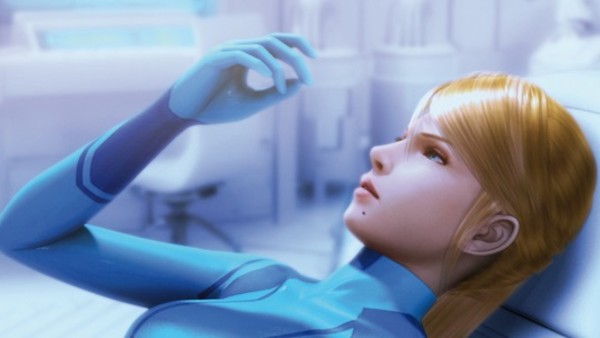
Metroid: Other M may not have received the same accolades as the Metroid Prime series but Team Ninja's action-adventurer won over a lot of critics. The way the game switches from 2D, 3D, and first-person perspective is seamless, allowing the gameplay to feel more innovative and fluid than ever before in the franchise.
Although the series' heroine, Samus Aran, is usually depicted as a silent warrior, Other M was the first entry to give her a speaking role. Because the game includes many cutscenes of Samus interacting with others, we finally got to see the intergalactic soldier as a flesh-and-blood human being rather than a faceless avatar.
At least, that was the idea. Players were horrified by Other M's dire performances, ridiculous story, and awful dialogue. Sadly, nobody got it worse than Samus. Despite the fact she's meant to be a badass bounty hunter, Other M depicts her as arrogant, unstable, and erratic. What's worse is that you can't skip the cutscenes, meaning you are forced to watch Other M ruin one of the most iconic video game characters of all time.
2. Deadly Premonition 1 + 2
Deadly Premonition is a survivor horror where a private detective travels to a fictionalised town in America to investigate a murder. Even though the premise is dead serious, the game is stuffed with pop culture references and wacky humour, which jars with the story's tone.
However, critics and gamers can't decided if these qualities are good or bad! While many critics found the dialogue and performances cringy, some players loved how unnatural everything sounds since it invokes a Twin Peaks-like surrealism.
Deadly Premonition became infamous for its mixed reviews, garnering scores that ranged from 20% to 100%. It wasn't a commercial success but it received enough of a cult following for the sequel, Deadly Premonitions 2: A Blessing in Disguise, to be released in 2020.
As before, this follow-up was criticised and praised for the same things - lack of structure, weird performances, and awkward dialogue. It went on to win GameRadar's Best Worst Game, Gamasutra's Best Cult Game and now holds the Guinness World Record for Most Polarising Survivor Horror Game Ever - a distinction that was previously owned by the first game.
1. The Last Of Us Part II

Naughty Dog's action-adventurer, The Last of Us, centres around a man and girl trying to survive after America has been ravaged by a deadly virus. Despite the fact the graphics are gorgeous and the audio is stunning, it was Joel and Ellie's relationship that gamers gravitated to. The writing and performances for the pair helped solidify The Last of Us as the flagship for great storytelling in gaming.
Although many believed a follow-up couldn't live up to expectations, The Last of Us Part II garnered more Game of the Year awards than any game in history. According to critics, the nuanced exploration, audio design, and character development were on par with its predecessor.
However, many reviews failed to mention the sequel doesn't focus on Joel's relationship with Ellie. Because you only take control of Joel in the opening, fans felt cheated since they weren't getting what they experienced in the first game.
You could forgive TLOUS2 if it included characters as equally compelling. But not only does it introduce many bland characters, most of their relationships don't evolve, preventing the game from hitting the same heights as its predecessor. Yes, the graphics, music, and performances are flawless, but that doesn't change the fact this sequel left out the most important element from the first game.