10 Video Games Ruined By One Dumb Decision
Mass Effect 3's ending undermined the entire trilogy.

Creating and releasing a game is the result of thousands - if not tens of thousands - of creative and business decisions made across countless departments and disciplines over many years.
But sometimes, all it takes is one shambolically bad idea to ruin all that hard work, and to forever sour the experience for players who had been waiting literally years to get their hands on it.
That's very much the case with these 10 games, all of which shipped amid a tidal wave of hype, only for the end result to underwhelm, disappoint and even infuriate paying customers for one reason above all others.
Perhaps a publisher's skeevy business practises encroached upon the developer's vision and compromised the end product, or maybe the developers themselves goofed with a poorly-programmed sequence which simply left players irritated and upset.
Whatever the reason, whether artistic or commercial, these poorly thought-out, greedy and straight-up asinine calls all permanently damaged the fan reception to these games, and even years later, it's still the first thing most players think about when they're mentioned...
10. The Inclusion Of Loot Boxes - Star Wars Battlefront II

After EA's 2015 Star Wars Battlefront reboot proved to be an entertaining yet relatively shallow, content-light multiplayer shooter, the publisher promised that their 2017 follow-up would remedy this, releasing with not only a single-player campaign but also ditching a Season Pass in favour of free periodic DLC.
But in a textbook example of why gamers should never trust slick-tongued publishers, Battlefront II released to an unfathomable amount of blowback after it became clear that the multiplayer suite's progression system was inextricably linked to the acquisition of loot boxes.
Critics noted that players were encouraged to spend real money in order to unlock ability-enhancing items which would otherwise take tens of hours to grind out the hard way.
Amid mounting pressure from critics, a widely-mocked PR response which became the most downvoted comment in Reddit history and a tumbling share price, EA reluctant unplugged microtransactions from the game just ahead of launch, before reinstating them in a less-intrusive form several months later.
But the damage had already been done: what should've been a do-over for its piecemeal predecessor was a sheer laughing stock.
The whole sorry situation not only saw fans taking a principled stand against predatory business practises, but also invited several governments worldwide to investigate the possible criminality of the game's loot box mechanics.
Fans could've forgiven the mediocre single-player campaign, but considering that loot boxes were such an inherent part of the multiplayer gameplay loop - which represents the bulk of Battlefront II's value - it basically ruined everything worthwhile in the game.
9. The Impossibly Difficult Tutorial - Driver

Driver is one of the PS1's most iconic titles, despite the fact that its very first level - if you can even call it that - is one of the most infuriatingly difficult opening sections of any video game ever.
And to clarify, we're talking about the damn tutorial.
Driver's tutorial takes place in an underground parking garage, where the player is tasked with performing a literal shopping list of manoeuvers to prove they're ready to move onto the game proper.
Except, these nifty tricks aren't in any way explained beyond a single-word description, and if you were a kid playing this game back in 1999, how the hell were you supposed to know what a "slalom" was?
Even if your mum or dad was around to explain it to you, the imprecise trigger points for these moves created further frustration, and you most likely had to get your older brother/sister/cousin to complete it for you.
It's a major design flaw in a game that never really gets this difficult again, and for some - especially those without a sibling or friend around to tackle it - it was challenging enough to make the rest of the game literally unplayable.
8. Releasing Before It Was Finished - Metal Gear Solid V: The Phantom Pain

Metal Gear Solid V: The Phantom Pain is one of the greatest video games of all time from a pure gameplay perspective, but its narrative is so intensely, haphazardly executed so as to sour the entire experience.
Even accepting that Hideo Kojima wanted to make MGSV a more "emergent" experience, with storytelling bore out by gameplay rather than hour-long cut-scenes, the game's production was huaranged by major tension between Kojima and publisher Konami, who felt that he was spending too much money and taking too long to ship the game.
The result was MGSV being released before it had actually been completed, such that the story just abruptly...ends, and a planned third chapter, where Snake battles Eli on an island he's taken command of, was scrapped.
This compounded the overwhelming disappointment of the game's rushed final plot twist, where Venom Snake was revealed to be a Big Boss doppelganger all along - though players had to get through a heap of busy-work to even unlock this "ending."
Again, from a purely technical and mechanical perspective, MGSV is a virtually peerless open-world sandbox game, but with the story feeling so egregiously incomplete, it removes much incentive to ever go back.
7. Samus' Characterisation - Metroid: Other M

Despite 2010's Metroid sequel-prequel Other M providing a ripe opportunity to explore protagonist Samus' shadowy past, the game is misguided enough in its characterisation to make fans wish Nintendo had never bothered.
Samus' signature self-assuredness is cast aside almost entirely, rewriting her as a confidence-spare, obnoxious, childish and even downright unlikeable young woman.
It is a characterisation so staggeringly tone-deaf you have to wonder how Nintendo allowed it out the front door.
Why anyone, in as recent a time as 2010, would dare take one of gaming's pre-eminent badass heroines and make her so weak, so timid and so thoroughly dependent on men is a mystery for the ages.
It's a shame, as the gameplay itself is uniformly solid, yet entirely overshadowed by intensely icky writing.
6. Outsourcing Boss Battles To Another Studio - Deus Ex: Human Revolution

Deus Ex: Human Revolution seemed primed to be a major return to form for the franchise, and though the bulk of the experience was a ton of fun - particularly the world-building and wealth of player freedom - the game was fatally hobbled by its howlingly awful boss fights.
Because Eidos Montréal was struggling to complete the game under considerable constraints, they actually outsourced the boss battles to little-known dev team Grip Entertainment.
The result was a major stylistic disconnect between these action-centric sequences and the more stealth-orientated gameplay of the rest of the game.
Fan response with universally negative, with some so frustrated by the difficulty spikes of these engagements - due to most players being ill-equipped to fight tank-like enemies - that they abandoned the game entirely.
Eidos did eventually release a Director's Cut of the game which severely nerfed the difficulty by providing more solutions to dispatch the bosses, but of course, you had to buy the game again for the privilege (albeit discounted at the time of release for owners of the original version).
Though it severely tainted the reception of an otherwise spectacular action-RPG, the developer at least learned their lesson for the sequel, 2016's Mankind Divided, which majorly de-emphasised its few boss encounters on offer.
5. Trico Is A Total Pain In The Ass - The Last Guardian

The Last Guardian was unquestionably one of this generation's most anticipated video games, the follow-up to Fumito Ueda's masterpiece Shadow of the Colossus, and was in development for close to a decade before finally releasing on PS4 at the end of 2016.
And though the game is unquestionably an artistic, ambitious triumph in many areas - best of all aesthetically and emotionally - it's also an immensely frustrating experience at times due to the game's awkward controls, A.I. and camera design while trying to manipulate your gigantic pet dog-cat-bird creature, Trico.
General character movement is as floaty and scarcely responsive as it was in Shadow of the Colossus, and with the added task of having to direct a clumsy, lumbering beast around the sprawling environments too, the result is that the game often does the exact opposite of what you want it to.
These flawed, janky aspects of the various gameplay systems conspire to incite player rage routinely, running hilariously counter to the game's otherwise serene and calming style.
Some will argue that this lack of exactitude makes Trico seem like a more "realistic" animal, but even so, the unresponsiveness is ultimately more annoying than it is charming.
4. The Atrocious Matchmaking System - Tom Clancy's Ghost Recon Breakpoint

The recently released Ghost Recon Breakpoint is not a good game. Like, at all.
But its generic mission structure and pathetically lazy story could've been forgiven if the central multiplayer looter shooter loop were much fun at all.
And though there was plenty of potential for a Division 2-esque reinvention of the Ghost Recon franchise, Breakpoint's promise is totally derailed by an abominably awful matchmaking system.
The Division 2's greatest strength, arguably, is how easy it is to find a group of random players to help tackle your next story mission or just goof around in the wild.
Breakpoint clearly should've just replicated that formula, but instead, it bafflingly doesn't even include the ability to matchmake for specific story missions, instead randomly throwing you into whatever mission your party leader is currently up to.
This hilariously results in players being able to effectively "beat" the game within literally minutes of co-op play opening up...whether they want to or not.
It's an embarrassing, bizarre oversight, and the game's true unforgivable misstep, because it totally obliterates the otherwise rock solid gunplay.
3. The "Pick A Colour" Ending - Mass Effect 3

Mass Effect 3 was one of the most anticipated video games of the last decade, with BioWare promising that players' decisions over the course of the three games would pay off in one ambitiously labyrinthine tapestry of a finale.
But as it turned out, this was a classic case of a developer over-promising and under-delivering, as the game's original ending proved so shambolically disappointing that some felt it ruined not just Mass Effect 3, but the franchise as a whole. A touch melodramatic, perhaps.
The tail-end of the game simply asks you to pick a colour related to a simple, linear trio of choices, all of which are largely unaffected by your actions throughout the game and the series prior.
A PR firestorm quickly ensued once the game was released, with fans demanding that BioWare "fix" the ending, resulting in a DLC update which expanded upon the climax, though still left many unsatisfied.
It was a most depressing end to an otherwise incredible sci-fi RPG franchise, and permanently dented many fans' love for the series.
The subsequent release of the massively underwhelming fourth game, Mass Effect: Andromeda, probably didn't help either.
2. The Auction House - Diablo III

As hype as Diablo fans were for the series' first game in over a decade, Diablo III was released in 2012 to immediate controversy when, in addition to the presence of always-online DRM, the game's Auction House allowed players to purchase loot with real money.
Though initially conceived as an attempt to reduce risky third-party buying and selling of in-game items, allowing trading with physical cash cheapened the overall experience for many players, who felt that allowing people to pay their way to a sweet loadout was dangerously close to pay-to-win territory.
For the core contingent of Diablo fans, the thrill of these games has always been the glee of finding rare loot after hours hacking away in the wild, and so by reducing it all to just a few clicks and a number on a bank statement, that gameplay loop was largely invalidated.
Less than two years after Diablo III's release, though, Blizzard eventually binned the Auction House, even if many fans were already long gone.
At least it doesn't seem likely that the impending Diablo IV will repeat the same mistake. Fingers crossed, anyway.
1. Chapter 13 - Final Fantasy XV
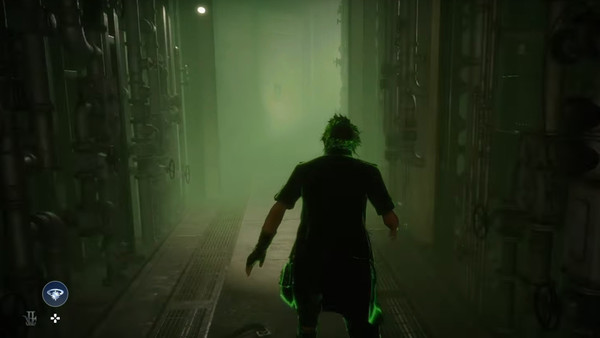
Final Fantasy XV was one of the most avidly anticipated games of the last five years, and though it boasted terrific visuals and a cast of unexpectedly likeable dudebros, the entire game was derailed late in the day by the infamously terrible Chapter 13.
The fluid combat and entertainingly ridiculous story hits a brick wall at this point, with protagonist Noctis being stripped of his weapons, separated from the rest of his party and funneled down a series of repetitive, soulless hallways for about three hours.
With just the Ring of the Lucii equipped to fend off enemies, stealth is the order of the day here, while seeking out keycards to progress through the seemingly endless facility.
It couldn't have felt more counter to the game's prior gorgeous rural sprawl, and immediately transformed FFXV into an agonisingly dull slog.
Even if you accept director Hajime Tabata's thesis that he wanted players to feel frustrated like Noctis, there's clearly a line, and dragging such tedium out for literally hours was incredibly ill-advised.
Upon original release, many players were so aggravated by the level that they abandoned the game for a whole four months.
At this point, Square Enix finally released a patch, which increased Noctis' movement speed, buffed the Ring and allowed those who'd already completed the campaign to take a shorter 20-minute path on repeat playthroughs.
It's a miserable enough sequence that it severely impacts the overall experience, and there are surely many who simply dropped the game at Chapter 13 and never bothered returning to it.