10 Video Games Ruined By The Hype

There are some titles that have such a hefty marketing spin it leaves us all pretty dazed - which games could never live up to their reputations on release?

Hype is a way of quantifying imagination. The more someone wants to get their hands on something, that something grows in their head until the reality of it pales in comparison to what their imagination has conjured up. In gaming this is a double-edged sword. On one hand it's awesome to go to midnight launches, glue yourself to a live-stream during E3, and bark about the first thing you're gonna do in that game you've been waiting on for seemingly ever. Being excited for what we don't have is perfectly human, and a great way to get in touch with our inner child - with so many real-life responsibilities it's fun to be a little irrational and find yourself unhealthily excited for a new game. Plus, when a game delivers on that hype, the feeling is magical. Getting blown away by Half-Life 2's physics engine, Mario 64's graphics or Grand Theft Auto: Vice City's attention to detail are memories gamers hold close to their heart. On the flip-side, hype leads to entitlement. As a game's possibilities grow in your imagination through previews, demos and forum chatter it's easy to form an idea of what a game should and will be, versus what it actually is. As a result, wonderful games can be received negatively for not delivering on those imagined features, or worse, disregarded because they were too different, or not different enough. Look no further than Watch_Dogs for a modern day example. Thus, hype is a fickle beast - it's ruined good games, maligned great ones, and made us buy ones that barely had any right being released in the first place. Throughout gaming's history there have been countless titles irrevocably entangled with this phenomenon we call hype - oftentimes with catastrophic results. Presented in this totally awesome, best-of-all-time, five-out-of-five-star list are ten such games ruined by hype - both positive and negative. Some may be decent games that couldn't deliver on promises, others can be highly anticipated titles that chose to try something different and paid the price, and in one special a case, a game so good and so well received in beta, that too many people tried to play it to the point where the servers crashed and no one could play it at all.

10. Fez

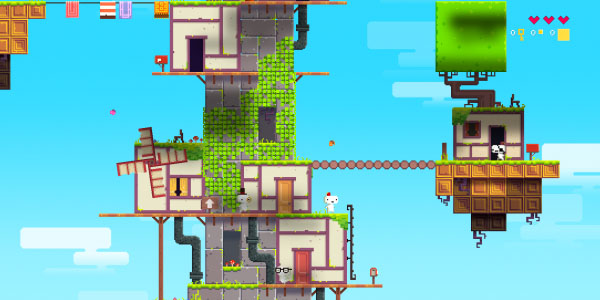
There was a time when everything about Fez seemed magical. When it was announced in 2007, the relaxed atmosphere, pixel-art aesthetic, fluid animation and mind-bending nature of the world-rotation mechanics promised something truly unique. By the time it released in 2012, it felt like it'd all be done before. Fez took so long to come out, it arrived at the tail end of the retro graphics fad its announcement way back in 2007 started. Fez's impact on the game industry, specifically the indie game industry, was immense before anyone paid a single dollar for it. You could argue it kicked the door open for Braid, Super Meat Boy, Minecraft, Spelunky, and countless retro remakes and re-releases on consoles, including TWO Mega Man sequels made in classic 8-bit style. So when gamers finally got their hands on Fez, it felt...foundational. Fez was aesthetically gorgeous, cute, warm and serene; the puzzles were fairly simple and the 3D world rotation mechanic was about as cool as one could hope. But still, the indie scene exploded so rapidly after Fez's announcement, that by 2012 that these kind of experiences were numerous and more specific - there were retro-platformers with RPG elements, retro-platformers with tough-as-nails levels, retro-platformers that focused on crafting, heck an entire "Grand Theft Auto" style retro game out a few scant months after Fez - Retro City Rampage. It wasn't that Fez was bad, it was that it felt like an also-ran despite being the first guy off the finish line. Toss in the fact that the initial Xbox 360 release had a game-corrupting bug that was impossible to patch due to to Microsoft licensing fees - and the cantankerous Phil Fish canceling Fez 2 over an internet beef - and there was a strange aura of negativity surrounding Fez post-release. The ultimate ruination of Fez came from the fact it changed the game, then didn't show up until to that game until the fourth quarter. The things that were unique about it were siphoned off by developers who realised they too could make a visually pleasing and mechanically creative game - and they did. Fez should have blown gamers away, instead it felt like a warm summer breeze.

9. Bioshock: Infinite

Would you kindly explain how to top one of the greatest games of the PS3/Xbox 360 era? Sure. First, you start throwing darts. Instead of underwater, we're above ground, no, we're in the clouds! Instead of plasmids... we'll call them....tonics, yeah! Oh and instead of a sense of isolation, impending dread and ethical questions about science and morality, we'll turn the game into a graphically violent mass-murder simulator where the bad guys are racist so it's okay you're killing them in waves while doing a weird multi-verse alternate history thing! It'll be great! Right? RIGHT? Not so much, Ken. Hype ruined Bioshock: Infinite simply because Irrational Games and creative director Ken Levine got lost in the lights. In an effort to be bigger, grander and more robust both in scope and message, Bioshock: Infinite lost its humanity both literally - by making your character a mass-murdering sociopath you're supposed to care about - and figuratively; where the plot-points involving mothers and fathers and portals and wombs and alternate dimensions and giant robot birds don't hit home because they're such broad ideas that become tricky to fully digest. The problem with Bioshock: Infinite is the idea that a sequel has to be 'bigger' and 'better'. Bioshock: Infinite is in the sky, and now the sun is shining, the buildings are bigger - the scale larger - and where before you were essentially fighting to save some children from an evil scientist in an abandoned city, here you're ultimately unraveling the fate of the universe in a largely functioning society across several different dimensions. It's a massive jump in scope, which it handles poorly because it's a first person shooter. You'll be shooting countless enemies, who unlike the splicers in the first Bioshock - are generally sentient humans, mostly policemen, and it gives you an icky vibe that's hard to shake off because you're constantly challenged to take the meta-physical themes of the plot seriously and disregard the shooty gamey parts. It's a strange case, where Bioshock: Infinite is actually worse than the sum of its parts. It's obvious a ton of TLC went into creating the dynamic gameplay, plot, and especially the visuals. But they never come together - instead saying "Here's the game parts!" and "Okay, time to care about this story again!" and hoping we're okay switching from left brain to right brain so quickly. But we're not.

8. Assassin's Creed III

For the uninformed, Assassin's Creed III is actually the fifth instalment in the historical/sci-fi action adventure series that€™s essentially €œAvatar€ meets €œMasterpiece Theater€ - except this time Ubisoft traded Middle Ages serfdom for (American) colonial angst and a new protagonist; Connor. The European setting of the previous Assassin's Creed games were beautifully realised and rendered, but unless you had a passion for the middle-ages, a lot of the 'real' historical details and Easter eggs flew right over the head of the average player. However, most players would be far more familiar with the folks involved in the revolutionary war, and have a better working knowledge of its events. The change in setting and plot was enough to get a lot of people - especially American people - excited. Couple that with an incredible first trailer featuring an all-star cast of 1770's-era heroes that ended with a wonderfully brutal musket assassination, and it was clear ACIII was going to be the most accessible Assassin's Creed game yet. And unfortunately all that positive energy and excitement withered in the face of the same problem Assassin's Creed had - schizophrenia. For starters ACIII's first several missions have you controlling a completely different character who is far more interesting, competent, and intriguing than Connor could ever hope to be, made worse by the fact that once you do get control of Connor the game spends quite a lot of time teaching you things you already know - and won't really need - to progress through the game. Then there€™s mini-games, meta-games, resource-gathering and management goals to complete - and about a half dozen other things that increase the dollars-to-gameplay value exponentially - but they all feel increasingly disjointed and pointless. Unfortunately Assassin's Creed III felt like a missed opportunity - the hype was there for a new AC experience that wasn't hampered by esoteric side-missions, and instead we got a game where in the span of five minutes you're required to skin a beaver and pilot a pirate ship - yet still somehow believe the plight of Connor and his friends.

7. Mario Sunshine

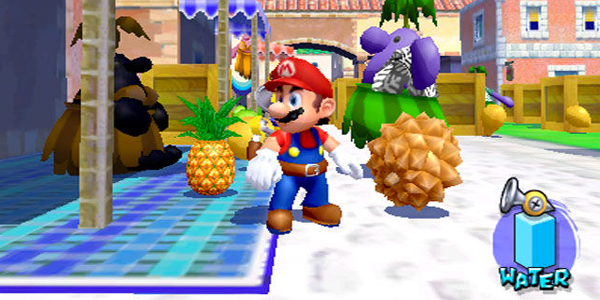
To properly explain how hype ruined Mario Sunshine, we must first talk about Super Mario 64, a game that not only lived up to the hype, it bought Hype dinner and took it home for a nightcap. Mario 64 literally defined the third dimension for console gaming - introducing analog stick controls, adjustable camera angles and wide-open levels with a litany of challenges to the masses. Everything about Mario 64 has become iconic, not only because it because it set the template for 3D console titles, because it was so good at being a great game while doing so. Because of its predecessor's nearly infinite impact on the landscape of gaming, Mario Sunshine always existed in Super Mario 64's shadow. Sure, it added updated graphics, a water-gun, rideable Yoshis and some realllllly bad voice-over work, but it felt like an iterative entry in the series, content to polish up some rough edges, add a couple of new ideas and hope for the best. What else could Nintendo do? All the revolutionary elements from Mario 64 were now commonplace in gaming. As a result Mario's water-gun ended up feeling like a bit of a gimmick, the world Mario inhabited wasn't nearly as magical as Peach's castle, and the idea of fighting Bowser Jr. felt like a let-down all the way around. In hindsight, Mario Sunshine is pretty fantastic with lots to explore, jump over, jump on and dive into, but at the time there was no escaping its predecessor's legacy.

6. Madden 2006

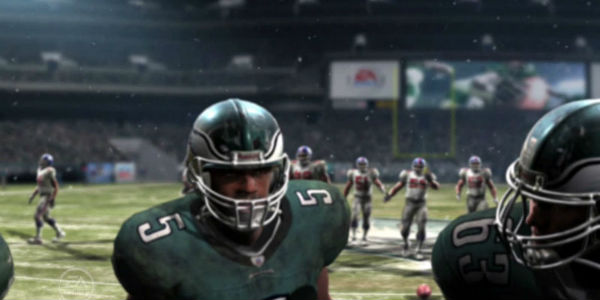
Considering the mind-blowing impression Madden 2001 one made on the PS2 when it came out, the idea of getting hyped for what Electronics Arts had up their sleeve for the impending releases of the Xbox 360 and PS3 was natural. And rarely has the gulf between a trailer and reality been so wide and filled with so many crushed souls. When the 'next gen' Madden trailer premiered during the NFL Draft, sports gamers across the globe could practically taste the human growth hormone. Madden's trailer featured dynamic lighting, futuristic injury systems, a ribald crowd atmosphere filled with thousands of flashing lights, incredible animation and a pulse-pounding last second drive led by Philadelphia Eagles QB Donovan McNabb that seemed too good to be true. It was. Madden NFL 06 promised to usher in a new era of American Football on consoles, and it failed spectacularly. Between a missing franchise mode, player customisation options, field goal nets, two minute warnings, proper out-of-bounds play stoppages, a superbly weird glitch that caused player's eyes to roll around the back of their heads - the game belongs in the dictionary next to the definition of the phrase "Buyer's Remorse". From this point forward it became 2K's NBA 2K series that got all the credit for debuting with top-of-the-line graphics, astounding players with its Xbox 360 debut, and simply blowing them away with their NBA 2k15 next-gen presentation. Meanwhile, Madden really hasn't quite recovered, constantly feeling clunky and behind the curve, even through well received titles. Even its Xbox One/PS4 debut seemed like a simple up-res of the Xbox 360 and PS3 versions, likely an attempt to avoid the disaster that was Madden 06 - but at the cost of player's excitement.

5. Sim City (2013)

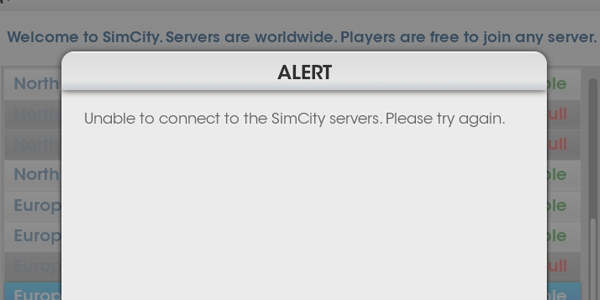
EA's 2013 release of Sim City was actually literally eaten alive by its own hype. The online-only City Simulator was so abuzz with positive word-of-mouth that upon release the servers collapsed under the pressure of tens of thousands of players trying to connect simultaneously - leaving no one able to play for what seemed like weeks. It takes a special kind of bumbling to pull that one off, and all of Sim City's positive hype mutated into a negative PR cluster-fruitcake. Amazon ended up pulling the game from their store, reviewers lowered their scores every day the game was unplayable, and damage control resulted in EA giving away several free games (including the offline compatible Sim City 4) to anyone who purchased Sim City (2013) early. By the time the game could be played reliably, any and all buzz generated by the game was null-and-void, to the point where even the recently released expansion pack 'Cities of Tomorrow' didn't get much press. Sim City was also killed by another kind of hype. The hype of the all-mighty cloud that pretty much all technology companies are eager to utilise, regardless of whether internet infrastructure is strong enough worldwide to handle it. Electronic Arts hammered home the fact that Sim City wouldn't be able to exist without the cloud. The hubris of EA and Maxis to believe that 100 percent of the people playing Sim City would be connected to the internet at all times is one thing, but then to completely fumble the ball on DAY ONE is unforgivable. To make matters worse, they eventually released an offline mode patch, thereby proving the whole catastrophe could have been avoided had they not been so eager to use a technology in its infancy simply because they could.

4. Duke Nukem Forever

Duke Nukem Forever was in development for fifteen years. A time-frame so long it achieved a unique kind of hype when it was finally announced this legendarily delayed game would see release. Of course not a single person in their right mind thought this thing was good. In fact you could argue many gamers were excited to play a crappy retro first person shooter as long as it had Duke and all the raunchy humor that came with him. But then the game finally came out and was just sort of... okay. Duke Nukem Forever wasn't so bad it was good, but it wasn't very good, either. It played like a middle-of-the-road shooter with a variety of half-hearted mini-games to spice up the repetitive action. It didn't feel old-school enough to be retro, and it wasn't modern enough to feel contemporary, so it all just felt dated. In addition, the real problem facing Duke Nukem was that HE felt dated too. Duke trades on his raunchiness, his ability to give digital strippers digital dollars for boobs, use toilets where you push E on your keyboard to pee, and spit out gritty action-movie one liners - ideally while exploding stuff from a jet pack. And while these elements were all present, they felt somehow benign. Between dated references, lame one-liners and a disjointed vibe overall, Duke felt like an old Andrew Dice Clay routine or Jerky Boyz tape - something better remembered than re-experienced. Duke was a persona dormant for 15 years. He reemerged into a world where franchises like Grand Theft Auto, Saints Row, Postal, Borderlands and dozens of other games tickle a lot of the same buttons Duke did, but far better. There are countless gaming moments that make you guffaw the same way Duke's raunchiest easter eggs did, and while Duke Nukem 3D deserves credit for being one of the first franchises to own this brand of sophomoric tongue-in-cheek humour, Forever is unfortunately an example of how it can go wrong when the creative spark is extinguished.

3. Grand Theft Auto IV

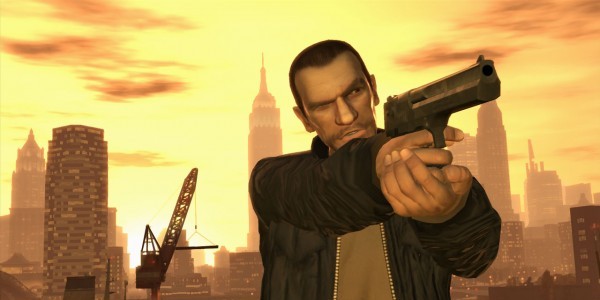
What happens when the game you expect and the game you get are different? For some folks Grand Theft Auto games exist to go on ridiculous sprees where they drive around crashing into things and cause mass chaos without a glance at the story. And that€™s perfectly acceptable. But in the case of the much-hyped Grand Theft Auto IV, it seems the developers left that large segment of players behind. With Grand Theft Auto IV the Houser brothers decided to attempt a real drama. 'The Great American Tragedy' so to speak. Not content to produce another pulpy, reference-heavy action-movie homage, Rockstar invented a realistic physics and lighting engine, pushed consoles to the brink in terms of graphical fidelity and attempted to bring a mature and nuanced story to a proudly sophomoric franchise. Whether or not Grand Theft Auto IV succeeded in this is up for debate; it was still a critical tour-de-force, generating countless five star and "10 out of 10" reviews. But it seemed gamers weren't ready to take Grand Theft Auto as seriously as Rockstar. It wasn't hyper-realistic, but the bombastic, over-the-top insanity of the previous Grand Theft Auto games felt reigned in. No airplanes, no car customisation, no jet packs, and certainly no purple 'romantic enhancement devices' as weapons. The whole game felt deliberately understated, instead pointing players toward engaging in social interactions with other NPCs who would call you up to go bowling, grab a drink, or take in a show when not doing story missions. Hours of dialog were recorded between Niko, Roman, Packie, Malorie, Florian and other characters for the express purpose of exploring their personalities, wants, needs, and dreams. While all this dialog is wonderfully written and quite insightful (and uproariously funny) - it was definitely not Grand Theft Auto as gamers saw it. Heck, Saints Row 2's entire marketing campaign was focused on pointing out just how droll Grand Theft Auto IV felt, and became a smash hit simply by doing the things old GTA games did that Grand Theft Auto IV did not. Of course, GTA IV is still a great game. It's an important game, too. But at the time of release, it was not the one people expected; they wanted a bigger, better and louder experience from this franchise, but instead Rockstar delivered an uncharacteristic acoustic set.

2. Metal Gear Solid 2

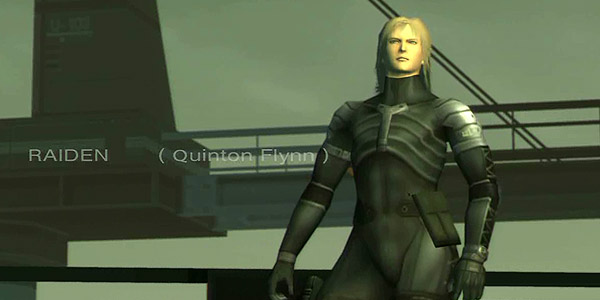
The phrase "bait-and-switch" has never, ever, ever been looked upon fondly by anyone in the history of ever. Ever. Never (ever) in life has someone ordered Filet Mignon from a fancy restaurant and been pleasantly surprised when an order of chicken nuggets appeared instead. Never (ever) has anyone met a person from an online dating site and been delighted their date's horizontal dimensions were in fact larger than the ones suggested in their profile picture. This is a roundabout way of saying folks don't like being screwed with. They especially don't like being screwed with when it comes to iconic franchises and iconic characters. Metal Gear Solid is an iconic franchise, and you bet your bandanna that Solid Snake is an iconic character, so what in the name of Vulcan Raven was Hideo Kojima thinking when he swapped out Solid Snake for a silver-haired rookie named Raiden?! He was thinking about quite a lot actually, but Metal Gear Solid 2 took away Solid Snake, teased players with a lush tanker setting before switching over to a barren oil rig, telling a story where the point was essentially "look how awesome Metal Gear Solid was!", all-the-while having you fight Metal Gears 50 times less cool than the one you fought in the first game. It was very easy to find yourself disappointed. It wasn't that the game was bad - the gameplay was solid as ever, even adding in a first person mode that was simply divine, but the changes left a bitter taste in the mouth of players, to the point where it was hard to immerse yourself in what the game is trying to say. Kojima even realised this, to the point where several jokes regarding Raiden appeared in Metal Gear Solid 3. In hindsight Metal Gear Solid 2 is the most contemporary of the Metal Gear Solid games - its narrative questioning the source of media and information in a digital age. In a world where information comes from endless sources, how does anyone know what's true? The marketing and switch of Metal Gear Solid 2's main character served to inform the game's overall message - that despite all the press coverage, such a massive secret was hidden from the public. In 2014, folks constantly post memes and 'stats' on social media that are impossible to prove right or wrong that come from sources that are anything but reputable or fact checked, but if enough people believe it, it's accepted as such regardless, ultimately proving Metal Gear Solid 2's point nearly a decade later. But that doesn't make Raiden any less annoying, or Metal Gear Solid 2's bait-and-switch any less disappointing.

1. Fable

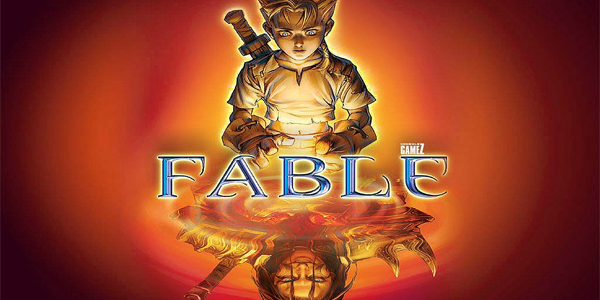
Peter Molyneux's mouth has probably sold more Microsoft consoles than we'd care to admit. The man's a showman. Rich with enthusiasm and promise, he's constantly promised to change the world and the way we interact with media through his games like Black & White, The Movies, Populous, and his most notable franchise - the console RPG series; Fable. Fable is strange because even though the games are teeming with tender love and care, they're continuously over-hyped and feel a little disappointing in retrospect, oftentimes turning the games from a day one purchase to something picked up at Gamestop for £/$14.99 during a sale. This trend started way back in 2004 with the promise of Fable - an open-world life simulator that promised to bend the entire world to your whim. If you were evil, your face would grow grim and wrinkled and town citizens would run away in fear. If you were good, your face would be bright and school children would gather around you just for a glimpse of the hero they heard of only in legend. You were promised your own house, your own wife, kids, a dog, and an experience unlike any other. Yeah, it's a little hard to deliver on all that, and Fable didn't. Ultimately its own hype and imagination derailed the wonderful - if short and narrower in scope than expected - action-RPG from 'instant classic' to 'pretty good' game. Much like gamers across the world, or really people across the world, Peter Molyneux's ambition and excitement for the medium exceeded the realities of what was possible. But in a world where new ideas cost money and ambition has to come with a bottom line, it's good to know there are men like Monlyneux and franchises like Fable that aren't afraid to promise the moon with genuine enthusiasm, to the point where even though the hype may 'ruin' a game like Fable, the resulting product is obviously the best it could very possibly can be - and in a creative medium, it's not a bad trade off. Which titles do you were think represented wrongly before release, or did you let yourself get carried away thinking they'd be something they could never be? Let us know in the comments!

Contributor
Contributor

Paul is a writer, video producer, gamer, lover, and tie-fighter. E-mail him at MeekinOnMovies@gmail.com.