10 Video Games That Broke All The Rules
Red Dead Redemption 2 could not care less about what you think is "fun".

There's nothing video game publishers love more than a bankable formula.
Year after year these big companies spend millions to gather the most relevant data about which kinds of games sell and which don't, and try as hard as possible to follow trends and cash-in on recognisable names and faces. Even worse, once they've figured out this formula, they'll bleed it dry, releasing sequel after sequel and rarely daring to dream to the tune of big bucks.
Fortunately, there are still a few bastions of creativity out there which refuse to simply do what everyone else is doing because it'll make them a little bit more profit come the end of the financial year. These are games built to break the rules, to look at established genres, narratives and tropes and see how they can effectively break the very fabric of them to create something genuinely new and original.
It doesn't always work as well as intended, but you've gotta admire the balls on these releases for sticking up a middle finger to the idea of playing it safe.
10. Gone Home

Gone Home remains a great game to this day, but to fully appreciate its impact you need to understand the environment it originally released in. Back in 2013 you couldn't move for walking simulator-style horror games on the PC, with big companies and first-time developers alike using the resources at their disposal to make terrifying haunted house titles to satiate a booming audience.
And, on the surface, that was exactly what Gone Home was.
As soon as you boot the game up you're thrown into a spooky setting; an empty house, a stormy night, family members mysteriously missing and a bunch of puzzles that need to be figured out. However, the developers at Fullbright used this clichéd framing to hide the game's true story, which wasn't about supernatural goings ons or anything like that, but was rather a low-key family drama about a young girl coming to grips with her sexuality.
It subverts your expectations at every step, and uses your understanding of other games to pull the wool over your eyes.
9. A Way Out

Josef Fares categorically does not give one single f***. This is the man who famously got on stage at the Game Awards and proclaimed "f*** the Oscars", so it's no surprise that same renegade spirit is all over the games he's made. The critically-acclaimed Brothers: A Tale of Two Sons broke formal conventions by forcing two players to use the same controller, but it's A Way Out that was even more ambitious when it came to tearing up the rulebook.
Again, it's important to understand the context the title released in, as the gaming industry as a whole has been moving away from local multiplayer over the past decade. Couch co-op and split screen features have become incredibly rare, even in franchises where they once flourished, as the world has moved towards making online connectivity the de facto multiplayer experience.
A Way Out said stuff this, and even if you're playing online with someone else, the entire game is still presented in a split screen mode. It isn't just a gimmick either; everything from the gameplay to the narrative is centred around this presentation style, and it functions as a vital ingredient in making the title's climax so resonant.
8. The Last Of Us

Mechanically, The Last of Us doesn't break the mold of the thousand survival-horror action games that came before it, and there's a reason that most of the acclaim comes from the story.
There have been no shortage of post-apocalyptic games released over this generation and the last, but Naughty Dog's opus pitched itself as The Road rather than Mad Max. It set up a conventional zombie story about the search for a cure in a save-the-world adventure, but the end result eschewed all the trappings of those tales.
Nothing plays out how you think it will. Neither Ellie nor Joel dies, the world isn't saved by a miraculous cure, and the relationship between the heroes ends up being defined by an act of murder and a lie. Hell, the 'good guys' - the Fireflies - are even cast in a pretty morally grey light.
The game kept its focus on character at a time where other post-apocalyptic franchises were shooting for the stars with convoluted lore and mythology, and it was all the better for it.
7. Undertale

Undertale keeps its cards close to its chest right up until the very end of its story mode. Essentially, it casts you as a child who's fallen from the human realm into the realm of monsters. Naturally, your quest sees you attempt to return home, and battle against the demons you come into contact with. By fighting, you gain EXP and LOVE, which seem to reward you for taking out these monsters.
It's not as simple as that though, and every single combat encounter in the game is actually optional, and there's always a way to defeat enemies without killing them. This is because the final twist makes it clear that these monsters are actually innocent for the most part, and you've been slaughtering them without remorse because... well, that's what you do in video games. It turns out that LOVE stands for 'Level of Violence', while EXP isn't 'experience' like you may have assumed, but actually 'execution points' that reflect your brutality.
It's another title that functions to subvert the player's familiarity with action mechanics, and it makes you feel like s**t for not questioning them.
6. The Walking Dead

These days, The Walking Dead probably doesn't appear all that unique. There have been so many games since that have embraced the same kind of cinematic, player-driven storytelling it helped popularised, and Telltale as a company came to be known almost exclusively for catering to this niche.
However, at the time, the first season of the company's best work broke the rules of what was expected from an adventure game. Before TWD, games in the genre were concerned primarily with puzzle-solving and exploration, but Telltale mostly dropped this angle with this tie-in, replacing it with a focus on player choice and storytelling.
The puzzles were no longer the draw, and it was the characters, writing and the idea that you were in control of who lived and who died which took became the main hook. It sounds like an obvious, natural transition today, but at the time it was hella risky to assume fans would take to this new vision of the genre.
5. Spec Ops: The Line

Yes, I know, it's another Whatculture Gaming list championing Spec Ops: The Line, but I couldn't really leave it off a ranking of games that completely subverted expectations and ripped up the rulebook, could I?
By now everyone knows how the shooter pretty much functioned entirely as a commentary on other shooters, and how players will blindly pick up a virtual gun and shoot hundreds of people in the face as long as someone confirms they're the good guy and the enemies are the bad guys.
However, the twist that your character was actually the villain the whole time - and that you were complicit in his evil actions - only worked so thoroughly because it was bundled into a game that looked like nothing more than a knock-off Gears of War clone.
Nobody expected a big-budget shooter - especially at the time - to hold a deeper meaning or commentary on war and violence, especially one which appeared so by-the-numbers and pedestrian at a glance.
4. Resident Evil 4

Nothing about Resident Evil 4 should work. The game swapped out pretty much everything identifiable about the series with the exception of its lead character. Gone were the fixed camera angles and tank controls, absent were Gothic mansions and overrun American streets, and the franchise's iconic enemies - the zombies themselves - were now yesterday's news.
The revolutionary sequel didn't only defy the conventions of its own series though, but completely stuck two fingers up to action games in general, opting to do things its own way. A move as simple as shifting the camera to an over-the-shoulder perspective and then zooming in to aim was the gaming equivalent of realising cheesy chips make for the perfect hangover cure for the first. If that analogy hasn't made it clear: it was a big deal that seems totally obvious today.
Throw in a bunch of villains that were as hilarious as they were menacing, and a weird second half that throws you into a haunted house, and every move Resident Evil 4 made should have doomed it, and yet Capcom's sequel ended up being one of the best games ever made.
3. Metal Gear Solid 2: Sons Of Liberty
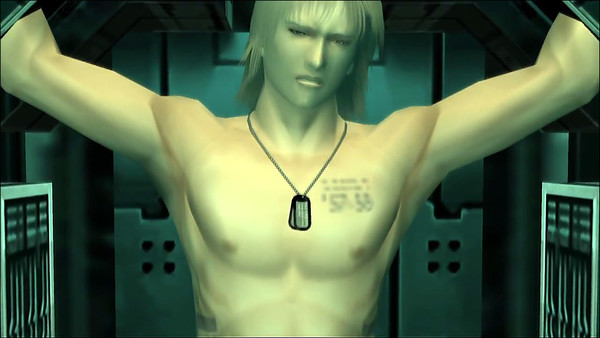
Metal Gear Solid 2 is my favourite entry in Hideo Kojima's wacky franchise, but I can totally see why it rubbed people the wrong way, especially at launch. This was the most anticipated sequel of its time; a total tour-de-force system seller for the PS2, and fans were desperate to continue the journey of Solid Snake on a brand new generation.
Of course, they were able to do just that, but not in the way they envisioned. After an opening prologue that gave the fans exactly what they wanted, the developers proceeded to take it all away.
First, Snake was replaced with newcomer Raiden, a rookie who effectively had to be babysat by every single person he came into contact with. Second, the newness of the prologue's setting was replaced with a familiar structure for the rest of the game - a structure which deliberately mimicked that of the original title.
All of this subversion was in service of a narrative that commented on fake news and the creation of sequels in general, a great meta analysis of the impending information age. It was a lightyears ahead of its time, but that meant appreciation for it only really trickled in long after the sequel hit shelves.
2. The Legend Of Zelda: Breath Of The Wild

In spite of its legendary pedigree, it was easy to fear for Breath of the Wild's transition into open world territory. At the time, pretty much every major franchise was embracing sandbox elements, and the worry was that this transition was fuelled by money rather than creativity.
Especially when it came to this specific Nintendo franchise, much of the charm in the past had come from how uniquely structured the games were. They all had freeform elements and encouraged players to experiment, but never on this scale, and the bulk of the appeal came from the intricacies of the dungeons players needed to conquer.
Fans needn't have worried about the move to an open world though, because Breath of the Wild wasn't your regular open world game. While other titles on the market filled their sandboxes with an overwhelming amount of activities, held players' hands from one objective to the next and only gave them the illusion of freedom, Zelda refused to treat its fans like idiots.
Eschewing most open-world conventions, there is a real sense of freedom to Breath of the Wild. Hell, you can take on the final boss as soon as you pick up the controller if you wish, and while there aren't many "quests" in the conventional sense, that doesn't mean there isn't anything to do.
Where other open world games are only bothered about the destination rather than the journey, this title was all about those in betweens.
1. Red Dead Redemption 2

From one game which redefined the open world genre to another, there's nothing else quite like Red Dead Redemption 2. Sure, there are other sandbox games with quests, crafting, character building and shooting, but none with the same meditative, slow-pace of Rockstar's latest opus.
The sequel encourages you to simply live in its world and indulge in the minutiae of the Wild West. You might spend one session doing nothing but hunting animals and fishing so your camp is stocked up. You might spend another surviving in the wild on your own, only to return to your friends stinking and beaten days later. 'Realism' is often misused when it comes to describing video games, but Red Dead has a real appreciation for process, making fans admire the actions of activities, rather than focusing purely on the end reward.
Admittedly, that means the game might appear too slow, clumsy or methodical for some players, and that's certainly fair. You have to be in the right mood to gorge on RDR 2, but when it comes to creating a living, breathing world full of unique things to encounter and fully-realised characters to interact with, there's little else like it.