10 Video Games That Contradict Their Own Message
"I don't want to be a killer," says the man who just ran over like, 50 people.

Ludo-narrative dissonance is an odd phrase, isn't it?
It's a term invented solely to describe phenomenon in video games that can't happen in other media. This is when a game's mechanics or scope runs contrary to everything its story is trying to tell.
You might think that this isn't a big deal. If the story is good enough, it should survive the odd contradiction here or there, right? But a big part of video games is the immersion, even more so than books or films. People can forgive the occasional glitch, but something intentionally put in or allowed that contradicts the game's entire thesis? That's a lot harder to let go.
This can happen in a variety of large or small ways. It could be a level or scenario that contradicts what an earlier section was trying to say about the plot, theme, or characters. Or it could be something the game allows the player to get away with that the story would otherwise look down upon. It could be something as tiny as the set dressing or the clothes the characters are wearing.
Of all the ways games can contradict their own messages, these ten entries are the most egregious examples.
10. Eating Trash - Bioshock Infinite
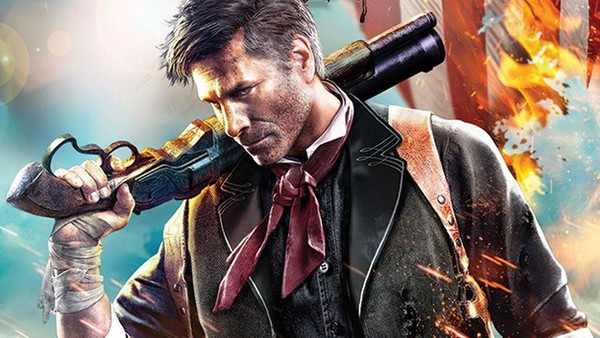
Starting off with a rather small example, we have Bioshock Infinite. In many ways a game so fussed over until every detail runs like a Swiss watch, but alas the player cannot help but screw all that up, can they?
Mind you, it probably doesn't help for the game to set up main character Booker Dewitt as a badass, hard nosed private detective... and then have him eat half-chewed candy bars out of the trash. It's Bioshock tradition to make you scrounge for every bit of food and resource, but some stuff is just a little too disgusting for some characters.
Little details like that don't really pull you out of the experience, but they do leave you scratching your head why Booker, who HAS money for food and the mark that the city is looking for nice and covered up, would instead opt to just pull crap out of the waste bin and chow down on that instead of something actually cooked and ready to eat.
9. Breaking People's Pots - Legend Of Zelda

It isn't hard to see why a lot of people so readily accepted Breath Of The Wild's "burn the forest down to appease the fire gods!" Link when you think about it. After all, that same bunch already saw him as a pot-hating kleptomaniac.
It's a running gag at this point that no matter the incarnation, Link has this homicidal, seething HATRED for pottery in all its forms. Every home you can enter since Link To The Past has had some amount of pots that apparently no one minds if you start shattering left and right for their life savings stored safely within.
I know we don't really question this anymore since it's been a thing for so long, but it's just so hilariously contradictory to what the games build Link up to be. He's supposed to be this great and noble hero. That's probably why we love this running gag so much, and we celebrated when we saw it somewhat expanded in BOTW.
Link's under a lot of pressure, let him blow off steam... and then rob ya blind.
8. Avoiding The Main Quest - Skyrim

The player is the source of 90% of occurrences of ludonarrative dissonance, because they're the one thing the game can never truly account for. Constantly distracted, morally apathetic, and gleefully willing to pick apart every pixel of your game for any flaw they can exploit for the lolz, it's a wonder why people even try to make linear games anymore when titles like Skyrim offer the best compromise: just let them wander about until they get bored.
This only becomes a problem in the latter half of any main quests you're doing, whether it be for the dragonborn, the Imperials, or for the Stormcloaks. For much of the game, you really are just wandering around exploring the world and looking for something to do.
But once you're given concrete directions and the bad guys start making their move, you doing inane sidequests left and right becomes significantly less justified because Alduin The World Eater is about to do his job all over everyone's faces.
7. Easily Killing People - Tomb Raider (2013)

One of the most controversial scenes in the reboot of Tomb Raider back in 2013 was the infamous scene where a man captures Lara, who narrowly escapes from what was heavily implied to be an attempted sexual assault. In order to escape, Lara is forced to kill the man, which she almost breaks down completely over because she's an archaeology student who had never been in a real fight, let alone ever taken a life.
Then the cutscene ends and the game gives you back control and suddenly you're gunning down bad guys left and right, stabbing them in the neck with arrows, performing several perfect jumps across ledges hundreds of feet in the air, and God only knows what else.
This isn't a meaningless nitpick made only by sad regressive morons like, say, whining about Rey using the force so easily in The Force Awakens. The Force isn't supposed to be a defined thing. Meanwhile gunfights and parkour and all the rest ARE. Especially when the game's story goes out of its way to make the main heroine out to be as inexperienced as possible.
6. Not Caring About Collateral Damage - Prototype 2

One could argue that the first Prototype could have been put here for the same reasons, but considering that 2 cemented that yeah, Alex Mercer was a bad dude all along, him reducing the citizenry of New York to a fine red mist isn't shocking.
Now, James Heller on the other hand...
Unlike the first game, the second actually tries to make you feel sorry for Heller, having lost his family to the virus, with the city he grew up in following immediately after. His journey is meant to be one of rediscovering his humanity, taking down Mercer and ending the plague to save his city and the world.
You know, except for all the innocent people you are totally allowed to just rip apart and consume at will. Say what you will about Infamous' binary morality system, at least that's an acknowledgement that if you carve through an entire crowd of innocent people, there should be SOME kind of consequence.
Prototype 2 is another example of a game giving players the opportunity to screw over the message and narrative it's trying to build, and players not even hesitating to do so.
5. Nate Suddenly Caring About His Enemy's Life - Uncharted: Golden Abyss

Nathan Drake is a lot of things: treasure hunter, actually pretty decent family man all things considered, physically incapable of taking anything seriously, and of course, gleefully violent killer.
The body count for even one of the Uncharted game is insane, and while we can stay on Nathan's side because the bad guys are always the ones who start the fight, he never seems that concerned with reaching slasher movie villain level killcount.
But in Uncharted: Golden Abyss, near the end, Nathan goes out of his way to save someone from the collapsing building of the week, claiming that he can't just leave someone to die. Sure, this is a prequel to the main series, so Nathan's killcount isn't in the triple digits yet, but it's well within the double digits by the time you get to this scene. It isn't the saving that's the problem, it's the refusal to let a man die when every other moment in the game has THOROUGHLY proven the opposite.
Nathan, buddy, we love you, but this is why detractors call you a hypocrite.
4. Consistent Tone Problems - Dead Rising

Any story with zombies in it needs to have some kind of hook to convince people to actually give it a shot, since the late 2000s and early 2010s boom of zombie fiction is still fresh in our minds. Dead Rising definitely found its hook with the ability to turn anything into an improvised weapon. Such a shame then that it took them a few games to find a tone to match such a hook.
Not saying that you COULDN'T have a serious story with the setup Dead Rising has, but when all the advertising plays up the fun of running zombies through by the dozens with a construction excavator, and when in game you can perform complex kills with the inventory of a sex shop, while naked mind you, people don't exactly expect ponderous serious story time.
The comedy in 3 was hit and miss, mostly miss, but at least it recognized the tone that this series was going to have to adopt if it wanted to take its gameplay any further.
3. Convincing Ann To Go Nude - Persona 5

The first several hours of Persona 5 are the best parts of the game, mostly because it directly confronts something that most fans of anime and JRPGs take for granted: the objectification of women and young girls. The main villain of the first arc, Kamoshida, is one of the most hauntingly real antagonists in the Persona franchise, a washed up Olympic champ now slumming it in a high school and taking his frustration out by physically abusing his male students and molesting his female students.
The Kamoshida chapter is one of the angriest cries against sexual abuse of minors in all of media, and a perfect introduction to new players of what this game offers: a story about defending the marginalized, abused and forgotten parts of society from things society itself deems to be okay.
Then in the next chapter, in order to get close to the bad guy - a famous artist - the male heroes who were decrying this sort of thing just hours ago, start pressuring Ann to accept the artist's apprentice's offer for her to act as a nude model. Ann, one of Kamoshida's victims, is obviously against it, but you essentially browbeat her into doing it.
Yes, she finds a way to avoid actually stripping for the guy, but the fact that subject matter that the game was taking so seriously is now taken as a joke is whiplash inducing at best, insulting at worst.
2. Everything You Do - GTA IV

A lot of people were put off by the more lighthearted satirical approach taken by GTA V when it first came out. There are many reasons for this, including the approach the game chose for its satire just not gelling with some. But another reason is that the previous game went in the exact opposite direction with its tone.
Perhaps Rockstar was just thinking of tonal consistency with their new direction, considering that for all of Niko's talk of wanting a better life and trying to get away from his violent past, he sure does love running people over with an 18-wheeler, doesn't he?
Give a player any kind of power and freedom, and their first instinct will be to abuse it, every single time. Not to say that you couldn't make a serious GTA style game work - not when Red Dead Redemption is sitting right there as a counter example - but the way they characterize Niko as someone who explicitly does not want to do the criminal stuff he gets dragged into, makes you running people over and shooting them kind of counter-intuitive.
1. The Alternate Outfits - Haunting Ground

Haunting Ground is one of the most masterfully uncomfortable experiences in gaming history, right up there with Pathologic. But while Pathologic made its player uncomfortable by BRUTALLY punishing them at pretty much every turn for the sake of driving up the tension or just because it feels like it, Haunting Ground makes the player as uncomfortable as possible by being VERY specific about what the price of failure is.
Haunting Ground's main protagonist, Fiona, is trapped in a castle with a family of monstrous men and outright monsters. All of whom have one goal: rape her and impregnate her with a demon child. Haunting Ground, at its core, is a story about sexual exploitation, mental illness, unwanted pregnancy, and sexually related trauma.
So it sure would be a shame if completing the game got you skimpy alternate outfits for Fiona for the players to ogle at.
We're not counting the default outfit she wears because that was given to her by the guys who see her only as an object, and there aren't any other clothes for her to wear besides, so it makes fittingly uncomfortable sense. But the alternate outfits have no excuse. Oh, and on harder difficulties, getting by without the skimpy cowgirl outfit - which gives Fiona a GUN - is damn near impossible. So the game is all but browbeating you into using these outfits, destroying all the carefully constructed themes and sense of terror that first playthrough worked so hard to build.