10 Video Games That Don't Deserve Their High Metacritic Scores
Riding the hype train can be intoxicating.

As a metric of quality, Metacritic should be flawless. You take the review scores from across the land, aggregate them into one final stat, and slap it on the requisite game's page - simple.
However, such a system is inherently going to derive a sense of objectivity from subjectivity - the stat you get implies "Look, this game is unanimously worth this", whereas the individual reviewing it could be championing any number of aspects through personal preference. I might decide Fallout 4 is a complete mess when reviewing it, but fans of Bethesda's unique open-world design would give it their own personal high score, resulting in a higher metric on Metacritic overall.
There's also the encroaching fact that a ton of outlets now score games markedly higher or lower than the competition just to stand out on the site's feed (just look at The Washington Post's 'comedy review' for Uncharted 4, giving it a 40) as somewhere buried amongst all these mixed messages, is the information you actually need before putting down any cash.
If reviews are fundamentally a representation of an individual's opinion, then how useful is an aggregate score, really? Well, in the case of the following games, not very...
10. Beyond: Two Souls

Metacritic Score: 70 (PS3)
One thing you'll immediately notice when delving into the wonderful world of review scores, is how much critics love to champion innovation over all else. Having played thousands upon thousands of hours of games and compiled various reviews myself, I can sympathise with the idea of wanting to support something that genuinely provides a refreshing break from the more formulaic stuff seen in the upper echelons of the industry.
However, in doing so, far too many reviewers supported the complete shambles that was Beyond: Two Souls, David Cage's fourth title that yet again attempted to blur the lines between film and game.
Ol' Cagey just can't help injecting his games with a number of jarring sci-fi elements, resulting here, in something that tries to weave a yarn about a girl living with a demon as her best friend, only to have you then fight a giant possessed wall of sand, before picking a life partner from a menu in the final few minutes.
Heavy Rain, this ain't, and aside from its graphics and 'unique storytelling' by way of jumping around through character Josie's life for no real reason, there's nothing left to sustain such a high score in the long run.
9. SSX (2012)

Metacritic Score: 81 (PS3), 82 (360)
Take a once-prolific franchise, announce it's coming back, give it a lick of paint and re-release it to the masses. Such was what we thought we were getting with the revamped SSX in 2012, the reworked version of EA BIG's characterful arcade-style racer on the PS2.
Nope! Instead, someone clearly didn't get the memo that SSX's appeal was routed in character. Characterful riders, characterful special moves, character courses. None of which was present, as the afro-topped Eddy was suddenly DLC (urgh) and all the once-colourful and quip-happy cast had about as much to differentiate them as Zack Snyder does CG explosions.
The control scheme was overhauled and a terrible 'rewind' mechanic was implemented, yet it only worked on yourself, meaning the second you fell off the course, every other rider was immediately several hundred meters ahead. Add in that it had no head-to-head multiplayer and instead forced you to race 'ghosts' of your opponents, and there's a damn good reason this was a 'return' resigned to a single instalment..
8. Bioshock Infinite

Metacritic Score: 94 (PS3/PC) 93 (360)
Considering the state of Bioshock Infinite back when it was first being shown off to now, it's a wonder anything came together at all. Initially pegged as a more supernatural experience where helper character Elizabeth would be pulling in all sorts of additional items and catastrophic set-pieces from other realms (like wiping out your enemies with a train, for example), all that was stripped back in favour of a far more basic shooter.
Even the ability to hop on rails and ride around enemies felt underdeveloped, as you never really needed to. Combat encounters continually happened in cordoned off 'arenas' that felt unnaturally placed when you consider the game was supposed to be set in a giant city. And that level of 'I'm in a museum'-like framing only scuppered the presentation of everything else.
Weapon upgrades were both pointless and barely incremental, the eventual encounter with antagonist Zachary Comstock was over in seconds as you lost control of your character, and by the time it all ended, the ultimate time-bending finale was just forced and needlessly complicated.
Infinite excelled in touching upon the idea of taking a vision of America from the 50s and letting it run without any global interference, but outside of that and some very neat art design, actually playing Bioshock Infinite was a total chore.
7. Mass Effect 3

Metacritic Score: 93 (PS3), 93 (360), 89 (PC)
Yes, yes, 'the ending' - I'll get to that.
Firstly, Mass Effect 3's entire story felt broken from the get-go. It opens with the omnipresent threat of the Reapers invading Earth and the galaxy overall - fine. So we'll look into that and find out a way to stop them righ- what? They're here now? In this opening cutscene?! But that only forces me to thunder through the missions and exposition as fast as possible, because for every second I'm standing still, literally thousands of people are dying.
Oh, but there are still scores of side missions, fetch-quests and stat-grinding to be done, so... I guess it can wait?
Never mind the graphics that somehow look worse than ME2, the DLC character Javik who's integral to the plot yet remains off-disc thanks to EA's meddling, and don't worry about the occasional bugs that mean character models simply don't load into conversations...
And yeah... don't let the fact the game ends with a scene that makes zero sense if you haven't got the DLC installed stop you either. Just go right ahead and crown this one of the highest-rated games of all time.
That'll go down SWELL.
6. Batman: Arkham City

Metacritic Score: 96 (PS3), 94 (360) 91 (PC)
We're all friends here, let's be honest: no Arkham game is ever going to top Asylum. It just can't be done. Rocksteady's first release had that perfect mix of unique mechanics (the combat system), a tight story packed with characters and references and even the reuniting of Mark Hamill and Kevin Conroy as the Caped Crusader and the Clown Prince.
For the sequel, they elected to take it open world... its 'world' being an expanded prison area comprised of multiple linear levels you now had to travel between. Think about it: Once you get past the "Oh this is kinda awesome!" feeling of flying around and 'being Batman in Gotham', there was no reason for the series to actually switch genres.
The plot was sold as one Hugo Strange finding out Bruce's identity, and the notion of Batman having to fight harder than ever to overthrow him. Instead, Bruce acts incredibly out of character by pursuing Talia al Ghul simply out of pure lust, talks down to Robin and Alfred constantly, and the story's main hook comes to an abrupt end when Strange is killed by Ra's al Ghul out of nowhere.
And why? So we could get the Joker back in, of course. AC still played fantastically, but the off-kilter character moments, annoying dream sequences, forced plot twists and unfulfilling map design were way too much for this to score higher than Asylum.
5. Undertale
Metacritic Score: 92 (PC)
"You dare speak ill of the masterful Undertale?!"
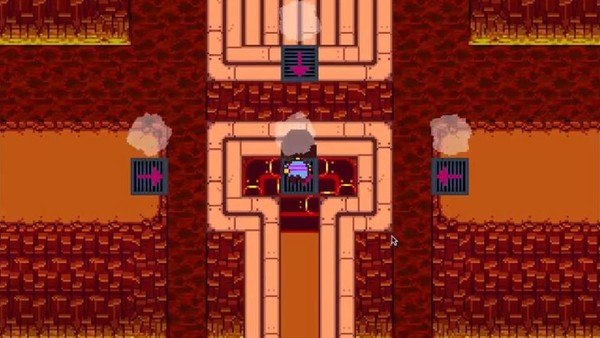
Yes, sadly, because although its narrative design, character work and score are absolutely fantastic, replaying it without the rose-tinted hype glasses only points out one thing - the gameplay outside of combat is kinda terrible.
The early going in particular has you aimlessly wandering around floral expanses in search of hidden switches, whereas a key section near the end features 'puzzles' by way of launch pads that fire you around a series of tiled grids. It's all at odds with an otherwise vibrant world packed full of monsters and creatures you can converse with or kill, ultimately forming the entire point of the game by the time the credits come around.
Think of Undertale and you'll think of everything other than playing it, as if creator Toby Fox randomly thought "Crap! I should have some game in this video game!" before conjuring up unnecessarily arduous and annoying sections that are made even worse when sat next to the rest of the experience.
4. Grand Theft Auto IV

Metacritic Score: 98 (PS3/360), 90 (PC)
It's GTA, of course it was going to be regarded incredibly positively. GTA III, Vice City and San Andreas made more of us into gamers than Pokmon, Mario and Halo combined, yet for Rockstar's trans-generational leap, they wanted to do something different.
Gone were the overblown mission designs from San Andreas that included toy planes and Area 51-style stealth sections, and in was a tone that exuded realism and grit. War vet Niko Bellic arrived on American soil after being sold a lie by his brother, and the ensuing allure of organised crime should've been a story for the ages.
Whilst critics certainly thought so, I and thousands of fans to this day still label GTA IV as by far the worst instalment in the series' history. Driving cars was incredibly floaty, Niko himself was as bland as the environment's colouring, and although gunplay was refined and made more impactful, none of the missions were especially memorable or fun to play, especially when a lack of checkpointing kicked you back to the start after an occasional difficulty spike.
GTA IV sits on a 98 on Metacritic - just two points off being The Perfect Game. Even if you're a fan, surely you have to admit that's just a tad too much?
3. Quantum Break

Metacritic Score: 77 (XONE)
Speaking of games that give it their all and come crashing down, Remedy's surprisingly bad Quantum Break aimed to marry the developer's expert gunplay from Max Payne and Alan Wake with a live-action TV show component, only for the acting and plot to simply be poorly implemented.
Acting was stilted, the shooting was fantastic (but restricted to only a handful of encounters) and the most motivated characters only existed in the filmed TV segments - only to not factor into the story whatsoever by the time the credits rolled.
Ambitious, unique, experimental - all appropriate words that most definitely apply, but for me, the actual narrative drive and character development necessary to hold everything together just wasn't there.
Check out the full review for more.
2. L.A. Noire

Metacritic Score: 89 (PS3/360), 83 (PC)
I really, really wanted to like L.A. Noire. A detective game initially developed by Team Bondi, helped out by the mighty Rockstar when they found out about the facial-scanning tech and wanted to help out? That was going to be incredible.
Then you played it, and realised every part of the investigative work, every part of the face-to-face conversations and every part of being immersed in a crime caper you were meant to be tying together hinged on an interrogation mechanic that was flat out broken.
Multiple pieces of evidence would've led to more probing questions and allegations you could follow up on, but the game only gave you one shot to pick the appropriate item. That sat alongside main character Cole Phelps' horrendously sporadic line deliveries, making 'conversations' go from "So... tell me what you saw" to "I KNOW YOU DID IT, YOU HID THE KNIFE UPSTAIRS DIDN'T YOU!?" and back to "... yes, I believe that checks out."
Throw in some forced infidelity twists and a last minute death for crowbarred-in emotion, and you had a straight-up "F*ck this" from the vast majority of gamers - not that it was reflected in the Metacritic score.
1. Fallout 4
Metacritic Score: 87 (PS4), 88 (XONE), 84 (PC)
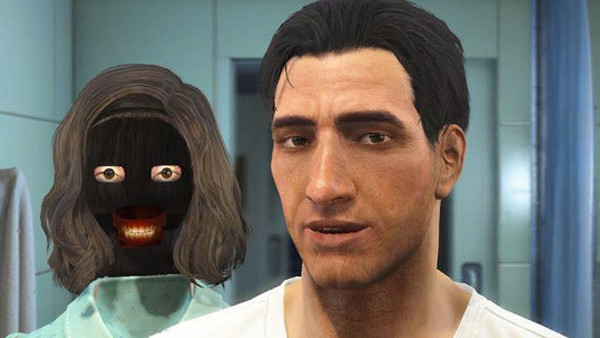
Possibly the most polarising game in recent years, every comment section, Youtube video and general appearance of Fallout 4 is swiftly followed by a miasma of conflicting opinions.
Critics and video game awards shows claimed it was 'the best game of 2015', whilst outside the most diehard Bethesda devotees, the response was it was just far too buggy and repetitive to be worthy of such a statement.
Bethesda have always knocked it out the park when it comes to world-building on paper, but in the transition to code, something about Fallout 4 was severely lacking. A.I. scripting meant characters got stuck in walls, floors or even on rooftops, animations across the board felt decidedly 'last-gen', and even the story pacing suffered from 'Mass Effect 3 syndrome' (that need to complete a main objective as fast as possible, yet you're forever free to roam the lands to your heart's content).
On PC, an influx of mods from the community immediately fixed everything from the broken dialogue system to the layering of armour items, essentially doing Bethesda's work for them, but again, what does that say about the game as it was at launch?
Overall there was nothing you could sell Fallout 4 on that Fallout 3 didn't already nail back in 2008, and nowhere near enough outlets made that clear.
Which do you agree or disagree with, and which games would you throw up as being rated WAY too highly? Let us know in the comments!