10 Video Games That Don’t Deserve Their Masterpiece Status
If it has a flaw, it's not a 'masterpiece'. Done.

As a medium of entertainment, video games can be among the most exciting and engrossing experiences of all, and when a certain title gets a formula so pitch-perfect, it's worth celebrating that achievement.
Unfortunately, the stubborn nature of so-called 'real video game fans' can occasionally lead to the merits of a particular game or franchise being a little overblown. The unwavering passion of the industry can be wonderfully refreshing and admirable at times, but sadly it can lead to some good games being considered better than they truly deserve to be.
Many titles have been incorrectly heralded as 'masterpieces' over the years, and while some are deserving, others... not so much. It's time we debunked some of those masterpiece myths once and for all...
10. Final Fantasy IX

Upon the release of Final Fantasy IX, many of its pandering reviews from the likes of IGN noted how the series could more than likely go on forever, simply by tweaking the game's baseline formula. While this could sound like high praise, it's actually just as much an indictment of lazy development from a studio that should know better.
While many were caught up in the rehashing of old titles, a more critical eye noted that Final Fantasy IX just didn't offer anything new to the series. Reviewers at GameCritics complained that it simply "rehashed bits from other Final Fantasy games and take them any further", concluding that the game was "more than a little formulaic". Game Revolution also noted that the experience was far too shallow to be considered an improvement, adding that even the most indoctrinated fans of the series "must start asking for more".
Final Fantasy IX is a very enjoyable game, and the old adage of "if it ain't broke, don't fix it" can be applied as justification to a point. With little more than a dash of polish given to the series' already impressive visuals, though, Final Fantasy IX can't be considered the masterpiece that many believe it to be.
9. Metal Gear Solid V: The Phantom Pain

When Metal Gear Solid V: The Phantom Pain was confirmed to be taking the series back into an ambitious and dangerous setting, I was overjoyed. The idea of a refined Snake Eater for new generation of hardware sounded like the type of game I - and many fans - had been dreaming of since first beating MGS3 all those years ago.
What came in its place, however, was far from that. The Phantom Pain plays without any of the panache or nuance that other MGS games have, and at times it ended up feeling like an Assassin's Creed game under a new guise. The action was far too forgiving; I never felt punished for not doing things Big Boss' way and there was always an easy way out. Boss' gadgets literally offer a solution to nearly every issue, making him seem almost worthless without his gear.
The Phantom Pain also features what must be the least intelligent enemy AI of the series so far; you can too easily manipulate their behaviour to pick them off one by one. Drawing guards to a fortifiable slaughter-house is a reliable strategy for almost every mission, taking away virtually all of the tactical challenge of earlier games in the series.
Oh, and don't even mention that painfully ridiculous opening stage at the hospital. What a waste of forty-five minutes that was! While parts of this game were wonderful, a masterpiece, it is certainly not.
8. FIFA 10
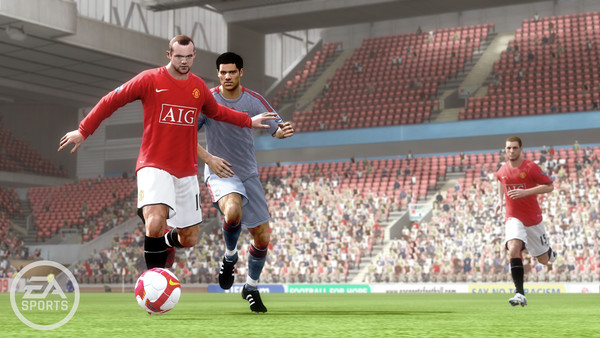
At the turn of the decade, EA Sports' flagship FIFA series managed to wrestle its majority share of gaming football fans back from Pro Evolution Soccer. As a result, FIFA 10 is widely considered to be their greatest output in the series to date.
In theory, that sounds hard to argue with but in reality it's simply not true. Much of FIFA 10's positive press came in comparison to the dip in quality that Pro Evolution Soccer experienced in that same year. Sure, FIFA 10 came with a new coat of paint and updated player hairstyles, but it's only looked on as favourably as it has been due to Konami's slips with their own football experience.
The players in FIFA 10 looked like they were gliding around the field on skates, with replays demonstrating that the barrier between studs and pitch makes it look like they're hovering. This air hockey style was made even more ridiculous by a physics engine that made battling players look like colliding bags of lumpy sand, and some of the most ridiculous glitches in the series' history. Simply search YouTube for 'FIFA 10 glitches' if you need a reminder of just how bad this game truly was.
7. The Witness

Earlier this year people started going crazy over Jonathan Blow's open-world puzzler The Witness. Gamers revelled at getting themselves stuck into the often painfully difficult challenges, with reviewers and critics everywhere waxing lyrical about how it's changed the way they see modern games.
And when you get into it, The Witness does what it sets out to very well. The puzzles are devilish at times, and the freedom with which it lets you approach them and explore the island is refreshing for a while. That being said; it's not without its flaws.
Like a parent trying to reason with an unruly child, I find myself preaching about the benefits of guidance. The Witness is great if you have the patience of a saint, but such an approach that appeals to some will ultimately alienate many others: it's often too pretentious for its own good.
Rather like a multi-faceted book that reveals the only story it was telling was actually about you leafing the pages in the first place, The Witness is more cult-classic than worldwide phenomenon.
6. Jet Grind Radio

Jet Grind Radio has one of the best average review scores of any Dreamcast title. It's generally considered to be virtually perfect by all who experienced it for this system, and it has garnered a remarkable stream of adoring one-line testimonials.
It seems, however, that many of its reviewers at the time were fairly well duped by flashy packaging around a pretty boring game. Obviously soundtrack and visuals are important to a game with punky sensibilities like this - just as any Tony Hawk game - but underneath it all that there just isn't much happening.
Jet Grind Radio is one of those games that feels like it should hold your attention for as long as your coins last in an arcade machine. It's fun, but only if you experience it in immensely short doses. Console games just shouldn't be designed that way, but it seems as though this one was.
5. Minecraft

Majong have created a game that blatantly dupes its players into thinking there's actually a meaningful game behind Minecraft's various systems. In actual fact, each randomised stage does nothing more than throw you into an already perfectly-crafted world, instructing you to play with its blocks while keeping an eye on its superfluous 'survival' mechanics.
At least The Witness has the decency to bask in the glow of its own self-serving pretentiousness.
Minecraft is also so incredibly lo-fi that the vast majority of the experience has been ported into a functional mobile/tablet experience with virtually no compromise. It's true that smartphones are getting more powerful than ever these days, but should a modern game really be so easily supported by supposedly inferior devices?
The game is essentially nothing more than a dumbed down coding experience. Sure, people have made some impressive creations with it, but game developers all over the world are doing just the same with far more difficult tools. Don't get duped into believing that this is actually a worthwhile distraction.
4. Half-Life 2

The question of where Half-Life 3 is (followed by the subsequent "what do you mean it's not even in development?") still gets asked a lot these days. Why wouldn't it be; Half-Life 2 was pretty much perfect, wasn't it?
Well, no. In the build up to its release, the sequel promised a great many things. Enemy AI was said to be the most intelligent of its time, and there were claims for fully destructible environments and objects for the player to enjoy.
While these promises were fulfilled to a fraction, there was nowhere near the level of intense detail that had been touted prior to release. Enemy AI was perhaps a little better than the standard of the time, but ultimately each enemy's movement and behaviour quickly became formulaic and predictable. They may hold you in a stalemate for a while, but eventually each would charge you and fence themselves into a killing corridor to allow you to progress with ease.
The destructible environments were a beautiful lie, too. Shooting virtually any large item would yield the same scripted crack or fracture; why make such a big deal out of the environments if the only really believable aspect is the way random boxes and items fall down?
3. Uncharted: Drake's Fortune
On paper, Uncharted sounds like an exciting experience. A slick Indiana Jones-esque protagonist taking a whistle-stop tour across exotic locations and combating evil-doers at the same time? Great! Sign me up to that game any day.
In reality, however, the game ended up becoming a strange affair that seemed to fall in between the conventions of two genres, being Naughty Dog were still in the process of learning how to craft a brilliant shooter. The platforming was supposed to be supplemented by a heavier action focus than that of the older Tomb Raider titles, but this didn't strike anywhere near the correct balance until Uncharted 2: Among Thieves.
Instead, this first iteration on the formula became a strange homage to third-person shooters akin to Gears of War. The fact that Drake would also so willingly massacre scores of enemies without so much as batting an eyelid added to it even further, making the protagonist's 'loveable rogue' persona seem far less believable in the face of such unashamed bloodthirstiness. To go from cracking wise and being thoroughly charming to snapping necks and gunning down goons within seconds of each other was just jarring, and has ruined Drake in the eyes of many ever since.
Naughty Dog managed to find their feet later, honing the formula more comfortably with the second instalment, but this first outing was definitely very wide of the mark.
2. Call Of Duty 4: Modern Warfare
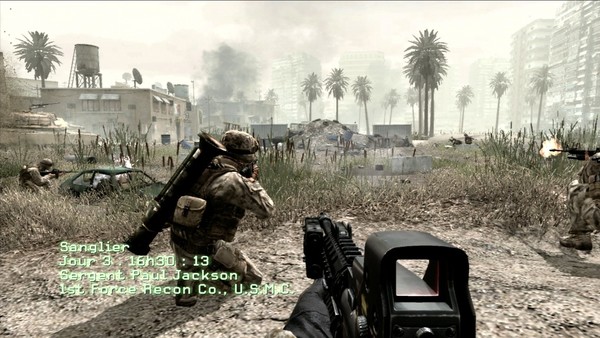
Many people believe that Call of Duty 4: Modern Warfare is one of the franchise's greatest triumphs, and its reviews reflect this school of thought. Judged against many other Call of Duty games it may seem like near-perfection, but in a wider sense it's a disappointingly narrow experience at a time when the genre itself was lacking something to keep it alive.
Modern Warfare's campaign is stacked with bells and whistles like a baggage-laden Buckaroo. When you cut through all of the superfluous explosions and background action, there isn't actually all that much happening. Each stage of the campaign follows formulaic and linear conventions; you'll enter an area and defeat some enemies, then you'll enter a building and kill some more before finally heading back outside for a bit more of the same.
Modern Warfare's campaign missions are probably entertaining to watch as a spectator where you can appreciate all of the atmospheric extras, but for a player, the repetitiveness is infuriating.
While the online modes had just enough competitiveness to offer some saving grace, there was nowhere near enough offered up by the game to see it considered a masterpiece. It's little wonder, then, why so many new FPS titles are drafting RPG or even survival elements into their formula as they pursue greatness.
1. The Elder Scrolls V: Skyrim

Let me start by saying that subjectively, I love Skyrim. As an Elder Scrolls fan it was such a great addition to the series, and one that consumed large portions of my life over the winter of 2011/12.
It's far from perfect, however, and there's a lot keeping it from being that, despite what the biggest Bethesda devotees may say. Featuring a combat system that makes your hero look like they're swinging a bag of bricks rather than a sword or axe, the physics are maddeningly inaccurate, with horses apparently having the strength to climb vertical slopes, and the enemy AI being laughably bad throughout.
There are also the famous 'Bethesda Bugs' to consider. Skyrim's bugs have somehow become one of the idiosyncrasies that fans have grown to love - or at least tolerate. Critically speaking, however, they represent a broken game, and one that - as much as I'd like it to be - can't be considered a masterpiece for that alone.
Ready to jump in and speak in defence of a game that's be broadsided here? Or maybe have something you'd add to the list? Join the discussion in the comments below!