10 Video Games That Make You Think About Death

A game quitting itself forever if you die - total genius, or absolute madness?

The subject of death is a big one, loaded with so much significance that it makes us uncomfortable to talk about in relation to ourselves or those close to us. Sure, we can talk about it philosophically or in the abstract, but on a direct level it's something best kept well away until the need arises. But then along came video games, and added a whole new layer of meaning to 'Death'. Suddenly, we were killing and dying all the time and barely batting an eyelid. Death in games usually means pretty much what we'd want it to in real life; an opportunity for us to experience the same reality again, but change our behaviours so that we can do things a little better this time round. Death is a reset, a crucial part of a player's learning process, and a whole lot less scary than the real deal. There are also games out there that seek to be a bit more ambitious, turning death into an event of consequence that we desperately want to avoid - be it by forcing us to atone for our clumsy actions, permanently killing off characters we've become attached to, or perhaps by taking a moment to commemorate the fact that we've lost one of our brave companions along the way. Here are ten games that have been unafraid to broach the subject of death - whether through story or gameplay mechanics - proving that the medium is a good as any at making us reflect on one of society's greatest taboos.

10. Spec Ops: The Line

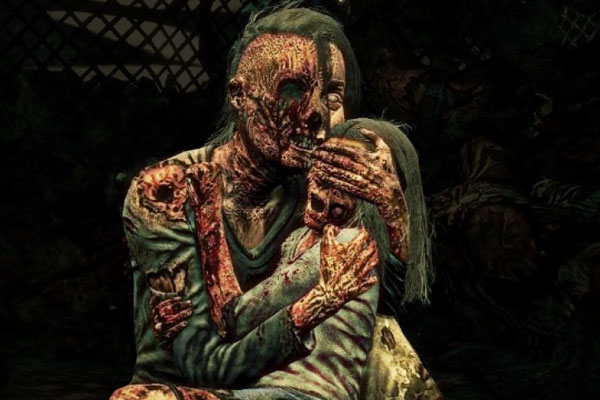
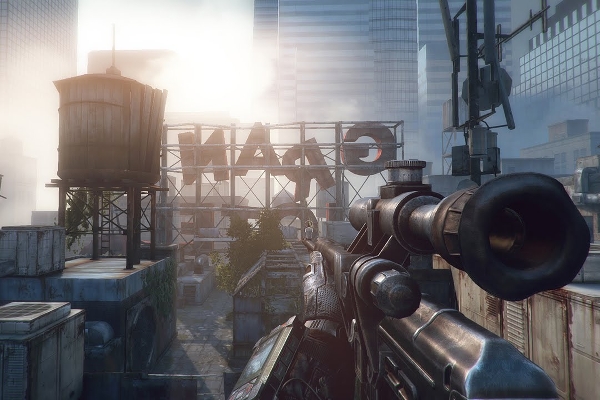
When Spec Ops was first announced, many of us muttered "Here we go again" under our breaths and paid little attention to what we assumed would be 'yet another' modern war shooter. How wrong we were though, as Spec Ops subverted the macho, gung-ho image we've come to expect from such a game and gave us one of the most poetic, harrowing depictions of military conflict. There are several hard-hitting moments that make you seriously rethink whether you're doing 'the right thing' by shooting scores of enemy troops. The most impactful of these is the infamous White Phosphorus scene, where you bomb a group of enemy soldiers only to find out that they were trying to evacuate a group of civilians. After the bombing, you wander through the aftermath of the blast. The sight of mutilated soldiers stumbling around and dying on the battlefield is pretty standard stuff in a war shooter, but when you enter a room filled with around 50 civilians burned to death (with particular focus on a dead, horrifically burned woman holding onto her dead child), it gives the preceding carnage a whole new context. Suddenly, you regard everyone you killed up to that point in the game as a potential victim, rather than an enemy, and each subsequent kill you make is laced with an unsettling feeling that there is something deeply wrong about your hitherto unquestioned role in the game.

9. Cannon Fodder

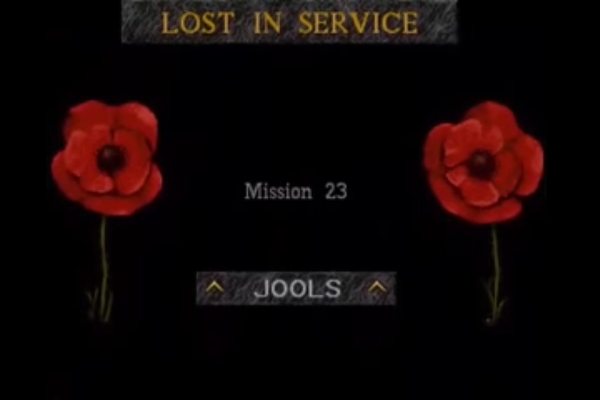
Buy Cannon Fodder at GOG The first time I ever felt sad about the death of an in-game character was in the aftermath of a Cannon Fodder mission in which I'd lost Jools, the first ever soldier you control in the game. Cannon Fodder is a classic 90s top-down shooter in which you control a four-man squad carrying out dangerous missions against huge numbers of enemies. If a soldier dies in a mission, he's gone forever, and replaced by another conscript in subsequent missions. The fact that characters died permanently was already pretty heavy-going stuff, but the magnitude of it was amplified by the post-mission debrief, during which the names of the soldiers who died in the last mission scroll up the screen, flanked by a pair of poppies and accompanied by the melancholy tune of Jon Hare's Narcissus. As you lose troops, the hill behind which new recruits come in to replace fallen ones steady fills up with graves, so between each mission you're faced with a constant reminder of the lives lost during your campaign. You feel guilty for being so reckless, and responsible for the dead. In a weird way, completing the game never feels like an unmitigated success unless every single one of your soldiers survives - which just isn't going to happen. Jools and Jop. Your sacrifices will never be forgotten.

8. Dark Souls

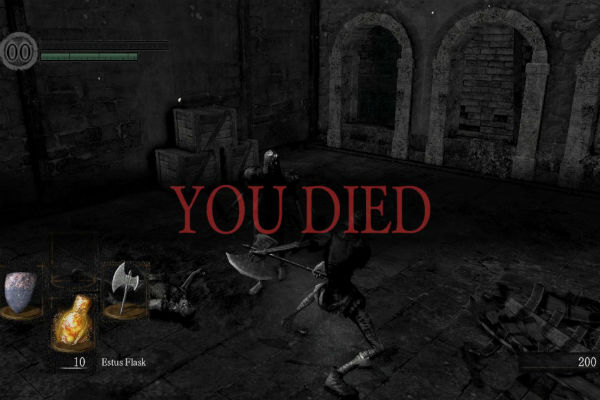
Over the last decade, mainstream games have been going down the path of ever-increasing simplification and hand-holding. Objectives have become clearly demarcated, and death usually just means restarting from a checkpoint a few seconds back. If you keep pummelling your head against a tough point in a game for long enough, you'll break through eventually. Enter the Souls series, which made death something to fear - an event of agonising consequence that gave you a sinking feeling in your stomach. When you die in Dark Souls, all the precious souls (essentially currency and XP) you had on your person at the point of death stay where you died, which means you have to go back and collect them without dying on your way - otherwise they're gone forever. This makes you incredibly wary of making mistakes. You approach each enemy carefully rather than running into battle with your sword a-swinging, and you take a deep breath to psychologically prepare yourself before stepping through a fog gate with a boss waiting on the other side. In this game, death is the worst thing that can possibly happen to you, and it completely shapes your approach to the game. It'd be pushing it to say that Dark Souls' death mechanics mean that you approach the game world much like you'd approach it if it were a real place; if that was the case, I for one would probably just cower in some dark corner of the Undead Asylum, blubbering my eyes out until they dropped out of my skull when I inevitably turn hollow. But Dark Souls does a great job of infusing death with a feeling of foreboding not too dissimilar to how we regard it in real life.

7. XCOM: Enemy Unknown

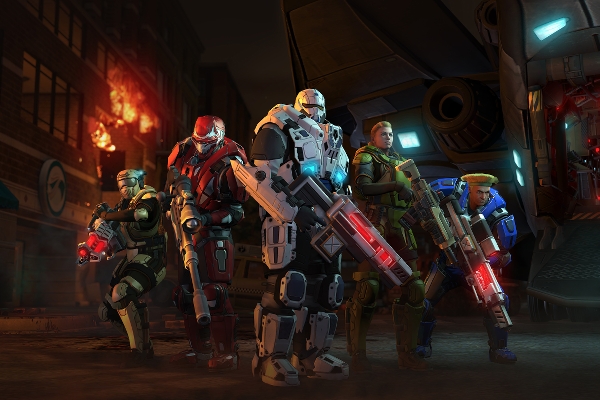
When it comes to tackling the topic of death, you could argue that XCOM is the spiritual successor to Cannon Fodder. You command a military unit tasked with protecting the planet from an alien invasion. As the distinctly defined 'commander' of the whole operation, the game casts you in a role where you feel directly responsible for your troops. These XCOM troops aren't just faceless pixellated soldiers either. They're characters who you upgrade as the games go on, specialising them in certain skills that make them crucial members of your team. You command them through so many dangerous missions, and subsequently build bonds with them. If they fall in battle then you feel like you not only lose a crucial tool in your war against the aliens, but also a character who you shared exhilarating experiences with, and for whom you probably concocted a personality. This makes it all the tougher when you inevitably lose them in battle. It's the mechanic of featuring death as a 'point of no return' that really gives it weight in XCOM. The game does a great job in making you feel responsible for the lives of your squad, as well as all of humanity, making death an event you accept as necessary in the war, but something you want to avoid as much as possible.

6. The Walking Dead

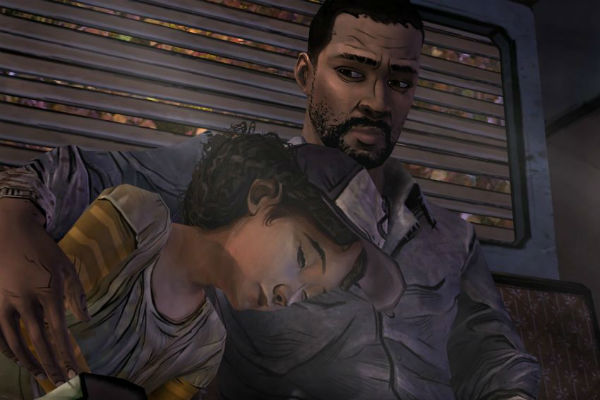
Buy The Walking Dead at GOG Those experienced in the ways of Telltale Games may be a bit cynical about how they endow the player's decision-making with a sense of significance, but that shouldn't stop people who haven't played them yet to allow themselves to be swept up in these hard-hitting stories. The Walking Dead is an interactive drama, in which the game's biggest moments come in the form of quick-time events that often dictate whether a character lives or dies within seconds, and moral conundrums in which you have to make difficult decisions to protect your group of survivors. Many of these decisions will involve directly choosing which character lives or dies, or even whether to save certain characters or intentionally let them die for the greater good of the group. It's a game in which you're often forced to weigh death up against the bigger picture, in which the direct death of a character might ultimately save more lives down the line. Essentially, The Walking Dead offers a utilitarian exploration of death, testing whether you're capable of detaching yourself from the immediacy of saving someone's life right in front of you. While early on you may be quixotically trying to save everyone's life, as the game wears on you accept that death is all-pervasive in this world, and that you'll often need to choose whose lives are more or less valuable to you.

5. One Life

Now this one is really relentless. This online survival shooter recently got greenlit on Steam, and is driven by the concept that you only have one life ever in the game. That's right, you die once, and you're locked out of the title forever. It's an excellent concept, and if you think permadeath survival shooters like Rust and DayZ are intense, then just imagine the suspense you'd feel if death in the game was really permanent. There'll be no heroes relentlessly running into combat all guns-a-blazing, people will likely be desperate to band together with others to increase their chances of survival (but who can you trust?), and nervously edging their way around each corner in the game's designated 'combat zones'. What makes it even more interesting is that you don't need to kill your fallen enemies, but can take them captive, set them free, or humiliate them (by taking a widdle on them, among other things). Would you be able to pull the trigger on someone you know paid $10 to play that game? Would they do the same for you? Never has death in a game been done quite like this before. One Life will make you play the game like your life actually depends on it (well, not your actual life, but $10 worth of your actual-life money). It's an awesome experiment, and the fact that it's been approved by gamers on Greenlight suggests there is a demand for this unique kind of challenge - in which death is the gravest kind of 'Game Over' possible.

4. Rogue Legacy

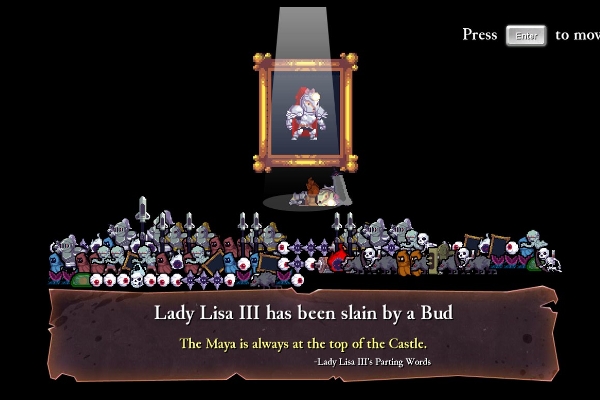
Buy Rogue Legacy at GOG Everything looks so sweet and innocent in Rogue Legacy. Despite the fact that the game staunchly stands in the ruthless 'Metroidvania' genre, its innocuous aesthetic make it easy to underestimate both its difficulty and surprisingly poignant death system. In Rogue Legacy, each time a knight dies, you go into your next playthrough as that knight's descendant. That knight who fell is gone forever, and their memory is preserved as a portrait on the knight-selection screen. It's a given that many knights will die as you play, but if you had a particularly good run with one of them then you'll occasionally look at their portrait on that screen and reminisce fondly about their heroic exploits. But there's more to it than that, because all the money and items that a knight picks up on a run won't ever be used by them. Instead, everything you collect can only be used by that knight's descendants, which means that on each run of the game the knights are selflessly collecting items that will give their successors a better chance at surviving the castle; a brilliant way of giving a sense of purpose and progress to each knight's death; none of their deaths are in vain...

3. FTL: Faster Than Light

Buy FTL: Advanced Edition at GOG Your spaceship's just survived an intense battle against a formidable attacker. You've come out victorious, but several rooms on your ship are on fire. You stop the blaze spreading by sealing off the affected rooms, then sucking the oxygen out of them to put the fire out. The thing is, during this entire ordeal, one of your most experienced crew members was in one of those rooms. They didn't make it out, they're dead, and they're not coming back. This is a typical experience in FTL, a spaceship sim in which you manage a ship and its crew as they traverse the vast blackness of space. Gameplay-wise, it's a cross between Oregon Trail and rogue-likes, and uses permadeath to keep you on your toes constantly. But it's not just permadeath which makes FTL a profound exploration of death. You'll encounter plenty of situations where you just won't have a hope of saving individual crew members and will see them die, or will even have to consign them to death in order to save everyone else. The fact that your crew members level up and become more skilled as the game goes on helps you relate to them more, because like you they're constantly progressing themselves. They also become more significant to the ship and crew as the game goes on, and their loss could have long-term consequences on everyone's well-being. There's a kind of fatalism about FTL, as there's a high chance that your whole crew, who you grow quite fond of, will die eventually. Despite that, you seek to give them as great a run at their short spacefaring life as possible.

2. ZombiU/Zombi

ZombiU was a surprising launch title for the Wii U - a clear statement of intent from Nintendo that this console wasn't just for the kids. But ZombiU ended up being unfairly overlooked, and it's only with its recent release as Zombi on the PS4, PC and Xbox One that gamers at large will get to experience this unique survival horror. Much like Rogue Legacy, each time you die in ZombiU, that character is then dead and gone forever. But rather than their death beig commemorated by a portrait, the deceased characters turns into zombies themselves. If in your next run you want to get your precious stuff back, then you need to go back and kill your zombified old self. It's a Dark Souls-style scenario, in so far as death is a severe punishment that continues to haunt you in your subsequent playing of the game. But while in Dark Souls you get to keep your equipment and are well prepared to go back and retrieve it, in Zombi you're weak and vulnerable. Do you go back and try to put your previous character out of their undead existence (for which you're responsible), or do you leave their shambling corpses to wander the earth?

1. Oregon Trail/Organ Trail

The original iteration of the great wagon adventure is one of the oldest games around, having first come out in 1971. Since then, it's gone through countless revamps (including the excellent zombie-apocalypse version, Organ Trail), but the basic premise and focus on preserving lives remain the same. At the start of an Oregon Trail run, you assign names to your travelling party, which means that inevitably you name them after your real-life friends. You must then guide them across the country, combating random events like ambushes and disease outbreaks, while keeping them healthy and well-fed by going hunting and making regular stops. Even nearly 50 years on from its initial release, the graphics in these games are basic, yet they're incredibly immersive because of how much of the game is left to your own imagination. As soon as you name your party members after your real-life buddies, you envision them in that trailer or car traversing America, and are determined to keep them alive and well. This, combined with the permadeath, means that you're heavily invested in that pixellated little crew of travellers. If one of them dies, then you envision your friend, family member, whoever you chose to name your party members after, dying, and that's pretty powerful stuff. You can keep your flashy graphics and cinematic deaths in video games. This stripped-back experience remains one of the most profound stories about death in the medium. Let us know which games really got you thinking about death in the comments, and create an account if you'd like to write for the site!

In this post: 
Dark Souls
 
Posted On: 
Contributor
Contributor

Gamer, Researcher of strange things. I'm a writer-editor hybrid whose writings on video games, technology and movies can be found across the internet. I've even ventured into the realm of current affairs on occasion but, unable to face reality, have retreated into expatiating on things on screens instead.