10 Video Games That Only Scored High Because Of Hype
These ten games had clear faults but were still given high scores regardless.

Hype and anticipation are powerful tools in the gaming industry; they can herald a game's dash to super-stardom or summon the imminent disappointment of fans.
On the one hand you have instant classics that remain enjoyable decades after their release and on the other you have wretched pieces of entertainment media that are forgotten quickly after they come out. Scores stamped onto a game linger on for some time, with aggregate websites attempting to offer the official authority on how groundbreaking some games have been, while consigning others to the bargain bin.
Then, there are these games: titles where the hype got a little out of hand to the point reviewers felt compelled to slap a higher score on the box, while ignoring their legitimate issues. Fuelled by over-excitement, the titles on this list are either looked on less favourably nowadays or received a massive split between mainstream critics and audiences on release. It's hard to deny though that the ten games here were a little undeserving of their critical acclaim. They're certainly not awful, but very overrated. Let's dig in.
10. Halo 4

When the Halo trilogy wrapped up in 2007, Microsoft wasn't about to let the profitable franchise slip from their grasp, so they put together a new team. Halo 4 was the most expensive Xbox production up to that point and expectations were appropriately high, given the pedigree of the original trilogy. Bungie moved out and 343 Industries got to work.
The end result was competent, but it fell short of previous mainline entries. The campaign was more linear than ever, despite the more emotional story at play, with several unlikeable characters. The multiplayer however was a heavy point of criticism, with changes brought to loadouts bringing Halo 4 too close to Call of Duty territory. The cooperative Spartan Ops mode would also fizzle out, not offering enough variation to make it replayable.
Three years in the making, Halo 4 may not be the weakest game of the series, but the long-awaited sequel was praised too highly by some critics, most notably IGN with their overzealous 9.8/10. Generally 4 is viewed as one of the weaker entries in the series, the player base dropping once 343's handling of the franchise would continue to be controversial, eventually reaching crisis point with 2015's Halo 5.
9. The Legend Of Zelda: Skyward Sword

A new Legend of Zelda game typically graces the gaming industry every four or five years, generating considerable excitement in the process. For some time, Nintendo was looking to make good on its improved motion plus hardware. Unlike its predecessor Twilight Princess, Skyward Sword was developed specifically for the Nintendo Wii, allowing players full freedom of movement with Link's sword and other tools. There were many positive elements for sure, most notably the new world of Skyloft and the closer friendship between Link and Zelda, but not every element was so refined.
Much like other main games in the series, Skyward Sword received rave reviews on release but it's hard to deny the issues that put it below other 3D entries. Countless critics gave it perfect scores, while seemingly glossing over the issues with the motion controls and the bloated nature of the quest. When you have a game running on somewhat dated Wii remote tech and stretched out ad nauseum, you have a single-player adventure that slowly out stays its welcome and bogs down the pacing. Skyward Sword now sits in the lower tier among fans and reviewers alike, but judging by its questionable reception in 2011, you wouldn't know that.
8. Evolve

As one of biggest failures of the current-gen, Evolve remains a laughing stock in the gaming community. Coming from the creators of Left 4 Dead, Evolve was a brilliant concept on paper at first, something that would forward the design template of asymmetric multiplayer modes. Four players taking up arms as human hunters to take on a single player-controlled monster. People were initially excited, as the game scooped many an award at E3 and other showcases. Lost amidst all this overzealous celebration was whether or not the core gameplay would actually be enjoyable after hundreds or thousands of hours. This immediately backfired when Evolve arrived in February 2015.
Ridiculously over-hyped at countless press events and shamelessly praised on release, Evolve was a gargantuan bomb amongst players. Its aggressively mundane gameplay loop and downright offensive approach to donwloadable content were lambasted by players. Yet many mainstream critics saw fit to disregard these faults as the title scored above average across the board. Attempts to save the game were mostly made in vain as the free-to-play model did little to salvage the game's failings. To this day, Turtle Rock Studios have kept their heads down, not releasing a major project for some time.
7. Metal Gear Solid 5: The Phantom Pain

The fifth and currently final entry in the Metal Gear Solid franchise was highly anticipated; after all, it was the first mainline tale in the series since 2008's Guns of the Patriots. On top of that, it was also a culmination of a gameplay shift that had been building since 2006's Portable Ops. The game was certainly shaping up well; in terms of trailer demonstrations, MGS5 has some of the best in the business. We were all looking forward to seeing Hideo Kojima flex his storytelling muscles, but when the game arrived, the fan reaction was more mixed.
Outside of its stellar stealth gameplay, what exactly did Metal Gear Solid V: The Phantom Pain offer to the franchise? Countless other elements had taken a step backwards. The open-world action may have offered players many different options, but it was also as barren as a strip-mine when you took away the enemy bases. Of course the heaviest point of criticism was the game's weak story, with limited characterisation and many details confined to audio logs. It also didn't help that the game wasn't complete due to Konami's mismanagement. Let's just say these issues shouldn't have been ignored when the reviewers delivered their critique.
6. Bioshock Infinite
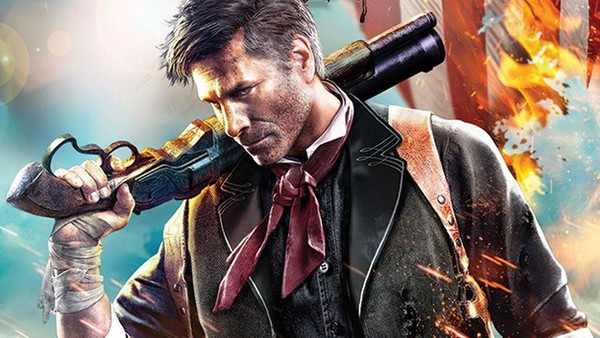
The Bioshock series was one of the most acclaimed franchises on the seventh generation of consoles. After a mostly safe effort with Bioshock 2 in 2010, the third entry had some high expectations to live up to. It seemed to be shaping up well upon its announcement. The E3 demo was certainly a standout to the masses, seemingly offering wide open levels with plenty of options in combat. Flash forward to 2013 and the game we got was solid, but not without problems. Its finest aspects were its beautiful presentation and deep themes surrounding American exceptionalism.
Bioshock Infinite may have offered an incredible environment and a strong connection to Elizabeth that grew throughout its campaign, but it also retracted many elements that made its predecessors so memorable. Restricting Booker to just two weapons and vigor powers at a time really limits the player's options and the ultimate twist involving time travel and paradoxes has its own issues. Infinite isn't a bad game by any means, but the changes it made to its core gameplay dilute its identity somewhat. It seemed reviewers at the time were very much in awe of its look and feel when they gave their high scores.
5. LittleBigPlanet

Media Molecule's debut title on the then struggling PlayStation 3 was one of the first major exclusives that really got gamers to run out and buy the system in 2008. While it seemed like a straightforward 2D platformer at first, LittleBigPlanet's biggest claim to fame was allowing its fans to create their own levels from scratch. This led to a large cultivated community as players began to share their stages worldwide, massively extending the game's longevity. This kind of freedom had rarely been seen on consoles before, having mostly been relegated to modding tools on PC.
LittleBigPlanet was cute, charming and offered a huge tool-set for players to create. It was a pioneer of user-generated content on console at the time, but did it really deserve to be called one of the best games ever made? Not really; it had issues with its platforming and camera at times. The more realistic and floaty jumps led to bouts of frustration and when playing with others, the game had a serious problem with focusing its camera on a wider view. These faults didn't stop the critics from overly-praising it however as it still stands as one of the highest rated games on PS3.
4. Resistance 2
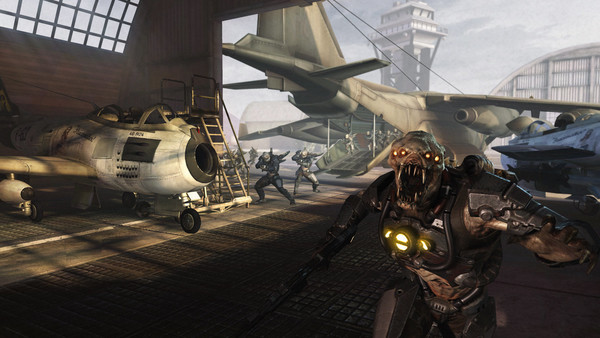
When the PlayStation first got out of the gate, there were only a few select exclusives to its name and it was Resistance: Fall of Man that led the charge for the initially slow trickle of system sellers. As the best game of the launch line-up, a sequel was anticipated by the fanbase and in 2008, Insomniac Games obliged with Resistance 2. Like many sequels at the time, it aimed to go bigger and better in every way, most notably with its sixty-player online multiplayer.
Resistance 2 was highly praised upon release, mostly for its massively increased scale in both single player and multiplayer design. However in retrospect, both the game and the top marks it received were a product of the time. The seventh generation was only one year into the mainstream FPS craze that had been kicked off by Call of Duty 4 the year before and as a result, we hadn't reached saturation point yet. As a result, a blind eye was turned to R2's shallow gameplay and overly linear layout in its campaign. Insomniac later reflected that Resistance 2 took things in the wrong direction, but it didn't stop critics from lavishing it with unearned praise.
3. Fallout 3

At the time of Fallout 3's release, it had been a full decade since the last major release. With Interplay Entertainment and Black Isle Studios having faded away, the series found itself in the hands of Bethesda Game Studios. Taking the same approach as they did for The Elder Scrolls IV: Oblivion, excitement quickly began to build as the popular RPG finally made the transition to full 3D. It was met with critical acclaim on release, winning numerous game of the year awards and setting Bethesda on the path to where they are today. It had its moments, most notably the VATS targeting system and the sombre atmosphere of the Capital Wasteland.
The fan complaints were mostly drowned out as Fallout 3 achieved enormous success, with Bethesda releasing other mainline titles in the years to come. Years after its release, with the hype having worn off, many a player now looks on Fallout 3 unfavourably, most notably for its weaker story and limited implementation of side quests and narrative consequence. Of course, anyone following the Fallout franchise in recent years knows how bad things have gotten, but it all started with number 3, an overly-hyped product that hasn't aged too well upon replaying.
2. Fable 3

As one of Xbox's key exclusive titles, the Fable series was once a key pillar of the console, offering the brand's premier RPG experience. The franchise has its fans who have stuck by the series from day one, even if it wasn't as popular as Halo or Forza. Fable 3, released in 2010, promised the grandest tale yet seen in the franchise, homing in on historical revolutionary fervour and the rise to becoming king as the key themes in its story. It was certainly a high-tier exclusive for the Xbox 360 that year alongside Halo Reach and the launch of the Kinect.
Fable 3, and indeed, the series in general, has been problematic to say the least, with industry icon Peter Molyneux consistently over-promising and under-delivering. The third entry became the peak of this crisis, as developer Lionhead Studios added features that severely damaged the game's flow and pacing. The Sanctuary that took forever to load, many useless cosmetic features and a ridiculously easy level of difficulty - the list goes on. This didn't seem to affect reviewers however as they gave into the hype and delivered high scores yet again. By Fable 3, a winning formula should have been established, but the series continued to disappoint.
1. Final Fantasy VII: Remake

Final Fantasy VII is an undisputed classic and for over a decade, the fanbase was pining for a modern rendition of the title. The hype for Final Fantasy VII: Remake was unprecedented, a steady build-up that began with a bombshell of an announcement at E3 2015. Things appeared to be shaping up well after much of the development went on behind the scenes at Square Enix. One controversial release model generated some discussion and when it finally arrived earlier this year, Remake ended up being dramatically different from the original game. Not everyone was happy with it.
For better or worse, this new take on Final Fantasy VII offers a substantially longer quest while giving some supporting characters larger roles. While the latter was welcomed by fans, a good portion took issue with the former, feeling the game was padded out with content that didn't contribute to the main story. Seemingly lost on the mainstream critics, Final Fantasy VII: Remake scored highly regardless, leaving the community wondering how this episodic model will pan out for the next decade.
-
There you have it, ten overrated games that the critics judged too highly. Got any more suggestions? Stick them in the comments.