10 Video Games That Were Cancelled Despite Being Almost Finished
Seriously, give us Scalebound.

For every excellent video game that gets made, there’s another that never sees the light of day. Whether it's due to clashes between studios and publishers, failing to acquire rights, or studios going bust, there are any number of reasons why a project can become cancelled.
Like any other creative endeavour, tonnes of work and passion is put into working on these games. A cancellation would understandably come as a disappointment to those who dedicated themselves to putting it together.
Likewise, when a project is cancelled after its officially announced it can leave those eagerly anticipating its release just as, if not more, deflated by the unwelcomed news, with high profile cancellations such as Silent Hills, Star Wars 1313, and Gotham By Gaslight still leaving us wondering about what could have been had things turned out different.
While many games are killed off during the early stages of their production, other games were pulled from release after they were completed. In some instances, this was due to a case of poor timing whereas others were fuelled by controversy, or the unfortunate victims of business decisions. Whatever the reason, though, these games were never released.
10. Fable Legends

A bright and colourful RPG with a vibrant sense of humour to match, the Fable series was a fantasy juggernaut of the Xbox and Xbox 360 consoles. Despite creator Peter Molyneux’s infamous list of false promises, the series nevertheless had its legions of dedicated fans who couldn’t get enough of the imaginative world.
Following the release of Fable III in 2010 and Molyneux’s eventual departure from developers Lionhead in 2012, the team would begin work on what was to become Fable Legends. Designed to be a free-to-play asymmetrical multiplayer game, this Fable would be vastly different from what fans were used to. Likewise, the title was supposed to integrate Xbox’s cloud technology and be integrated with SmartGlass (remember that?).
After a very expensive development period, with Microsoft reportedly spending a whopping $75million, Fable Legends was abruptly axed, and Lionhead Studios was shut down only weeks after the open beta was launched.
While the exact reason for the cancellation remains unknown, sources involved in the production have claimed a lengthy list of bad decisions had resulted in a messy game that nobody really wanted to work on.
Here's hoping Playground Games's upcoming Fable reboot can make it across the finish line.
9. Six Days In Fallujah

Thanks to the overwhelming success of the Call Of Duty and Battlefield series, military-based first-person shooters dominated the blockbuster gaming scene throughout the 2000s and continues to do so today. With the release of Call Of Duty 4: Modern Warfare, video games showed they could shift the focus from historical conflicts to a more contemporary setting to deliver big budget spectacles and fast-paced action. One game that went too far, however, was Six Days In Fallujah.
Developed by Atomic Games, Six Days In Fallujah intended to portray a realistic depiction of the Iraq War’s Second Battle Of Fallujah. By working alongside US Marines who were there, the aim was to create as authentic a representation of the psychological impact of the battle as possible.
However, with the real-life event which left 800 Iraqi civilians dead still fresh in the public memory, the game sparked massive controversy for a lengthy list of valid reasons. Because of the backlash, Konami dropped out from publishing the game and Six Days In Fallujah was shelved after Atomic Games’s collapse in 2011.
With new developers Highwire Games picking up the mantle as recently as 2021, the controversial shooter is once again set for release.
8. Star Wars: Battlefront III

While DICE’s Battlefront games have made huge waves within the gaming scene in recent years, it's the original Battlefront series that older fans have the fondest memories of.
Released back in 2004, Star Wars: Battlefront was developed by Pandemic Studios and boasted a wide selection of fast-paced couch co-op action. The sequel was released one year later and built upon the exciting sci-fi action alongside providing a more robust campaign. The series was so popular that a third instalment was sure to follow. However, fate had other plans.
Rumours began circulating that upcoming sequel was being developed by Free Radical in 2006. By 2008, however, news broke that the team had lost the rights for the title. And, with that, hopes of getting our hands on the Battlefront III were extinguished.
Making matters worse, though, was that Free Radical co-founder Steven Ellis claimed developmwnt was nearly finished when it got the axe.
However, it wasn’t until earlier in 2022 when we saw just how finished the game was, when a Redditor claiming to have a PSP copy of an early build posted images online. If their claims are to be believed, Battlefront III was fully playable and a lot of fun.
7. Penn And Teller's Smoke And Mirrors

Starring the titular magician duo, Penn And Teller’s Smoke And Mirrors is a video game practical joke designed with the sole intention of hoodwinking friends.
Intended to release on the Sega CD in April 1995, Smoke And Mirrors consisted of six “scam” minigames which include a psychic gorilla supposedly guessing which card the victim pulls from a deck (the trick being the player secretly inputs a code to tell the game what the card is) alongside a rigged two-player shooter where one player always gets more points than the other.
However, the game is best known for the infamous Desert Bus. Designed as a response to the video game violence controversies at the time, this game saw the hapless victims driving a bus in a straight line for eight hours to get a single point.
Featured in various publications and reviewed by gaming outlets, Smoke And Mirrors was all set for release until publishers Absolute Entertainment went bankrupt. With no other publishers willing to pick up the reigns, the game went unreleased.
That was until 2005, however, when copies of the game found their way onto the internet, earning the title a cult following. Now everyone can experience Desert Bus’s hours' of fun.
6. Thrill Kill

Video games are no stranger to controversy, with dozens of games receiving backlash for their violent and graphic content. One game which took it to the extreme, however, was Thrill Kill.
Originally conceived as an Aztec sport game for the PlayStation, publishers Virgin Interactive would persuade developers Paradox Development to double down on the brutal violence and taboo-breaking content. This project eventually became Thrill Kill, a four-player fighting game which boasted a cast of the most over-the-top and transgressive leather-clad characters ever seen in a fighting game.
Virgin continued to play into the game’s sleezy aesthetic. However, they’d eventually need to tone down the gratuity to lower their Adults Only rating from the ESRB. But with the deadline fast approaching, Virgin Media Interactive were bought by Electronic Arts, who wanted nothing to do with Thrill Kill and the controversy it would inevitably bring with it.
Staff only found out about the game’s cancellation after reading about it in the news rather than hearing from their new bosses. Likewise, other publishers offered to acquire the title for themselves, but EA refused to budge.
In a positive turn of events, however, Thrill Kill's blueprints were transformed into lesser-known but excellent fighting game Wu-Tang: Shaolin Style.
5. True Fantasy Live Online

Designed to be a gigantic MMORPG for Xbox Live, True Fantasy Live Online was to be helmed by RPG veterans Level-5, who’d previously worked on the Dark Cloud series.
Not only did the game’s cell-shaded art style look incredible, but the title was also hugely ambitious for the time. Up to 3000 people were said to be able to play together on the same server, with each player having complete freedom on which role could occupy within this massive world.
The title was showcased at the Tokyo Game Show in 2003 and was set to launch in 2004. However, the game was delayed soon after, and news went dark. The last anyone heard about it was that it was in a fully playable state. Not long after that announcement, though, True Fantasy was cancelled in June 2004.
The story goes that Microsoft were determined that the game should have voice chat. But Level-5, who were inexperienced with developing online games (especially something of this scale), couldn’t handle everything Microsoft wanted to include. Tensions began to grow between the two companies until the plug was finally pulled.
Had it released, we could have witnessed one of the most ambitious MMORPGs of the 2000s.
4. Propeller Arena: Aviation Battle Championship

While some cancelations are due to licensing issues or volatile disputes between developer and publishers, the abrupt cancelation of SEGA’s Propeller Arena: Aviation Battle Championship was nothing more than a case of poor timing and unfortunate circumstance.
As the title suggests, Propeller Arena would see players take part in a series of areal dogfights against other aircraft to win the titular championship. It was developed by AM2 and was completed and ready to be released on the Dreamcast on 19 September 2001.
However, following 9/11, the game’s release was postponed for obvious reasons. Specifically, SEGA cited the game’s artwork (which depicted planes fighting over a city) as one of the main reasons.
However, Propeller Arena’s story doesn’t get any better from here either. Whereas other pieces of media were released at this time following some editing (Sam Raimi’s Spider-Man film being one of the more well-known examples), this game wasn’t so lucky.
Thanks to the disappointing performance of the Dreamcast, SEGA decided that it wouldn’t be financially beneficial to release the game. And with those two blows of unfortunate circumstance, Propeller Arena remained shelved through no fault of its own.
3. Scalebound

Originally announced back in 2014, Scalebound was set to be a bombastic action game from acclaimed developers PlatinumGames.
Marketed as a gigantic JRPG experience, the title would see players teaming up with others to fight gigantic creatures with the help of dragon companions. The gameplay footage and demos the developers treated us to were massive spectacles that had the entire industry talking.
The concept for the game was conceived alongside the studio’s establishment in 2006, however development of other titles kept getting in the way. It took until 2013 for work on Scalebound to take off. But before it arrived at its 2017 release window following a year delay, Scalebound was cancelled in January of that year to the surprise of those excitedly awaiting its arrival.
Given that the loss came at a time when Microsoft faced criticism for their lack of first-party exclusives, the cancelation came as an added blow for anyone who hoped that Scaleboud would signal a new chapter for Xbox exclusives.
Reasons for the cancelations cite the game simply not living up to the standards advertised. Despite Microsoft owning the rights, PlatinumGames have since expressed they’d still like to release the game some day.
2. Star Fox 2
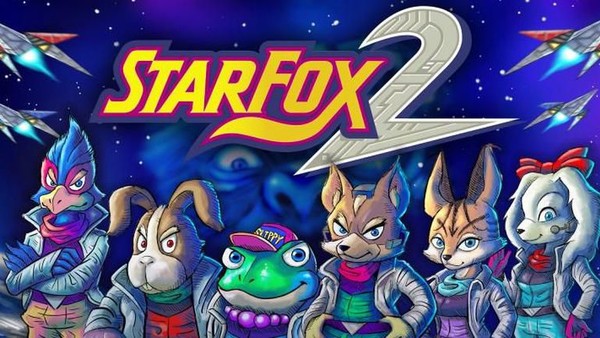
After the overwhelming success of bombastic polygonal shooter Star Fox for the SNES in 1993, there was a lot of excitement about how the upcoming sequel (which began development almost immediately after the first game’s launch) could further push the boundaries of what Nintendo’s console was capable of.
Using the same Super FX chip that was used in Yoshi’s Island, Star Fox 2 was faster and more visually ambitious than its predecessor. It also incorporated a real-time strategy element in which players would need to defend the home planet against advancing enemy forces.
With the game only months away from release, however, Nintendo slammed on the brakes. The reason for this last-minute cancelation was the release of Sony’s PlayStation and SEGA’s Saturn which heralded the arrival of fully 3D games.
According to sources, Nintendo was concerned that this new level of visual fidelity would make Star Fox 2 look inferior in comparison. That was all the reason needed to stop this game from hitting shelves.
There is a happy ending to this story, though. Almost two decades after the cancellation, Star Fox 2 finally made it into our hands when it released as part of the miniature SNES console in 2017.
1. Prey 2

Revealed to the public in 2011, the follow-up to the 2006 sci-fi shooter was set to take the Prey series in a bold new direction. Original protagonist Tommy was replaced by grizzled bounty hunter Killian Samuels, and the setting was swapped from a claustrophobic spaceship to an open world set on an alien planet.
The gameplay footage and trailers promised a slick and revolutionary AAA blockbuster. But news about the game soon went quiet. Despite Bethesda’s promises that work on Prey 2 was still being carried out to ensure it was the best it could be, news eventually broke in 2014 that the game was cancelled even though it close to an alpha release.
Stories of nightmarish productions are nothing new within the world of entertainment, but none were as turbulent as Prey 2’s production hell, which boiled down to Bethesda and Human Head butting heads over legal disputes.
In short, Bethesda wanted to buy out the developers and tried to force their hand by backing them into a contractual corner. The studio refused to budge, and rather than settling on any agreement, the contract expired.
Bethesda subsequently handed development over to Arkane Studios, and (for better or worse) 2016’s Prey was born.