10 Video Games That Were Scrapped AFTER Being Almost Finished
These games were infuriatingly cancelled at the finish line.

The world of games development is considerably more secretive than those of, say, film, TV, and music.
So much happens in a clandestine fashion behind closed doors, and as players there are so many games whose cancellation we never even learn about - because they weren't ever announced in the first place.
And while it's not uncommon for games to be scrapped during early stages of development or even a few years in, it's decidedly less frequent that games are canned when they're approaching the finish line.
After all, with so much time and money already invested in a product, it surely makes sense to get it out the door and recoup at least some of that investment, right?
But despite these 10 games all being in the latter stages of production, each never saw the official light of day, being killed in the home stretch for one of many reasons.
Perhaps the publisher reacted to a changing trend in the games industry, felt that it wasn't up to par with a previous game in the series, or more tragically, was derailed by dire financial straits behind-the-scenes.
Whatever the reason, these games all got really damn close to being in our hands...
10. Fable Legends

Fable Legends was a free-to-play co-op entry into Lionhead Studios' beloved RPG franchise - an asymmetric multiplayer game in which four Heroes battle an omnipotent Villain who hurls obstacles in their way.
Fable Legends began development in 2012 and was officially announced in 2013, with Lionhead reportedly spending $75 million on the game and intending to support it as a live service title for 5-10 years.
Despite the game having a closed beta in 2014 and being in the final polishing stages of development by 2015, it was unexpectedly cancelled in March 2016 when Microsoft suddenly closed Lionhead.
Numerous reasons were cited for Microsoft's decision, from the game's sizable budget to the difficulty of monetising it, the mixed response to the closed beta, few at Lionhead actually wanting to work on it, and Microsoft strategically shifting award from free-to-play multiplayer fare.
Though the live service space is wildly overcrowded today, it's rare for a game as far along as Fable Legends to get the chop.
Ultimately though, its cancellation is an indication of just how expensive and time-consuming it is to continually manage and operate "ongoing" games.
9. Primal Rage II
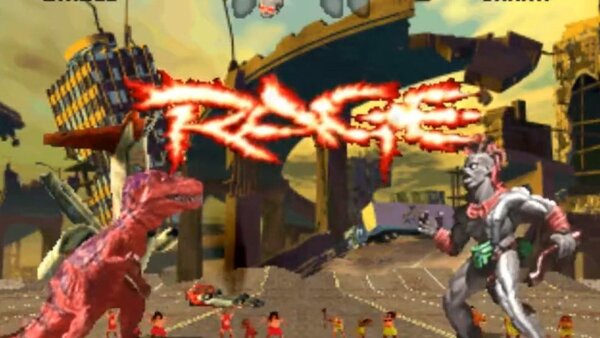
Fighting game Primal Rage was a considerable hit for Atari when it launched in arcades in 1994 and was ported to consoles the very next year.
And so, they swiftly got to work on producing a sequel, with an intended arcade release date of September 1996.
Development got far enough that test cabinets of Primal Rage II were even fleetingly playable in a few California arcades, but Atari ultimately surmised that there was no possibility of the game selling enough copies to be profitable, and so cut their losses, cancelling the game despite playable builds being in circulation.
Though there were initially conflicting reports about how feature-complete Primal Rage II was at the time of being scrapped, screenshots and video clips subsequently leaked from a test build suggested it to be in a relatively polished state.
Later a ROM of the game was leaked online, and in 2017 modders managed to get it running on a bespoke emulator, confirming indeed that Primal Rage II was very far along when it was culled.
8. Pirates of the Caribbean: Armada of the Damned
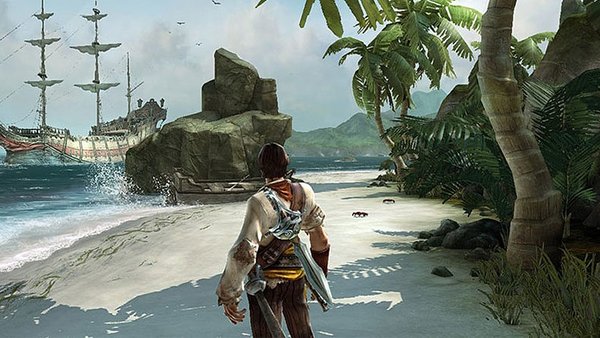
Pirates of the Caribbean: Armada of the Damned was an ambitious attempt to develop an open world action-RPG based on the hit movie franchise, from Turok (2008) and Tron: Evolution developers Propaganda Games.
The game was set 10-15 years before the events of the first movie, focusing on a new pirate captain as they sail the Caribbean Sea and try to make a name for themselves.
Armada of the Damned was first announced at E3 2009, and garnered positive responses from most journalists who had the opportunity to play it, with many comparing it favourably to the Assassin's Creed franchise.
There's a ton of gameplay footage out there from press previews, making it abundantly clear that the game was deep into development and close to completion.
However in October 2010, apparently mere months away from its intended release date, Disney laid off most of Propaganda's development team as part of a corporate restructuring plan, immediately resulting in Armada of the Damned's cancellation.
Given that Pirates of the Caribbean was still an absolutely huge IP in 2010 - with the fourth film, On Stranger Tides, grossing over $1 billion the very next year - it's totally maddening that Disney thought it financially sound to cancel such a promising, near-finished title.
7. Black9
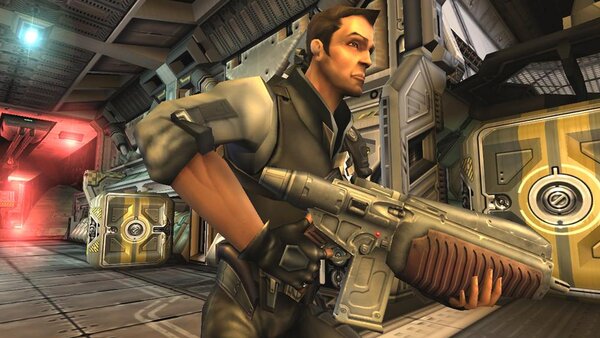
Black9 was a third-person action-RPG in the vein of Deus Ex developed by Taldren, Inc, set in a cyberpunk future of 2080.
The game was first announced in 2003, and in addition to offering up rich character customisation and sci-fi combat, Black9 planned to feature vehicles in its campaign and offer an extensive multiplayer suite.
However, in 2004 the game was cancelled amid disputes between Taldren and publisher Majesco, with numerous ex-Talden developers claiming that Majesco made unfair demands of them while reneging on promised funding.
Ultimately Black9 was said to be around 85% complete at the time of its cancellation and fully playable from start to finish, despite an abundance of jank you'd expect from an unpolished version of any game.
Even with its aggressively mid-2000s title, the gameplay footage and images that have been released actually look pretty damn good, suggesting Black9 could've lived up to its inspiration were it not for executive meddling behind-the-scenes.
6. Resident Evil 1.5

Capcom wasted no time at all getting to work on Resident Evil 2 following the first game's completion in 1996, though the first version of the sequel never actually made it out the door.
Resident Evil 1.5, as it's now fondly known, was a radically different iteration of the sequel, pairing Leon Kennedy not with Claire Redfield but a biker by the name of Elza Walker.
Though Resident Evil 1.5 had most of the same locations as the eventual Resident Evil 2, the Raccoon City Police Station looked considerably more contemporary, and the game overall had far fewer puzzles.
Also, because Capcom expected the first game to flop, the sequel was initially designed to provide a narrative conclusion to the series.
Resident Evil 1.5 was said to be roughly up to 80% complete when Capcom decided to restart the project, feeling that this version of the game simply wasn't fun or interesting enough. And so, Resident Evil 2 as we know it was born.
v. , mResident Evil 1.5 however became something of a white whale for collectors and preservationists to seek out, and in the 2010s incomplete builds of the game began to leak online, with modders even working to make them more feature-complete.
5. Star Wars: Battlefront III
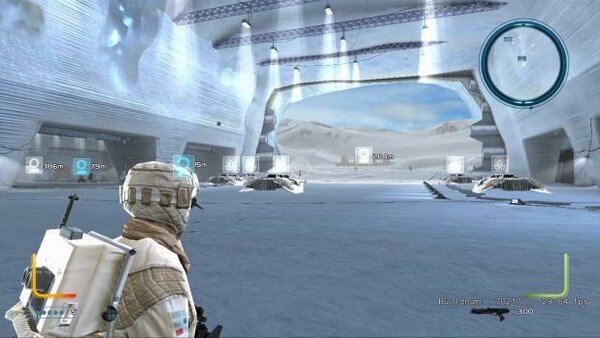
2005's Star Wars: Battlefront II was widely acclaimed by critics and Star Wars fans alike, as well as being a solid commercial success, seemingly ensuring that a third game would quickly come to fruition.
After several years of rumours, in 2008 developer Free Radical Design confirmed that while they'd been working on Battlefront III for two years, the game had been cancelled due to the developer losing the rights to the IP and LucasArts failing to commit to a large marketing spend.
Battlefront III was said to be extremely close to finished at the time of its cancellation, while developer Michael Barclay later claimed that the game would've been "legit incredible."
Last December, after years of sporadic gameplay leaks, a near-complete build of the Wii version of Battlefront III found its way online, showing off one of the game's most impressive features - the ability to seamlessly get into a spacecraft on the ground and fly into space.
The franchise seems oddly adverse to a third entry, as even the wildly successful rebooted Battlefront series stopped short of delivering a threequel, due to EA not wanting to pay the high licensing costs for the IP.
4. Half-Life (Dreamcast)

The original Half-Life was released for PC in 1998 and later ported to the PS2 in 2001, but did you know that Valve also intended to release it on the hallowed Sega Dreamcast?
Original Half-Life publisher Sierra announced a Dreamcast port of their seminal first-person shooter in early 2000, which would feature improved visuals as well as an additional mini-campaign, Blue Shift, focusing on beloved security guard Barney.
But the port had a troubled production resulting in numerous delays, even as early copies of the game were sent to prominent gaming outlets for review, suggesting it was near enough finished.
A poor critical reception, citing myriad technical issues, caused Sierra to further delay the port, all while Blue Shift was released as a standalone expansion on PC, complete with the higher-resolution textures brought over from the Dreamcast version.
In June 2011, just four days after Blue Shift hit PC, Sierra confirmed that the Dreamcast Half-Life port was dead, citing "changing market conditions," no matter that it was clearly very close to done.
This was confirmed beyond all doubt in 2013 when the Dreamcast build leaked online, featuring fully playable, complete versions of both Half-Life and Blue Shift.
3. Daredevil: The Man Without Fear
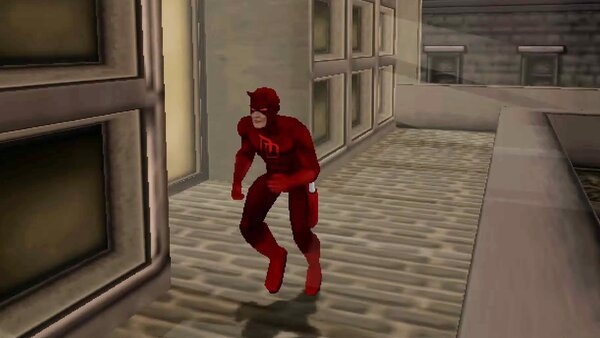
In the early 2000s, Army Men developers 5000ft Inc. began work on a video game based on Marvel superhero Daredevil.
While originally conceived as a lower-budget affair, this changed once Fox announced a blockbuster Ben Affleck-starring Daredevil movie, resulting in the game's scope expanding into a more ambitious open world outing intended to release in proximity of the 2003 movie.
But 5000ft struggled to keep up with the increasing scope, not to mention that Sony, Microsoft, and Marvel all had creative control over the end product, further slowing development.
This all eventually became so unwieldy that 5000ft scrapped the planned open world in an attempt to get the game out the door in time for the film's release.
And though the game was finally close to done, its release was ultimately not approved by Marvel, who were unhappy with the end product.
In 2020 gameplay footage from Daredevil: The Man Without Fear leaked, and in 2023 a playable PS2 build found its way online courtesy of an anonymous former 5000ft developer, indeed confirming just how far along the game was when it was canned.
2. Scalebound

PlatinumGames' co-op action-RPG Scalebound was announced at E3 2014 and turned a lot of heads as a flashy new IP for Microsoft.
Though word went rather quiet in the years following its unveiling, its release was eventually delayed from late 2016 into 2017.
Yet at the beginning of 2017, with Scalebound evidently being less than a year away from launch, it was confirmed to have been cancelled, much to the frustration of many players.
A few years later, PlatinumGames studio head Atsushi Inaba claimed that Scalebound was scrapped so late in development because of joint failures on the part of both PlatinumGames and Microsoft.
The developer struggled to acclimate to working on Unreal Engine 4 and had little prior experience with online-heavy games - as also proved problematic for the company's next foray into online action-RPG fare, the doomed Babylon's Fall.
There remains hope from some that Scalebound could be revived one day, and in the very least, the project got far enough along to make that a fringe possibility.
1. Dune Generations
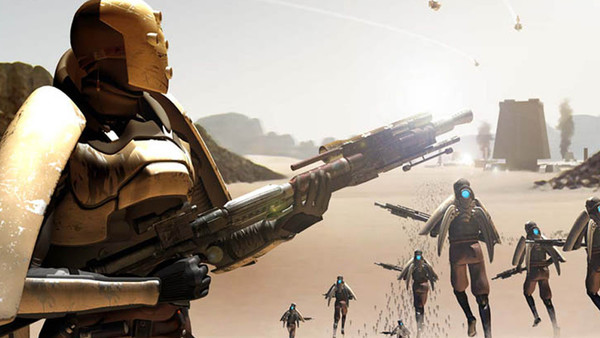
Dune Generations was announced in 2001 as a massively multiplayer online RTS being developed by Cryo Networks.
With its promise of a persistent online rendition of the world of Arrakis, with up to 20,000 players per server fighting over control of it, it certainly wasn't a project that lacked for ambition.
Dune Generations made it to the alpha stage of development, meaning that a build of the game was playable and being extensively tested for bugs, before it would be deemed feature-complete and begin the beta testing stage.
However, development stalled in the summer of 2002 when publisher Cryo Interactive filed for bankruptcy, instantly killing the game along with all of Cryo's other unfinished projects.
It was a huge blow to Dune fans, though given the more recent mainstream success of the IP through Denis Villeneuve's blockbuster movie adaptations, it's not terribly surprising that a similarly premised Dune MMO, Dune Awakening, is currently in the works.