10 Video Games The Critics Were DEAD Wrong About
Alpha Protocol was fantastic and we will hear no different.

It's all too easy to defer to a critical review of a game, lest you risk taking a gamble. It's only natural, as nobody wants to waste time or money on a potentially rubbish expenditure.
And for the most part? Sure, they're usually right. After all, it's a critic's job to weed through the good and bad to help us, the unknowing consumer, make an informed decision.
But what if... they're not always right? Just because ten reviewers didn't like a game doesn't mean you won't. Or worse yet, what if the practice of paid reviews has overwritten journalistic integrity, as it has done? They'll swear a steamer of a bad game is actually quite good to appease their paymasters, regardless of those that will then waste money on it.
So instead, let's have a look at some games that are not actually as bad as they were initially made out to be - or otherwise came out completely different to the general consensus.
(And yes, I am aware of the irony of me telling you what is good or not after chastising those that get paid to do it. But I'm doing it for your benefit, remember.)
10. Tony Hawk: RIDE

The Tony Hawk's series was renowned for its soundtracks, daft storylines and physics-defying skills and tricks. It may not have been realistic, but it was fun.
So why would making players stand atop a plastic skateboard and take any of the craziness out of what made the games great?
Well, because Activision had made millions from Guitar Hero, and set their sights on expanding.
Cries of it being "just like real life" and "the evolution of skateboarding games" came forth to an unsuspecting public. People crave immersion, after all.
Except it wasn't. It was hot garbage wrapped up in an expensive gimmick, which certainly didn't help the legacy of the already-declining franchise.
What could make this travesty worse? Only a bloody sequel! Oh, but this has snowboarding in it too. Hallelujah.
It was like putting out a garbage fire with more garbage fire. Which you could take as a metaphor, or something you could literally do with the board.
But from a distance, obviously. Burning plastic and all.
9. Sonic The Hedgehog (2006)

It's been said many a time (and I'm guilty of it myself) that Sonic's transition to 3D was not a smooth one. But gawd bless'em, Sega still kept trying, and we got Sonic the Hedgehog in 2006.
Of course, we know now some fourteen years on that this was a terrible game. So much so, that SEGA delisted it in 2010 in an effort to keep the franchise pure and untainted (yet they still released Boom...).
But back then, early preview critics were singing its praises, as if we'd learnt nothing from Sonic Adventure. And much like Adventure, it wasn't just one thing that ruined it. You couldn't say "Oh, the gameplay's naff but the story's alright", the whole thing stank.
Fans were hoping for something better after Sonic Heroes and Shadow the Hedgehog, but this wasn't to be it, sadly.
Glossing over the oft derided "Sonic getting it on with a human" schtick, the whole game was rightfully run into the ground. Probably a good thing that SEGA buried it some years later.
8. Mighty No. 9

If there's anything to be learnt from the Might No. 9 debacle, it's hubris.
Keiji Inafune may well have made his legacy with the Mega Man games, but it was ambitious to assume that all the success would follow with his new creation.
It also didn't help when the game was delayed a few times, as well as Inafune trying to fund another game before putting this out, earning cries of mismanagement and greed from the press and eager fans.
And it showed in the release of Mighty No. 9, critics called it out for, well, not being as good as Mega Man. Despite an impressive $4 million earned in Kickstarter, critics were quick to point out that it didn't have the polish of a game with half of that budget.
But time can sometimes be a saving grace, and through subsequent updates and patches, Mighty No. 9 is actually not a bad little title.
If anything, it plays just like a Mega Man game: Awkward, clunky, occasionally frustrating and looking like a relic of the past. Isn't that why people love the Blue Bomber, or am I missing something?
7. UDraw

What is it with the noughties and peripheral gaming? We've had various Hero's and Band's, as well as the previously mentioned RIDE fiasco, so why did THQ go ahead with this?
Even worse, why did any reviewer worth their salt try and convince themselves or us that this would be for anyone serious about art? But surprisingly (or not, as we're here) some did try and convince gamers with an artistic flourish that this was the real deal.
Except that it wasn't, and coincidentally paper and pens are much cheaper.
It was evident in the catalogue that followed was redirected for the young market. Whilst not a bad thing, it's not the kids that would be rushing out to buy them.
As a result, THQ reported a near one and a half million unsold uDraw tablets, somewhere in the region of a $100 million loss to the company. Maybe if reviewers had been a bit more honest with themselves, THQ wouldn't have invested so much into a failed exercise?
Sadly, that massive loss is just one of many nails in THQ's coffin by that point.
6. NeverDead

NeverDead is the product of a few good ideas wrapped up in a clunky design that got absolutely torn to shreds on release, but perhaps slightly unfairly.
The adventures of the undying Bryce Boltzmann were great fun, once to get used to the core gameplay mechanic.
You see, Bryce is immortal, but not invulnerable. This meant that when you take damage, you don't limp about for a bit, your leg falls off. Or your arms, or one of each, and maybe your torso too. Bryce's curse made for some interesting combinations, like rolling around with your arms attached to your head and firing at any and everything.
I'm not going to lie and say it's a hidden AAA gem of a game or anything, but it was a silly third person shooter on par with some of Capcom's output at the time.
The story is a bit daft. I mean, why would the antagonist curse you with immortality? That's literally the opposite of peak bad guy behaviour.
But how many other games let you throw your own head through a vent, Marble Madness-style? Exactly.
5. Deus Ex: Mankind Divided
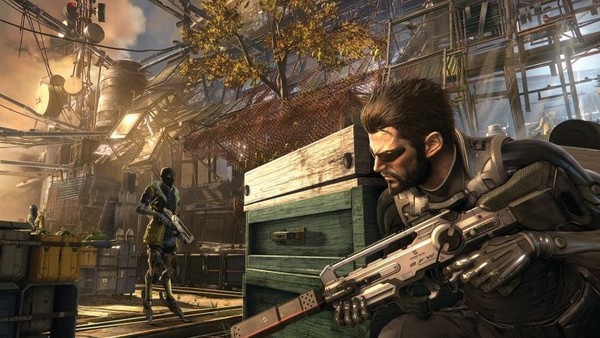
Look, I get it. The whole preorder tier system nonsense, the overall length of the game, I understand. I too bought this for full price on launch, and I too was disappointed at how short it is. At least, compared to Human Revolution.
See, four years on, my temper has cooled somewhat, so I've recently come back to this with a calmer perspective. And you know what?
It's as good as, if not better than, Human Revolution. A better set of skills to use, and methods of completing missions were expanded on. Both stealth and shooting, lethal or not, were vastly improved on, as were the visuals. Less black and gold this time.
Critics were miffed because they, and many others, were expecting a vaster length over HR, being on a new platform and all. At the time, it deserved all that derision about its length. But now it's cheaper than a couple of pints? Go for it.
It's a worthy continuation for Adam "I Didn't Ask for This" Jensen and the fight against the Illuminati. Go in with the mindset of Human Revolution 1.5 and you can't go wrong.
4. Left Alive

Left Alive often gets mistaken as a Metal Gear knockoff purely on the basis that Yoji Shinkawa has brought his recognisable art style across to it. It's actually a spin-off of the Front Mission series, a tactical RPG series that also has giant robots in it.
Not that you would have made that comparison through the absolute hatred it got on release. And to be fair, it was mostly deserved. For a mostly-stealth game, it functioned like a terrible third person shooter. A badly optimised game with an even worse hit detection system, even the lure of giant robots wasn't enough for a lot of people.
But time has been kind to Left Alive, as has a massive patch that's sorted out a lot of these issues and made it playable.
Does it handle like the series it gets mistaken for? No, but it gives it a decent shot.
It won't revolutionise the third person shooter or stealth genres, but for those looking to fill the gap between Metal Gear and Splinter Cell, there's no harm in digging this out of a bargain bin.
3. The Last Guardian

The Last Guardian has to carry the burden of taking a development time almost rivaling Duke Nukem Forever to arrive and not being as good as Shadow of the Colossus.
Critics called it out for being a chore to handle, as was trying to tame the cat/bird/thing Trico, but hang on a second...
Aren't some of these the same complaints that got levelled at ICO and SotC about how they handled too? Critics are so fickle.
Play The Last Guardian on its own, without drawing comparison, and it's a bloody wonderful game. A tale of a boy and cat/bird/thing playing the shoddy hand they're dealt, it's a magically tale told through trial and error. The puzzles are enough to get you thinking, if not to the standard of The Witness, alongside some charming platforming.
It's not solely for the "games are art" snobs either, everyone should give it a chance. It's a whimsical tale, as much as ICO was all those years ago, that deserves a second pass.
Just... don't blame me if Trico hoofs you off the occasional ledge or two. He is learning.
2. Kingdom Hearts III
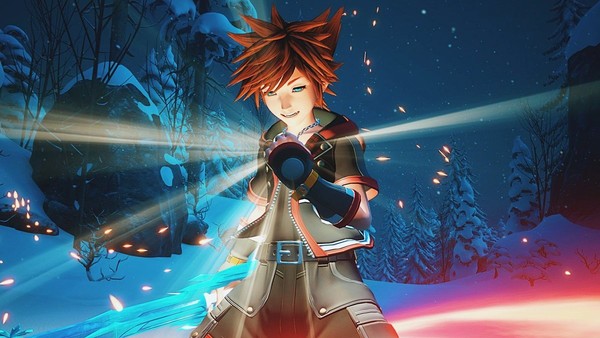
As someone who has played and enjoyed the first two Kingdom Hearts, this one was disappointing. But perhaps it's because I only played the first two that I "just don't get this one". For that, I say, why should I fork out for multiple consoles to play this convoluted farce out in its entirety?*
That is unfortunately Kingdom Heart III's inherent problem: unless you've played all the spin-offs, card games, titles with divisions in their names, you're gonna have a bad time.
Even the recap at the start of this one will make little sense to an outsider, besides "Spot the Disney/Square character".
Understandably, reviewers of this game are going to be mostly fans, so of course they're going to heap praise on a game that took the best part of six years to come out.
Yet there are even fans saying this is too much... well, too Kingdom Hearts-y. One convoluted plot to rule them all, as it were, that it is off-putting to anyone that isn't the head of a KH wiki page.
A title too proud to dumb itself down for anyone who hasn't lapped up every title, Kingdom Hearts III won't bring any new fans to the series.
*Yes, I know they're now part of various 1.5 and 2.8 collections, but they weren't always.
1. Alpha Protocol

Prior to Fallout: New Vegas, Obsidian had a fairly decent track record. Alpha Protocol only came out five months before the post-apocalyptic smash, but fell by the wayside due to critical response.
Sitting in the average score bracket, many considered Alpha Protocol to be a bit of a misfire. With clunky controls and a somewhat broken skill system, it overshadowed any decent merits the game tried to fall back on.
Which, frankly, is a shame.
Scratch the dirt off and there's a gem under there. Admittedly a rough cut gem, but a gem nonetheless. A solid spy adventure more grounded than a Metal Gear Solid game, with a heavy narrative and multiple routes you can take.
Some would call it ambitious and dismiss it, but don't listen to those naysayers. There's a multi-branching story and decent customer charactisation model to get stuck into, where you could easily lose a good few hours trying to master it.
Sure, you won't get slick controls or action that you'd see in a Splinter Cell either, but there's some fun to be had in Alpha Protocol.