10 Video Games That Totally Lied To Get Your Money

Bullsh*t isn't bullsh*t unless you can prove it. Unfortunately for these games, we can...

Sometimes developers and publishers aren€™t exactly truthful when it comes to telling us about their upcoming games. They might overhype what the experience will bring or exaggerate about the features and it€™s not uncommon for critical information to be held back or taken out of context to suit marketing needs. This is not a situation isolated within the gaming industry either. It is pretty much exactly how marketing works; you can€™t expect trailers or adverts to tell you how mediocre a game is - instead they are always going to be shown in the absolute best light in order to grab your attention and get you lay down your cash. Very occasionally though you will come across a company who cross the line; they are no longer simply embellishing the truth, but instead trying to purposely mislead you. Publishers might make particular references to features that were never actually planned to be included, Peter Molyneux and his constant over-promising regarding series such as Fable. A game that was originally slated to be a living world, where trees would grow as you progressed and the choices you made would profoundly affect the world, turned out to be a by-the-book RPG where you could pick up face-scars after being slashed for the first time. Heck, they might even go so far as use footage that in no way correlates to what the final product will actually look like, a prime example being Killzone 2. Guerrilla Games showed off amazing trailers for their new title, which promptly blew everyone€™s minds thanks to the cutting edge graphics and brilliant animation. However, it turned out Killzone 2 wasn€™t running on a PlayStation 3, but rather a much more powerful computer than greatly increased its performance. This article counts down the 10 worst offenders from the industry, the times when publishers or developers let players down by breaking promises and maliciously misleading them. Remember though that not all of the entries will be terrible games, in fact some are excellent €“ but they were ultimately sold to us with the full knowledge that they were not what they were supposed to be.

10. Too Human

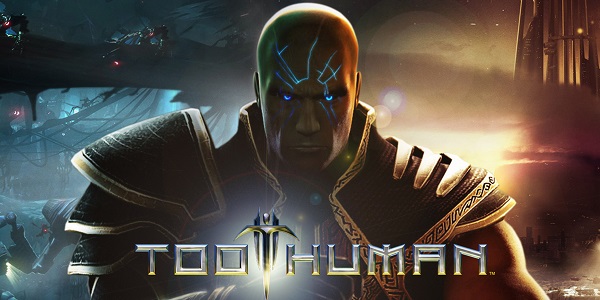
Silicon Knights first announced Too Human in 1999, stating that it was an action RPG that would revolutionise the genre. Fusing together Norse mythology with a futuristic sci-fi setting the title would bring about the next step in game storytelling, and not only that €“ Denis Dyack also promised innovative combat and a brilliant new camera system that would allow for slick gameplay. Although we didn€™t really hear about it again until 2005 many people were optimistic. After all. these were the guys who had brought us Eternal Darkness on the GameCube, which produced such a stunning atmosphere and driven story. So needless to say, anticipation was high. Instead Silicon Knights brought us a game that felt outdated. The cinematics were poor, hindering the plot rather than adding to it in any significant way. The combat system was incredibly fiddly; using the analogue stick to control fighting actions just really didn€™t work. Because of this the game had a stupid camera system that automatically locked onto enemies rather than allowing you to control it manually, leading to many instances of looking at things you really didn€™t want to focus on. Even more annoyingly for those who might have enjoyed the experience is the fact that you won€™t ever get the answers to the many questions raised within the plot thanks to the cliffhanger at the end. You're left never quite knowing how the story would have concluded, which is probably the price the developers paid for failing to reach their own lofty ideals.

9. Ryse: Son Of Rome

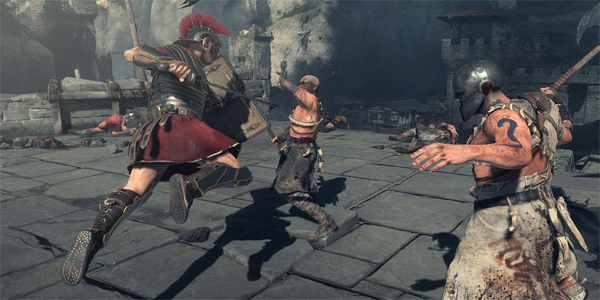
It€™s always wise to not get your hopes up too much in regards to launch titles. While they can be spectacular and serve to show exactly why you need to buy a particular console, think The Legend of Zelda, Super Mario Bros. and Halo, they can also be a massive let down that leave you wondering why you spent hundreds of pounds on that new piece of hardware. So when Crytek announced that they were working on Ryse as a launch game for the Xbox One people tried not to get too excited. Things soon started to look very promising. Trailers showed beautifully advanced graphics, compelling action orientated gameplay and a deep story. The developers said the combat would be meaningful and complex. To show off the potential of the Xbox One they would not simply revert to shallow button bashing. Unfortunately it turned out that Ryse just couldn€™t deliver. A bland plot that didn€™t properly invest in the setting left you feeling largely underwhelmed; the visuals, while certainly impressive for a console, were far from revolutionary. But more important the combat and gameplay was simply dull. The repetitive use of QTEs that focus only on time just make you feel as if you are watching a journey unfold rather than taking an active role in it. Crytek has essentially created a £50 tech demo rather than a compelling game.

8. Resident Evil 5

The Resident Evil series has a tradition of newer games evolving from older entries, as the developers seek to make a game that isn€™t just better but introduces new features and ideas to improve upon the franchise. So it was normal service when producer Jun Takeuchi announced made a number of promises about the latest instalment. These ranged from a change in gameplay mechanics from Resident Evil 4 to brand new elements that would have an effect on your character. Intense heat and light would lead to mirages, blurred vision and disorientation after long-term exposure. According to Takeuchi, this would mean players would have to adjust their tactics and how they play the game, adding more depth and realism to the overall experience. Yet when the Resident Evil 5 finally released in 2009 some players felt incredibly let down. While it was polished and generally well received it did not include the features that the producer had previously talked about €“ both the light and heat systems were missing, with the game featuring much simpler gameplay than initially announced. Even more disappointingly though the controls had been lifted straight from the previous title, rather than improving it had stood still in almost every respect. And don't get us started on Sheva's pants-on-head ridiculous AI, but that's a task for another article.

7. Red Steel

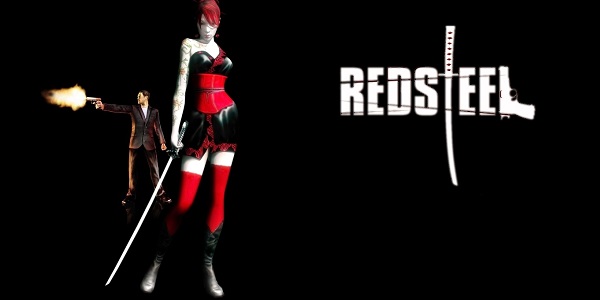
Ubisoft€™s Red Steel was supposed to allow gamers to do something they had always wanted to do since they were kids €“ take the role of a samurai warrior who is a master of sword fighting. The Nintendo Wii seemed to be the perfect console for this with its motion controls, and the developer promised unprecedented control over both the sword and gun in Red Steel, allowing you to feel as if you really were wielding a deadly weapon. As you might have guessed, the game simply did not allow players to be Jedi€™s in training. The Wii Remote just couldn€™t translate movement that accurately to the console €“ instead players would wave the control around while the character on screen performed one of a small number of pre-set moves. Needless to say, all the wannabe Shoguns were furious. Although you can€™t blame Ubisoft for the limitations of the Nintendo Wii they have to take responsibility for lying to customers. They must have known that direct control €“ as they spoke about before release €“ was not possible, but they continued to mislead players over how the game would be played in order to make it appear more exciting and attract more sales.

6. Star Wars: The Force Unleashed

The Force Unleashed promised so much when it was first revealed. LucasArts set it up as the first game that would truly put you in the place of a Jedi. You would have all the force powers of a master in their prime able take on hordes of enemies. The developers also put much effort into letting fans know about how it would redefine physics engines by having an ultra-realistic world. Most importantly though it would fulfil the wish of every Star Wars fan by including incredible lightsaber duels. What became clear after you had bought the game however was that many of those features were highly exaggerated. The gameplay was a repetitive hack and slash fest that didn€™t exactly leave you feeling like an all-powerful Jedi. Force powers were not essential and could be largely ignored while boss battles were disappointing. The story itself also introduced several problems, with one of the main issues being why you had incredibly strong powers that allowed you to pull down an entire Star Destroyer but struggled to force push a couple of Stormtroopers off a ledge. The biggest let down though had to be the broken promise of the innovative physics engine. LucasArts hadn€™t created a system to allow every character and item to interact uniquely with the world €“ granted, it did allow for the environment to be affected by your actions but not in the way the developers had stated; leaving you with an underwhelming title that couldn€™t live up to the hype.

5. Air Raid 3

Air Raid 3 was a flight combat game that released in 2009 for the PlayStation 2. It was a fairly terrible game that only released in Australia and Europe, produced by Phoenix Games, a studio who are now famous for creating shovelware for a variety of consoles. They€™ve been known to bend the truth somewhat with the information they put on their box art and game descriptions but their biggest con has to be Air Raid 3. The lie used to get you to buy the game here isn€™t some fancy trailers or misleading descriptions, it€™s the title of the game. It implies that it is the third part in a series or franchise. This is important because terrible games generally do not get sequels. A product will either have to be well-received, a commercial success or at least seen to have done something right for it to continue. Therefore if you see Air Raid 3 in a shop you might assume that it has to be at least a decent, because at least the series has seen two previous entries. It's only logical, right? That isn€™t so; this stand-alone product doesn€™t have any predecessors, direct or otherwise. Sure there have been games with €œAir Raid€ in the title in the past but they weren€™t made by the same people or set in the same world. It€™s simply an awful game that has been named in such a way to confuse and mislead customers.

4. Brütal Legend

2009€™s Brutal Legend was Tim Schafer€™s attempt at creating a musical adventure game. From the outset it was clear that it had been influenced from great rock and heavy metal artists, and everything we heard about the game told us about the beat €˜em up gameplay, the voice talent from the likes of Lemmy and Ozzy Osbourne and a brilliant soundtrack. It had many fans waiting patiently from release, because if there€™s one thing Schafer does well its adventure games. Alas even though many of the trailers focused solely on the action orientated third-person combat the final game did contain many elements that surprised players. As you progress through it becomes clear that Brutal Legend is part real-time strategy. After several hours of what players were expecting, suddenly a tower defence strategy element appeared and took up a considerable portion of the entire quest. There had hardly been any mention of the RTS elements before release €“ it just kind of throws them at you part way through. So instead of the adventure game many people had thought they were buying, they ended up with a crossover of two largely incompatible genres. Schafer blamed this on EA and Activision not wanting to put gamers off by including the term €œRTS€ on packaging. Surely if you think the strategy gameplay might put off players then don€™t include it at all, rather than lying about it being there in the first place. This doesn€™t stop Brutal Legend from being a solid title but it did mean many people didn€™t get the experience they were led to believe they would.

3. Tiger Woods PGA Tour 09

Sprucing up trailers so that they look better than the actual game itself is a common practice. In fact, many advertisements won€™t include any actual gameplay footage at all and will rely on pre-rendered CGI. While not exactly a welcoming practice at least these videos contain warnings that the action shown may not be representative of the final product. However EA doesn€™t always feel the need to include such warnings, instead focusing on trying to trick gamers into thinking a title looks much better than it really is. The prime example is Tiger Woods €™09. When it was due for release ads started appearing on television for the Wii version, with Tiger seen using a Wii Remote to control his golfer€™s swing while footage of the game played behind him. What EA failed to mention was that the gameplay was actually from the Xbox 360 version and not anywhere near representative of what the Wii version looked like. This wasn€™t just them showing off the best available video of the game, they made it look like this was being played directly on the Wii by having Tiger use the Wii controllers throughout. The Advertising Standards Agency took exception to this and ordered EA not to show the advert again after viewers complained, going someway to proving how EA had purposely lied to you to get your money.

2. Aliens: Colonial Marines

Sega and Gearbox€™s Aliens game was meant to be an ode to the series, taking fans back to a universe that they love, expanding the story and revealing new information. It was marketed as a true sequel and many were expecting big things. Yet the end product was far from what was initially stated by the publisher €“ rather than a story-driven entry into the Alien franchise, we got an uninspired first-person shooter that did more harm than good. It was universally panned for its poor gameplay, terrible plot that contradicted with the rest of the series, and a large number of bugs which could see the one-time terrifying Xenomorphs innocuously waddle past you. But hey, bad games get released, right? Not every release can reach the same heights at Ocarina of Time or The Last of Us. It€™s taken for granted in the gaming industry that a good number of titles just won€™t be any good. So the fact that Gearbox put out this dreadful game instead of the promised entry isn€™t the great big exploitation it might be. What is though is that they, along with Sega, continually showed trailers that misled gamers. They showed incredibly advanced enemy A.I. along with sophisticated lighting effects and high-resolution textures, and all we absent from the end product. Projects will often go through different phases during development where different assets and effects are added or removed, but the usual thing is for such videos to contain disclaimers or notes that this is an early build and is subject to change. But Gearbox and Sega didn€™t do that and continued to put out footage that was completely unrepresentative of Aliens: Colonial Marines. All in an attempt to get you to buy a game that didn€™t exist in that form. In fact they did it to such an extent much so that the Advertising Standards Agency upheld complaints against them.

1. Mass Effect 3

The Mass Effect series has been one of the best of the previous generation. All three games took RPG elements and combined them with an action packed third-person shooter to create a stunning franchise where you really do feel as if you're part of a huge inhabited universe that's full of life. All three games have been largely excellent but the third entry did, in many people€™s views, betray the fans. From the very beginning Mass Effect was planned to be a trilogy. Over the course of development and in between releases BioWare made it known that the choices you make in each game won€™t just affect that title but carry over into the entire series. We were sold the promise of a deeply personal journey where everything you do can have an effect on the world. We bought into it because it worked and BioWare delivered on their promise €“ carrying over your save data file was something most people loved, as you truly felt the story was unfolding in a way unique to you. Yet the third instalment broke that promise in the worst possible way. Let us remind you that BioWare specifically stated that your actions throughout all three entries would shape the outcome, with staff members repeatedly making it clear that each ending would be different according to how you played the game. Clearly, this isn€™t what happened €“ instead we got three essentially identical endings that simply swapped the colour of explosions. You could have watched one ending and swapped differently tinted sun glasses and gotten the same effect. This is not just a case of fans being upset that the outcome wasn€™t the ending they had envisioned. They were rightly distressed because the time they had invested in the game came to nothing; you never got to see how your choices affected the galaxy or how your actions changed the lives of your companions.

In this post: 
Mass Effect
 
Posted On: 
Contributor
Contributor

A sport, gaming and fiction enthusiast, I particularly enjoy Formula 1, rugby, tennis, athletics and football.