10 Ways Hideo Kojima Should Have Made Metal Gear Solid 5: Phantom Pain
How to bring Solid Snake back for the greatest David Hayter cameo of all time.
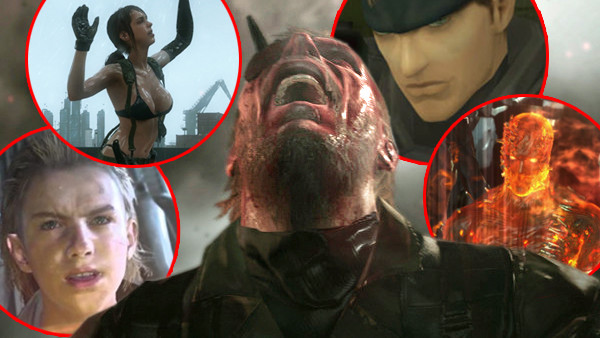
Of all the games that fans look at and ponder on why certain things happened or didn't pan out the way they thought, MGS V is right at the top of the pile. Releasing amidst tumultuous times, original series creator Hideo Kojima had to unite his team under one vision for the sake of completing the most expensive and experimental instalment yet; one that was inevitably hampered by parent company Konami falling apart around him.
It resulted in a game that's easily the best-playing Metal Gear by quite a considerable margin, but one that takes a number of creative risks with plot and character elements that ultimately, don't completely pay off. Some aspects we'll get into were just plain unfinished, with pivotal scenes showed in trailers that the team literally ran out of time pulling together.
The Phantom Pain is still one of the greatest games of all time and an entry I ranked as the third best in the entire canon, but there are many things that should've gone another way, starting with...
10. Establish Skull Face As A Terrifying Villain

There's so much wasted potential in the Skull Face character. Introduced mysteriously in Ground Zeroes, all of us assumed his charred face was indicative of Kojima revealing he was a previously established character - possibly Volgin, or even Major Zero.
In reality, it was revealed he was an agent for Zero who'd grown to despise Big Boss, someone who was forever helping 'build the legend' of the perfect soldier, but was never getting any of the credit. We learned that he'd always been present across Boss' rise to dominance in the likes of Peace Walker, cleaning up after him, even killing for him to get across the notion that the former Naked Snake was indeed some powerful, reputable force on the battlefield.
However, almost none of this was brought up or used effectively. The long car ride you have with him where he dictates his 'evil plan' and mostly stares you down, has no buildup in terms of motivation or Boss dealing with the fact there's been someone watching over him this whole time.
We were too preoccupied in wondering how the hell he was controlling a skyscraper-sized mech that could drop in from space to worry about anything else, and that was a misstep. Even if players hadn't completed Ground Zeroes and didn't know about the horrific rape scenes that Skull Face forces Paz and Chico to partake in, that side of his character should've surfaced as an additional motivation to see him brought to justice.
Ask yourself: Based entirely on what's in cutscenes and essential dialogue from The Phantom Pain, what is Skull Face's character, and why is he the bad guy?
9. Do Quiet's Motivations & Her Romance Properly

It's only when you look into some of the game's deleted audio that you find evidence of Boss and Quiet's relationship having more than a hint of romance or genuine sexual attraction - outside of Quiet dangling her boobs in his face, that is.

In the game, the two meet and have this strangely stilted, 'mutual respect' thing going on, but outside of triggering the terribly executed scene where Quiet strips off in the rain (ending with the two of them assuming a very intimate pose), it doesn't feed into anything outside of her sacrificing herself for you at the very end.
Even the idea that the two of them are supposed to be an item only comes through one line of dialogue ("She's in love with the legend"), or the way Boss looks to care about her after she almost dies during the Mother Base infection. It's so close to connoting the age-old phrase from MGS 1 about whether "Love can bloom, even on a battlefield", but stays too wide of the mark.
When all's said and done, we know Quiet's dialogue is hampered by the vocal chord parasites restricting her English language use, but she opens up to Code Talker later in the game. Why not have more tapes/cutscenes where we hear her motivations being broken down in conversations with him, where genuinely struggles to decide whether what she's doing is right?
It would certainly have been more palatable than Code Talker rambling on about the minutia of his research for hours on end.
8. Explain The Man On Fire Effectively
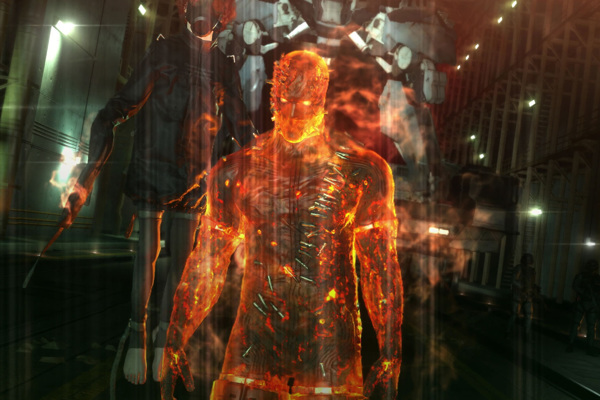
It's weird when most of us are okay with a man being made of hornets helping the Allies to victory in World War 2, but a dude throwing fireballs is just too much, but... it is.
Whilst The Pain can mostly be hand-waved away as a parasitic infection rewiring his biological makeup, The Man on Fire's explanation is that he's actually Colonel Volgin from MGS 3, who was so !*$% annoyed when he lost to Naked Snake, that this passion fused with Psycho Mantis' latent power and formed an entity of pure fury.
I mean... sure, but even if we go with that - which is explained in cassette tapes, not by Volgin himself - it's a stretch at best. MGS always has some sort of science-y explanation for its madness, even if it boils down to nanomachines. Honestly, considering we're told that the piece of shrapnel in Venom's head will cause hallucinations, I fully expected a re-run of The Man on Fire's scenes - or anything ridiculous like the flying, flaming Moby Dick - to get played back, Fight Club-style, where we see what was really happening.
Instead, we just have to buy this origin story, which even if you can, leads to a terrible final confrontation where the Man on Fire is dealt with in a quick battle and then a short cutscene - all without Snake remarking on ANY of it.
A little "What the hell?!" goes a long way, you know.
7. Lose The Near-Mute Snake
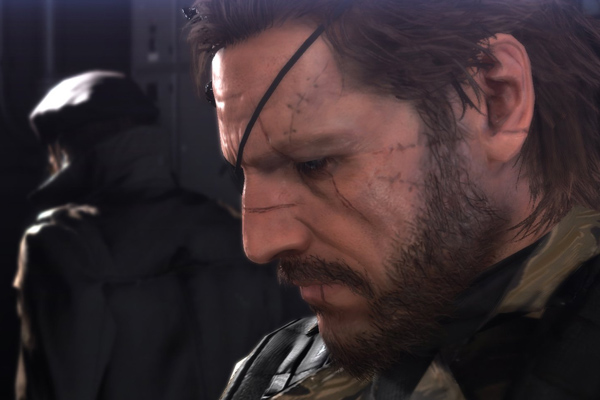
So let's get onto one of the biggest creative changes that'll never sit right with fans; losing David Hayter as the voice of Snake. It's not that Kiefer Sutherland does a bad job (in fact if you scour the unused voice files, he actually had a ton more to say), but that Kojima wanted to 'tell a different kind of story' than what we're used to.
To that end, Hayter wasn't even considered for the role he'd had for almost two decades (which we later found out, has lead to some bad blood between him and Kojima, for good reason), as Venom's role in the story was essentially to play out as a soulless clone of Big Boss himself. It works better in retrospect once you know the full picture, but is still jarring when you're 1. Used to Big Boss being a world-weary soldier with plenty to say, and 2. Expecting basic communication between him and whoever's in the room.
The version of Venom is more just a cog in the story than a character (which is almost the point), but for every time there's a pronounced pause as characters continue to keep talking and Boss refrains from speaking up or even really emoting, it feels weird, to say the least.
6. Show The Downfall Of Big Boss

I've done a full, three-part breakdown of everything that would've contributed to Boss' downfall in a past article on every cut piece of content, but sufficed to say it's one of the biggest omissions of the entire game.
In the run-up to release, we repeatedly saw images of Boss in a spiralling mental state, be it kneeling in a village following some harrowing event as he screamed in agony or distress, covering his face in the ashes of his fallen comrades, or even being completely soaked in blood, yet not seeming to care.
Trailers talked about how this game was the "missing link" between the hero Big Boss we knew from Snake Eater/Peace Walker, and the megalomaniacal warlord we'd kill in the original MSX Metal Gear. Thus, fans expected to see something that would trigger this supposed 'downfall', but it never materialised.
The scene in the village was removed, and although the ash scene comes after the infection at Mother Base, it doesn't seem to effect Boss whatsoever afterwards. The overly serious speech he gives about his soldiers' deaths feels out of place, and by the end of the game, the reveal that the real Big Boss was never affected by these actions means we have nothing to connect the dots as to why either of them ended up changing so much.
Fans have argued that the 'real' fall comes in Peace Walker as Boss establishes Mother Base as a nuclear superpower, but that's not what was advertised, and that's not what we got here.
5. What Happened To Ocelot?
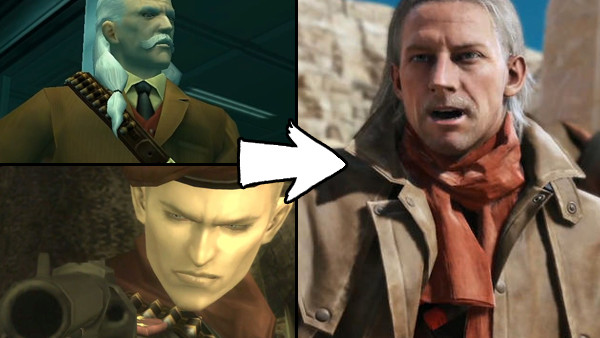
Personally I didn't have a huge problem with Ocelot changing tact and ostensibly being a far nicer, more approachable and less conniving presence than the other games, but I chalked it up to him forever switching sides, playing multiple people off against each other at once. Y'know, the whole 'final credits, epilogue conversation that reveals true intentions' switcheroo.
I assumed there was going to be some big twist later in the game that would once again shatter his allegiances, but the version we got was a helper character. Nothing more, nothing less.
In a new interview with Metal Gear Informer, voice actor Troy Baker opened up about this, saying Kojima would get very stern-faced in the recording booth if Baker slipped into any persona reminiscent of the older performances from Patric Zimmerman and Josh Keaton.
At some point you have to draw a line under it all as a writer and determine if you're venturing so far away from a given character, that it isn't really be that personality anymore.
Why, when you've got Miller already on-hand and set up as a helper, wasn't he the more easy-going guy, which would've left Ocelot as a financial benefactor who was necessary to running Mother Base, but who nobody really trusted?
4. Modifiers When Replaying Missions
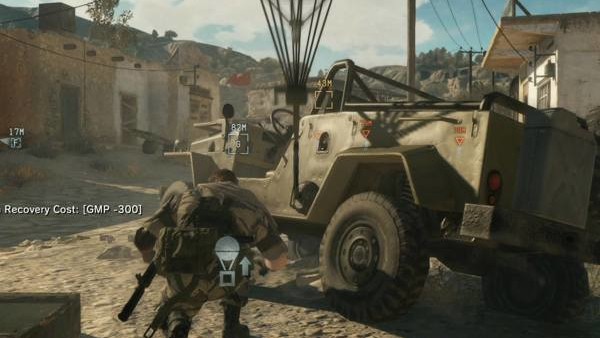
One of the sad facts of life is that we may never see another Metal Gear, and it's not that we need more original story necessarily, but we'll never get more levels and environments to use Phantom Pain's exquisite game engine on.
Seriously, the gameplay loop of Poké-managing your troops, clearing outposts, watching cutscenes, collecting weapons and items, drinking in the story - I put 300 hours into it overall, and I still want more. Thing is - they hinted at a way to give it to us.
Optional modifiers pop up towards the close of the game, where suddenly - like Peace Walker - you're forced to replay levels with different parameters attached such as taking more damage or, my favourite, the 'Subsistence' variant. These forced you to procure all items and weapons on-site, really showing off just how elegant and effective the stealth in MGS V truly is.
It gave the two or three missions you could play in this mode a whole new feel and lease of life, and is something that should've been available for the entire game. Yes, you can strip down Snake's equipment and send him in with almost nothing, but you'll still have a few items, and it doesn't have the same effect.
We should've had a bank of modifiers available on game's end, just for the sake of providing an excuse to re-run some already-spectacular levels with a new challenge.
3. Make The Battle Gear Playable
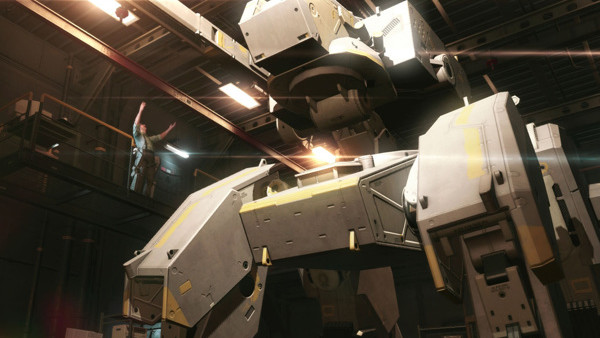
This one just reeks of Phantom Pain being kicked out the door unfinished, as midway through the story you'll get a cutscene where Huey remarks that he can build a custom Metal Gear, just for you. The scene finishes with him saying to keep checking back across your runtime, the assumption being that it'll be available eventually.
Nope.
Instead, this was another thing that was cut, as tutorial voice files from Ocelot dictate him describing to Boss what the mech would've done.
It's not that we needed another buddy alongside the four we got, but having a cutscene that includes dialogue saying "This thing will be ready soon!", only for it be resigned to a prop in your base and a menu prompt for your optional soldier missions is just confusing.
2. Tie Up Eli/Liquid Snake's Arc
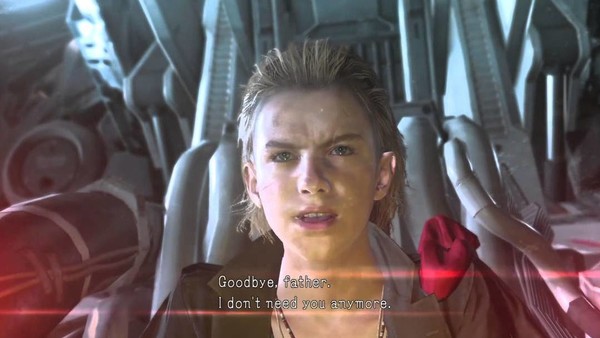
I'm going full fan service for these last two points, but when you think on how much Kojima loves this stuff in say, MGS 4, we had a bunch of obvious plot points that by all means should have been in The Phantom Pain.
As it stands, MGS V ends with Eli/future Liquid disappearing with the devastating Sahelanthropus mech, only for us to assume he bides his time for 20 years until the Shadow Moses incident. It just doesn't add up - and that's entirely because the Episode 51 cutscene that features the battle to render the machine useless, isn't in the game whatsoever.
Resigned to the bonus disc as an unfinished cutscene, it at least sets up the gap in the timeline by noting that Mantis and a wounded Liquid leave the battlefield together to grow up, before deciding they want another crack at world domination.
For the game's events though, Eli pops up as the leader of some child soldiers, features a brilliant voice performance from Piers Stubbs, gets mentioned in regards to being Boss' son, steals Metal Gear and leaves. There's no motivation, no idea of who he really is - it's more fan service that he's in there at all, if his final scene's dangling plot thread wasn't so strong that it ends up hanging around the game's neck.
We needed Episode 51 and we needed something that cemented Eli's feelings for Boss, even at this early stage. Instead, he comes across as a kid doing their best Liquid Snake impression, before leaving and being forgotten about - even by Ocelot, who's supposedly going to reconnect with him in the near future to set up the other games.
1. Bring Back Solid Snake For The Ultimate Ending Scene

We all thought it was going to happen, and you have to believe Kojima and co. had it in mind at one point too; the return of David Hayter after all the Kiefer Sutherland nonsense, and one last look at Solid Snake for the fans.
The stage was already set in the game's final cutscene. We'd seen Mother Base become Outer Heaven as the whole 'dual Bosses' thing played out; Venom was righteously annoyed, and is last seen walking out his main equipment room to set up shop and await the Snake that was sent to kill him.
So picture it: We know Snake enters Outer Heaven from the sea - we've seen as much in the MSX original, and it was already mimicked in MGS 1/Twin Snakes. Again, you have that scene of Snake swimming through the water, you have the score rising underneath him as all the memories of those early games come flooding back. A much younger, greener Solid Snake climbs out the water, removes his breathing equipment and looks straight at the camera. He says - in David Hayter's voice - "Kept you waiting, huh?"
Cut to black:
"Thank you for playing,Metal Gear Solid, 1987-2015"
That, is how this all should have ended.
What do you think? Would you change anything else, and what do you think of my suggestions? Let me know in the comments below!