10 Ways The Sega Dreamcast Was Ahead Of Its Time
The future belongs to those who believe in the power of their Dreamcast.
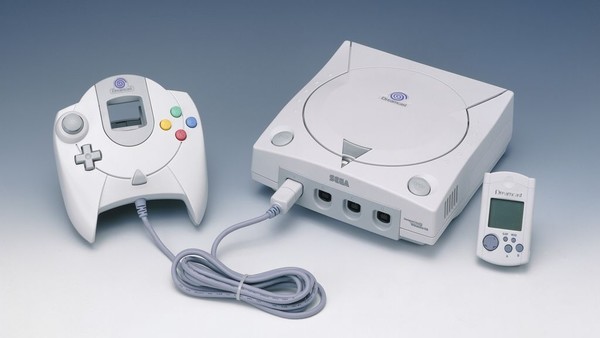
Developer GyroVorbis' retro-styled RPG Elysian Shadows raised a number of eyebrows when the company announced it was to be released on the now-defunct Dreamcast. For those of us still mourning the loss of one of gaming's greatest underachievers, it came as welcome news.
There's a hint of irony to GyroVorbis' decision; whilst Elysian Shadows is a game with one eye very much on the past, the Dreamcast was a console whose ethos firmly looked to the future. The whole philosophy of the machine was to take the industry into new and exciting realms. Some of them were online. Others were on fishing boats. It promised everything, and more.
Sega sold their seductively-sleek console on the back of its heightened capabilities, but unfortunately, people just weren't prepared for the majority of its pioneering ideas.
The Dreamcast jumped the gun on the other fifth-generation consoles, and ultimately Sega's impatience was the console's downfall. But its death was not in vain. When the precocious white-box fell by the wayside, the blueprints for the entire future of the industry were left in its wake.
Sega's last console was ahead of its time in so many ways, one needs their fingers to count them. Now, I only have ten, so that's as far as I got. See if you can read through them all whilst fighting the urge to dig out your VMUs and GD-ROM.
10. Incredibly Detailed Open-Worlds - Shenmue

Whatever Shenmue's objective quality, no-one can argue it wasn't revolutionary.
Yu Suzuki dubbed his baby the first 'FREE' title, which in case you're wondering, stands for 'Fully Reactive Eyes Entertainment', and yes, that sounds like nonsense because it is nonsense. Shenmue's suburban sprawl, Yokosuka, was the most meticulously realised environment ever seen.
Details were painstakingly precise; every building was accessible, every shop was fully stocked, every location felt tangibly real. It was unlike anything that had preceded it.
But it was an oxymoron: through being fascinatingly authentic, it also managed to be acutely boring. It was a sandbox without any sand. There simply wasn't enough for the player to do in the highly-detailed world, and the bulk of Shenmue's action took the form of forklift truck racing. And looking for sailors.
Sega made little return on their $45 million investment, but whilst it crippled the company, the industry profited. A world as intricately realised as Shenmue's seemed lightyears away before Suzuki showed it was a possibility. Further still, its narrative heavy, action-light nature paved the way for a whole new breed of engrossing interactive fiction.
Oh, and quick time events. It gave us those. Cheers for that.
Every revolution has its casualties.
9. Console-Linking Portable Devices - The VMU

Remember when you used to buy a new memory card for your PS1 and think: "I wish this was also a Tamagotchi"?
No? Well, Sega did.
A simple, interchangeable slab of raw disk space wasn't enough for the Japanese company, and with a capricious mis-regard for established industry standards, Sega unveiled the Visual Memory Unit. Was it a memory card? Was it a games device? Was it a needless way to justify its exorbitant price? It was all of these things and more.
Thanks to its diddy LCD display, the VMU often doubled up as an in-game aid, from displaying the usually hidden health monitor in Resident Evil, to signalling the presence of a nearby charm in Skies of Arcadia. Many games simply opted to show a cute animation. Still, it was better than nothing.
The VMU's capabilities didn't stop there. Some games - notably Sonic Adventure - provided mini-games which could be saved to the memory unit and played on the go. It was truly space-age stuff.
Truthfully, many of these portable playthings were utter rubbish. But Sega were forging into a brave new world; such connectivity between consoles and other devices had never been seen before on such a system-wide scale (the N64's Transfer Pak was limited to only a handful of games).
Sega were committed to the idea - inexplicably, it was also possible to link the Dreamcast to certain NeoGeo Pocket titles. However, like all the console's pioneering ideas, widespread connectivity failed because the technology just wasn't ready for it, and a whole generation of Chaos were left to expire in the drawers of Dreamcast owners.
8. PAL 60 Resolutions

In 1995, the Schengen Area was introduced allowing freedom of movement across the EU. For gamers, however, Europe remained a land with distinct borders - until the Dreamcast arrived three years later.
The difference between the North American/Japanese NTSC television standard and Europe's PAL format meant that whilst European broadcasts could display in a higher-quality (625 lines of resolution compared with 525, the latter leading to that distinctly 'fuzzy' look for early-'90s American TV), they ran at a lower frame-rate to compensate. This seemed a fair trade-off as far as television was concerned, but for games, it was a different story.
American and Japanese games converted for use on PAL systems rarely took advantage of the additional pixel real estate - often processing power simply did not allow it - and as a result European gamers were stuck with titles that were both slower than their foreign counterparts, and blighted by thick black borders on the frontiers of the screen.
Europeans wondered what all the fuss was about over Sonic the Hedgehog; the supposedly electric erinaceinae was practically plodding. Games of its ilk, sold on a gasconade of superslick celerity, seldom played with any pace on the continent.
Sega redressed the balance, the Dreamcast becoming the first console to allow blighted PAL players to finally experience games in the same way as their NTSC cousins - and sans borders. By giving European gamers a 60 Hz mode, the Dreamcast finally allowed the blue blaze to zip across their screens at his intended velocity
7. Full Analogue Triggers - The Controller

Let's get one thing clear straight away: the Dreamcast controller is not good. Whilst it's not abject on the level of the Atari Jaguar pad, nor the original Xbox's sasquatch-sized hunk of plastic (which seemingly took the Dreamcast's effort, painted it black, and somehow made it worse), it's not exactly a bastion of ergonomic excellence.
Its circular shape makes one feel as though they are driving a bus, whilst the analogue stick is as slippy as a greasy toad on a banana skin. And that wire coming out the bottom? All the Gods wept (yes, I know it is because of the VMU, and yes, I know it can be clipped to the top).
So how exactly is the Dreamcast's much-maligned pad "ahead of its time"?
The answer comes in the form of two triggers hidden on its inverse. Few things feel as satisfying as depressing the spongy buttons to their limit. Tactile titillation aside, the triggers, being fully analogue, revolutionised the way some of the industry's most enduring genres were controlled.
Acceleration in driving sims was shifted from face-buttons to a perfectly precise throttle on the prong's underside. Shooting people now felt all the more realistic, and therefore all the more fun. In-game cameras were given the perfect dolly. Magellan-like, the Dreamcast controller remapped the gaming landscape.
Admittedly, the controller wasn't the first to feature trigger buttons of this ilk: the design was largely based on Sega's own 3D pad released alongside NiGHTs three years earlier. However, the Dreamcast made them standard. Three years later, the Xbox's clone-controller made them universal.
6. GD-ROMs

After surveying the piracy rampant on Sony's PlayStation console, Sega knew they needed a better solution than a basic CD-ROM. Their answer was a proprietary format: the GD-ROM.
The custom disks were not readily available to the public, thus eliminating software piracy entirely. Sega seemed to be onto a winner.
The road to hell is paved with good intentions, however. Whilst would-be copiers were foiled by the patent format, Sega neglected to consider that pirates could simply pack most of the console's games onto standard CD-ROMs. People being the massive b*stards they are, did not hesitate to do just that.
Not only did the GD-ROM fail in its sole purpose of combating bootleggers, it also caused a swathe of laser failures (not to mention the Dreamcast's distinctive raspy loading noise). Sony's decision to go with DVDs for the PS2 was disastrous for the Dreamcast; not only did the format offer eight times the capacity, but it also transformed the rival machine into a budget DVD player - a selling point which far outweighed its inferior launch library.
GD-ROMs were an unmitigated failure, but "ahead-of-its-time" doesn't always equate to "good". Sega were the first company to combat the issue of piracy head-on without resorting to a prohibitive cartridge format, and theirs was a move that'd later be imitated by Nintendo for the GameCube's Lilliputian discs as well as the Wii and Wii U's proprietary optical media.
Sega had to take the greatest hit of all to teach the rest of the industry how to fight piracy. Only the dead see the end of the war (cheers, Plato).
5. The Idea Of A Console Dashboard

Gamers used to have a relatively simple life. Stick the cartridge in the slot, press the power button, and away you go: instant gaming gratification.
Before CD-based consoles, starting your machine up sans-cartridge would produce nothing more than a black screen. Consoles had just one function: to play games, and nothing more. It was an easier time. Some would argue it was also a better time.
Much as the PS2 would later serve as an adequate budget DVD player, its predecessor acted as a surprisingly high-spec CD player. This, combined with the necessity to manage external memory cards, meant the console was one of the first to come equipped with a pre-game menu (listeners could even apply equaliser effects to their music).
Despite the PlayStation's blocky-grey menu being crucial, it was well-hidden - perhaps to force people to buy more memory cards. The Dreamcast took the idea to another level; its own start-up screen acted as the system's hub, where owners could manage save files, load games, play music, and adjust system settings such as the in-built clock (another first). It was even possible to change the background with a little VMU trickery-pokery
It was no coincidence that Microsoft's first entrant into the console market, the Xbox, was also the next to use the concept of a pre-game home screen; the company had played a key role in developing Sega's last effort.
As systems gradually evolved into multimedia platforms rather than mere games-mules, sophisticated menu screens became the norm - and they can trace their origins back to the Dreamcast's endearingly bouncy icons.
4. The Dreameye

After seeing a prototype PlayStation 2 at the 1999 Game Developers Conference, Richard Marks was struck with inspiration: a digital camera peripheral which could detect motion, allowing for highly interactive, motion-controlled games. What fun that would be, he mused (possibly: this is literary embellishment). Marks subsequently joined Sony to work on his pet project, the EyeToy. Little did he know, Sega had already beaten him to the punch.
Before the EyeToy was even a twinkle in Marks' eye, Sega's R&D had already conceptualised a virtually identical device, and in 1998 began to develop it proper. Originally devised as the Dreamcast's answer to the booming webcam industry, the 'Dreameye' began to acquire more lofty intentions than merely allowing teenagers to expose their particulars to one another (I presume they do that sort of thing).
Speaking at the camera's unveiling in Cannes, Sega of Japan's Takenori Fujishima alluded to the possibility of the Dreameye being fully embraced by Dreamcast games - "when the technology becomes more advanced." His thinking was that players would be able to use their pictures as skins, and furthermore play as themselves. Like the EyeToy, yeh?
As we know, technology did sufficiently advance to allow this. Unfortunately for Sega, their exit from the hardware market had long-since been written into video game folklore.
3. Voice Control

"Xbox on. Xbox ON. XBOX ON!!" *stands up and presses power button*
Is this a vaguely familiar scenario? It probably isn't because, let's face it, using voice commands is an exercise in futility akin to trying to tame a hippo. Though, large water-dwelling mammals probably respond more readily than half-baked hardware.
Any of you who have tried and repeatedly failed to perform even the most basic of tasks with just the power of speech can blame the idea on the Dreamcast. Had Sega's cutting-edge console survived its infancy, our frustrations with voice recognition could have occurred much sooner.
The Dreamcast's microphone was similar in execution to the N64's Voice Recognition Unit, neatly slotting into the controller's expansion slot. Unlike the Nintendo effort, Sega's mic had more ambitious intentions than a pet Pikachu and a painfully niche train simulator (Densha de Go! 64, check it out, it's the foremost title in the train announcement genre).
Originally developed for the frankly ludicrous Seaman (basically Hey You, Pikachu! with the yellow mouse substituted for a man-faced fish), the peripheral was set to be used in a whole range of titles, but its potential was cut short by the Dreamcast's early demise. In the end, it was compatible with just three published games.
A fourth - Propeller Arena - was due for release, but was hastily canned following 9/11. A game allowing players to command planes to fly into buildings was a definite no-no in 2001. The Dreamcast stopped production shortly afterwards, and games had to wait many years before they could be cooed by my mellifluous tones.
2. Motion Controls

The overriding theme from this list seems to be that, for all the Dreamcast was a thing of beauty, it nevertheless has a lot to answer for.
Nintendo's Wii was met with a widespread febrility hitherto unseen in the industry, but it courted much criticism from the 'hardcore' section of the video game audience, who accused the company of betraying their roots by focusing on universally accessible, 'casual' titles. Of course, the complaint was utter BS; Nintendo had carved out a vaunted reputation as the industry's innovators, and they weren't averse to taking a risk on a potentially divisive product.
Unfortunately for the frothing-fanboys, their misplaced rage was also misdirected; the motion-control gravy train had left the station long before Nintendo devised the Wii.
Eight years prior, Sega unleashed just what the gaming world had been waiting for: the Dreamcast fishing controller. As the name suggests, the peripheral was conceived largely with bass-bothering in mind, and the console had no shortage of angling action; no fewer than six (six!) fishing titles called the Dreamcast their home.
The applications of the controller were seemingly limited, but it harboured a hidden secret: primitive motion sensing capabilities. Aside from being used to fine-tune cast-offs, the secret sensors were also compatible with Soul Calibur's sword-swinging, as well as top-class racquet-riot Virtua Tennis - essentially turning the latter into a prototype Wii Tennis.
Playing tennis with a fishing rod. How can that not be considered avant garde?
1. Online Play

We might consider online gaming as a relatively modern phenomenon, but it's been around almost as long as the internet has been a thing - and it's been a thing about as long as games have been around.
University students were sharing games on local networks as far back as the '70s, as college dorms swapped the sickness of alcohol-fuelled shindigs for The Oregon Trail's frequent dysentery. As the name implies, Multi-User Dungeon (more commonly known as MUD1) took things a step further, allowing a whole group of players to adventure and die together without the need for a six-sided die.
The N64 was the first machine to allow four players to compete straight out of the box, but in 1996 anything more than that seemed a long, long way off. Widespread net play might as well have been a hover-car. Then, suddenly, the Dreamcast made it a reality.
Consoles had been able to connect to the internet before - the NES had its own modem, designed by Atari guru Nolan Bushnell - but none had ever allowed it on purchase before Sega's beautiful white box.
With a modem already in place under the hood, users could hook the Dreamcast up to a phone-line and start enjoying the bounteous pleasures of online gaming from day one (provided it was Chu Chu Rocket!).
Endearing as Sonic Team's mouse-shepherding puzzler was, it wasn't exactly the greatest advert for the exciting possibilities of online multiplayer. Phantasy Star Online, on the other hand, was - a game so far ahead of schedule in terms of industry expectations that it was ridiculous.
It's impossible to imagine the console scene without online gaming now; it's so ubiquitous that many games have abandoned the tradition of local multiplayer altogether. Apparently bringing people together means keeping them apart. The Dreamcast can claim responsibility for confining a whole generation of gamers firmly in their bedrooms.
Maybe it's for the best.
--
Eyes open and minds blown? Let us know in the comments what you make of the time-travelling Dreamcast!