10 Worst Things Video Games Made You Pay For
Taking microtransactions to a whole new level.

There was a time, not so very long ago, when video games actually arrived fully-formed on hefty cartridges (or disks). There was no prospect of releasing patches or fixes after the fact, and the released title was the final product. Because it had to be.
Today, the industry is rather different. It’s rare to find a AAA title that doesn’t launch with a day one patch, require bug-squashing updates or see a DLC expansion down the line. It’s certainly a positive that issues can be found and (relatively) easily fixed after the fact, but this also opens the door to microtransactions and the like.
The ease of adding content to established titles means more money-making opportunities for developers and publishers. While a lovingly crafted and substantial slice of DLC is often very eagerly received by fans of a given game, some of the sillier uses of the concept have not been.
Here are some of the most absurd things players have had to pay real money for.
10. Metro: Last Light: Ranger Mode - A Difficulty Setting As Paid DLC

Metro: Last
Light is an experience quite unlike any other. While gritty and gory FPS games
aren’t exactly thin on the ground, this 2013 sequel to Metro 2033 expanded on the
original’s success and dialled up its oppressive atmosphere even further still.
The Metro titles balance visceral shooting action with tense survival horror elements, and an extra mode is available in the second game to emphasize this to the fullest: Ranger Mode, in which the focus in on realism. In hardcore Ranger Mode, no HUD of any sort is available, the player is restricted with the amount of weapons they can carry, and a single hit will kill both the protagonist and his enemies.
This is an excellent addition, of course; the ultimate challenge for experts who want to truly test themselves. The only issue is, Ranger Mode released as a paid DLC, costing £3.99.
9. Metal Gear Survive - An Additional Save File

Metal Gear Survive is a curious series offshoot that launched in 2018. Emphasizing survival elements and lumpen zombie-esque opponents was the furthest thing from the fanbase’s desires, but the microtransaction-heavy business model was even more of a misfire.
The game employs a currency it calls SV coins, and while this sort of thing isn’t new to the series, there’s one specific use of these coins that really rankles. The player is stuck with the avatar they created.
Those wishing to try something new or even just use another save slot are out of luck, as the single save initially available is tied to the character.
You’ll have to pay for the privilege of creating an additional character, to the tune of 1,000 SV coins. This will cost a significant sum, as IGN reported at the time: $9.99 (around £7.50) was the going price for 1,150 SV coins on launch.
8. Harry Potter: Hogwarts Mystery - Specific Energy Costs

As Harry Potter fans will know, both Ron Weasley and Harry himself may have perished at the hands (or rather, tendrils) of the Devil’s Snare plant in the first instalment without Hermione Granger.
They were incredibly lucky that mobile title Harry Potter: Hogwarts Mystery wasn’t set during their time at the magical school, because it could certainly be time consuming to escape Devil’s Snare in that game. Time consuming or expensive.
Now, granted, it’s unfair to single out Hogwarts Mystery for its energy system (pay to purchase more energy or wait until it recharges before playing any more), because these systems are common in free-to-play mobile titles.
However, the sheer infamous brutality of this particular moment is without parallel.
The encounter with the Devil’s Snare occurs early in the game, and ‘tugging at the vines’ is an energy-intensive process. The visual of your avatar struggling in the midst of the deadly plant is one that will stick with you, and though more activities were later added that help to replenish this energy (such as interacting with in-game pets), this is one of the most worst examples of forcing microtransactions around.
7. Dungeon Keeper Mobile - Resetting Timers To Play Again

Many long-time strategy fans will fondly remember 1997’s Dungeon Keeper. This PC management title Cast the player as an unseen Keeper, developing and maintaining an underground lair with the help of recruited minions. The goal was to wage war against the Heroes of the surface world, who invade in an attempt to stop your evil plans.
2014 mobile ‘reboot’ Dungeon Keeper, with EA at the helm, also proved to be a microtransaction machine.
The crux of the classic series gameplay was in tunnelling through the earth to make empty space, which was claimed by Imps tile by tile and then could be built upon. Not only does the mobile iteration employ a strict timer for such digging, but the Horned Reaper advisor even makes insulting jokes to the player about a ‘polarizing’ system that will remove said time requirement (real-life cash, of course).
Peter Molyneux, producer of the original title, put it best in an interview with the BBC on the mobile title’s launch in 2014: “This is ridiculous. I just want to make a dungeon. I don't want to schedule it on my alarm clock for six days to come back for a block to be chipped."
6. The Elder Scrolls IV: Oblivion - Horse Armor

Now, there’s no denying that the Elder Scrolls series can offer tremendous value for money. These are deep, involved and beloved RPGs, which players can tackle again and again using different classes, builds, general approaches, roleplay characters and so on.
The issue is, as many times as the games (The Elder Scrolls V: Skyrim in particular) have been rereleased and repackaged, there’s always a money-making opportunity lurking below the surface. In the case of The Elder Scrolls IV: Oblivion, the much-snarked-on Horse Armor comes to mind.
This notorious and meme-worthy addition to the game was one of the first examples of microtransactions in gaming, a stylish cosmetic that, per USGamer, was priced at 200 Microsoft Points (around $2.50).
The Horse Armor’s release caused a bit of a sensation, in the worst of ways. The term 'Horse Armor' is still sometimes used to describe frivolous and/or pricey DLC.
5. Asura’s Wrath - The Ending
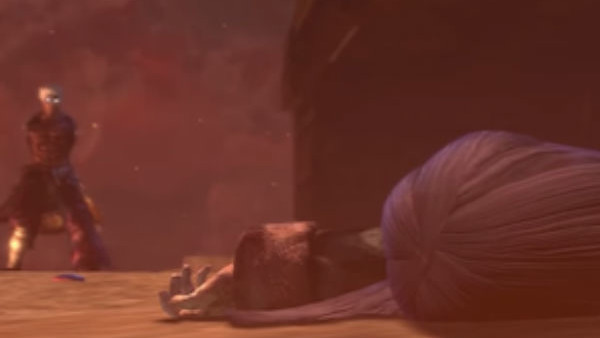
Of course,
it’s very common for games to offer multiple endings, and this tends to be a
very good thing. It encouraging more playthroughs, making different decisions
and following alternate paths. Asura’s Wrath, however, offered a ‘true’ ending
that was locked behind a paywall.
The non-ending of the base game, a cliffhanger in which Vlitra may have survived Asura’s brutal pummelling of its core, didn’t satiate fans’ hunger for answers. No sequel for the action title would come along to right this wrong, but DLC shenanigans did instead.
The Episode IV: Nirvana package consists of four episodes: Episode 19: The One Behind The Curtain, Episode 20: The Key to Victory, Episode 21: A Rude Awakening and Episode 22: A Life Well Lived. To see Asura embrace his mortality 870 million years later (now that’s an ending), the Nirvana DLC had to be bought. While the extra content is a thrilling, worthy ride, hiding a satisfying ending within it was a shady move.
4. Mega Man 9 - A Difficulty Setting

As the Mega
Man series’ legions of fans will tell you, these games are nothing if not
challenging. The mainline series proudly offers some dastardly level design,
insta-death pits amundo, hard as nails bosses (and boss gauntlets). Still, it’s
exactly these traits that keep fans coming back for more.
2008’s Mega Man 9 was a digital homage to the classic games, offering a retro Blue Bomber experience with just a few mod-cons to mark it out as a contemporary release. It was well received and truly evokes the spirit of the original games, but those wanting an additional challenge would have to open their wallets again.
Post-launch, it was supported by budget DLC packages, offering simply extra modes. Along with Endless Attack, a sort of survival mode on an endless stage, both Hero Mode and Superhero Mode were added, at 100 Wii Points each (per Nintendo Life) or equivalent. Challenges and Ranking are unavailable in these modes, which dial up the intensity of the ‘enemy distribution.’
Again, these options added a lot of replay value for many, but something so simple may not have warranted a price tag at all.
3. Resident Evil 2 Remake - Pay To Avoid Playing

Those who have been gaming for some years will probably wistfully recall a time when they played for much longer than they can now. What with adult responsibilities, it really can be hard to rack up the hours like we used to.
For some publishers and developers, this sad fact represents another money-making opportunity. The ‘paying for instant access to things that can be unlocked through normal play’ concept appeals to the impulsive, the time-strapped and the impatient, and 2019’s Resident Evil 2 remake offers the opportunity to do just that.
The $4.99 (per Polygon) All-In Game Rewards Unlock DLC gives instant gratification in the form of the outfits, artwork and “The Tofu Survivor” and “The Fourth Survivor” scenarios, that are ohtherwise the game’s unlockable extras.
This is all very well, but the original Resident Evil 2 couldn’t have dreamed of offering such an option, and the experience really revolves around tackling those scenarios and enjoying the experience for different perspectives.
2. Super Smash Bros. Ultimate - Doom Slayer... As A Costume
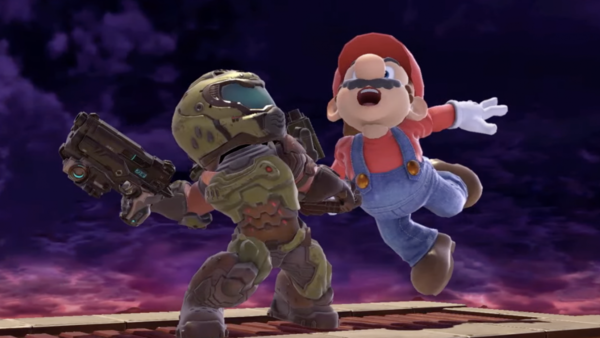
Super Smash
Bros. Ultimate boasts one of the most incredible rosters in gaming history. Prior
to Super Smash Bros. Brawl, it was difficult to image Mario, Sonic the Hedgehog and Solid Snake appearing
together, but Ultimate has thrown an enormous range of eclectic characters into
the mix besides.
From Hero of Dragon Quest fame to Minecraft Steve, Banjo-Kazooie and Kingdom Heart’s Sora, the game’s last DLC fighter, Sakurai and his team really seemed to pull out all the stops.
Nevertheless, to extend the cast even further, some popular picks were reduce to mere Mii Costumes.
Ahead of Sora’s reveal, many seemed to expect the iconic Doom Slayer to be released as a fully-fledged fighter. This furore continued before several of the previous fighter reveals, and Doom Slayer’s reveal as a Mii Gunner outfit proved devastating for many fans, perhaps more so than previous Mii Costumes.
It’s available at a budget price, but it’s just not what so many ambitious fans were hoping for.
1. Mario Kart Tour - A Full-Priced Game As "DLC"

Again, free-to-play mobile titles are hardly strangers to the microtransaction concept, but this particular transaction certainly had nothing micro about it.
Mario Kart Tour is an admirable effort to bring Mario Kart to the mobile market, but its controls take some time to get to grips with and it clearly revels in its free-to-play status. The game has seen a huge number of content drops since its initial launch in 2019, with a number of time-limited tour events offering special characters, such as Mario (Santa) for the 2021 Holiday tour.
A familiar gacha system is firmly in place, but premium-priced content packs are also available to help your luck along and get your hands on the more popular characters. Infamously, the Diddy Kong Pack arrived in October of 2019, offering the iconic little monkey, a Quick Ticket and a windfall of Rubies.
The egregious thing about this? Per Eurogamer, it was priced at £38.99.
This, as many pointed out on the pack’s release, is more than a copy of Mario Kart 8 Deluxe on Nintendo Switch would set fans back, a move there’s simply no justification for.