10 Worst Video Game Marketing Campaigns Ever
Sending a gunman into a crowded building? What could go wrong?!

It's been said for generations that fortune favours the bold. So, when a video game company wants to promote their work, churning out a few trailers and posters isn’t going to cut the mustard. To sell their brand effectively, things need to get a little crazy.
Unconventional promotions can look silly or counter-productive, but they can also be directly responsible for a game's success. The "Third Place" commercials for PS2 were weird as hell, but they were also extremely memorable. To promote Battlefield 3, tanks stormed through London with the game's title branded on the vehicles. Although these strategies could've backfired, they helped to win consumers over.
However, it must be emphasised that outlandish endorsements and guerrilla marketing doesn't always pay off. In fact, they can come across as desperate, exploitive, stupid, or downright offensive.
Some of these advertising methods went so badly, they jeopardised the very product they were trying to sell. Sometimes, it's better for the marketing team to do absolutely nothing, rather than relying on these laughably harebrained schemes. Here are the ten worst marketing campaigns ever put out for video games.
10. Threatening A Crowd With A Fake Gun - Splinter Cell: Conviction

Splinter Cell has a reputation for being the ultimate stealth shooter. The franchise's hero, Sam Fisher, is such a skilled assassin, he can slip into any facility and kill his target, without anyone being the wiser until it's too late.
So, when Splinter Cell Conviction was nearing release, Ubisoft decided to run a promotion in New Zealand that was sure to leave an impression (but not the one they hoped for). Basically, the company hired an actor to walk into a crowded bar in Auckland before threatening the locals with a fake firearm.
Unsurprisingly, the situation played out exactly as you'd imagine. Instead of the customers saying, "Oh, look. This gentleman is clearly promoting a video game," everyone hid under tables or ran out of the establishment in terror.
Worse still, the actor portraying the gunman was nearly shot on sight by the police.
Even though some marketing campaigns only seem dumb in hindsight, it's bewildering how no one involved in this stunt thought this was a bad idea. I mean, how did they think locals would react upon seeing a man wielding a realistic gun prop?
9. Give Your Kid A Dumb Name For $10,000 - Turok Evolution

Few gaming companies embrace marketing gimmicks like Acclaim. (At least they did before they went defunct.) So when Turok Evolution was about to hit shelves, Acclaim started brainstorming ways to promote the latest sequel in the dinosaur-hunting franchise.
So what did they come up with? Organise a giant T-Rex puppet marching around a large city? Organise a lottery to win a free copy of the game? Make Turok Evolution actually good?
But the publisher didn't go with any of these ideas. According to Acclaim spokesman, Alan Lewis, they needed to do something unprecedented, since it was tough to leave a lasting impression in the growing gaming market.
With that in mind, the company decided to offer $10,000 in saving bonds to the first parents who named their baby Turok.
For some reason, none of the higher-ups at Acclaim thought this was a bad idea, despite the fact "Turok" is a really stupid name. What do you think is going to happen to the kid who's not only named after a video game character, but named after really crappy game? He's going to be bullied for life!
Considering Acclaim went bankrupt shortly after, it was clear the company was out of money as well as ideas.
8. Mock Every Female On Earth - The Legend Of Zelda: Ocarina Of Time

Nintendo have always been protective of their properties, not just to maintain their branding, but to ensure their products don't upset potential consumers.
Although the Japanese company takes precautions with renowned franchises like Super Mario and Pokemon, they are extra careful while handling The Legend of Zelda. When it was pointed out that several elements in the games had religious connotations, Nintendo had them scrubbed out upon the re-releases to avoid offending anyone of faith.
Now, because The Legend of Zelda: Ocarina of Time was touted as Nintendo 64's crowning title, even before it was released, you'd assume Nintendo would ensure the promotions were handled delicately.
Instead, commercials for the sequel concluded with the tagline, "Wilst thou get the girl... or play like one?" With that one single line, the promoters basically mocked half the planet! 72 complains were made to the Independent Television Commission in the hopes the ad would be pulled (which proved unsuccessful).
The negativity towards the commercial didn't seem to affect sales, since Ocarina of Time became the best-selling title of 1998. Nevertheless, it was foolish to use such a juvenile slogan to advertise the N64's most prominent game.
7. Encourage Speeding (And Crashing) Your Car - Burnout 2: Point Of Impact

The Burnout franchise has always separated itself from other racers by focusing more on dangerous speeds and aggressive driving. But Burnout's greatest selling point has got to be the crashing. By smashing other vehicles off the road, your car will receive a speed boost, allowing it to zoom across the course and perform more devastating collisions. The fact that each takedown is shown in slo-mo makes racing all the more exhilarating.
Because the series was synonymous with dangerous driving, Acclaim took this into consideration while selling Burnout 2: Point of Impact.
To bring mass awareness to this follow-up, the company announced they would pay for any speeding ticket in the UK on October 11th 2002, which was the game's launch date.
At first, this sounded like a clever thinking-out-of-the-box idea. By paying traffic fines, Acclaim would help drivers with their fees and advertise their product in one go.
However, the British government encouraged Acclaim to redact their ploy, since they were concerned it would encourage reckless driving. Not wanting to get involved in a potential lawsuit, the company took the deal off the table several days later.
6. What's In The Box? - Watch Dogs

As Watch Dogs centres around greyhat hacker, Ubisoft felt obligated to incorporate this element into their marketing.
In a promotional ad, we see customers being pranked by a fake retailer who seemingly manipulates their phones to hack lights, cars, and ATM machines.
Even though this was a genius way to market the game, not all of Ubisoft's ideas were met with the same level of positivity.
That same year, they decided to generate some buzz for Watch Dogs by placing a copy of the game, a baseball cap and a beanie inside a black safe, before sending it to news outlet Ninemsn's office in Australia. The package came with a letter, which informed the reader to check their voicemail, which would explain how to unlock the safe door.
Rather than following the instructions, employees tried to open the lock themselves, which caused the safe to start beeping. Fearing there was an explosive inside, the office was evacuated and the bomb squad was called in. The crew moved the safe to the building's basement before opening it, revealing the harmless swag bag within.
Bizarrely, Watch Dogs now has a reputation for having one of the best and worst video game campaigns ever.
5. Grave Concerns - Shadow Man: 2econd Coming
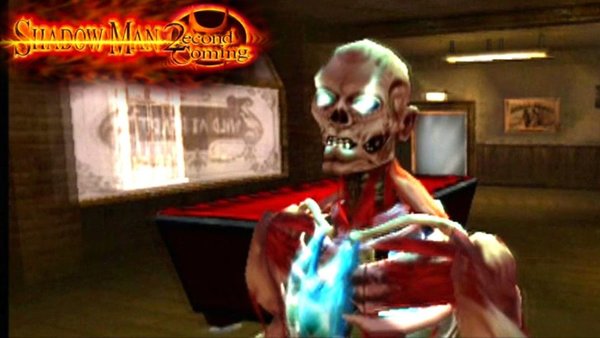
With Acclaim landing on our list for the third time, it’s apparent these guys aren’t the best at promoting their work, are they?
Now, the most important part of a promotion is to ensure potential buyers knows a product exists. So, when Acclaim was about to release Shadow Man: 2econd Coming, they needed to slap images of the sequel in places where everybody could see them, such as bus stops, subways, and, y'know, walls.
Due to Shadow Man's morbid premise, the developers thought it was logical to promote the sequel in a specific environment - cemeteries. This strategy, which was called deadvertising, involved paying participants to place a billboard of 2econd Coming on their relatives' gravestones. (Because that sounds like a disturbing sketch from Black Mirror, it must be emphasised this was an actual business decision made by a once-prominent gaming publisher.)
What's worse is that Acclaim came across as insensitive and out-of-touch when they suggested their campaign benefited poor families, who struggled with funeral costs. Their comments sparked such an outrage from the Church of England, Acclaim abandoned their campaign entirely.
Ironically, Shadow Man 2's bungled stunt generated more attention than the game itself.
4. Put Out A Hit On Your Friends (With Insulting Descriptors) - Hitman: Absolution
When a video game property revolves around an assassin, promoters have to be extra careful if they wish to market it in a creative way.
Sadly, IO Interactive didn't think about then when releasing the Hitman: Absolution teaser, which depicted our titular assassin showering a group of latex-garbed nuns with bullets. The trailer was criticised for its misogynistic and sexual connotations, forcing the game's director, Tore Blystad, to apologise.
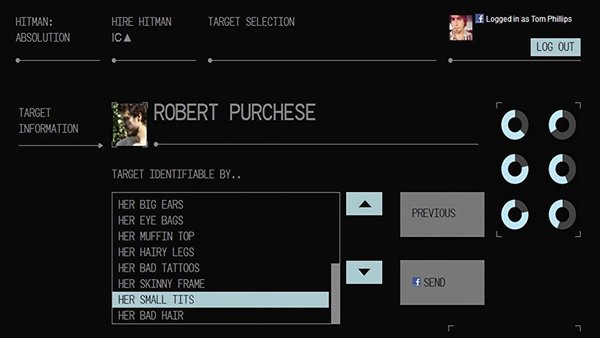
Although Blystad insisted his work was never meant to offend anyone, Absolution created a greater controversy the very same year! Two weeks after the Hitman sequel was released, IO Interactive released an app, allowing users to figuratively hire Agent 47 to assassinate their Facebook friends.
Not only was this a stupid idea, it was unnecessarily mean-spirited. The app encouraged cyber-bullying, since customers could identify their target by selecting pre-programmed phrases, like "his eye bags," "bad tattoos," or "his tiny penis".
Recognising the psychological harm the app could cause, IO Interactive agreed to remove the feature from the App Store the same day it launched. Even though Hitman: Absolution did well commercially and critically, its impossible to think of without remembering how abominably it was advertised.
3. Goat Of War - God Of War II

The original God of War was an instant hit due to its inventive action, epic boss battles, and expansive lore. Of course, it was the over-the-top bloodshed that allowed GoW to secure its legacy in the gaming world.
In order to promote the sequel, Sony held an Athenian-themed media event, which featured scantily clad women and an actor dressed as the series' protagonist, Kratos.
Unfortunately, everything was overshadowed by the party's centrepiece - a dead goat. Although this farm animal was supposed to represent a sacrifice to the Greek gods, many thought it was in poor taste.
But when the Daily Mail learned of the event, Sony's little misfire became the most controversial gaming story of the year. The British newspaper heavily embellished details of the get-together, erroneously stating the goat was freshly decapitated, and attendees were expected to pull out the creature's organs.
Due to inaccurate stories like this, anti-video gamer campaigner, Keith Vaz, demanded consumers to boycott Sony products.
Sony eventually made a statement to confirm the God of War II event was nowhere near as depraved as initially reported. However, they owned up, saying the inclusion of a deceased goat was still "in poor taste".
2. Scattering "Zombie" Body Parts Around A Major City - Resident Evil 5

For the launch of Resident Evil 5, Monument PR created a zombie-oriented scavenger hunt, where the winner would be rewarded with a trip to Africa. For the contest, participants had to find props, which resembled human body parts, in a specific section of London.
Even though these "limbs" were from a mannequin, they looked convincing, since they were drenched in blood and pieces of chicken liver.
Now, you might be wondering, "Couldn't the props be mistaken for real dismembered limbs?"
Yes. That's exactly what happened.
Several people, who were oblivious of the scavenger hunt, stumbled upon these disembodied appendages, which urged them to call the police. Participants asked random people on the street if they had seen "dead body parts", which scared the hell out of them and probably convinced them there was a serial killer on the loose!
What's worse is that several props, including a head, two torsos, and half a dozen limbs weren't accounted for by the time the scavenger hunt wrapped up! For all we know, some poor sod is going to stumble upon these disembodied limbs tomorrow and get the fright of their life!
In hindsight, it's obvious the scavenger hunt is the dumbest thing to come out of Resident Evil 5 (apart from the sequence where Chris Redfield punches a boulder).
1. Changing A Console's Entire Release Plan Last Minute - Sega Saturn

It's easy to see why the Sega Saturn is intertwined with the word "failure", considering it was discontinued after only three years on the market. But the console wasn't let down by bad games or technical limitations. It died out because of a promotional screw-up.
When it launched in Japan, the Saturn sold very well, mainly because of how Virtua Fighter was ported so successfully on the system.
Although the Saturn was set for a global release in September 1995, Sega of Japan brought the launch forward by four months to avoid competing with Sony's Playstation. Because gamers are always eager to get their hands on the latest console, the early release of the Saturn sounded like a dream come true.
But the way Sega went about this decision was disastrous.
On May 11th 1995, Sega of America CEO, Tom Kalinske, announced at E3 the Saturn was available that day, and the company had already shipped 30,000 units to Toys "R" Us, Walmart, and other stores. Retailers were furious by this last-minute change, since they had no time to adjust their stocks. Some retailers like KB Toys were so upset by Sega's incompetence, they refused to sell the Saturn altogether.
Considering the system only had six games available, it was all the more reason why the Saturn should've stuck with its original release date.
This fiasco didn't just sink the Saturn - it left Sega with a reputation for outright incompetence, which it maintained until they abandoned the console business in 2001.