11 Mind-Blowing Facts You Didn't Know About Batman: Arkham
Arkham Asylum is nearly ten years old! What are the best facts about Rocksteady's series?
This August, Batman: Arkham Asylum will be ten - yes, ten - years old. No, I don't like it either, but time is a cruel mistress and though it may only seem like it was yesterday we were all playing the first game's demo over and over (and over) again, Batman: Arkham is a completely different beast in 2019. Sure, we've gone just over four years without another entry - seriously, what gives? - but there's no denying what a stunning achievement Rocksteady's series is.
In many ways, Arkham Asylum was the little Batman game that could. The studio only had one title to their name before they were handed the Batman license, and that almost never happened too, with Warner Bros. still in the thrall of the movie tie-in game craze and a Dark Knight title collapsing midway through development.
Instead of continuing that trend, Rocksteady dared to do different. Taking inspiration from the comics and the beloved animated series of the nineties, the studio fashioned their own version of Batman's world and placed their own stamp on the character, with their primary objective being to empower players as the Dark Knight - to effectively let them be the Bat.
It should probably go without saying that, with two sequels, a prequel, a new console generation and tie-in material aplenty, that there are plenty of fascinating facts that fans may not know about Arkham too. Here are the most mind-blowing ones of all...
11. It Took THREE YEARS For Fans To Find Arkham City's Last Easter Egg

After Rocksteady surprised everyone with the revelation that Arkham Asylum was hiding a secret room all along - one that teased the Arkham City sequel, no less - fans were prepared for the follow-up. They chronicled Easter eggs, riddles and story revelations that could have a part to play in an inevitable sequel, and when the Scarecrow lab boat was revealed just after release, everyone thought that was that.
Only, it wasn't.
Fans scoured the game far and wide searching for something - anything - that they could get their hands on. There were already an abundance of nods and winks to what would later become Arkham Knight, but Rocksteady maintained there were still things in the game that fans were yet to find.
Eventually, a full three years after Arkham City released, the final Easter egg was revealed. It was tied to Calendar Man all along, because even though fans had visited him on specific dates to get new dialogue, they hadn't visited him on Rocksteady's birthday. Doing so sparked dialogue that hinted at the events of Arkham Knight, the climax of Rocksteady's trilogy, and of the studio's development itself.
10. Mad Hatter Was Originally Meant To Appear In Arkham Asylum

It wouldn't be until Arkham City where Mad Hatter would make his triple-A debut, but he quickly became a staple of the franchise, following up his side mission with further challenges in Arkham Origins and in the Season of Infamy DLC in Arkham Knight.
Originally, though, Mad Hatter was meant to appear in the first Arkham game. Take Batman to the Botanical Garden and you'll be able to scan a riddle referencing the character (a tea-set placed in one of the locale's stealth sections), and it turns out that he was going to actually have a section dedicated to himself.
Early on in development, Rocksteady planned for the Hatter to take control of a maze designed to entertain children visiting the island, only with the intent of trapping Batman within it. The reason why it was cut was because writer Paul Dini reportedly couldn't find an organic way for the encounter to work in the story, leaving Batman's Lewis Carroll fanatic to bide his time until the sequel.
Still, a maze level along the lines of BTAS' If You're So Smart, Why Aren't You Rich? would've been brilliant. Here's hoping a maze makes its way to Arkham in the future.
9. From Asylum-Knight, Over 23 Other DC Heroes Are Referenced

From the very get-go, it became clear that Batman: Arkham Asylum had more to it than just the Dark Knight. The game referenced the Injustice Gang (a typical foil for the Justice League of America), and the decision to focus on a Batman at the peak of years seemed to indicate a rich and well-established universe. After all, if Barbara Gordon was Oracle that would mean The Killing Joke happened, and if that happened, then surely Babs would've been involved with either Task Force X or the Birds of Prey.
Aware of the obvious potential the series had to branch out into other DC properties (one that's still yet to be fully realised), Rocksteady upped the amount of Easter eggs on show in Arkham City by a ludicrous amount. The game referenced the cities of Metropolis and Keystone, thereby confirming the existence of Superman and the Flash, and WB Montreal followed suit in Arkham Origins, with the very first trailer opening with a box owned by Queen Industries, Green Arrow's own company.
Arkham Knight went even further. Bruce can take a message from Lex Luthor, and the Matter of Family DLC included Starro, the Justice League's first ever villain.
Martian Manhunter, Swamp Thing, the Question, Huntress and John Constantine were all referenced too, alongside countless other DC figures. Point being, there's a massive universe outside of Gotham, and one WB have to explore sooner or later.
8. Prometheus Was Cut From Batman: Arkham Knight

People tend to hold up Joker as Batman's polar opposite, but the real antithesis of the character is Prometheus. He's literally the anti Batman, with his parents having been killed by law enforcement at an early age, and him pursuing a life of villainy thereafter.
Prometheus was first referenced in Arkham Asylum and was fortunate enough to have his own character bio. He wasn't present at the Asylum at the time of the break-in, but it was clear he was active and that he had potential to be a major threat in the future.
Still, as time went on, Prometheus was still no closer to appearing in Arkham. He seemed an ideal fit for Arkham Origins' story of assassins, but it seems as though Rocksteady had him in mind for their Season of Infamy DLC instead. Of course, as those who have played said DLC will know, Prometheus didn't appear.
According to in-game files, both he and Black Mask were cut from the Season of Infamy. The latter showed up in the Red Hood DLC, but fans are still waiting for Prometheus' physical debut.
7. Arkham Asylum And Origins' Cancelled Enemy Types
If there was any criticism to level at Arkham's gameplay, it would be that it could occasionally err on the repetitive side. Sure, new enemy types were introduced with each entry, but sometimes things could start to feel a little same-y.
Whenever a new enemy was introduced, however, gameplay experienced a sudden jolt of unpredictability. First it was the knife-wielding guards in Asylum, then it was the shield and stun-rod thugs of Arkham City, and then the martial-artists of Arkham Origins. If you'd ever wondered what kind of enemies didn't make the grade though, then you'll be interested to learn that both Rocksteady and Montreal have unveiled several cancelled enemy types that were cut during development.
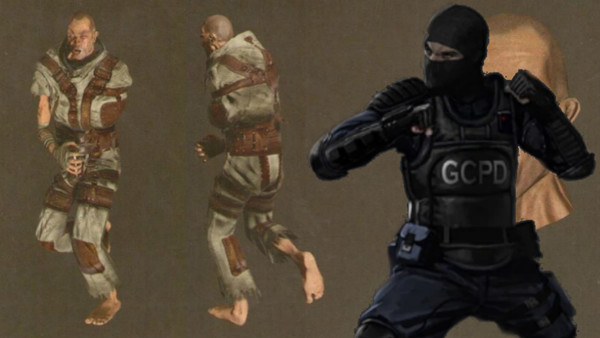
One of the more curious examples is the straightjacket thug that was planned to appear in Arkham Asylum. He would've behaved like the other insane enemy in the game but would've wielded a weapon too. He was eventually cut however, surviving only as a floating head in a jar in the Asylum's Intensive Treatment building.
Likewise, Arkham Origins developers WB Montreal planned to have a martial artist version of the GCPD and Anarky enemies. The latter featured in the E3 demo, but weren't present in the final game.
6. Arkham Asylum's Joker Almost Looked Completely Different
Although Rocksteady themselves should be praised for building the visual foundations of the Arkhamverse, another name that seemingly gets overlooked is Carlos D'Anda. D'Anda's art is all over Arkham Asylum, with the game having used his concept art in the various character bios present, and it's perhaps unsurprising that the artist went through various designs before settling on the ones seen in the finished product.
Take Harley Quinn for instance. Originally her design was based on a BDSM theme, before writer Paul Dini suggested Rocksteady lead with a nurse design instead. With that in mind, D'Anda also conceptualised a version of Joker dressed out in a lab coat, almost along the lines of the version seen in Batman R.I.P., which coincidentally released during Arkham Asylum's development.
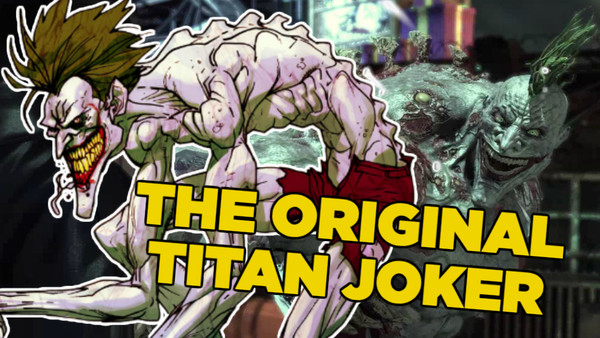
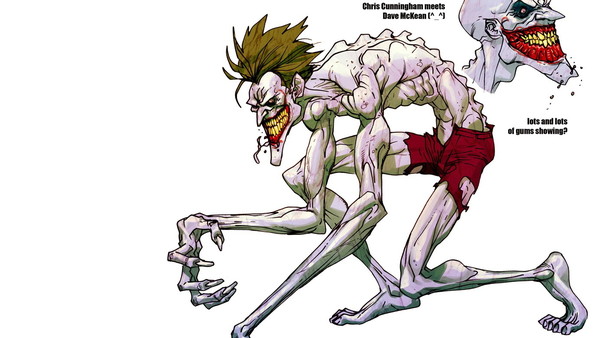
By far the biggest visual departure from the final product, however, was D'Anda's vision of Titan Joker. Love or hate Asylum's finale, there's no denying the muscle-bound, hulking version of the Clown Prince was both terrifying and imposing. Originally though, he could've been much scarier.
As detailed in D'Anda's art above, the original Titan Joker was far more skeletal than his final design. He would've also had his gums showing, making him look more like an apparition of Scarecrow's doing than one who'd been hopped up on a more extreme version of Bane's Venom.
5. Paul Dini's Contributions To The Arkhamverse Started Before Asylum
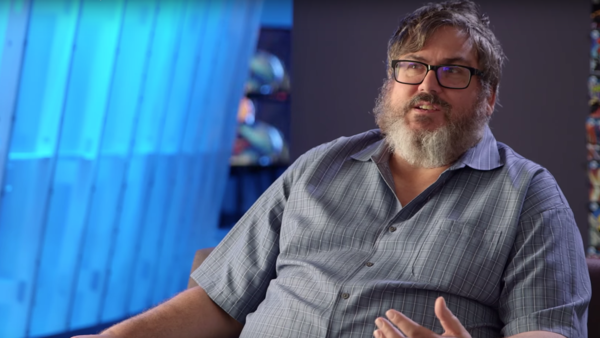
Although the Arkham series is very much Rocksteady's own baby, it owes a lot of its initial success to the work of Paul Dini. The writer was one of the key architects behind Batman: The Animated Series and it was he who laid the groundwork for the Arkhamverse as we know it today, not just in terms of his contributions to the stories of City and Asylum, but also in how BTAS inspired so many of Arkham's elements.
For starters, BTAS alums Kevin Conroy, Mark Hamill and Arleen Sorkin all appeared in Asylum. Their portrayals of Batman, Joker and Harley Quinn are all definitive, and they all stemmed from BTAS.
Likewise, although Rocksteady opted not to retain Dini's services for Arkham Knight (for the worse, one could argue), the writer still had a major part to play in fleshing out the rest of the Arkhamverse. He wrote tie-in material for Arkham City, the titular Phantasm of Mask of the Phantasm is referenced in Arkham Origins, and the whole plot thread from Arkham City involving Hush stealing Bruce's face stems from his underrated stint on Detective Comics and Streets of Gotham, which he was writing alongside the development of the first two Arkham titles.
It's a huge shame Dini didn't get to wrap up the threads he established in City, but his influence was still pivotal.
4. Arkham Knight Fixed One Of The New 52's Biggest Mistakes

Kate Kane's Batwoman may not make a physical appearance in any of the Arkham titles, but Batwoman fans were given an Easter egg to latch onto with Arkham Knight.
The third entry in Rocksteady's trilogy released about four years into DC's New 52 experiment. The whole thing was a needlessly controversial reboot, and one of its biggest controversies occurred on the main Batwoman title, when DC forbid creative duo Haden Blackman and J.H. Williams III's plan for Kane to marry longtime girlfriend Maggie Sawyer. Blackman and Williams soon left the title, and the story they had planned went untold. An appalling example of editorial interference if there ever was one.
Perhaps in a clap-back at DC's bonkers decision, if you head to Wayne Tower and listen to Wayne's voicemail you can hear a message left by Kate asking Bruce about his availability for her "engagement thing", a subtle reference to her upcoming marriage with Sawyer.
Will Batwoman and Maggie appear in a future Arkham title? One can only hope.
3. Troy Baker Is One Of The Only People To Voice Joker AND Batman
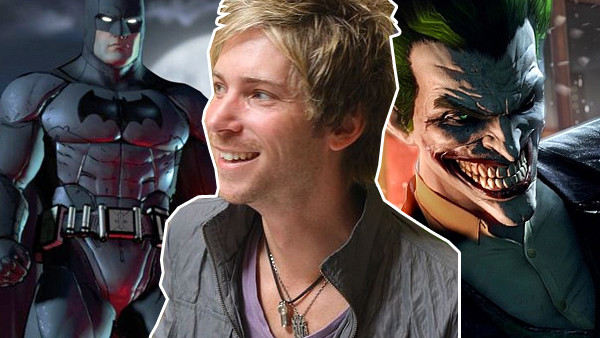
Although there once was a time where Nolan North played everyone and everything, it's Troy Baker who has that honour these days. He seems to be in pretty much every major release, and so it was somewhat inevitable when his paths crossed with the Arkham series in 2013's Origins prequel.
Baker had big shoes to fill in that game as he took on the part of the Clown Prince of Crime. He delivered a fantastic performance though, aided by an equally fantastic script from Corey May, Ryan Galletta and Dooma Wendschuh. He was great, but here's the thing - Baker had already played two roles in the Arkham series before in Arkham City as Two-Face and Robin.
That in itself makes for a unique filmography, but Baker followed up his appearance in Origins as the Joker with one in Telltale's Batman game as the Dark Knight himself.
How many other actors have played both the Caped Crusader and his arch rival? Only a couple - but Baker is also the only one to voice Batman, Joker, Two-Face and Robin.
2. A Suicide Squad Arkham Game Was THIS Close To Happening

It finally looks as though Warner Bros. Montreal are close to realising their next Arkham title, but for years it seemed as though the studio were left frustrated in development hell.
Arkham Origins' ending set up a Suicide Squad spin-off, or at least a title that would've utilised Task Force X in one form or another. They already had Deathstroke nailed to appear, CCH Pounder reprised her role as Amanda Waller from 2003's Justice League cartoon, and an animated spin-off centred around the premise called Assault on Arkham even released too.
But whatever became of Montreal's game? Given they're thought to be working on a sequel to Origins spotlighting the Court of Owls it should come as no surprise to hear it was binned off.
According to Kotaku's Jason Schreier, Montreal stopped working on Suicide Squad late 2016 to focus on a Damian Wayne game, which in turn seems to have fallen to the wayside. The title was meant to be co-op oriented, so here's hoping the studio figure out a way to make that feature work with their new Batman title - whenever it releases.
1. A Single Character In Arkham Knight Has As Many Polygons As All Of Arkham Asylum

Batman: Arkham Knight is one of the best looking games of the last generation. It was the first time Rocksteady moved onto Unreal Engine 4, and the amount of detail they managed to pack into their version of Gotham really shines through; it's a stunning achievement.
However, perhaps the most impressive thing about Arkham Knight is the level of detail on display. The character models for Batman, Harley Quinn and pretty much everyone that appears are all incredibly impressive, and given the game released a whole six years after Asylum did big advancements were always expected.
Perhaps not to the level it eventually ended up being though.
In the build up to Knight's release, Lead Character Artist Albert Feliu spoke to Game Informer (Via Push Square) and said that "one character is as big as the polygon count of Arkham Asylum, the whole environment."
That's an incredible upgrade, and one of the most fascinating tidbits about the Arkham series.
Watch Next
How Well Do You Remember Batman: Arkham Asylum?
