11 Most Disappointing Video Games Of 2016
Three words. You know which ones.
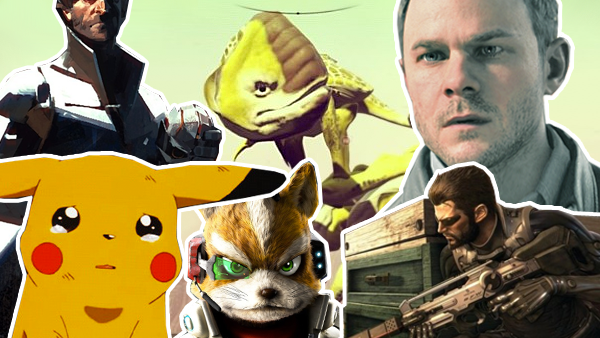
2016 has been a stinker of a year, unless you were a gamer. Thankfully, whilst many iconic superstars were popping off left, right and centre, the Coral Reef was dying and a mousse-haired reality TV star was taking office, gamers could surround themselves in the likes of Uncharted 4, Overwatch, DOOM, Inside and many more.
Indeed, it may have taken three years, but the gaming industry is finally firing on all cylinders, resulting in far more hits than misses across the board.
That said, when the overall spectrum of games is so stellar, it only serves to make the naff ones stick out that much more. And let's not forget, the hype around any given game these days borders on the ridiculous, and even so, which games didn't just fail to live up that expectation, but completely fell down as worthwhile experiences in of themselves?
--
11. Pokémon GO
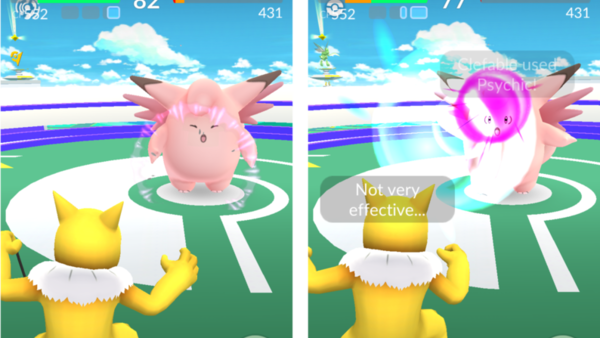
"Pokémon GO: 2016 - 2016"
Such will read the tombstone above Niantic's initially exemplary handheld title, as never before had we seen a mobile game have such a massive cultural impact. Everybody and their granny was attempting to 'catch em all', social circles were blossoming around real-world meet-up points and even small businesses were tying promotional offers into ever-expanding Pokédex totals.
The only poignant negative was a spotty 'tracking' feature; the mechanic that was supposed to help you locate Pokémon all around. In response, Niantic 'updated' the game, only to remove the feature altogether, thereby immediately crippling PoGo's playability.
To this day, Niantic are yet to implement a feature that accurately replicates the best of its original incarnation, and that serves to make Pokémon GO quite the ridiculous phenomenon: A game that shook the world and made millions, only to die off completely, all within a matter of weeks.
10. The Division
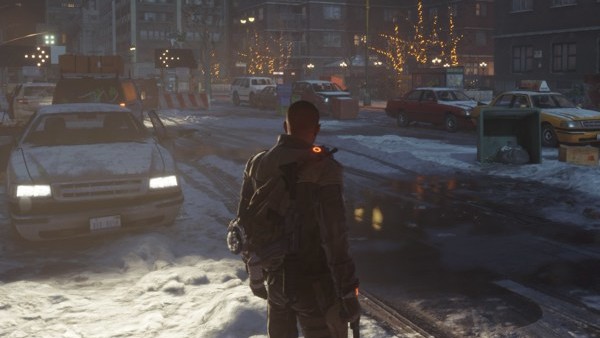
It's worth remembering that not every game on this list is irrevocably bad, merely that some didn't live up to the hype, or in other instances, misrepresentation and outright lying during a game's marketing sold consumers a product that didn't truly exist.
In The Division's case, Ubisoft showed off a version of its post-apocalyptic landscape back in 2014 that was absolutely stunning, a photo-realistic take on New York covered in snow that was also being gripped by a viral epidemic. Come launch and we were hit with a graphical downgrade, only to discover the game barely functioned as a single-player experience (get knocked down with no one to revive you and you're sent back to the start), and that the multiplayer-focussed Dark Zone was the standout defining feature.
Again, there was nothing inherently terrible about The Division - its mechanics and world were still serviceable enough to grant hours of enjoyment - but as as an execution on what we saw two years ago? 2016's incarnation was nowhere near.
9. STEEP
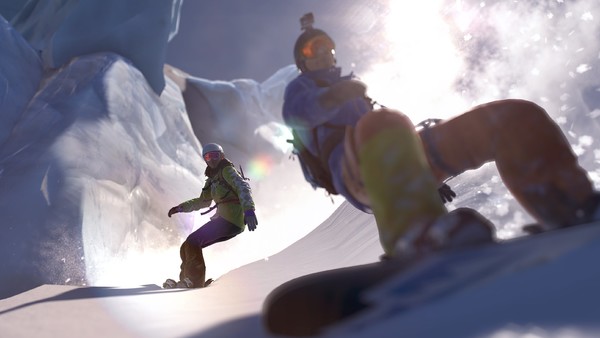
Maybe it's our fault. Maybe, after such a long period without a decent SSX game (because f**k whatever that characterless 2012 version was trying to be), we wanted STEEP to be something it could never live up to.
In fact, it must be said, like many Ubisoft games, there's nothing fundamentally broken or 'wrong' about STEEP. In fact, a la The Division, its basic mechanics are enjoyable enough for the first few hours - there's just nothing to keep you there for the long run.
In STEEP's case, developers Ubisoft Annecy have given it a bit of a tonal problem. One minute STEEP is a physics-based point-scorer, a Skate-style setup where just landing a huge trick is reward itself, then it's a 'quirky', 'kooky' costume-fest with goat heads and talking mountains telling you how majestic they are.
In the end, there's nothing in STEEP that'll keep you for the duration, and when it doesn't have a trick system geared towards replayability like SSX, there's little to recommend unless you find it for a third of what it's selling at right now.
8. Dishonored 2

Critics loved it - our own Ben loved it too - but man, I just could not get on board with Dishonored 2, and luckily, looking online, it seems quite a few others couldn't either.
See, there's something that feels fundamentally broken about this sequel that I swear wasn't prevalent in the original; broken enemy and NPC A.I.
You can barely go one minute without a random guard or pedestrian spotting you from across the map, or otherwise causing a ruckus when you're attempting to sleuth your way from place to place. The game attempts to compensate by giving you 'Dark Vision'; a power to see through walls to identify enemy patrol routes and vision cones, but unless you want to play through a constant sepia hue, it's not recommended.
Engaging with enemies (either voluntarily or as a result of being shouted at) quickly devolves into one-two combos of deflect and instant kill, resulting in many critics and players noting the game is more fun if you just go in wanting to cause as much carnage as possible.
That may be, but sword-fighting and gore-happy superpowers do not a good stealth game make, and it results in a game that feels constantly torn between two contrasting gameplay styles.
7. Star Fox Zero
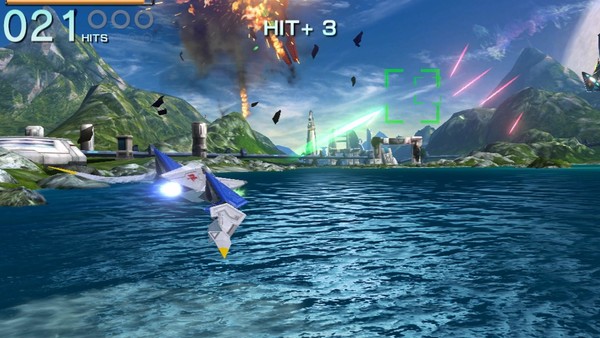
Speaking of deflating experiences, try playing Star Fox Zero.
After years and years (and years) of fans begging Nintendo for a proper home console Star Fox sequel (Assault was 2005), they eventually got it... to a fault.
Star Fox Zero arrived as a demonic hybrid of old and new-school design. Its aesthetic was routed in the N64 era, the polygonal, blocky ships surely being a charming inclusion to many 90s gamers, but the controls... well, they were awkwardly forced into accommodating Wii U functionality, putting aiming on the Touchpad itself, with no option to change to anything else.
You'd literally have to angle the Touchpad 'at' the screen and aim 'through' it to hit enemies on your TV, which is even more cumbersome than it sounds.
It comes to something when it's not the main instalment, but spin-off tower defence mini-game Star Fox Guard that endears itself to peoples' hearts in 2016, but that's just how monumentally naff Zero truly was.
6. Street Fighter V

The result of a major publisher putting money above all else, Capcom 'needed' a new Street Fighter to showcase - and be the main playable game - at their Capcom Pro Tour earlier this year.
As such, development was rushed and key features were omitted so the online vs. mode could be finished on time. Literally, the game didn't even launch with an offline versus option, something that's been a staple of the fighting genre for time immemorial.
The story was relegated to a patch months later, there were no tutorials or challenge modes to acclimatise to the new V-Skills, and even right now, fans are still waiting on the standard ladder-based Arcade mode being added.
Oh, and in case you need a reminder, Street Fighter V was released back in February.
5. Quantum Break

This... this one hurt.
Being the latest game from the masterminds behind Max Payne and Alan Wake, Quantum Break was supposed to be this 'innovative' new take on an action game, pairing the slow-motion gunplay the studio pioneered through Max Payne with a live-action TV show that'd tie in perfectly with Microsoft's new TV-focussed Xbox One.
Though... well, we all know how that particular selling point went down.
Still, Quantum Break should still play well and be immaculately acted, telling another story that would go down in gaming history, right?
Wrong.
Even actors Shawn Ashmore, Dominic Monaghan and Aiden Gillen couldn't save this overblown, "What happens when time stops?" thriller, ending up with a mishmash of open-ended plot points, character motivations only existing in the TV component, and a third act that goes completely off the rails, only to bait a sequel and hope you come back for more.
4. Deus Ex: Mankind Divided
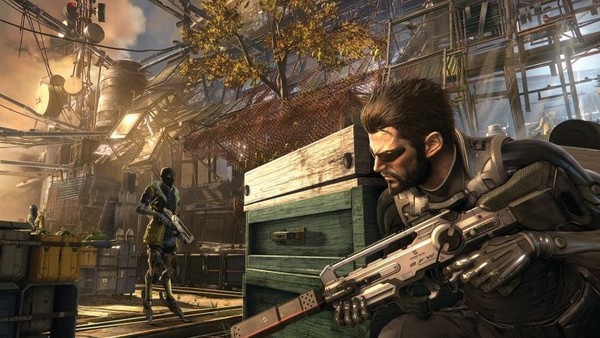
Dammit, Square Enix, all you had to do was not meddle in your developer's affairs.
Sadly, in an age where microtransactions are king, they - according to an inside source who came clean with Jim Sterling - forced the devs to implement a system that totally broke the progression of the game only weeks before launch. No longer did you need to play through to unlock Adam Jensen's full roster of abilities, instead you could just pay for them, and the money-grubbing didn't stop there.
Integral DLC was gutted and held back as paid content, resulting in a story that felt incredibly haphazard and badly paced, ending abruptly right when it felt like things were ramping up.
Sadly, despite the Deus Ex name being close to gaming royalty and 2011's Human Revolution being an outstanding RPG, you'd struggle to find someone who even knew Mankind Divided released this year, let alone recommend it.
3. PlayStation VR

Seeing Sony, Oculus and Valve attempt to convince the masses why VR is the future has been the weirdest thing, because it forever rests on trying the tech yourself - something that unless you've got a few hundred notes spare, isn't going to happen any time soon.
Even then, I've had the pleasure of playing PS VR for a good few days, resulting in mixed feelings that basically boil down to this:
Remember when Sony introduced their analogue stick-fronted Dualshock? It changed the very nature of how we control games. Suddenly third-person cameras were manually controllable, the industry shifted to accommodate and we got thousands of titles that could only 'work' using both sticks.
For VR, aside from Sony's own London Heist which requires you utilise 3D space to manoeuvre your character, and tells a story by interacting with the player multiple times (feeling your side tingle after being virtually stabbed is a trip), 99% of games simply repurpose camera controls onto your head movement.
It's nothing fundamentally new as a game experience, and until developers start treating VR as 'the next analogue stick' to create games that can only be done in VR, the technology will continue to flounder as an overly expensive gimmick, devoid of anything you genuinely 'need to experience'.
2. Battlefield 1

Controversial I know, but strip away the sheer size and scope of the multiplayer - something Battlefield has done before, and better - and what do you have? A few hour-long campaign, rushed emotional beats, microtransactions and 'loot boxes' (Supply Packs) that get doled out at complete random.
Yes, despite how much we really wanted a return to the old school World War setting, Battlefield 1's approach is only skin-deep. It'll take you around 40 minutes a piece to clock the five campaign segments (of which only two are truly worthwhile), and then it's back into the online, twitch-focussed multiplayer.
Spawn, get shot from across the map, respawn, die again, rinse repeat. At this stage it's the norm for online shooters (unless you're playing the mighty Titanfall 2), resulting in a critically-revered title that I maintain had way more misfires than anything remotely worthwhile.
1. No Man's Sky

Despite the fact Hello Games finally got a game-changing patch out some four months after launch, as far as gaming is concerned, No Man's Sky is the biggest blot on 2016 overall.
At this stage, newborn babies are springing out of the womb knowing that 'Sean Murray' and 'lied' go hand-in-hand like Christmas and Chris Rea, the tale of how the game was revealed standing tall as a shining example of How Not To Market A Game.
From misled consumers who thought they'd be able to meet up with others in-game, to those who still played hundreds of hours only to realise "What was at the centre of the universe" was literally the game resetting itself (yes, really), No Man's Sky is one of the most disappointing games of not only 2016, but of all time.
Still, none of this means you shouldn't give it another chance.
--
What was your most disappointing game of 2016? Let us know in the comments!