12 Biggest Video Games That Are The Most Value For Money

Most replayable, best game mechanics, timeless levels - what gives the most bang per buck?

There's been a word thrown around the gaming industry across the last couple of years; one that ignores the thousands of hours put into bringing you the most complex titles seen so far - 'lazy'. Everything from Destiny to Fallout 4 has had this word thrown its way at one point or another, and it comes down to a major talking point; how iterative do games have to be, to be 'worth' a sequel, as oppose to a DLC pack or nothing at all? Titles like Star Wars: The Force Unleashed 2 or Just Cause 3 barely did anything with their preceding formulas, but the final result was still fun enough. Is that a problem? We didn't seem to mind when Rockstar were reusing GTA III's engine, re-skinning it with timely assets and re-releasing as Vice City and San Andreas across the early 2000s, and why? Because there appeared to be enough changes overall, to warrant them charging full price again and again. Look to more recent titles though, and you'll see developers charging top dollar for multiplayer-only shooters like Rainbow Six: Siege, Evolve, Star Wars Battlefront, etc. Many developer/publisher combos seem enamoured with charging a sandwich's price for a slice of bread, and in contrast, that makes the best titles that reward your empty wallet with endless good times far more worthy of celebration.

12. Metal Gear Solid V: The Phantom Pain

Hideo Kojima left the evil clutches of Konami with a hop and skip right into the warm, welcoming arms of Sony exclusivity - but that didn't stop him putting his all into the final Metal Gear Solid. The Phantom Pain is easily the best-playing of the entire past canon, an intricate science experiment of iterative item unlocks and fancy, customisable firearms. You could spend a day perfecting how to infiltrate any given enemy outpost with a silenced pistol and your trusty canine, D-Dog - or you could dart off and explore the vast chunks of Afghanistan and Africa that are meticulously modelled from canyon to swampland and back again. MGS V's story is deliberately paced in a way to encourage indulgence in side-missions, resource management, crafting and open-world impulse. You'll slowly get fed a very well-researched look into the evolution of language, racial tension and emerging global ideologies down the main path, but the sheer amount of content present in every tactical option, companion A.I. interaction, researchable weapon and item along the way is genuinely staggering.

11. Grand Theft Auto: San Andreas

Here's a controversial thought; GTA V isn't the best GTA - and why? Because it doesn't have an environment you actively want to live in and explore, at least not in the same way as the earlier titles pulled off perfectly. Honestly, you could swap this out for Vice City if you prefer the synth-pop and retro-rock of the 80s, but for now I'm leaving it as San Andreas, its showcase of 90s rap and gangster culture providing a hotbed for everything from blowing up police helicopters to relaxing with a game of pool. Thanks to just how much more world geometry Rockstar managed to concoct between releases, this was the first time it genuinely felt like a 'world' was in front of you, the initially risky switch between the city of Los Santos giving way to mountainous countrysides, back o' beyond villages and the cloud-tickling Mt. Chiliad. It also saw Rockstar detail the entirety of the underwater environment too, with you able to swim to get away from any Wanted level you may have accrued by losing yourself amongst the corals. In your mind, San Andreas most likely remains an incomprehensible explosion of possibility, and although newer games have the edge in sheer square mileage, it remains Rockstar's crowning achievement from all of GTA's history.

10. Don't Starve

Developers Klei Entertainment are one of the most underrated greats; a team with a devout artistic vision they evolve and follow through on with every release, each subsequent game being more impressive than the last. Case in point: Don't Starve, a title that casts you initially as the inventor, Wilson, before dropping you on an island and simply asking that you find a way to survive. Trees can be chopped down, shrubs collected, animals ensnared and killed for food - the entire world is randomly generated every time, the goal being to accomplish the title itself. However, it's in how you do this where Klei have padded out every detail to a ridiculous degree. Materials can be crafted, enemies even befriended once you learn their wants and needs, and when it comes to how you want to make a 'living' on the island yourself, anything goes. Provided you can find a light source before darkness falls and the instant-killing monsters come out, you're free to explore and chart a course across the island whichever way you please. DLC 'Shipwrecked' expanded this ethos by taking the action to the seas, letting you craft various rafts, boats and sails to get between a variety if smaller islands. Since release and to this day, Klei have supported the game with some excellent customer feedback, listening to complaints and delivering additional tweaks that should ensure it'll have legs for years to come.

9. Assassin's Creed IV: Black Flag

Remember when Assassin's Creed was amazing? When it was really, honest-to-God awesome? Many fans point to Brotherhood as the peak of both the Ezio trilogy and the series overall, before it was slow downhill slide into the coffin that became Unity. Thing is - and whisper it - Black Flag might just be that little bit better. Ubisoft would definitely go too far with their own formula for open-world games by placing a few hundred side-quest and optional markers on the map in recent releases, but for AC IV, the Caribbean setting made it feel perfect. Taking on a series of assassination missions before hopping on your ship and catching the wind is a feeling no other open-world title has even come close to, and it's what gives this instalment the edge over every other entry so far. Treasure hunts, underwater segments, rare animal hunts, debris-scattering naval battles, Black Flag had it all and more. The sheer expansiveness of the environment made chasing the horizon a perfect metaphor for how you approached every gameplay option; always searching for more things to do, and enjoying every step of the way there.

8. Wasteland 2

There are a couple of other wasteland-centric experiences left to go on this list, but one of the most criminally overlooked is Wasteland 2, InXile Entertainment's spiritual continuation of where Fallout 1 and 2 left off. Without delving into the whys and wherefores of Fallout's past, sufficed to say Bethesda dove in and bought out original developers Black Isle back in 2006. Such a move fractured the fanbase, but thankfully, the Wasteland games are a return to the text-based, hardcore pen n' paper RPG of yore; one where the character creator itself has more detail that the latest Fallout's facial tech. Naturally, with an open-world RPG that has its hooks in stat-progression, there's everything from ranking up specific skills for your four-person quad to crafting items, exploring an overworld to find new settlements and even a killer loot system to encourage everything in between. Combat takes place on an isometric plane, XCOM-style, which turns out to be the missing ingredient you never knew you needed. With that last piece of the puzzle in place, Wasteland 2 plays like the game thousands of Fallout fans know Bethesda's version will never be.

7. The Elder Scrolls V: Skyrim

Speaking of Bethesda, they definitely cut their teeth on creating the most dense and detailed games out there. Not just in an environmental sense, either, a new instalment in the Elder Scrolls series means even the books you can find on the walls are dripping in mythology. It's an attention to detail only Bethesda can deliver, and while that occasionally (read: frequently) means bugs and other glitches hamper the experience, there's literally no better, truer open-world fantasy experience out there. Right from the get-go you're assaulted with all sorts of options for your character build, and it's a freeform ethos that factors into your abilities in combat, dialogue options, paths through the world itself, and everything else. NPC interaction, weapon and armour customisation, quest design - it's all ludicrously well thought-out and endlessly enjoyable, a quality that gives Bethesda's games one hell of a signature feel. Here's a fun fact too - you can never actually 'finish' Skyrim; Bethesda implemented a cool algorithm into the quests themselves, where the game will generate content based on areas or townships you've not seen, literally adding on hundreds of hours to your overall playtime.

6. Dark Souls

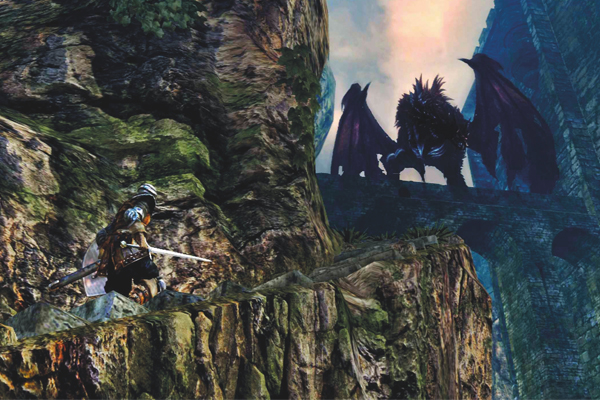
It would take them two games to get the formula down-pat, but what Demon's Souls started in 2009 was perfected in 2011, as Dark Souls expanded on the franchise's uniquely strategic hack n' slash feel, birthing one of the best game worlds of all time in the process. Exploration and experimentation are a given in the RPG genre overall, but you've not felt a buzz of discovery quite like Dark Souls. Pathways interlock and feed back into each other, character options favour taking on enemies in different ways, the game actively slaps away your hand as a way to force you into becoming more confident, and even after you've finished, there's a world of story and lore elements to soak up. Dark Souls is one of only a handful of games that can remind you of a time when game worlds were mysterious and a genuine unknown quantity. You'll never know what's round the next corner, but it's in holding up your weapon, pressing forward and poising your finger on the dodge button that provides one of the most rewarding game experiences of all time.

5. XCOM: Enemy Within/XCOM 2

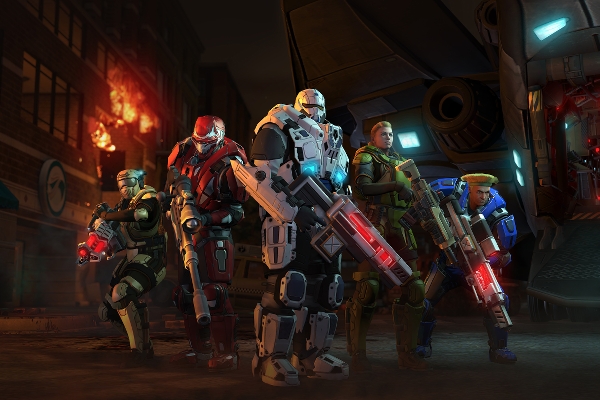
Depending on whether you're a console or PC gamer, you'll have access to either XCOM: Enemy Within (the 2013 definitive edition of Enemy Unknown) or XCOM 2, the recently-released PC/Mac sequel that's currently wowing fans all over again. Regardless, both games are top-down isometric strategy-fests, letting you build up a custom team of soldiers purpose-trained to repel an alien horde. The second game goes with the idea that humanity actually loses this fight in the preceding two games, therefore making you a rebel faction slowly reclaiming the land, whereas the first two posit you in an 'all or nothing' war for Earth itself. The sheer depth of playability on offer is consistently staggering. Just take any mission as an indication of the possibilities therein; you'll deploy on a mission, taking team members that can be customised with everything from clothing to cybernetic implants, fight aliens that if captured alive, can be studied, harvested and repurposed into all sorts of additional equipment. You'll then set your scientists off researching weapon and armour upgrades, unlock flying armour suits, cloaking technology, submit certain soldiers for biomechanical augments - and that's all within the first half hour. XCOM has one HELL of an addictive gameplay loop at its core, asking you to figure out precisely what's going to turn the tide in battle every step of the way. Once it has you, there's no escaping - at least not without pondering your next mission in the process.

4. Mad Max

Busywork in open-world games can go one of two ways. Either you have something like Assassin's Creed: Unity, where your map is absolutely caked in icons and pointless side-missions you could complete for no reason, or you get something like the wonderfully underrated Mad Max; asking you to take back the wasteland, one grain of sand at a time. The general marketing and reviews for this glossed over a really cool sense of survivalism, which starts to give Mad Max a great sense of identity once you get a handle on things like ammo conservation, water allowance and fuel management. See, there is a story to slowly pick away at if you want specifically-designed missions, but along the way you're free to take back scores of outposts, ram loot-filled convoys off the road, venture out into storms to catch pieces of valuable debris and fight a handful of 'boss' characters that head up more armoured encampments. Your personal vehicle of hell-brought death and destruction won't upgrade itself, and as a player, your acclimatisation to the harsh realities of the wasteland mimics that of Max himself. Put simply, if you're looking for an open-world game that absolutely relishes in letting you pick a direction and seeing what you come across, knowing everything factors back into an overall progression Avalanche Studios did a wonderful job breathing life into one of the most otherwise desolate game worlds in quite some time.

3. Fallout 4

From one wasteland to another, Bethesda's unbelievably-hyped sequel to Fallout 3 ended up being a bit of a mixed bag overall. Subjectively, many fans simply thought there weren't enough advancements made to the core formula first nailed down in 2008, whereas the rest of us were too busy taking on side-missions for the various factions, upgrading our guns and building Settlements to care. Think of Fallout like a great big meat pie; one where even the smallest serving will fill you up for the rest of the day. Bethesda are known for making some of the most detailed games of all time, and to focus on what Fallout 4 didn't do, is to miss the point entirely. The world is rammed with an unprecedented amount of things to see and do. Loot-grinds determine why it's worth exploring for 30 seconds or 30 minutes, whilst main and side quests come with some of the best-written and most detailed scriptwriting in any of Bethesda's titles. Character builds that can be incredibly varied too, meaning that even if you think the credits spell the end of your journey, it's only just beginning.

2. The Witcher 3: Wild Hunt

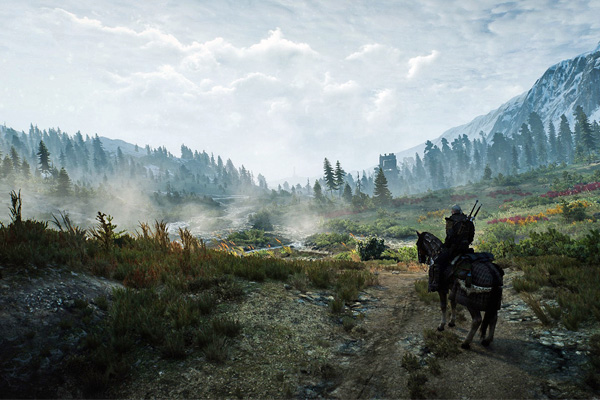
Across 2015, there was only one game that was always going to claim the top spot, and even against strong opposition such as Metal Gear Solid V and Fallout 4, CD Projekt RED's third Witcher beat them, hands down. Giving this (supposed) final instalment in the canon its due through words alone is the hard part. There's absolutely nothing I can write down that will match up to the sequential thrill of looking out across endlessly gorgeous vistas, slaying handfuls of uniquely-designed beasts, embarking on lengthy, weighty quests, and then leaping on your horse to explore one step at a time. Playing as Geralt may seem like too much of a designated character initially, but his personality and traits as a warrior raised to suppress all emotion gives you enough room to inject your own flair. The main story will take you a good 80-plus hours to get through, and that's if you don't get distracted ranking up items or weapons, indulging in your own creature-slaying Witcher duties, taking a boat out to an island on the horizon, or venturing across the lands in search of secret items and treasure. CDPR pay tribute to Andrzej Sapkowski's incredible mythos through every pixel of Wild Hunt, and with two substantial DLC packs available by the close of 2016, it'll end up being bigger than you could ever imagine.

1. Minecraft

At the top of the pile, it's just going to have to be Minecraft. Markus Perrson's "What if Lego was digital?" idea skyrocketed him from a lowly desk in 2009, to the billionaire-bought mansions of the Beverley Hills across the last few years. Chances are you don't need to be told what Minecraft is - instead its presence in the world speaks for itself. At no point did the asking price for the game change, if anything it went down. In everything from the mobile app version to the console and PC/Mac iterations, a hugely vast creative toolset awaits. Obsessive fans and growing gamers have created everything from entire movie sets and props to video games, working iPhones, detailed statues, country landmarks... you name it, they've got it. Think about the craziest things people have built with Lego, then imagine groups of people synching up on shared servers to see what they can concoct. Minecraft's story has always been nonexistent (save for Telltale's episodic 'Story Mode' spin-off), but as a set of tools that provide gasoline to the fires of your imagination like nothing else, it's unbeatable. What's the biggest game that gave you the most value for money? Let us know in the comments!

Watch Next


Gaming Editor
Gaming Editor

WhatCulture's Head of Gaming.