12 Mind-Blowing Things You Didn't Know About The Bioshock Series
Bioshock, you mean the game that's all about plantlife, stealth and espionage?

Why do we trust on-screen prompts, anonymous narrators and assumed motivations?
Bioshock challenged these very notions and more, crafting one of the most genius and landmark narratives in gaming history - not to mention a monumental rug-pull twist that reverberates across the industry to this day.
Yes, it really is that good, and Irrational Games didn't stop there, stepping aside to let parent company 2K release one criminally underrated sequel in Bioshock 2, before returning for the mighty Bioshock: Infinite, a truly mind-blowing masterpiece that set the world on fire in 2013, and remains many peoples' best of all time.
All Bioshock games want to engage you on a purely cerebral level. They have brains and brawn, and thankfully the devs have always managed to expertly walk that line between the two. However, creating such monumental releases is no easy task, and from across one of the finest trilogies in gaming history, there are a ton of stories to tell...
--
12. Bioshock Infinite's Script Contains 20,000 More Words Than The Average Novel

Easily one of the most verbose and immaculately well written titles of all time, an official infographic for Bioshock Infinite noted it has around "20,000 more words than the average novel", as the chatty duo Booker and Elizabeth take up a whopping 32% of all lines spoken across the whole game.
Booker comes in with 1310 lines of dialogue, while Elizabeth contributes 2072 after she appears following her rescue in the first third.
Still, although compared to your average novel Bioshock: Infinite is very sizeable, when put next to the likes of Final Fantasy VII (which has around 107,000 lines) the length of Square's game dwarves this total.
11. Even Jack's Sweater Alludes To The End Of The Game

Just when you thought every part of the original Bioshock was a masterpiece, here's another layer you probably missed.
NEOGaf Finale Fireworker explains:
"Jack was intentionally designed to be as generic as possible to serve the narrative, and his lack of characterization is paradoxically the most important part of his character. Jack's generic white sweater though, as it turns out, is not a generic white sweater at all. It's very specifically an un-dyed cream-colour Aran jumper sweater made from un-scoured sheep's wool.
The design and texture of the wool makes these sweaters water resistant and therefore wearable and functional at sea. The Irish designs were usually very intricate and used common Gaelic braid patterns - patterns that also happen to resemble chains. The sheep's wool and braided chains, which are also double helixes, are a reference to bioscience and the nature of Jack's creation."
Mind blown yet?
10. There's A 'Blink-And-You'll-Miss-It' Reference To Star Wars In Bioshock: Infinite
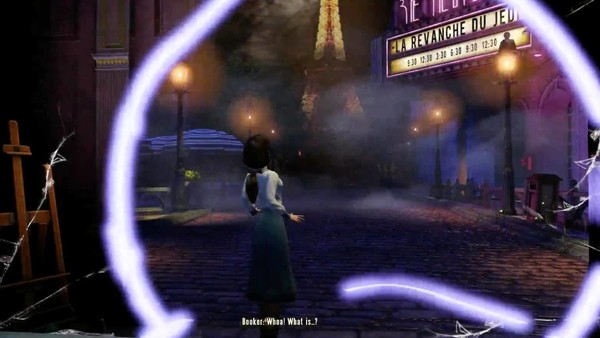
In the opening act of Bioshock: Infinite, you'll eventually come across Elizabeth and free her, to which she then starts using a number of 'tears' in space and time to get a handle on her powers. One will transport the two of you to Paris (where you'll return in the Buried at Sea DLC), but this first time, you may be distracted by the fact Elizabeth almost gets taken out by a wayward truck.
However, although it's more a small easter egg, look to the right of the street and you'll see a cinema with 'La Revanche Du Jedi' playing.
Translated to 'The Revenge of the Jedi', it was the original title for Star Wars Episode VI, which went on to be renamed, 'Return of the Jedi'.
See? Even Irrational's easter eggs are brilliantly nerdy.
9. The Little Sisters Original Designs Were... Inventive, To Say The Least
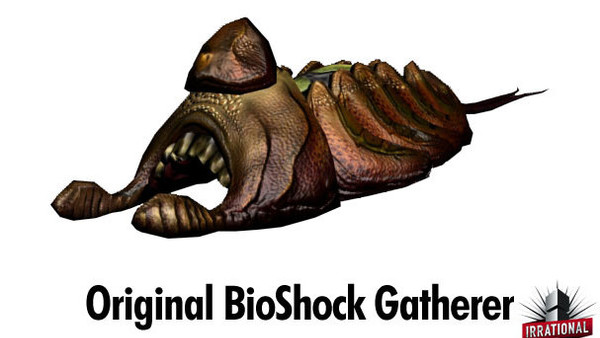
Not quite so loveable or empathetic as the humanoid versions we ended up with, I'm sure you'll agree.
Yes, in the original sketches for Rapture's Little Sisters, they appeared more as slug-like creatures, simply because it was easier to be comfortable harvesting them for ADAM. In fact, they weren't even called 'Little Sisters', instead being labelled 'Gatherers' and going through a number of redesigns including dogs in wheelchairs and - literally, this was their working title - the "Frog with a funnel in its anus."
Think that's a bit much? Check out the sketches below...
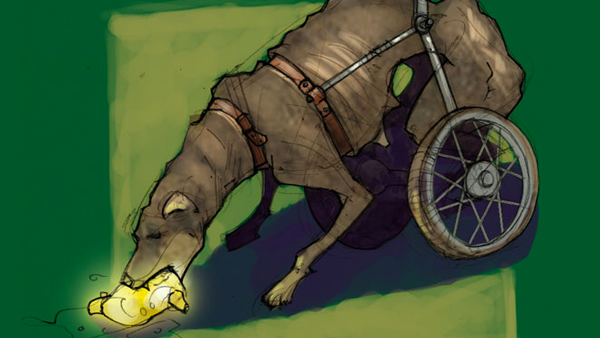
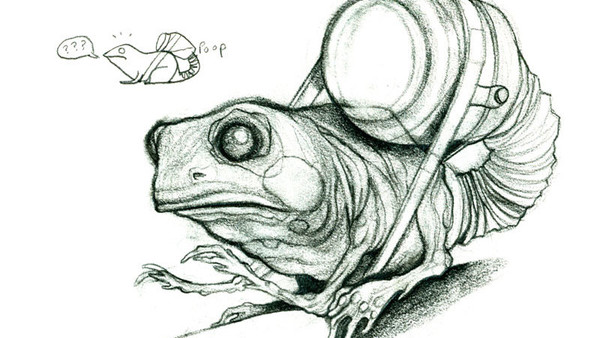
As development continued, it was clear the idea of harvesting these creatures should have more weight and purpose, so gradually the idea turned into coming face to face with another human - or rather, a tiny, innocent girl; the now-renamed, Little Sisters.
8. A Space Station, Tribal Island & Underwater Nazi Base Were Considered Before Rapture

These days, the thought of Rapture being an underwater city rammed full of twisted science-types go together like Sonic and speed, but it wasn't always the case. Instead, firstly because director Ken Levine's last major project was System Shock 2, Bioshock was to be set on another space station.
This was then ditched and a 'tribal island' was suggested instead; one where stealth would be essential in the face of violent natives. Very Far Cry 3.
Following that, the underwater setting was chosen but with the caveat that it would be filled with long-dormant Nazis, and finally the notion of a utopia-gone-sour gave the art department the biggest surge of energy yet.
Rapture was conceptualised, as were plasmids, Andrew Ryan and the whole idea of exploring a dilapidated version of a once-great city became the central narrative thrust.
7. Gone Home's Steve Gaynor Wrote Bioshock 2 DLC, Minerva's Den

Although the very idea of DLC, microtransactions and additional content post-release is met with about as much excitement as Microsoft deciding to make a Kinect 2, in Bioshock 2's case, it's actually for the best.
Whilst the main game is solid enough (speak its name in any social capacity and hear the word 'Underrated' get whispered from the ether), it wasn't put together by the same team as the original. However, for DLC, Minerva's Den, 2K had expert writer Steve Gaynor on-hand to get everything right.
Minerva's Den was a huge success (and continues to be one of the main reasons to seek out Bioshock 2 overall), and it led to Gaynor amassing enough credibility to form his own studio, The Fullbright Company, who would then go on to create Gone Home and Tacoma.
6. Kill 5 Enemies, Get A Loot Box!

Of all the entertainment industries in the world, gaming is forever increasing at an exponential rate when it comes to both rendering, and the pure graphical power of what's on display.
Case in point: The original Bioshock couldn't handle more than five corpses on screen at any one time, so as a workaround after any particularly intense firefights, if you kill six enemies in one space, the sixth will turn into a small 'loot box' containing whatever items they had on their person.
Most of us never saw this in action thanks to wasting Splicers and other enemies as soon as they appeared, but next time you're playing through, let your foes mount up and you'll suddenly see their ragdoll'ing bodies turn into tiny chests.
5. Elizabeth Directly References Bioshock Infinite's Delay

In a weird spot of pub trivia, 2013 saw two games centred around a male/female duo visiting all sorts of areas and providing commentary on them.
The Last of Us did so across Boston and saw Ellie talk about bands and society, whereas Infinite used Elizabeth to shed light on how much the dev team were aware of the game's delay before release.
If you take time to explore the arcade (and don't just sprint through) Elizabeth will sprint up to the machine for 'Flawless Flintlock', before noting it's "the newest one in the series" that has "been delayed three times."
This was a direct callback to the general reception surrounding Bioshock Infinite and its repeated delays, as the team struggled to nail down a final retail version.
4. Splicer Faces Were Based On 1940s Mugshots From San Francisco

We always new they looked a bit strange.
Apparently, in the pursuit of creating a game world that was drenched in tension and criminal undertones, Irrational came across a book of 1940s mugshots on eBay.
Seeing the variety of people all caught in time under the circumstances gave them the inspiration necessary to frame Splicers as regular citizens warped into this state of illegality.
It worked out perfectly in the end, and although the Splicers aren't as big a part of Bioshock's overall iconography as the Big Daddies, I bet you still remember your first handful of fights against them... and those noises they made.
3. Bioshock 1's Atlas & Fontaine Were Named After Ayn Rand Books

If there's one thing the original Bioshock screams, it's "academia". Every inch of the game, from the architectural clout of Rapture to the science-gone-wild idea of the Plasmids, feels steeped in mountains of literature and research.
Even the names of villains, Atlas and Frank Fontaine fall under this bracket too, as "Atlas Shrugged" and "The Fountainhead" are two of philosopher/writer Ayn Rand's most famous books.
Tapping into such potent works has led to many theses being put together analysing Irrational's use of Rand's work to frame the intentions of Atlas and Fontaine respectively. Delving into the introspective and mind-bending side of Bioshock gives the game another level of interaction entirely, but just know that you're in good hands with such a outright intelligent developer - providing you can keep up.
2. The Voice Of Bioshock 1's Jack Is The Game's Artist

Thanks to the original game's Jack ostensibly being a mute and only speaking a couple of lines of dialogue at the beginning and end of the game, 2K must have realised it was hardly worth bringing in any hireable talent.
Instead, artist Nate Wells - who you can thank for everything from the Big Daddies to Rapture's architecture itself - offered to lend his pipes to proceedings, providing a subtle yet brilliant easter egg after you know the details.
1. The Original Design Was Centred Around Plantlife & Espionage
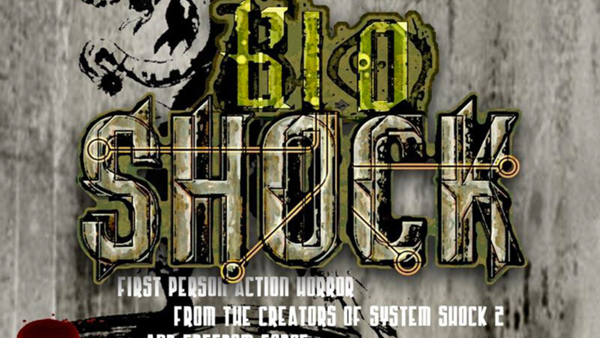
Far from the underwater utopia-gone-sour world of Rapture, one of the original versions of the game put you on land. You were to play the character of 'Carlos Cuello' as he infiltrated a cult-like agency on an island, all with the hopes of retrieving the daughter of a rich magnate who'd slipped in with the wrong crowd. You'd also struggle with all sorts of bio-mechanical, plantlike implants as you fought the 'Man O' Wars' - the original Big Daddies.
You were essentially 'deprogramming' the daughter character's indoctrination procedure over the course of the game, assumedly through both dialogue and in-game mechanics, whilst also taking part in plenty of weapon crafting, environmental attacks and upgrades that would flesh out Cuello's roster of moves.
In the end, Bioshock's final version only had the most threadbare of ties to this initial vision, but as Infinite opened up the possibilities for sequels in the future, perhaps another team will pick this idea up and run with it.
--
Are there any other cool Bioshock facts we missed? Let us know in the comments!