12 Most Surprising Metacritic Scores Of 2018
What happened, Bethesda?

While the video game industry will always measure success primarily in terms of sales, it's also fair to say that publishers put a ton of stock in reviews, and particularly that all-important aggregated Metacritic score.
It's been well-documented that some publishers even pay out bonuses for high Metacritic performance, because it's such a strong barometer of quality and has a significant effect on sales more often than not.
With games costing as much as they do, this is certainly more true than in the film industry, where movies can end up "critic-proof" to Rotten Tomatoes' Tomatometer. Just look at how well the critically-panned Venom is performing at the box office.
And though 2018 saw a ton of expectedly brilliant games scoring predictably high Metacritic scores - was anyone surprised by Red Dead Redemption 2 or God of War crossing the 90+ mark? - a number of games turned in decidedly more surprising results.
Whether disappointingly panned by critics, falling just a tad short of immense hype or perhaps even surpassing low expectations, these 12 games represent the most shocking and surprising Metacritic scores from the last 12 month.
And above all else, they serve up an ever-necessary reminder of how smart it is to wait for reviews rather than blindly pre-order games.
Note: the listed Metacritic scores are taken from the version of the game with the most reviews...
12. The Quiet Man (29)

While this Square Enix-published brawler didn't exactly leave a stellar impression following its anticlimactic E3 unveiling, few still would've pegged the AAA publisher to actually release a game this awful and poorly received.
With a mere 29 Metascore on PS4, The Quiet Man ended up Square Enix's second worst-reviewed release of all time, ahead of only the 2013 iOS game Final Fantasy: All the Bravest, which rocks a shocking 25.
And to be clear, the game deserves all the derision it's been getting from critics and fans alike.
With its lacklustre combat, hilariously bad FMV sequences and utter misfire of a premise, this is certainly the most embarrassingly bad video game to be released by a respected publisher in quite some time.
11. Bravo Team (45)

Supermassive Games turned a lot of heads with their well-received PSVR shooter Until Dawn: Rush of Blood (72), so expectations were naturally high for Bravo Team, which fashioned itself as the answer to Rainbow Six for VR.
Despite making use of PSVR's fantastic Aim controller, Bravo Team was one of 2018's most crushing disappointments, an extremely rough, technically janky and shockingly soulless shooter.
While Supermassive's games hardly tend to get rave reviews, Bravo Team seemed primed for a solid 70-ish score, so headset owners were left stunned when it ended up the third worst-reviewed PSVR game of the year.
Eurogamer have since written a fantastic piece on the game's rushed, troubled development, and despite their seeming commitment to PSVR, Supermassive hasn't announced a new game for the headset since.
10. Fallout 76 (52)

No matter how sceptical you were of Bethesda's ability to deliver on the promise of Fallout 76's multiplayer mayhem, few could've anticipated that it would score anywhere below 65.
It in fact went on to land a stunningly bad 52, making it the worst-received AAA retail game Bethesda Game Studios has ever made, and among the worst they've ever published.
Like seriously, even freaking Knack got (slightly) better reviews.
The flaws, of course, were myriad: the sprawling world felt empty and lifeless, multiplayer wasn't fun, the scarce semblance of a plot was boring, it ran like hot garbage on consoles while forcing players into always-online connectivity.
Considering that critics have been routinely condemned for being too generous with their review scores for Bethesda's technically roughshod games, this was clearly the straw that broke the camel's (or rather, the critic's) back.
And the game's disastrous public perception sure didn't stop there, resulting in one of the most jaw-dropping and unexpectedly embarrassing AAA launches of the entire generation, if not beyond.
Naturally Bethesda has kept pretty quiet since Fallout 76's release, but it's certainly got many fans worried about how both Starfield and The Elder Scrolls VI - which will be running on the same game engine - may turn out. Expectations have been lowered, to say the least.
9. The Inpatient (59)

If Bravo Team was Supermassive's major disgrace in 2018, they preceded it with another colossal PSVR disappointment, with their Until Dawn horror spin-off The Inpatient.
Despite being hyped up as a masterclass in VR horror, The Inpatient turned out to be a rather flat, even tedious on-rails effort which, despite its oft-gorgeous visuals and solid sound design, was fatally lacking in atmosphere.
The two-hour length and lack of Game Over possibilities until the very end of the game made it feel a little too much like yet another VR "experience" rather than the full-fat game fans expected.
It wasn't completely terrible, but it nevertheless fell totally short of the mark.
8. The Crew 2 (64)
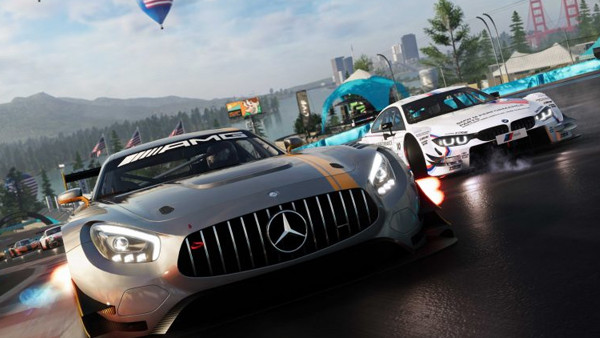
While few were expecting Ubisoft's racing sequel to score in the 90s alongside Forza Horizon 4, the marketing did a solid job convincing players that it would be a marked improvement over the thoroughly mediocre original, which scored just 61.
A huge disappointment it was, then, that The Crew 2 managed to score only mildly higher than its predecessor, with criticism generally levelled against its generic open-world gameplay, poor AI, a lack of PVP options available at launch and the general feeling that Ubisoft released an unfinished game.
Given that this clearly had the potential to basically soft-reboot the franchise and make it a top-tier AAA racing property, The Crew 2 was a colossally missed opportunity to say the least.
7. Shadow Of The Tomb Raider (76)

After 2013's Tomb Raider reboot scored strong reviews (86) and its follow-up, Rise of the Tomb Raider, delivered a hugely consistent sequel (86), it seemed like a slam-dunk for the third game, Shadow of the Tomb Raider, to land an 80+ Metascore.
While the new game certainly didn't receive bad reviews, it did score decidedly lower than its two predecessors, attributed to its main development being headed up by Eidos Montréal rather than the previous team at Crystal Dynamics.
Most critics agreed that Shadow was a rock solid adventure game, though simply didn't bring enough innovation to the table to place it on par with what came before.
The third time was clearly not the charm here, even if it still mostly delivered on the cinematic AAA blockbuster mayhem fans were expecting.
6. WWE 2K19 (77)
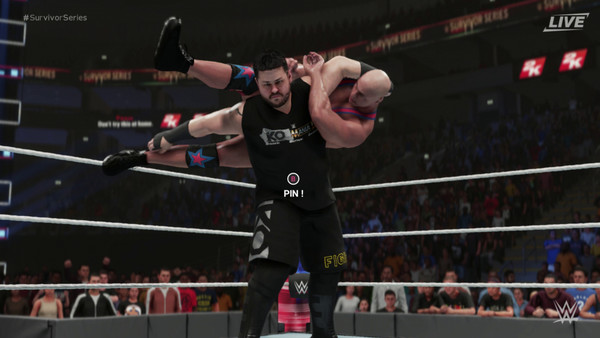
Long-suffering fans of the WWE 2K franchise have likely made peace with the fact that 2K Games just doesn't seem capable of delivering a technically sound, mechanically fun and richly rewarding wrestling game on par with the greats.
After all, the immensely sloppy WWE 2K18 received indifferent reviews from critics (66), 2K17 wasn't much better (67), and in fact the last time an annualised WWE game scored 75+ was THQ's WWE '13 back in 2012 (78).
So what a pleasant surprise it was, then, for WWE 2K19 to score strong reviews from most critics, citing the slicker and more fluid core gameplay, pleasantly surprising improvements to MyCareer mode and enhanced progression suite.
Sure, 2K's approach to DLC still stinks and the online multiplayer is a mess, but the focal experience feels a good deal better-crafted than in recent years and less like a rushed-out, perfunctory annual cash-grab.
5. Firewall Zero Hour (79)

After getting burned by the disappointment of Bravo Team, it's safe to say that many kept their expectations in-check for this past summer's PSVR shooter Firewall Zero Hour, especially considering developer First Contact Entertainment Inc.'s lack of industry cred.
Mercifully, Firewall effectively ended up being the game headset owners wanted Bravo Team to be: a tense, highly addictive squad-based multiplayer shooter with exceptional Aim controller tracking.
It ended up becoming one of the year's best-reviewed PSVR games, and likely as a result of this, the multiplayer community is still surprisingly active almost four months later.
Given that few would've been surprised if it ended up another dud like Bravo Team, this was a mighty relief indeed.
4. Pokémon: Let's Go, Pikachu! (79) & Let's Go, Eevee! (81)

Expectations were undeniably high for the release of the first Pokémon games on the Switch, and while Let's Go, Pikachu! and Let's Go, Eevee! were certainly well-received on the whole, many fans were left craving a little more.
Though the games were praised for being a fine introduction for new players while dialling back the grinding and ditching the random battles, it was generally agreed that the experience was less appealing to veteran fans of the franchise.
The motion controls were widely criticised as well as the limited online functionality (shocking), not to mention the abundance of missing features from previous games that fans reasonably expected.
Fans wanted Let's Go to be a 90+ game and it just wasn't there. Fingers crossed that next year's full-fat Gen VIII game delivers the goods.
3. Octopath Traveler (83)

If there was any Nintendo Switch game not called Super Smash Bros. Ultimate that just about everybody expected to land a 90+ Metascore, it was surely Square Enix's gorgeous RPG Octopath Traveler.
And though Octopath certainly fared well with critics, it fell just a smidge short of the high mark fans had set for the game, with its awesome battle system and incredible style being brought down somewhat by the fairly unsatisfying story and some frustratingly old-school design choices.
As a result, the game mostly received 8/10 scores from reviewers, which in the industry's culture of "less than 9/10 = hot garbage" just wasn't enough for many. We all wanted this to be as absorbing and incredible as it looked, but it just wasn't quite the masterpiece fans wanted.
2. Astro Bot Rescue Mission (90)

Talk about the big surprise of the year. Though anyone who played The Playroom's PSVR tech demo featuring Astro Bot surely saw the potential in the adorable mascot getting his own VR platformer, there was never any guarantee it would translate successfully to a fleshed-out AAA experience.
But thankfully, it sure did.
What a joy it is to say without any doubt whatsoever that a PSVR title is both one of the best and most creative games of the year, an endlessly charming platformer in the vein of Super Mario 64 that serves up one of the most tactile and immersive VR gaming experiences on any platform.
With its Metascore of 90, Astro Bot surpassed countless games with decidedly more hype to become one of 2018's best-reviewed efforts, and even went on to (rightly) win the "Best VR/AR Game" award at The Game Awards.
If you own a PSVR headset, you need to play this game.
1. Celeste (92)

Even more so than Astro Bot, Celeste is a game that came completely out of nowhere and just blew away everybody who played it.
Brutally difficult retro-styled platformers are of course a dime-a-dozen these days, so Celeste could've easily just scored a solid 81 and come and gone without much fuss.
But thanks to its expert level design, satisfyingly tough-but-fair difficulty and unexpectedly deep, emotional story, Celeste in fact dares to be a true masterpiece of modern platforming and simply one of the year's best games.
That it would fare better with critics than the Shadow of the Colossus remake, Monster Hunter: World, Assassin's Creed Odyssey, Marvel's Spider-Man and countless other highly-acclaimed AAA offerings is something nobody saw coming. Bravo.
Which Metacritic scores surprised you the most in 2018? Shout them out in the comments!