12 Ridiculous Video Game Ideas That Should Never Have Worked

Some video games just shouldn't exist. And yet they do and are awesome...

Some video games just shouldn't exist. There, I said it. We can look at some video games and just think, "How did anyone give this one the green light?", not because the game is by any means bad, but simply because it's so outlandish and ludicrous that it's hard to believe any publisher would take a gamble on releasing it. By all rights, these 12 projects should have been horrible flops, and yet through some miracle, they managed to connect with gamers and were runaway successes. Either due to their bizarre, niche premise, the seemingly aimless nature of the gameplay or the cost-prohibitive peripherals needed to actually play the game, these titles should have all failed, but instead they are a celebration of originality, even if in many cases these games ended up being run into the ground by franchise fever. Speaking of which, let's get on with the list. As there are so many surprisingly successful video game oddities out there, please add your own suggestions in the comments!

12. Guitar Hero

Guitar Hero is a musician simulator in which players have to fork out cash for a glorified plastic Fisher Price controller on top of the game itself, in order to pretend to play various classic rock tunes. In short, you're paying not much less than you could pay for a starter guitar kit to click and clack colour-coded keys in your living room. It was a fanciful project, and one that should have lost Activision millions of dollars, right? Right!? Instead, it made Activision billions of dollars between the years of 2005 and 2010, before the series died a death from over-saturation. Still, for those 5 years, it was one of the most talked-about pop culture products, featuring in a wealth of TV shows and movies, perhaps most famously being parodied in the South Park episode "Guitar Queer-O". It was a must-have item, and inspired the also-brilliant Rock Band, which followed a similar trajectory of huge popularity followed by a meteoric downfall. As I look at the three plastic Guitar Hero guitars in my closet, as much as I love the games, I have to wonder how it ever took off as it did.

11. Lego Movie Games

A video game series based on Lego is a pretty genius idea, but a video game series that combines Lego and famous movie franchises? It's an ambitious and novel concept, but does it really have the mileage to become more than merely a cutesy gimmick? Just look at the number of Lego movie titles that have been released since 2001 and you'll see for yourself: four Harry Potter games, four Star Wars games, two Indiana Jones games, two Batman games, a Pirates of the Caribbean game, a Lord of the Rings game, a Hobbit game and even a Marvel Super Heroes game. The main reason these games work so well is the huge sense of fun and adventure they create, largely thanks to surprisingly intelligent scripts and excellent voice-over work. They're not all amazing, but when they hit the mark, they remind us why this franchise continues to thrive, with combined sales in the tens of millions and solid-to-strong reviews depending on the game.

10. World Of Warcraft

The MMORPG is a great idea in principle, of taking the much-loved format of an RPG and putting it on the Internet, where players can interact with others and even team up to take on larger enemies. The MMO has been around for years, but it truly took off when Blizzard's World of Warcraft arrived on the scene in 2004, quickly becoming the most-subscribed MMO of all time, a title it has held ever since despite facing fierce competition. Still, should it have worked as well as it has? Firstly, there's the fact that the game is rooted more in addiction than any finessed gameplay mechanics. As someone who played the game for several years, I found that mindless repetition took a priority over varied gameplay and a great story, but that repetition has nevertheless resulted in a huge subscriber base. Then there's the fact that the game has a subscription fee, and though many MMOs prior to it had required monthly payments, they had never reached close to the all-time high subscriber count of 12 million that WoW had in 2010. Though WoW "only" boasts 7 million players now, it is a far bigger success than anyone could have anticipated, while the majority of its rivals, even the good ones, simply cannot compete with its sheer scale and momentum.

9. Paperboy

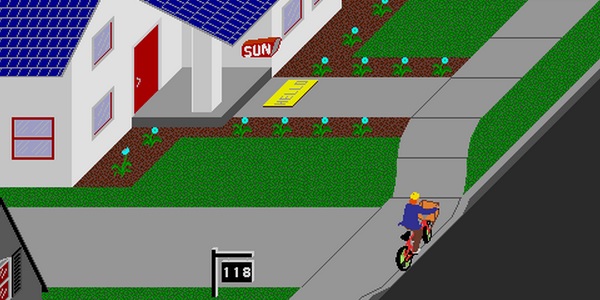
A video game based on the grossly underpaid job that most people had as a kid. Why would kids spend their paper-round money on...a game about paper-rounds? Surely this would never catch on. However, the novelty factor clearly won out, as the game was ported to a bunch of platforms and has enjoyed its status as an iconic video game classic ever since. Despite having virtually no storyline and dated visuals for its period, the ridiculousness of Paperboy is what makes it work. The game is literally just a seven-day trip through the life of a paperboy, avoiding obstacles in the road and aiming papers at porches and mailboxes. If you smash the windows of your subscribers, they will cancel their subscriptions, and if you lose them all, then it's game over. Conversely, you can gain bonus points by screwing with non-subscribers, smashing their windows and tipping over their garbage cans. This anarchic spirit perhaps contributed to its success, but it's proof of how mainstream a very weird premise can become.

8. Worms

Team 17's turn-based strategy game is nothing short of genius. It takes the already familiar strategy formula and then turns it on its head, as the units you're waging war both with and against are not mere mortals...they are worms, worms that are armed to the teeth with an array of delightfully demented weaponry. Still, it's an idea so daft it could easily have been forgotten as a meek attempt to latch onto the same audience who fell for Lemmings several years before, but its cutting sense of humour and hugely entertaining combat quickly made it a popular franchise that continues to thrive to this day. To me, what really makes these games work is the hilarious weapons Team 17 have included over the years, from the Holy Hand Grenade, to the Banana Bomb, the Sheep, and my own personal favourite, the Old Woman, an elderly lady who explodes and causes massive damage.

7. The Sims

If TV shows like Big Brother and video games like The Sims have revealed one surprising fact about humanity, it's that we really like watching people living their regular lives, no matter how banal the activity is. Maxis' people sim is the highest-selling PC game of all time, something I personally would never have anticipated given that, despite the game's increasingly outlandish array of expansion packs, the core gameplay is pretty simplistic and doesn't really hold the attention for more than half an hour or so. But that's precisely why it's so popular, even with non-gamers, because the game doesn't have an end-point, and is simply about trying to constantly build a bigger and more successful life for your Sims. Though the attention-seeking behaviour of the characters can prove annoying when they seemingly can't even clean up after themselves, the fun is in moving to a bigger home, starting a family, and all of the drama that accompanies it. The benefit is that if your child starts crying, unlike real life, you can just quit to the desktop and take a load off.

6. Katamari Damacy

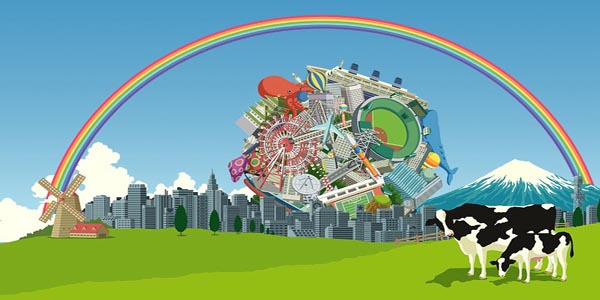
Though it's nowhere near as popular as the rest of the games on this list, Katamari Damacy is also easily the weirdest game on this list, and so its modest level of success is a miracle in of itself, moving out of its very Japanese niche and becoming a cult hit in the Western world as well. The protagonist is Prince of All Cosmos, who is ordered by his King to use a ball called a katamari to collect objects from pencils, to people, to buildings, that can (somehow) be used to create new stars and essentially save the Universe. Like so many brilliant games, though, it's all about the simplicity. If Katamari Damacy had a dozen rules players had to follow, it would never catch on, but this is a game pretty much anyone can pick up and play. The idiosyncratic humour might not be to all tastes, but the reason this game became a cult classic is because of its unique premise and addictive gameplay, no matter how crazy it is.

5. Mario

A short, fat Italian plumber's quest to rescue the beautiful Princess Peach from the tyrannical, grotesque creature Bowser. That is the premise for pretty much the entire Mario series, and it's nothing short of amazing how well the character has endured over 3 decades despite not really doing all that much to change things up. Sure, the graphics get nicer and the level designs are changed, but the core idea has been fairly similar since the start, yet perhaps it is that very familiarity that has made the game a hit with both hardcore gamers and casuals also, particularly during the brilliant success of Nintendo's Wii. Mario is always ranked next to Sonic the Hedgehog in terms of platforming mascots, and though it's easy to see the appeal of a hedgehog who can zoom around maps at lightning-speed, the appeal of a pudgy plumber is a little harder to make out. It's difficult to imagine executives having massive confidence in Mario right back in his origin days, when he was called Jumpman, but alas, he defied the odds and perhaps in being a more down-to-Earth protagonist, won the hearts of gamers the world over.

4. Pikmin

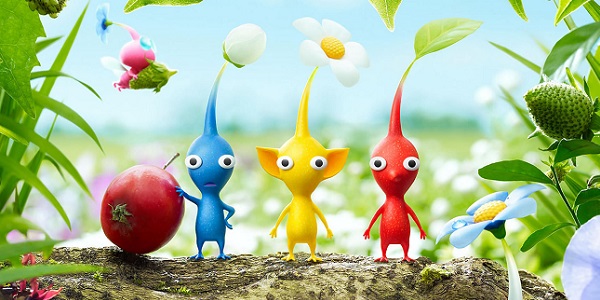
Even for the standards of Nintendo, it's easy to dismiss Pikmin as a game aimed at children, and that's just one of the reasons why it shouldn't work. Believe it or not, despite the child-friendly exterior, Pikmin is actually a pretty challenging game which requires players to use the titular creatures to reassemble their ship. Only certain coloured Pikmin can perform certain activities, so there's a high degree of strategy to it, and micro-managing all the Pikmin at once is not something young kids will probably have a very easy time with. As such, Pikmin is a game that looks like it's for kids but is in fact geared more towards adults who are still a little young at heart. It's a niche audience to fill, but the series has sold roughly 3.5 million copies to date, and has an extremely passionate fanbase to boot. As a more simplistic game it would have easily been appealing to children, but Nintendo had something a little more daring in mind, and somehow, it worked.

3. Portal

Portal was originally released as a standalone title on Steam and also in Valve's compendium The Orange Box, with few expecting that it would be anything more than a well-made, short-lived puzzle game that couldn't possibly live up to Valve's legacy with the Half-Life games. The game's singular premise revolves around the protagonist navigating a series of increasingly complex puzzles by way of a Portal Gun and an object called a Weighted Companion Cube. What made the game more than a competent-but-forgettable puzzler wasn't just its fiendish difficulty, but its vibrant personality. The malevolent computer wishing to send you to your death, GLaDOS, quickly became a fan favourite character, and the game's closing song, "Still Alive", has become a gaming anthem ever since. Many cake-related memes followed (relating to GLaDOS' constant promises of cake), as did a massively successful sequel, and the rest is history. Just don't count on a third game: we all know how much Valve hate the number 3...

2. Minecraft

Much like The Sims, Minecraft is an immensely popular game seemingly because of its virtue that there isn't an end-point or even a specific goal, simply that players have fun and immerse themselves in this world. The concept revolves around breaking down and placing building blocks to create structures like the one pictured above. Much of the game's unexpected success, given that it has rudimentary graphics for one, comes from the creativity it allows, resulting in a multitude of unique creations (including a working computer with RAM, believe it or not) as well as some that draw from the world of pop culture (both Lord of the Rings and Game of Thrones are very well-represented throughout the game). What helped take Minecraft to the next level is its ubiquity across platforms, including not just PC, but consoles and even mobile phones. This game is literally everywhere, and combines both the casual and the complex in a totally ingenious manner.

1. Nintendo Wii

But the idea that I just couldn't believe actually worked the most was Nintendo's Wii. Pre-release snickering suggested that the console would probably enjoy modest success at best, given the mockery of its title and the riskiness of the motion control gimmick, but it ended up decisively beating the PS3 and Xbox 360 in the seventh generation, selling more than 100 million consoles and helping bring gaming closer to the mainstream. On paper, to me it seemed like an idea destined for failure, to sit alongside the Sega CD and other misguided peripherals as an outlandish gimmick that wouldn't connect with audiences. But oh how wrong I was. The Wii defied the odds and managed to succeed with non-gamers, casual gamers and Nintendo's hardcores all at once, and though their successor, the Wii U, is in dire straits at the moment, its seeming failure will never be able to undo Nintendo's mind-blowing success prior. Are there any ridiculous gaming trends, consoles or games I missed? Let me know below!

Watch Next


Contributor
Contributor

Stay at home dad who spends as much time teaching his kids the merits of Martin Scorsese as possible (against the missus' wishes). General video game, TV and film nut. Occasional sports fan. Full time loon.