12 Things You Didn't Know About Fallout 3
Bethesda's masterpiece was almost even better.

Fallout 3 arguably made Bethesda one of the biggest developers in the gaming industry. The studio had earned a fanbase making quality games for years prior to reimagining this franchise, but while The Elder Scrolls IV: Oblivion in particular earned them new levels of recognition and success, it was the follow up of Fallout 3 that really catapulted them into the mainstream.
It was for good reason as well; despite being based on an older, niche series, Fallout 3 was one of the most influential and barrier-breaking games of its time. Its blend of open-world exploration and post-apocalyptic violence provided a perfect mix of experiences that could appeal to any type of gamer - and appeal it did.
Of course, essentially rebooting an inherited series so radically and successfully isn't exactly an easy or smooth process, and Bethesda experienced a whole bunch of roadblocks, complicated issues and happy accidents on their way to delivering their defining masterpiece.
12. V.A.T.S Had An Unlikely Source Of Inspiration
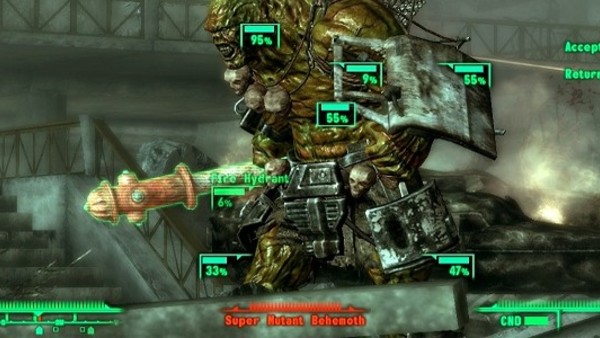
V.A.T.S. is one of Fallout 3's more impressive combat features, offsetting the admittedly clunky gunplay by allowing players to stop time and play a numbers game by targeting specific body parts and turning them into a bloody mess.
Creating their first shooter in a decade didn't come easily though, and Bethesda actually had an unlikely source of inspiration for the gory feature: Burnout.
Apparently, the devs had been binging EA's series (who can blame them?) and became particularly enamoured with the crash replays, which would slow down time and show the destruction of the vehicles from a bunch of different angles, savouring each impact.
They applied that same concept to the V.A.T.S. system, with each shot being shown off in glorious slow-motion and particular emphasis on destroyed body parts.
11. S.P.E.C.I.A.L. Sounds
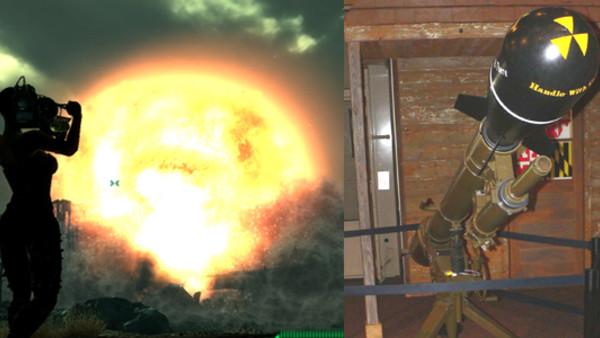
Since writing these articles, it's become apparent that the most inventive part of any game's design comes in creating the sound. Because releases like Fallout focus on situations that have no real-world reference (or if they do, they're not easily recreated without first dropping a couple nuclear bombs), the developers had to get creative in constructing this soundscape.
As a couple examples, the sound of the Fat Man mini-nuke launcher firing is actually the dinner bell at Bethesda studios. Honestly the biggest surprise there is that some offices have a lunchtime bell like they're schools.
Not all are just random sounds captured fresh in a studio however, as the sound that pings when entering into V.A.T.S. is actually the same one that plays when entering a combat turn in the original games.
10. The Game Quadrupled Album Sales Of Featured Artists
The unsung hero of Fallout 3 is its soundtrack. While the iconography and setting perfectly paints a picture of a retro future America perpetually stuck in a weird vision of the 1950s, it's the soundtrack - full of hits from around the same time - that really cements the strange blend of future and history that makes the series so special.
Roy Brown had a huge hand in that as well, with his tracks Mighty, Mighty Man and Butcher Pete Part 1 both appearing in game. While a lot of players who put 100 hours into the sequel ended up viewing these as some of the most annoying tracks in the game, they were undeniably catchy, and apparently boosted Roy Brown's iTunes sales four times over following the launch of the game.
His music became so entwined with the universe that the fourth game actually featured four of his tracks on the radio, no doubt introducing even more players to his work.
9. Courtney Cox Has An Odd History With Bethesda

Admittedly, this one has only shown up here as a crossover with the Fallout: New Vegas list, which had more than a few entries focused on Friends star Matthew Perry's involvement in the spin-off.
Well, it turns out he's not the only member of the Friends cast to have a history with the series, as Courtney Cox - Monica Gellar - actually briefly worked at Bethesda in the 1980s. Doing what? Well, I'm not entirely sure. Looking online, everyone seems certain she was employed, but nobody knows what her role actually was.
Either way, this came full circle in 2008, when Cox hosted the American launch party for Fallout 3 with a bunch of other celebrities. Maybe even former coworkers. Maybe she runs the company in secret. Literally nothing is off the table.
8. A Surgery Healing Mini-Game

Fallout - in stark contrast to The Elder Scrolls - never shies away from violence. Hell, with perks like Bloody Mess and the abilities to specifically target body parts, it absolutely revels in it.
This love of pure grossness was at one point going to extend to the player as well, with there being a full mini-game based around the the Vault Dweller repairing their injuries via on-site surgery. Apparently it was just as brutal in practice as it sounds on paper.
Initially this was conceived to be a rather gruesome system, but was scrapped because it slowed down the pace of combat. Instead, players now just jump into the pip boy and target specific limbs that need healing, and are suddenly cured without any traumatic side-effects. Those stimpacks can do anything, can't they?
7. Tenpenny Tower Had Its Own Radio Station
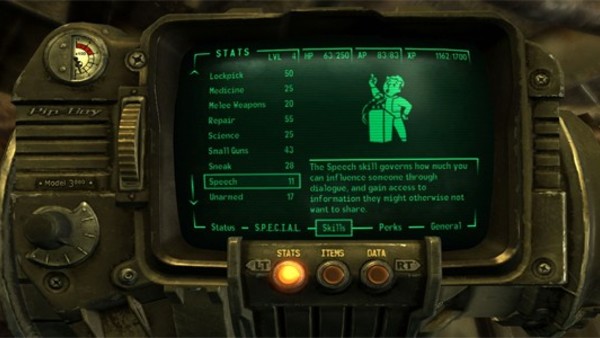
For as iconic as the actual soundtrack of Fallout 3 is, it was only as effective as it was because it was framed around fictional radio stations broadcasting over the Capital Wasteland. Bethesda's game featured two main stations: Galaxy News Radio, hosted by DJ Three Dog (bow wow) and Enclave Radio, hosted by President John Henry Eden (more on him later), but a third was in development at one point.
Tenpenny Tower is a pretty significant area in the game, a place for affluent, well-off survivors living in luxury, a set up that lends itself well to a radio station. Set to be hosted by Allistair Tenpenny, the station was cut during development, but dialogue was still found in the game's files.
Apparently there was going to be a section called Tenpenny Truisms, full of the kind of life mottos you'd expect from a rich fella like Tenpenny.
6. A Bunch Of Monster Designs Never Made The Final Game

Fallout 3 isn't exactly lacking in unique and awful monsters to fight, but Bethesda had plenty of ideas and designs during development that sadly had to be cut for the final release.
A bunch of these were different variations on the floater, a monster type which was left on the cutting room floor. These essentially would have been like a mix between Doom's cacodemons and Fallout's bloaters, being weird blobs of mutated flesh and teeth that, as their name suggests, float around the wasteland.
Oh, they'd burp toxic gas as well. Never good. In fact, always bad. Fortunately, a variation on these guys eventually showed up in Fallout 76.
Other discarded concepts included a Catfish Mirelurk, which would have essentially been a giant mutated catfish, and a variation on Wanamingos, which appeared first in Fallout 2.
5. Liberty Prime Was Originally Pilotable

One of the biggest criticisms held against Fallout 3 is that it has a pretty terrible end to the main story. The tale of the Vault Dweller attempting to purify the water supply of the Capital Wasteland tried to climax on as epic a note as possible, with the Brotherhood of Steel launching a push to complete their goal with the aid of Liberty Prime, a huge robotic mech that could lay down fiery laser death from above.
Admittedly, it is exciting to watch unfold, but the issue is the player doesn't actually get to engage with any of the cool stuff. Hell, they don't have to do anything really, simply follow the robot's big arse while he steals all the kills and pretty much completes the level for you. Yay?
Even worse, this section was going to be far stronger - and much more interactive - initially. Originally, the player was actually going to jump into Liberty Prime itself and directly control the action, getting to live out that sweet destruction themselves.
Sadly, due to technical limitations Liberty Prime as a whole had to be massively scaled down, only featuring briefly and not being even a little bit controllable. Bummer.
4. There Was A Real Vault Tech Phone Number You Could Call
This is actually something of a legacy Easter egg by this point, but there's been a bunch of different phone numbers released on fake Fallout posters that actually work if you phone them up (or worked, as some are pretty old now).
During the E3 2008 trailer for the third game, which dropped shortly before release, a Vault Tech support phone number was shown on screen, and it would actually put you through to a "real" message from the company if you rang up.
The gag returned when Fallout 4 was announced, this time with a number for the support line appearing on the official website. Ringing this time would put you through to an automated message, which gleefully explained:
"Thank you for calling Vault-Tec, your first choice in post-nuclear survival. We're sorry, but due to unexpectedly high call volume, all representatives are currently busy. Please stay on the line, and someone will be with you as soon as possible. There are (501,000,000) callers in front of you. Estimated wait time: (78,643) hours. Thank you for calling Vault-Tec. Have a wonderful day."
Even better, Bethesda has kept these numbers open right up to the launch of another game, so here's hoping they continue the trend with Fallout 5.
3. The "Oblivion With Guns" Criticism Was Almost Too Accurate
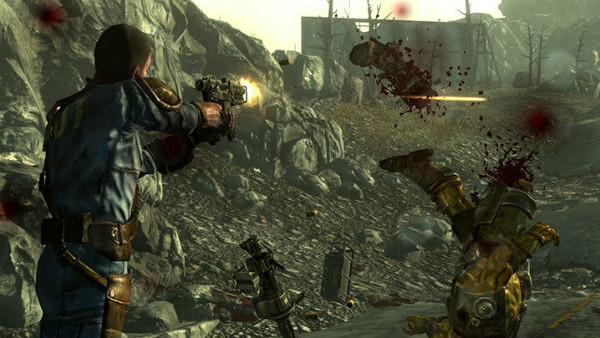
Because Fallout 3's core design was based on the engine and tools Bethesda had perfected across the Elder Scrolls series, it quickly became dubbed as 'Oblivion with guns' at launch. While that isn't a TOTALLY off-base summary of the sequel itself - considering the obvious similarities even at a glance - it was almost much more on the money.
That's because with this being Bethesda's first shooter since 1995, the studio actually prototyped the gun mechanics using the base they'd already built from Oblivion. Apparently, early on the prototypes for weapons were based on that game's bow and arrow, with the team adjusting the firing rate to mimic that of an assault rifle.
Unsurprisingly, this didn't work, and the team threw the prototype out and designed the gun system from scratch. Honestly, the end mechanics probably didn't end up being much better, with the gunplay in Fallout 3 being easily the worst part of the game.
2. Bill Clinton Was The Original Choice For John Henry Eden
John Henry Eden is a quintessential Fallout character. He's the surviving President of the United States, and his idyllic, hopeful tones light up the Enclave Radio station, where he plays songs, relays you with tales from his childhood, and talks up the future of America.
Of course, in classic series fashion this all turns out to be a smokescreen, and the "President" is actually an A.I. residing in the Enclave base, designed entirely to appeal to a romantic view of American prosperity. He's voice superbly by Malcolm McDowell in the final game (which instantly informs you something sinister is afoot, in hindsight), but originally the devs wanted to go one step further, and cast former actual President Bill Clinton in the role.
Unsurprisingly, big Bill didn't fancy it. Still, it's nice to think about what could have been. I mean, imagine booting the game up and hearing him over the radio waves? Surreal doesn't even cut it.
1. Washington D.C. Was Almost Fully Recreated

When all video games start development, the developers have wild ideas and ambitions that always have to be reigned in when technical limitations, time, money, or all three rear their ugly heads and force some kind of compromise. As you've probably guessed with Liberty Prime's role being minimised already, there's plenty of concepts Bethesda thought up that they had to sacrifice, including a fully recreated Washington D.C.
In the final game, the studio's post-apocalyptic version of D.C. was still impressive, but it was half the scale of what was initially intended. Originally every real area was going to be faithfully recreated, but when that would take up too much space, Bethesda opted to drop sections in favour of denser surrounding areas.
Though it hasn't been commented on, the problem could have been to do with having so many buildings in the same location. Fallout 3's open world infamously had to be split up by underground railways to avoid having load screens in the wilderness, so this could have been a contributing factor.
Watch Next
How Well Do You Remember Fallout 3?