12 Things You Didn't Know About Fallout: New Vegas
From crazy romances to a scrapped huge endgame, New Vegas was almost even better.

Nobody expected Fallout: New Vegas to still be relevant almost a decade after it launched. The spin-off to the monumental Fallout 3 was ridiculed at release for its wealth of bugs and glitches, and initially seemed destined to go down as a stop-gap spin-off.
However, over the years fans have come to accept Obsidian Entertainment's follow up as not only being part of the 'main' series, but perhaps the best instalment in the entire franchise. Or, barring that, certainly the best one since Bethesda took over.
That's partly because the team was made up of people who worked on the original games, returning to their franchise that had since been retooled.
As you can imagine, it was a strange development period, and while New Vegas has gone down as a beloved cult-classic with a rabid fanbase since, there are so many interesting facts from the production that even die-hard fans might not know.
12. There Are So Many Celebrity Voice Actors

Video games always like to get a few celebrities involved so they have an extra thing to market, and New Vegas drafted in Chandler Bing himself, Matthew Perry, to play the villainous Benny.
Though that appointment stole the headlines, there were actually a whole bunch of celebrity voice actors hired for roles across the RPG. The other biggie is Kris Kristofferson (I totally regretted sending his character off to jail as soon as I realised who was behind the voice) and real life Mr. Las Vegas, Wayne Newton, who doubled as radio host Mr. New Vegas.
On top of that, Danny Trejo, Rene Auberjonois, Felicia Day, Zachary Levi, John Doman, Michael Dorn, William Sadler, Rob Coddry, Alex Rocco, Will Wheaton and Zoe Bell all have roles.
Even Dave Foley, the voice of Flik in A Bug's Life, showed up at one point.
11. The Narrator Is An Actual Hidden Character (Kinda)
One celebrity I missed off that list is Ron Perlman, because while he is a big deal, he's always reprised his role as the narrator across the Fallout series.
An in-game face has never been put to the voice though, and he's acted as the invisible, omniscient god of the universe for years. However, through a bug, players realised they could break out of New Vegas' ending slideshow sequence to find a character they were never meant to see: Ron the Narrator.
He's just a placeholder character so that Ron Perlman's voice could be played in game rather than a cutscene, but he does kinda look like someone Ron Perlman would voice, bar maybe the Centurian armour.
There's actually one of these placeholder characters in all the DLC slideshows, which you can check out in the video above.
10. Most Of The Game Is Based On Concepts For The Original Fallout 3
As mentioned in the introduction, it's pretty well known that Obsidian Entertainment in 2011 housed former Black Isle developers, the studio which created Fallout in the first place. Consequently, while New Vegas was a spin-off, it was being made by people who knew the franchise even better than Bethesda.
Before Black Isle went bust, they did plan for a Fallout 3 set in the style of the old games, and while the isometric gameplay couldn't be transferred over to Bethesda's new take, a bunch of the original story ideas and concepts absolutely were.
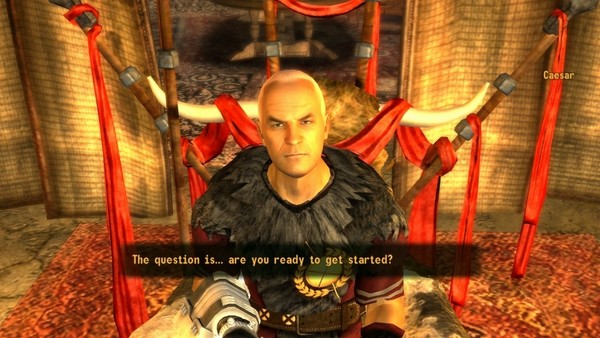
Nevada and the Hoover Dam were locations conjured up during pre-production on 3, as was Caesar's Legion being the major new faction. It helps that the intended game director, Josh Sawyer, also served as the director for New Vegas as well, meaning that the original Fallout 3 was able to be realised in one form or another.
9. Ghouls And Super Mutants Were Originally Playable

One of the genius parts of New Vegas is that you truly have the option to make your character whoever you want. Unlike 3's Vault Dweller, who had a defined origin and family, The Courier's personality and history could be whatever you wanted it to be, and Obsidian's original plans expanded that freedom ever further.
Back when it was known as Fallout: Sin City, the spin-off would let players pick between three different races: Human, Ghoul and Super Mutant. It's a concept that surprisingly has yet to be realised in a Fallout game, considering other Bethesda titles let you pick different races.
Sadly, issues with the Gamebryo engine meant that Obsidian didn't have the time to implement three different, unique classes, and in the end went with a regular old human protagonist.
8. One Perk Is Literally Useless

New Vegas' perk system is pretty versatile, but there is one you absolutely should not pick.
Shining Armour is supposed to give an extra five points to the Damage Threshold against energy weapons while wearing metal armour, but due to the in-game parameters being wrongly set, it actually provides no buff at all.
Essentially, the perk is programmed to assess whether the files of enemy weapons are named "Energy" to recognise whether the buff should be added, but the problem is that these guns are actually recognised as "EnergyWeapons" in the game's files.
While that's the biggest bug, other perks also didn't work as intended for a time either, including Educated and Ninja.
7. It Was Made In Only 18 Months

Speaking of bugs, a big reason why New Vegas was so broken at launch was because Bethesda only gave Obsidian 18 months to make it.
In a way, that was almost setting them up to fail. While the assets from 3 were reused, Bethesda's own RPGs usually take around four years to create, and Obsidian had less than half that time, and had to use an engine they weren't familiar with.
You could argue that timeframe should have made the team pull back on their ambitions (for instance, there's almost 20,000 more lines of dialogue in New Vegas than in 3), but you can't blame them for shooting for the stars, especially after losing this franchise once before.
6. Benny Is Based On A Real Person

Benny is one of video games' greatest slippery s***s. Him shooting you in the head and leaving you for dead is already all the justification you need to track him down, but Obsidian made him a character you absolutely love to chase across the Mojave wasteland.
The characterisation feels so truthful partly because Benny was based on a real life person, Benjamin "Bugsy" Siegel. Despite both having a love of checkered black-and-white suits, the two also built their legacy around the Vegas Strip. Bugsy in real life is considered one of the architects of modern Vegas, financing casinos and overseeing the construction of certain landmarks.
He was also a lifelong mobster, dipping his toes into everything from alcohol smuggling (during the Prohibition era) to assassinations before settling on gambling as his crime major.
The similarities between the two are striking, and Benny is just one of many characters with real-world inspirations.
5. Matthew Perry Was Actually A Huge Fan Of The Franchise
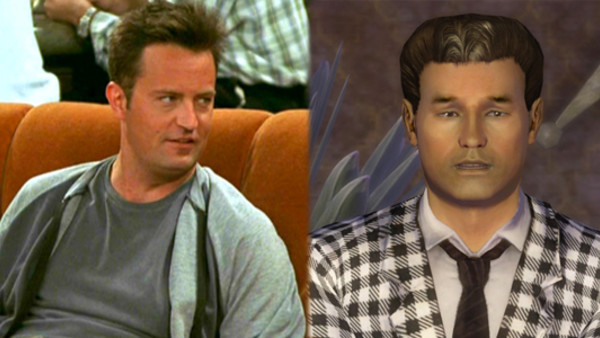
I've mentioned Matthew Perry's Benny multiple times in this list so far, but the actor's relationship with the game goes deeper than him just being a bit of stunt casting.
In fact, it wasn't his name or performance at all that resulted in him being courted for the role, but how much the actor actually loved the franchise. He appeared on The Ellen DeGeneres Show back in 2009 to promote 17 Again, and ended up professing his undying love for Fallout 3, even giving Ellen a copy of the game along with an Xbox 360.
Why? I have absolutely no idea, but good for him.
That apparently drew the attention of the top brass at Bethesda, who drafted him in for New Vegas. Unfortunately his performance as Benny is... let's be polite and go for 'a bit flat'. You would have hoped the enthusiasm would have resulted in a better performance but... no dice.
4. There's A Planet Of The Apes Ending
I've tried to keep away from Easter eggs on this list so far, because they're by far the biggest hidden secrets that get shared by Fallout fans. Consequently, most players at this point know about the corpse of Indiana Jones found in a fridge or the skeletons of Luke Skywalker's aunt and uncle burnt to a crisp.
That said, the Planet of the Apes ending was too fun to leave off, and the fact that it's located in the very last DLC means there's more of a chance people out there won't know about it.
The final choice of that story capper has you deciding what to do with a bunch of nuclear missiles set to imminently launch, and if you have the Wild Wasteland perk equipped, you can pick an option that destroys Caesar's Legion, the NCR, and everything in between.
If you do go rogue and blow everything up, you'll be treated to a special slideshow set against an image that mirrors the ending of Planet of the Apes, and a voiceover which explains the devastating consequences of your actions.
3. Bethesda Considered It A Failure

It kind of feels like Bethesda doesn't want to acknowledge New Vegas these days. When discussing the franchise, the company only ever references the games it built, and it didn't seem to take any inspiration from Obsidian's spin-off while making either Fallout 4 or 76.
Worse still, the deal in place was that the team only received an upfront payment to make the game, with no royalties scheme in place and a bonus only promised if New Vegas ended up hitting 85 on Metacritic. Its eventual score was 84, and they didn't get a penny from Bethesda.
Of course, the terms of the contract were clear and the company owed the team nothing, but it has become a point of contention for developers who worked on the title, as New Vegas was a huge commercial success, and the lack of royalties or bonus eventually led to Obsidian laying off tens of their staff.
2. There Was A Huge Endgame Plan That Had To Be Cut

Considering the game never shies away from doling out consequences to your choices, it's kinda strange that New Vegas doesn't continue after your final decisions in the main story, which radically alter the state of the Mojave.
As always, this wasn't the initial plan, and Obsidian originally had an entire endgame mapped out that ended up being condensed into the final slideshow presentation.
A whole bunch of files remained in the finished version referencing the planned post-game content, which wouldn't have shaken up the experience massively but would have allowed you to continue playing and observe how different characters react to your decisions. For instance, Mr. New Vegas had a whole bunch of news stories detailing the fallout (no pun intended) of the climax, while enemies would have shown up in different locations.
Even worse, expanded endgame content set in the regular Mojave was planned as DLC, until that too was canned in favour of self-contained stories so the devs could work on fixing the core game.
1. Scrapped Companion Romance Options Were Pretty Hilarious
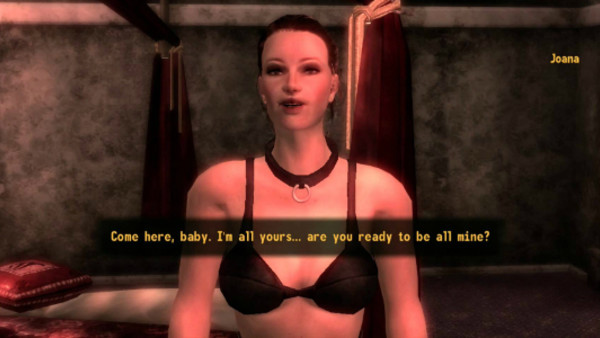
Companions are easily one of New Vegas' biggest strengths, and in pre-production, having romance options for these characters was also toyed with. Rather than making serious romantic escapades, Obsidian's idea was to let the Courier have a bunch of strange and wacky encounters with members of their own party.
While these stories didn't get too far along in development before they were canned, one involving Cass was revealed by Josh Sawyer. The idea was that Cass and the Courier would get black-out drunk one night and get married on a whim at the King's School of Impersonation, while an Elvis track played in the background.
That would have been awesome to see, but in the end nobody on the team was really that enamoured with the romance quests.