12 Most Useless Gaming Peripherals Ever

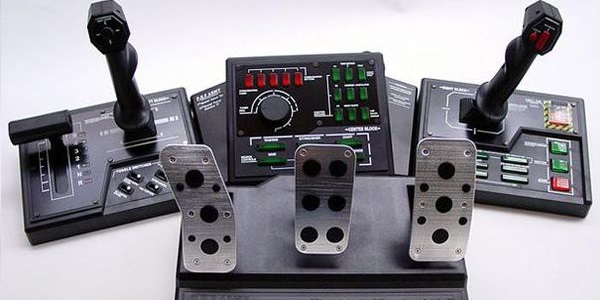
£100 for a pretty mech controller that only works with an obsolete game? Take my money.

Accessories for consoles have existed since gaming began.: in that time there have been a huge variety of peripherals released across all platforms from the great to the truly unnecessary. There has been an array of successful and useful products, such as the guitar controller for Guitar Hero, Xbox Kinect and racing wheels, which actually add to the gaming experience fundamentally, but on the back of their success, developers have launched peripherals that mean little on that front. Many peripherals have released for consoles that were no more than expensive ornaments. They come in many forms, from ones that seem like a good idea in concept, but miss the mark in practice to accessories that provide solutions to problems that simply don't exist. Others are just laughably misguided attempts to enhance your gaming experience, or more likely to squeeze as many dollars and pounds out of you as possible. This list counts down the most useless peripherals ever released for consoles.

12. Jogcon

The move to 3D gaming with the Nintendo 64 and the PlayStation put more pressure on an alternative to the traditional d-pad: the Nintendo 64 went with a joystick while Sony introduced analog sticks. Namco though went down a different route. To coincide with their release of Ridge Racer 4 they designed a completely new controller, which ignored the traditional analog sticks in favour of a large turning wheel in the middle of the controller. Nice idea, but it was ill-suited for a driving game as it had very little force feedback and was incredibly inaccurate. It was also only compatible with Ridge Racer 4 meaning that players would have to learn to use a different controller for one specific game.

11. Everlast Boxing Glove

The Nintendo Wii has its fair share of pointless attachments and peripherals. Many companies seem to have latched on to games like Wii Sports and released attachments for the Wii Remote that simply change the way it looks, rather than change the way it works at all. Possibly the worst offender though is the Everlast Boxing Gloves, into which you strap the Wii Remote and nunchuck controller and you€™re all set to fight your way to victory. The problem here, obviously, is that boxing gloves are designed to protect your hands when fighting, and your hands need very little protection when you are punching thin air while playing a video game. This accessary is a complete vanity item that has very little purpose other than making you look like you are taking the game a little bit too seriously. Not only that but it€™s an expensive accessory, costing £20.

10. Steel Battalion Controller

Everyone wants to control his or her own giant Mech, and in 2002 Steel Battalion on the original Xbox made that possible. To make the title more like a realistic simulator than a game the developers decided to release it alongside a control panel unlike any other. While it does have a small devoted following, the Steel Battalion controller is more of a hassle than anything else: it is heavy, cumbersome and complicated. With three foot pedals, two joysticks and over 40 buttons and switches it would probably be easier to learn to fly a plane than pilot a Mech, or perhaps to learn the technology to build a Mech, then learn how to drive it. What ultimately makes this controller useless though is that it could only be used with Steel Battalion, which makes it essentially a £100 accessory that most people cannot use.

9. Power Glove

This controller - devloped bu PAX - was released in 1989 for the Nintendo Entertainment System and promised to revolutionise how players could control games by using the movement of your hand rather than pressing buttons. The device had a huge marketing effort, including a central role in the film The Wizard and had a cameo in Freddy€™s Dead: The Final Nightmare. Appearances in The Wizard and commercials made the Power Glove look incredibly capable and like something NASA might use to control spacecraft remotely. Unfortunately it simply didn€™t work. The motion control was imprecise and it made playing games much harder than they were with a standard controller. Remember this was a time of hellishly difficult platformers, shooters and adventure games were precise movement was essential. As a final indication of the controller's quality, it was an outright commercial failure and led to PAX going bankrupt.

8. Xbox 360 Faceplates

The console faceplates launched alongside the Xbox 360 in 2005, with the idea being that you could customise your own console with a different design on the front rather than the boring plain one that came with the console. They worked in much the same way as customisable mobile phone cases. Unlike mobile phone cases though, they were very fiddly to get on and off and cost £15, and most importantly though the concept just didn€™t really translate to consoles. Custom cases on mobile phones make sense as you take it with you everywhere and lots of people will see it. Your Xbox 360, on the other hand, will rarely go anywhere and generally is only going to be seen by you as it is tucked away in the corner of your living room. Microsoft stopped producing and selling them after it turned out literally €œnobody bought it€.

7. Nintendo e-Reader

In 2001 Nintendo released the e-Reader for its Game Boy Advance: it was a device that plugged into the cartridge slot and allowed users to read special cards that allowed you to play retro games and unlock special items for some games. While the ability to play older games on a device is nothing new, there are much better ways of doing it than having people buy packs of cards and then slowly scan each corresponding card into a reader. Yet the silliest thing about the e-Reader was that in order to unlock items for games you needed two Game Boy Advances. Because the device plugged into the cartridge slot you needed another Game Boy to plug your game into and then had to link the two portables with a special cable. It proved to be unpopular amongst consumers and was discontinued in North America, while the European launch was cancelled pretty much as soon as it launched.

6. Katana Soul Controller

Released in conjunction with Onimusha 3: Demon Siege, the Katana Soul Controller was a motion-based accessory that made its way to the PlayStation 2. In some ways the controller makes at least a little sense: Onimusha 3 is a game where the protagonists usually fight with swords so making a controller that makes the in-game sword swing when the controller is swung might seem like a good idea. In other ways though the sword controller was something that shouldn€™t have left the drawing board. It was 3 foot long meaning that it was a bit of a danger to other people, furniture and cherished items when being swung around a room. The blade could be removed but then you are taking away its only redeeming feature, that it looks cool. Buttons on the hilt controlled movement and other actions. This made playing the game tricky. Add that to the fact that your swinging didn€™t really correspond to how your character swings his sword in-game and you€™ve got a rather pointless controller - especially as it cost £120 at launch.

5. Skywriter Stick Station

The controller for the Atari 2600 was a small and lightweight joystick that most people could pick up easily and hold comfortable in their hands. The system was also able to support a wide range of third-party controllers, almost all of which focused on making controllers that anyone could hold easily. However, someone somewhere decided that they didn€™t like that design philosophy and came up with the Skywriter Stick Station - a £15 controller was the standard Atari 2600 joystick encased in 1.5KG of wood. This meant you could not pick it up or hold it while playing, though it did make the perfect weapon for blunt force trauma if ever your gaming spilled over into violence. This particular peripheral turned out to be a flop, as most people preferred their controllers to be slightly more portable.

4. SpeakerCom

The year is 2004, online gaming on consoles is just starting to take off, with games like Counter Strike and Halo 2 are incredibly popular and people are battling it out with others over the internet. However because you aren€™t located next to the people you are playing you need some way of communicating with them. To the rescue came the SpeakerCom, which slotted into your Xbox controller via an adapter and allowed you to talk with other players. It did have several limitations though. If you wanted to talk, you had to press and hold a button on the device, meaning taking your hand off the controller, and thus talking to your teammates actually meant handicapping yourself significantly. The SpeakerCom also did not allow you to talk and listen at the same time, while the sound quality was terrible. The SpeakerCom was essentially a solution to a problem that no one had, and you would have to seriously enjoy being annoyed to want to use this over a infinitely more convenient and useful headset.

3. Game Boy Booster

The Game Boy revolutionised hand held gaming by allowing players to take games with them on the go, and it's chief virtues were that it was light, portable and relatively small. The Game Boy Booster took away all of the things that made the Game Boy great: if you wanted your Game Boy to be unwieldy, double the size and twice as heavy, then the Booster was definitely for you. It came fully armed with €œsuperior sound,€ which simply made the music and sound effects slightly louder but lowered the quality considerably, sort of like shouting into a traffic cone. It also added an easily breakable and cheap joystick to replace the d-pad and a magnifying glass that made the centre of the screen bigger, but warped the edges so much that they were incomprehensible. Add all that to the fact that this thing is just plain ugly and you have a recipe for disaster- and thus, as you may have guessed, it was a complete commercial failure.

2. LJN Roll & Rocker

Much like modern peripherals like Kinect, PlayStation Move and the Wii Remote the LJN Roll & Rocker guaranteed to make you the controller. It was a board that rested on the ground and you moved your character by standing on it and leaning in the appropriate direction. We€™ve mentioned before that titles on the NES, especially platformers and action games, required precise movement and timing. Games like Mario were ideally suited to the d-pad as it allowed gamers to control movement exactly. Using your feet to shift weight on a board isn€™t best suited to controlling games - which was made even even worse because the Roll & Rocker didn€™t have any buttons so could only control movement. You had to hold the NES controller in your hand to perform actions. While all co-ordinating your feet with your hands might be a good mental exercise it isn€™t useful for playing games. The Rocker & Roller proved to be a gimmick that didn€™t sell.

1. PlayStation 2 Stands

You may remember that the PlayStation 2 had the ability to stand either vertically or horizontally, much like the Xbox 360 and PlayStation 3. This didn€™t stop Sony from releasing a vertical stand to allow gamers to put their console in an upright position. Of course if your room is prone to earthquakes or massive vibrations it might prove useful, but in that case most people would surely just have the console lie down in its normal position. In an attempt to ensure they took top spot on this list Sony then went on to release an official horizontal stand. That€™s right, they released a stand to help your PlayStation lie horizontally, despite the already enormously helpful assistance of gravity. The official product description says that the stand will protect your console (presumably from killer table surfaces) and adds some style to create a €œvisually stunning result€. If you think we've missed any out then please feel free to point them out in the comments below.

Contributor
Contributor

A sport, gaming and fiction enthusiast, I particularly enjoy Formula 1, rugby, tennis, athletics and football.