12 Video Games Too Big To Fail (That Did Anyway)
Fallout 76 couldn't miss... right?

The phrase "too big to fail" is typically associated with banks and large corporations which, even in failure, must be bailed out again and again by governments in order to prevent the wider financial system from collapsing.
Applying that logic to the entertainment industry is risky, and especially when we're talking about something as complex as video games.
Because after all, no matter how many talented people might be working on a game, there are very few scenarios in the gaming industry where a sure-fire recipe for success actually exists.
As such it's little surprise that countless must-win games end up flaming out every year, and in the case of these 12, they were all especially ambitious, huge-scale titles which had a wealth of industry support behind them. On paper, they sounded like sure-fire critical and commercial hits.
To be clear, this list doesn't include games like No Man's Sky - which rode out a rough start to become a genuinely good game - and focuses instead on games which cratered after launch with virtually no indication of recovery.
12. Mass Effect: Andromeda

Why It Was "Too Big"
No matter the controversy surrounding Mass Effect 3's less-than-stellar ending, the sci-fi RPG franchise was largely considered untouchable both critically and commercially, registering mighty Metacritic scores and totalling 14 million units sold.
The fourth game, Andromeda, was touted as an apology of sorts for Mass Effect 3's bungled ending, while soft-rebooting the series and introducing the now-pervasive open-world gameplay elements.
Pre-release, the game looked fantastic, and the easy consensus was that it'd be a hit consistent with its predecessors.
Why It Failed Anyway
EA rather foolishly allowed players to try the game a week early on EA/Origin Access, where it immediately became clear that new dev team BioWare Montreal was in way over their heads.
Players reported embarrassingly bad character animations right out of the gate, not to mention a wealth of bugs and a depressingly repetitive core gameplay loop.
It emerged in the wake of Andromeda's release that its production was deeply troubled, stemming from both a shift to EA's proprietary Frostbite 3 engine and constant personnel changes throughout development.
The Damage
Andromeda released to Metascores in the early-to-mid 70s across platforms, roughly 20 points below the scores of the three prior games, while its abundance of visual imperfections quickly caused the game to go viral and become a significant embarrassment for EA and BioWare.
EA has been fairly cagey about disclosing precise sales figures for the game, but it's been widely accepted by industry analysts that Andromeda likely under-performed significantly compared to the previous entries in the series, making a minor profit at best.
EA quickly put the series "on hold" following Andromeda's relative failure, though BioWare higher-ups insist that the franchise is still alive. Hmmm.
11. Tomb Raider: The Angel Of Darkness

Why It Was "Too Big"
The first Tomb Raider game for the PS2 basically sold itself to fans, especially after the last canonical entry, 1999's The Last Revelation, left Lara Croft presumed dead.
And even with the commercial disappointment of 2000's spin-off Tomb Raider Chronicles - which sold just 1.5 million units - there was easy confidence across the industry that a next-gen Lara Croft adventure would blow the dust off the series' well-worn gameplay.
Why It Failed Anyway
2003's The Angel of Darkness had a troubled development, with the initial project being scrapped deep into production.
Developers Core Design were reportedly unprepared for the complexity of developing games for the PS2, which combined with their over-ambitious ideas and poor management of the project, caused major planned aspects of the game to be cut.
Between rampant technical issues, the lack of an explanation for Lara's survival, a divisive new side character and a general lack of polish, it was clear the end result had been rushed out - apparently to coincide with the release of the 2003 movie sequel - and, predictably, it was panned by critics.
The Damage
The Tomb Raider brand as a whole took a major hit from the game's failure. Reviews caused it to sell a mere 2.5 million units - half that of The Last Revelation - and Paramount Pictures even blamed the game's reception for their movie under-performing at the box office.
Core Design head Jeremy Heath-Smith resigned following its release, a proposed trilogy was scrapped and the franchise was taken away from Core Design, with Crystal Dynamics heading up development from that point.
Furthermore, the series didn't fully recover commercially until 2013's reboot, where it sold a franchise-best 11 million units.
10. E.T. The Extra-Terrestrial

Why It Was "Too Big"
A video game based on a colossal hit movie - what could go wrong? As much as video game movies have a sour reputation nowadays, back in 1982 there wasn't even a lingering doubt that E.T. for the Atari 2600 would be anything less than a stonking hit.
Between the worldwide love for Steven Spielberg's instant classic movie and the Christmas time release, this was quite literally a fool-proof plan if there ever was one.
Why It Failed Anyway
Designer Howard Scott Warshaw was given just five weeks to build the game from scratch to meet a brutal production deadline, and if you know anything at all about video games, it's that rushing them out the door - especially in the days before downloadable updates - is never a good thing.
Unsurprisingly, reviews panned the game for basically every aspect of its production.
The Damage
Despite initially strong sales, the disastrous reviews and atrocious word-of-mouth quickly caused sales to tank, sinking well below expectations set by Atari, who paid a princely $20-25 million for the game rights.
It's been estimated that 3.5 of the 4 million manufactured cartridges either went unsold or were returned by angry customers, causing Atari to report $536 million in losses in 1983 and lose $1.3 billion in stock market valuation.
Consumer interest in the Atari 2600 dwindled and Atari eventually went under, causing the infamous 1983-1985 video game crash, where the industry lost 97% of its value over a mere two-year period.
Today E.T. endures only as a bizarre curio for retro gaming enthusiasts, and is best-remembered for several hundred thousand unsold copies being buried in a New Mexico landfill.
9. Marvel Vs. Capcom: Infinite

Why It Was "Too Big"
Marvel and Capcom are two indefatigable brands, and with Marvel superheroes enjoying an unprecedented level of popularity over the last few years, it's easy to see why both brands felt that the latest entry into the beat 'em up franchise was destined for easy commercial success.
Why It Failed Anyway
Capcom just took too many liberties with their customers and didn't offer up enough for the asking price.
Between the game's divisive art style, its lacklustre roster - excluding X-Men and Fantastic Four entirely - and generally low-budget feel, few fans felt the need to add such a low-effort title to their libraries.
The Damage
Though the reviews weren't terrible, there was a general air of indifference among critics, and fans voted with their wallets, resulting in Infinite selling just half of Capcom's initial projections. The publisher itself even deemed the commercial performance "weak."
Capcom's lack of support for the game also caused it to be cut from high-profile beat 'em up competitions, and since then rumours have suggested that the publisher may be looking to re-brand the game as Marvel vs. Capcom 4. Oof.
8. Driv3r

Why It Was "Too Big"
Though the Driver series has always been divisively received by critics, there was an enormous amount of hype surrounding 2004's threequel, which in addition to being the series' PS2 debut, promised a more cinematic story alongside extensive on-foot gameplay and the use of guns.
Particularly in the UK, the marketing campaign for Driv3r was extremely aggressive, with publisher Atari hoping to transform Driver into a true flagship action franchise.
Why It Failed Anyway
Conventional wisdom dictated that, like the previous games in the series, Driv3r was kind of a mess, a fact only exacerbated by its more ambitious development.
Despite praise for the cutting-edge visuals, the game was pilloried by critics for its abundance of technical issues, its awkward gunplay and its utter, soulless blandness. The end result felt patently unfinished, and that's because it effectively was.
The Damage
With scathing reviews from most major outlets - not to mention a scandal surrounding a few suspiciously positive reviews - Driv3r quickly became an early laughing stock of gaming's sixth generation, and a textbook example of the dangers of runaway hype. Impressively, though, it still managed to sell reasonably.
The series limped along for a few more instalments and actually enjoyed a bit of a critical uptick, but with the last AAA entry releasing to deaf ears back in 2011 (Driver: San Francisco), it's safe to say the series is basically dead at this point.
A reboot isn't out of the question given the easy marketability of the brand name, and the fact that 15 years is probably enough time for (most) people to forget about the calamity that was Driv3r.
7. Superman 64

Why It Was "Too Big"
Superman 64 wasn't just the first-ever Superman game for the N64, it was also the first-ever 3D Superman game period, and developers Titus Interactive did a solid job selling that they wanted to make a superhero video game that gave players more freedom than ever before.
Why It Failed Anyway
DC Comics and Warner Bros. micro-managed development to a harmful extent, requiring Superman's powers to be limited by infamous "Kryptonite fog", while mandating that the game be set in a virtual world to prevent depicting Superman as beating up "real people."
Though Titus didn't exactly have a sterling track record before the game's release, the cumbersome approvals process with these companies resulted in a six-month delay and only roughly 10% of their ideas ending up in the final game.
As a result, Superman 64 was panned for its janky, boring gameplay, abundance of bugs and naff graphics.
The Damage
Sales started out strong enough, but it ended up hitting a brick wall at around 500,000 units sold. As both publisher and developer, Titus continued to operate for a few more years before declaring bankruptcy in 2005 with $43.8 million in liabilities.
Superman 64 meanwhile continues to endure as one of the most reviled video games of all time, and 20 years on, the Man of Steel has yet to get his own well-received solo video game (despite a few half-baked attempts).
6. Daikatana

Why It Was "Too Big"
If you were even remotely following video games in the late 1990s, it was impossible not to hear about Daikatana.
The latest, much-anticipated new project from Quake and Doom wunderkind John Romero was hyped up as a major leap forward for the FPS genre, with overzealous marketing even infamously claiming, "John Romero's about to make you his bitch."

Why It Failed Anyway
Daikatana is a classic case of a game that just spent too damn long in the oven. Romero had an over-ambitious design for it and laughably optimistic standards for the time-frame of its completion, resulting in Daikatana ultimately releasing almost 2.5 years after his initial Christmas 1997 projection.
Between Romero's inability to manage his team efficiently, a mid-production engine switch, numerous delays and the walk-out of many team members, the sunny PR tide eventually turned ugly against the game, as it became clear the end result would disappoint.
And that it did. Visually unremarkable and mechanically uninspired, Daikatana was skewered by critics and fans alike for disappointing in pretty much every aspect.
The Damage
It was consequentially a huge flop at retail, resulting in the closure of developer Ion Storm's lavish Dallas office.
Romero's career never fully recovered, and today Daikatana remains a fascinating test case for how dangerous personality-driven games development truly can be (not to mention unchecked hype).
5. Pac-Man (Atari 2600)

Why It Was "Too Big"
Everybody knows Pac-Man, and just about everybody loves Pac-Man, so how could they not also love the idea of the arcade fave finally coming to home consoles with its 1982 release on the Atari 2600? It's as simple as that.
Why It Failed Anyway
Programmer Tod Frye was given no arcade specs to make porting the game to a home console easier, and had to recreate the entire thing from scratch, spending 80-hour weeks over a six-month period developing it.
In perhaps the first example of a disappointing gaming downgrade, the technical restrictions of the 2600's hardware also required Frye to severely lessen the visual fidelity and dynamic mechanics of the arcade game.
Atari, confident that it would sell no matter what, were apparently unconcerned by its lacking resemblance to the arcade version, and ordered 12 million cartridges to be manufactured, far in excess of the 10 million console owners at the time.
The Damage
Despite the rancid critical response, Pac-Man's sheer pervasive brand identity allowed it to become the best-selling Atari 2600 game of all time, even with an (at the time) unprecedented level of returned copies, which ultimately went on to cost them hugely.
And though Pac-Man's "success" helped make gaming more of a mainstream product, it also sewed the seeds of distrust among gamers, and is widely accepted to be a precursor to the outright industry crash caused by E.T. later that year.
4. Anthem
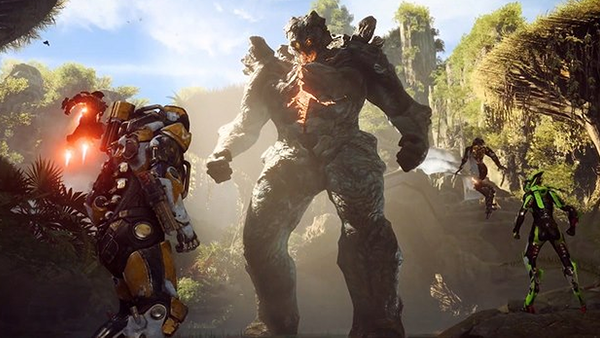
Why It Was "Too Big"
Even though the marketing suggested that EA's attempt to create its own Destiny would probably end up a bit generic and hollow, it nevertheless seemed like a game that would score broadly positive reviews and pull gangbusters business in its opening week alone.
With a clearly humongous production budget and possibly even larger marketing costs, Anthem seemed like a competent if uninspired AAA looter shooter that would serve the casual crowd just fine.
Why It Failed Anyway
Members of EA's Access Premier program were able to play Anthem a week early, and given that all of its meaningful content could be easily rinsed in a weekend, word quickly got out that the game wasn't really worth a full retail spend.
Reviews were slow-coming but largely apathetic, criticising the lacklustre multiplayer elements, forgettable story and characters, appalling loading times and general soulless nature of the gameplay grind.
Even before Anthem's release, reports emerged that development was troubled, with several prominent BioWare employees quitting the game mid-production. Post-release, it's now apparent that large sections of the game ended up looking decidedly lesser than advertised.
The Damage
Anthem wasn't a commercial failure, but its retail sales on launch week were just half that of Mass Effect: Andromeda, a figure that isn't entirely compensated for by the rise in digital gaming globally.
There have been talks of Anthem making $100 million digitally since release, but given that EA wanted this to be their Destiny - which generated $325 million of revenue in its first five days - that's not quite the splendid figure it might seem.
The week-long period of early access negativity combined with mediocre reviews were probably to blame, and above all else, when you can play everything the game has to offer for a month of Access Premier, why would it ever perform as well as Destiny?
More than all this, though, Anthem's dispiriting end result has severely dented the already dwindling reputation of BioWare, who between Andromeda and this are in desperate need of a win.
3. Spore

Why It Was "Too Big"
Another God game from Maxis, the geniuses behind The Sims, allowing players to develop a civilisation from the most microscopic organism to a hyper-complex, space-faring society, with an emphasis on procedural generation elements.
With The Sims being the most successful PC franchise of all time - currently boasting 200 million units sold - there was absolutely no reason to doubt Spore being another stonking hit for the company.
Why It Failed Anyway
Spore's development process was so arduous it even has its own damn Wikipedia page. The game was in production for roughly 8 years, during which scope and focus constantly shifted, with a larger array of evolutionary phases eventually being scaled back to just a few, while the rigorous scientific aesthetic was re-designed to look more "cute".
The end result was a shockingly hollow and superficial game compared to what was initially promised, and not really fun for more than a few hours. The phases were basically simplistic mini-games loosely appended together, and replay value was depressingly scant.
The Damage
Spore actually reviewed relatively well and its 84 Metascore remains one of the most bafflingly generous scores given to any game from the last decade-plus.
Sales were meanwhile solid out of the gate but quickly plateaued and sat at only 2.8 million units after 8 months on release.
Little has since been said about Spore's commercial performance - never a good sign - while a sequel has yet to materialise and announced plans for a feature film adaptation quietly entered development hell.
Spore is largely remembered as a monument to failed promise these days: an intriguing yet ultimately hugely underwhelming effort.
2. Fallout 76

Why It Was "Too Big"
Bethesda have proven themselves to be a money-printing machine over the last decade-or-so, especially when it comes to their Elder Scrolls and Fallout franchises.
With Fallout 4 generating a mind-boggling $750 million within 24 hours of its release, how could a multiplayer-focused Fallout game ever fail?
Why It Failed Anyway
Bethesda really bit off more than they could chew with this one, and it didn't take more than a few hours of playing Fallout 76 to appreciate that the game was a fast-and-loose attempt to cash-in on the Fallout brand.
With virtually no story, a total absence of human NPCs, painfully janky, bug-filled gameplay courtesy of the under-qualified Creation Engine and a lack of multiplayer presence, Fallout 76 was largely panned by critics and fans alike.
The Damage
The game received Metascores in the low-40s and early-50s, an embarrassingly low number for a AAA publisher as high-caliber as Bethesda, severely denting its commercial performance.
Fallout 76 launched to lower figures than than either Fallout 4 or Fallout: New Vegas, and the game saw worldwide price cuts less than a week after its retail release, indicating just how poorly it had sold compared to expectations.
If this wasn't enough to severely damage Bethesda's relationship with their fans, the low quality of the expensive Power Armor edition, which substituted canvas bags for cheaper nylon bags without telling customers, resulted in further egg on the publisher's face.
The whole mess caused many to insist that they'll be waiting on reviews before touching either of Bethesda's hyped upcoming games, Starfield and The Elder Scrolls VI, both of which will be inexplicably be using the same tired engine. What's the definition of insanity, again?
1. Too Human

Why It Was "Too Big"
Too Human was an epic action RPG from developers Silicon Knights (Blood Omen: Legacy of Kain), with the publishing might of Microsoft Game Studios behind it.
Microsoft did a fantastic job hyping the game up as the next big thing for the RPG genre, and given their prior successes and their talking-up of a potential trilogy, it was easy to believe them.
Why It Failed Anyway
Too Human had a troubled development from the beginning, starting out life in 1999 as a PS1 game, before shifting to the GameCube in 2000, and sitting dormant for five years before it was revived from scratch on the Xbox.
As delay followed delay, the budget ballooned to an estimated $80 million, and it wasn't until nine years after original production began that the final game released.
Reviews were thoroughly mediocre, citing impressive world-building but lacklustre storytelling and frustrating gameplay, with much criticism centred on the combat.
The Damage
Too Human sold just 700,000 units, immediately killing any prospect of a trilogy, and if that wasn't bad enough, Silicon Knights was sued into bankruptcy by Epic Games following a dispute over their illegal use of Unreal Engine 3.
The company was consequently instructed to destroy any unsold copies of games they had developed using UE3, quite literally resulting in Too Human being obliterated from existence in every legal sense, save for the physical copies already on the market.
The game wasn't good, but damn, that's a cruel fate.